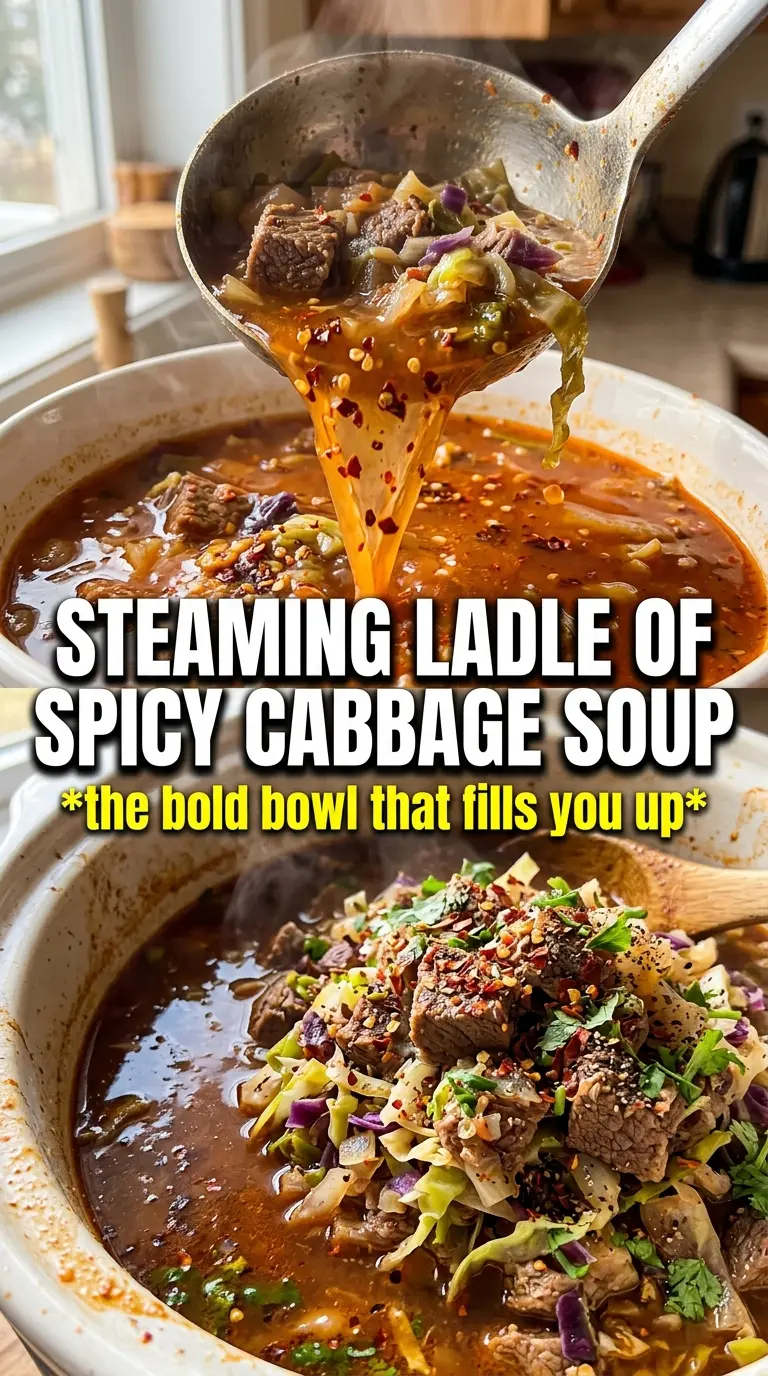
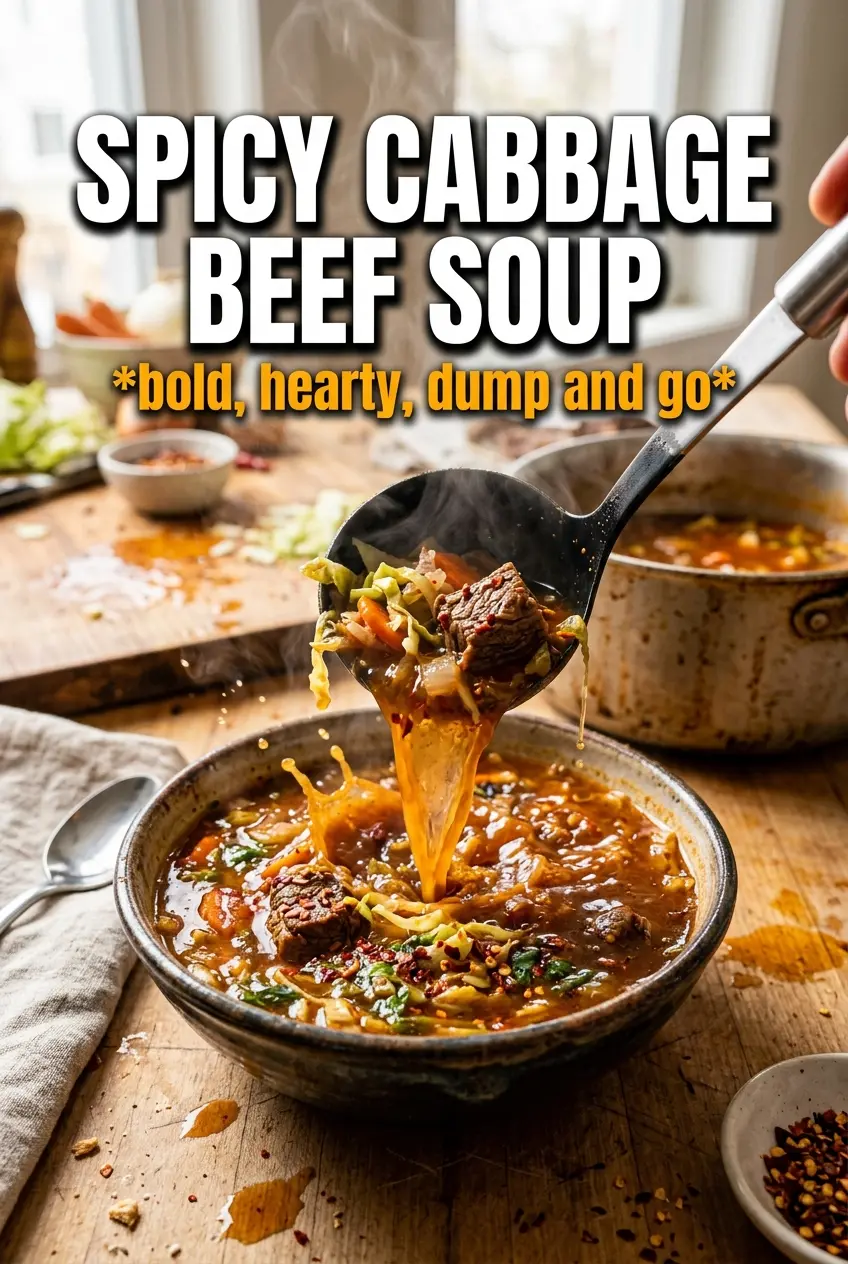
Slow cooker spicy cabbage beef soup turns humble ingredients into a bowl that tastes like it simmered all day, because it did. The cabbage softens into silky ribbons, the beef gives the broth body, and the tomatoes plus a little heat create a broth that lands somewhere between hearty and bright. It’s the kind of soup that gets even better after sitting in the fridge overnight, which makes it a smart pot to have going on a busy day.
The trick here is building enough flavor before the lid goes on. Browning the beef first gives the soup a savory base instead of a flat, boiled one, and the combination of crushed tomatoes, diced tomatoes, Worcestershire, smoked paprika, and cumin makes the broth taste deeper than the ingredient list looks. The cabbage cooks down a lot, so a full head might look excessive at the start, but it’s exactly what gives the soup its body.
Below, I’ve included the detail that matters most for keeping the broth rich, plus a few ways to adjust the heat, make it lighter, or stretch it for leftovers without losing the texture.
The cabbage softened perfectly without turning mushy, and the broth had this deep, smoky heat that got even better the next day. My husband went back for a second bowl before I’d even put the green onions out.
Save this slow cooker spicy cabbage beef soup for the kind of day when you want a thick, smoky, one-pot dinner that tastes even better tomorrow.
The Part That Keeps the Broth from Tasting Flat
Slow cooker soups can taste thin if everything goes in raw and cooks gently for hours. The fix here is simple: brown the beef first and keep the slow cooker doing what it does best, which is softening vegetables and marrying flavors instead of trying to create them from scratch. That browned beef brings a little caramelized depth, and the tomatoes add acidity that keeps the cabbage from tasting dull or overly sweet.
The other thing that matters is the balance of broth to vegetables. Cabbage releases liquid as it cooks, so this soup starts looking looser than it will finish. By the end, the broth thickens naturally from the softened cabbage and tomato base. If it ever seems too brothy, that usually means it needs more time, not more starch.
- Ground beef — Use 80/20 or 85/15 if you can. A little fat gives the soup better flavor, but drain it well after browning so the broth stays clean instead of greasy.
- Cabbage — Green cabbage holds up best here and turns tender without disappearing. Chop it into rough pieces; too fine, and it can go limp before the broth has time to deepen.
- Crushed tomatoes and diced tomatoes — Both matter. Crushed tomatoes build the body of the broth, while diced tomatoes keep a little texture so the soup doesn’t turn into pure puree.
- Worcestershire sauce — This is the quiet ingredient that makes the broth taste finished. There isn’t a true substitute for its savory depth, but soy sauce can cover in a pinch if you need a gluten-free swap.
- Red pepper flakes — Start with the listed amount, then add more at the end if you want the heat to linger. They bloom gently in the slow cooker, so the soup tastes warmer than sharp.
What Each Ingredient Is Actually Doing in This Recipe
- Primary ingredient (the star) — Quality matters most. Choose the best you can find.
- Cooking medium (oil, butter, or broth) — This carries flavors and prevents dryness.
- Seasonings (salt, pepper, spices, herbs) — Layer flavors so nothing overpowers. Build depth gradually.
- Aromatics (garlic, onion, herbs) — Cook with fat to bloom flavors. Become the foundation.
- Supporting ingredients — Complement the main ingredient without overpowering it.
- Sauce or liquid (if applicable) — Brings flavors together. Balance richness with acid.
- Acid (lemon, vinegar, wine, or other) — Brightens and prevents flat-tasting results.
- Final finish (garnish, glaze, or sauce) — Prevents one-dimensional taste and adds visual appeal.
How to Layer the Flavor Before the Long Cook
Browning the Beef First
Cook the ground beef in a skillet until there’s no pink left and the edges have a little color. That light browning gives the soup a deeper, meatier base, and it’s the one step that keeps the finished broth from tasting like tomatoes and cabbage alone. Drain off the excess fat before it goes into the slow cooker; too much grease will sit on top and mute the seasoning.
Building the Slow Cooker Base
Once the beef is in the slow cooker, add the cabbage, carrots, celery, onion, garlic, tomatoes, broth, Worcestershire, and spices. Stir it well enough that the seasoning isn’t sitting in one corner, because slow cookers don’t circulate like a stovetop pot. The cabbage will look piled high at first, but it collapses dramatically as it cooks, so don’t be tempted to add extra liquid right away.
Letting Time Do the Work
Cook on low for 7 to 8 hours if you can. That longer, gentler heat gives the vegetables time to soften all the way through while the broth concentrates. If you use high heat, start checking earlier so the cabbage doesn’t slip from tender to mushy; the soup should be soft and cohesive, not stringy.
Finishing the Bowl
Taste before serving and add salt and pepper at the end. Tomatoes, broth, and Worcestershire can all carry different amounts of salt, so the final seasoning should happen after everything has fully cooked together. A handful of green onions on top gives freshness, and hot sauce lets each bowl be as sharp or spicy as you want.
How to Adjust This Soup Without Losing Its Character
Make it dairy-free and gluten-free
This soup already lands naturally in both categories as written, as long as your Worcestershire sauce is gluten-free. If you swap it for soy sauce, use tamari instead so the broth stays safe for gluten-free eaters without losing that savory background note.
Turn down the heat without flattening the flavor
Cut the red pepper flakes in half and finish each bowl with hot sauce at the table. That keeps the base warm and smoky without making the whole pot spicy, which is better if you’re serving people with different heat preferences.
Use ground turkey instead of beef
Ground turkey works, but the soup will taste lighter and less rich, so keep the Worcestershire and smoked paprika in place. If the turkey is very lean, add a tablespoon of olive oil when browning so the base doesn’t come across dry.
Stretch it for a bigger crowd
You can add another few cups of cabbage or an extra carrot and celery rib without upsetting the balance. Don’t just pour in more broth unless you want a thinner soup; the body comes from the vegetables cooking down, not from a watery base.
Storage and Reheating
- Refrigerator: Store for up to 4 days. The cabbage softens a little more each day, and the broth thickens as it sits.
- Freezer: Freezes well for up to 3 months. Cool it completely first, then portion it into airtight containers so the vegetables keep their shape better when thawed.
- Reheating: Warm gently on the stove over medium-low or in the microwave in short bursts, stirring between rounds. A hard boil can make the cabbage go too soft and pull the beef texture apart.
Answers to the Questions Worth Asking
Slow Cooker Spicy Cabbage Beef Soup
Ingredients
Equipment
Method
- Brown and drain the ground beef, then add it to the slow cooker.
- Add the cabbage, carrots, celery, onion, garlic, crushed tomatoes, diced tomatoes, beef broth, Worcestershire sauce, smoked paprika, red pepper flakes, garlic powder, and cumin to the slow cooker and stir to combine.
- Cook on Low for 7–8 hours, or High for 4–5 hours, until the cabbage and vegetables are very tender.
- Season with salt and pepper to taste; the soup should be thick and deeply flavored after cooking.
- Serve hot with green onions and hot sauce.