Watermelon sangria drinks like the first cold sip of a backyard gathering: light, juicy, and bright enough to keep people coming back for another glass. The watermelon gives it a clean, fresh sweetness instead of the flat, syrupy taste that can happen with bottled mixers, and the citrus keeps the whole pitcher from feeling heavy. It’s the kind of drink that looks polished in a pitcher but is easy enough to pull together on a weekday afternoon.
The key is blending part of the watermelon into juice and leaving the rest in cubes. That gives you flavor throughout the pitcher without losing the texture of real fruit. Dry rosé works best because it keeps the drink crisp, while a small amount of vodka and triple sec gives the sangria a little more backbone without drowning out the melon. Letting it chill for a couple of hours matters, too; the fruit and wine need time to get acquainted.
Below, I’ll walk you through the one step that gives this sangria its vivid color, what to use if you want to tweak the alcohol, and how to keep the bubbles lively right up until serving.
The watermelon stayed bright and fresh after chilling, and the mint with the lime slices made it taste like something from a nice patio bar. I liked that it wasn’t too sweet, and the sparkling water at the end kept it crisp instead of heavy.
Save this watermelon sangria for the next time you want a blush-pink pitcher drink with fresh fruit, citrus, and a crisp finish.
The Trick to Keeping Watermelon Sangria Bright Instead of Muddy
Watermelon sangria goes flat when everything sits together too long without a plan. If you toss whole fruit, wine, and sparkling water into the pitcher at once, the bubbles disappear and the melon can taste watered down by the time guests pour their second glass. Blending part of the fruit into juice gives the drink its color and body, while the remaining cubes add fresh texture without making the whole pitcher cloudy.
The other thing that matters is balance. Dry rosé or a dry white wine keeps the drink from turning sugary, and the honey is there to round out the melon, not make it taste like candy. If your watermelon is exceptionally sweet, start with less honey and taste before adding more. That small adjustment keeps the sangria tasting clean instead of heavy.
What Each Ingredient Is Actually Doing in This Pitcher
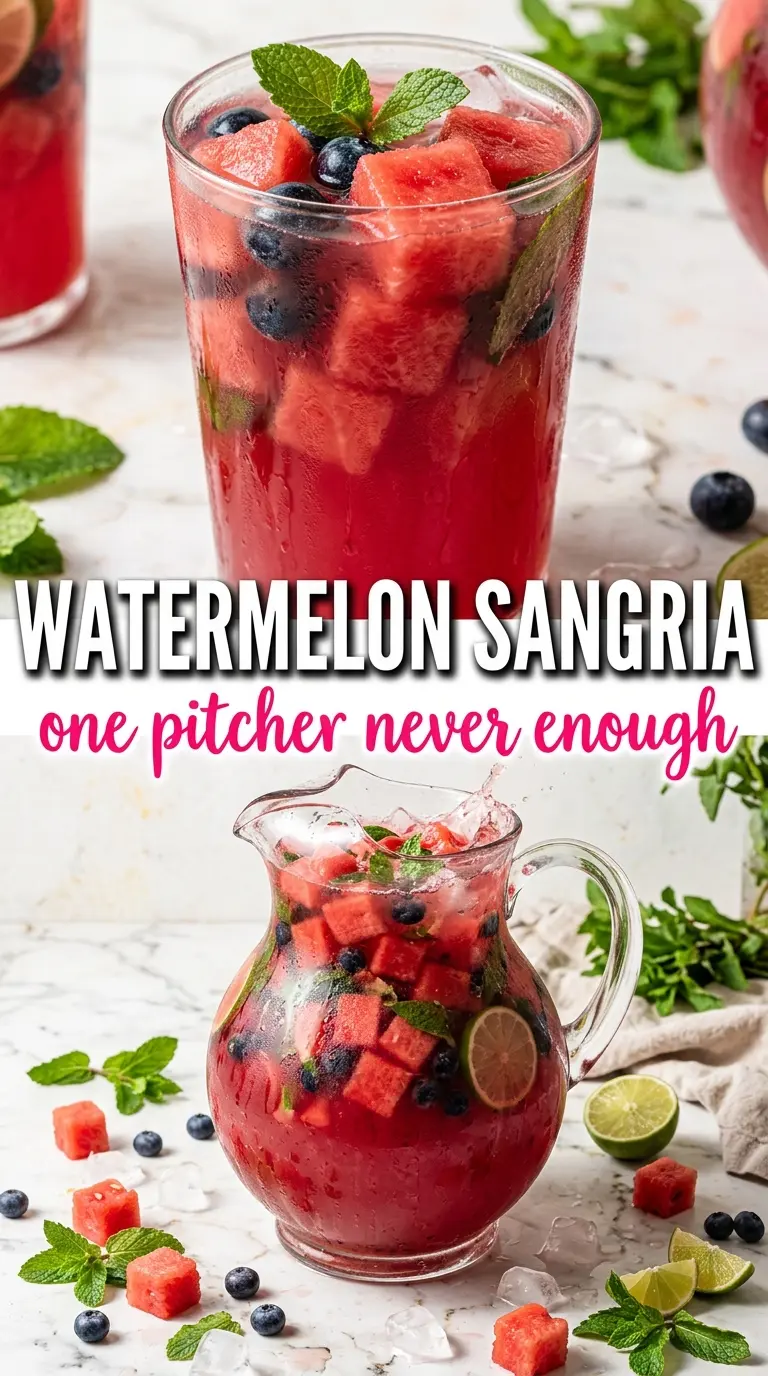
- Watermelon — Half of it gets blended into juice for color and flavor, and the rest stays in the pitcher for texture. Seedless melon is easiest here, but if your melon has a few seeds, just pick them out before blending so the juice stays smooth.
- Dry rosé or white wine — This is the base, so choose something crisp rather than sweet. A fruity wine is fine, but avoid anything overly oaky or heavy; those flavors fight the melon.
- Vodka and triple sec — Vodka adds strength without changing the flavor much, and triple sec brings a light citrus note that helps the lime and lemon taste sharper. If you want a lighter pitcher, cut the vodka back a little, but don’t skip all the alcohol or the sangria starts tasting like fruit punch.
- Honey or simple syrup — This smooths out the tart edges from the citrus and wine. Honey gives a slightly rounder finish, while simple syrup dissolves faster if your watermelon is cold when you mix the pitcher.
- Lime, lemon, and mint — The citrus slices steep into the sangria as it chills, and the mint on top keeps each glass smelling fresh. Thin slices work best because they release flavor without making the pitcher bitter.
- Sparkling water — Add this right before serving. If it goes in early, the bubbles fade and the drink loses the lift that makes each sip feel fresh.
Building the Pitcher So the Bubbles Stay Alive
Turning the Watermelon Into Juice
Blend two cups of the watermelon until smooth, then strain it through a fine mesh sieve. That step gives you a clean, vibrant juice instead of a foamy puree with pulp floating all through the pitcher. If you rush it and pour the blended melon straight in, the texture turns thicker and can muddy the drink as it chills.
Mixing the Base
Stir the watermelon juice, wine, vodka, triple sec, and honey in a large pitcher until the honey is fully dissolved. You want the liquid evenly blended before the fruit goes in, because honey that clings to the bottom of the pitcher leaves you with uneven sweetness. Taste at this stage if your watermelon was especially ripe; that’s the moment to adjust the sweetness, not after the sparkling water is in.
Letting It Chill Without Overdoing It
Add the remaining watermelon cubes, lime slices, and lemon slices, then refrigerate for at least two hours. That gives the fruit time to perfume the sangria and the wine time to pick up a little more melon flavor. Don’t leave it overnight with the sparkling water already added, or you’ll wake up to a flat pitcher with fruit that’s gone soft.
Finishing With the Sparkle
Stir in the sparkling water right before serving, then pour into ice-filled glasses and top with mint. The last-minute fizz is what makes the drink feel lifted instead of heavy. If the pitcher has been chilling a long time, stir gently from the bottom before pouring so the stronger flavors aren’t all sitting there in the last glass.
How to Adjust Watermelon Sangria for a Different Crowd
Make it lighter and lower in alcohol
Use half the vodka and replace the triple sec with an extra splash of orange juice. The drink still tastes bright and fruity, but it comes across more like a refreshing spritz than a stronger sangria.
Make it non-alcoholic
Swap the wine, vodka, and triple sec for chilled white grape juice, a little orange juice, and extra sparkling water. You’ll lose the wine’s dry edge, so add the citrus slowly and keep the drink well chilled to avoid it tasting too sweet.
Use white wine instead of rosé
A dry Sauvignon Blanc or Pinot Grigio gives you a crisper, paler sangria with a sharper finish. Rosé brings a softer berry note and that gorgeous blush color, so choose white wine when you want the melon and citrus to stand out more.
Keep it vegan
Use simple syrup instead of honey. The texture and sweetness stay the same, but simple syrup blends instantly and keeps the recipe fully plant-based.
Storage and Serving Prep
- Refrigerator: The sangria base keeps for up to 24 hours without the sparkling water. After that, the fruit starts to soften and the fresh flavor fades.
- Freezer: I don’t recommend freezing it. The texture of the watermelon changes and the wine base doesn’t thaw back smoothly.
- Reheating: Not applicable. For serving later, keep the base cold and add the sparkling water only when the pitcher is ready to hit the table.
Questions I Get Asked About This Recipe
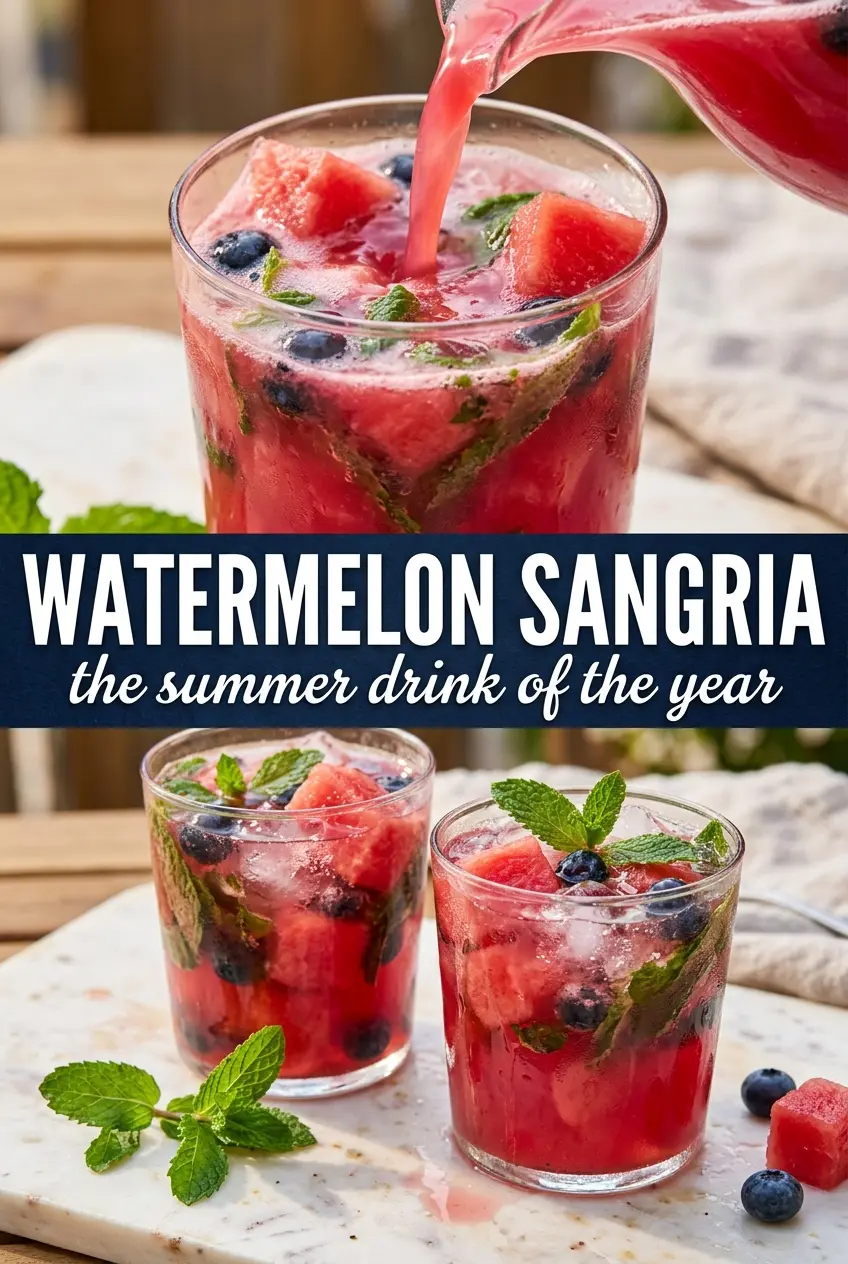
Watermelon Sangria
Ingredients
Equipment
Method
- Blend 2 cups of the fresh watermelon cubes until smooth, then strain through a fine-mesh sieve to get about 1 cup fresh watermelon juice. The texture should look like bright pink juice with no visible pulp.
- In a large pitcher, combine the watermelon juice, dry rosé or white wine, watermelon vodka or plain vodka, triple sec, and honey or simple syrup, then stir to combine. You should see an even, blush-pink base without streaks.
- Add the remaining fresh watermelon cubes, lime slices, and lemon slices to the pitcher. Cover and refrigerate for 2 hours so the fruit softens slightly and the flavors meld.
- Right before serving, add the sparkling water or club soda, stir gently, and pour into ice-filled glasses. Garnish each glass with fresh mint sprigs and serve immediately for the best bubbles.