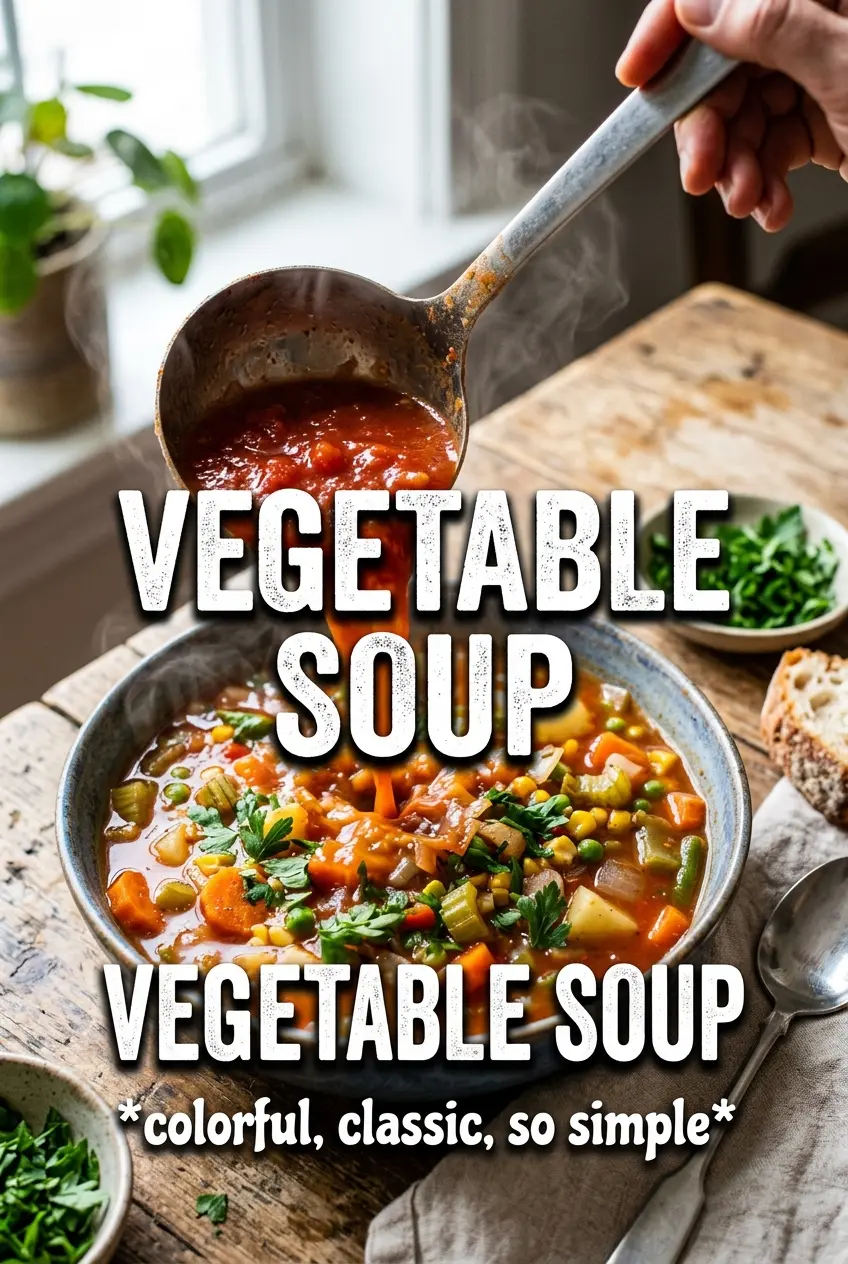
Clear broth, tender potatoes, and a bowl full of vegetables that still taste like themselves is what makes a good vegetable soup worth repeating. The carrots stay sweet, the green beans keep a little bite, and the peas and corn add just enough pop to keep every spoonful interesting. This is the kind of soup that feels simple at first glance, then quietly wins you over because it tastes balanced instead of watery or bland.
The trick is building the flavor in layers. Onion, carrot, and celery get a head start in olive oil so the broth has a savory base before anything else goes in. The potatoes simmer until just tender, then the green beans join long enough to cook through without turning drab. Frozen peas and corn go in at the end on purpose; if they cook too long, they lose their bright color and fresh taste.
Below you’ll find the timing that keeps every vegetable in its sweet spot, plus a few smart swaps if you’re using what you have on hand.
The broth stayed clear and the vegetables held their shape instead of turning mushy. I loved that the peas and corn went in at the end — the soup tasted fresh even on day two.
Save this vegetable soup for the nights when you want a clear, herb-scented broth packed with tender vegetables in every spoonful.
The Reason This Soup Stays Bright Instead of Blending Into One Note
Vegetable soup goes flat when every vegetable cooks for the same amount of time. Potatoes need enough simmering to turn tender, but peas and corn need only a short finish or they lose their sweetness and color. This version keeps the pot moving in stages, which is what gives the broth a fresh, layered taste instead of that muted, overcooked vegetable-soup problem.
The other thing that matters is the base. Sautéing the onion, carrots, and celery before adding the liquid gives the broth a deeper savory edge, even without meat. If you skip that step and dump everything into the pot at once, the soup still cooks, but it tastes thinner and the vegetables never pick up that same rounded flavor.
What Each Ingredient Is Actually Doing in the Pot

- Potatoes — They give the soup body and make each bowl feel substantial. Waxy potatoes hold their shape best, but any peeled potato works. Cut them into even cubes so they finish at the same time.
- Carrots, celery, and onion — This is the flavor base. The onion softens into the broth, the carrots add sweetness, and the celery brings that familiar soup backbone. Chop them evenly so they soften at the same pace.
- Garlic — It only needs a minute in the hot oil. If it browns, the soup can pick up a bitter edge, so add the broth as soon as it smells fragrant.
- Vegetable broth — Use one you actually like sipping, because it’s the main flavor of the finished soup. A low-sodium broth gives you more control over the final seasoning.
- Diced tomatoes — They add a little acidity and keep the broth from tasting one-dimensional. Fire-roasted tomatoes work if you want a deeper, slightly smokier finish.
- Frozen peas and corn — Frozen is perfect here. They go in at the end and stay sweet, bright, and tender without any extra prep.
- Thyme, parsley, and bay leaf — Thyme gives the soup an earthy base, parsley lifts it, and bay leaf ties everything together while it simmers. Don’t forget to remove the bay leaf before serving.
The Timing That Keeps Every Vegetable in Its Lane
Softening the Aromatics
Heat the olive oil first, then cook the onion, carrots, and celery until the onion turns translucent and the carrots start to lose their raw edge. You want the vegetables softened, not browned. If the pot runs too hot, the onion can catch and the soup will taste scorched before the broth even goes in.
Building the Broth
Add the garlic for just a minute, then pour in the broth and tomatoes right away. That stops the garlic from overcooking and gives the fond on the bottom a chance to dissolve into the liquid. Stir in the potatoes, thyme, parsley, and bay leaf, then bring everything to a boil before lowering it to a simmer.
Cooking the Heartier Vegetables First
Let the soup simmer until the potatoes are starting to turn tender, then add the green beans. The beans need enough time to cook through but not so much that they fade to olive green and get limp. Keep the simmer gentle; a hard boil can break the potatoes apart before the centers are fully cooked.
Finishing with the Quick-Cooking Vegetables
Stir in the corn and peas during the last few minutes and cook just until they’re heated through. This is the difference between a soup that tastes lively and one that tastes like it sat on the stove too long. Remove the bay leaf, taste, and season with salt and pepper at the very end so you can judge the broth after everything has had time to mingle.
How to Adapt This Soup Without Losing What Makes It Work
Make It More Filling
Add a can of drained white beans or chickpeas with the potatoes. They turn the soup into a heartier main dish without changing the cooking method, and they hold up better than pasta if you want leftovers that still look good the next day.
Gluten-Free and Naturally Meatless
This soup is already gluten-free and vegetarian as written, as long as your broth is certified gluten-free. That makes the broth choice the only real label to check.
Use What’s in the Freezer
Swap in frozen mixed vegetables if that’s what you have, but add them near the end so they don’t turn soft and dull. The soup will be a little less distinct in texture, but it still works well on busy nights.
Storage and Reheating
- Refrigerator: Keep in an airtight container for up to 4 days. The vegetables soften a bit more each day, but the flavor holds up well.
- Freezer: It freezes well for up to 3 months, though the potatoes will be a little softer after thawing. Cool it completely before freezing and leave a little space in the container for expansion.
- Reheating: Warm it gently on the stove over medium-low heat until hot. A hard boil can make the vegetables break down and turn the broth cloudy.