Plump cheese tortellini coated in a silky parmesan-egg sauce land somewhere between comfort food and a smart dinner shortcut. The pasta carries the sauce in a way spaghetti never quite does, and the crispy pancetta gives each bite a salty little crunch that keeps the whole bowl from feeling heavy. A heavy shower of black pepper finishes it with just enough bite to cut through the richness.
This version works because the sauce is built off the heat, with the hot tortellini and a little pasta water doing the job of gently thickening the eggs instead of scrambling them. Using mostly yolks gives the sauce body, while the whole egg keeps it supple and glossy. The nutmeg is subtle, but it rounds out the parmesan in a way that makes the dish taste complete rather than just cheesy.
Below, I’ll show you the timing that keeps the sauce smooth, plus the small adjustment to make if your pan cools down too fast and the sauce starts to tighten up.
The sauce turned out silky instead of clumpy, and the pancetta stayed crisp even after tossing. I added the pasta water a little at a time and it coated the tortellini perfectly.
Save this Tortellini Carbonara for the night you want silky egg-and-parmesan sauce with crispy pancetta and minimal cleanup.
The part that makes tortellini carbonara stay silky
Carbonara goes wrong fast when the pan is too hot or the sauce is too dry. With tortellini, that risk is even higher because the pasta holds onto heat and the filling changes the way the sauce clings. The fix is simple: pull the pan off the burner before the egg mixture goes in, then use the hot pasta and a splash of starchy water to do the gentle cooking for you.
The other trap is overloading the bowl with cheese before the eggs have a chance to loosen. Parmesan wants to melt into a smooth sauce, not clump into little gritty bits. When the sauce looks loose at first, keep tossing. It tightens fast as the cheese melts and the eggs turn glossy.
- Hot tortellini — This is the engine that cooks the sauce. Drain it and move quickly so it still has enough heat to thicken the eggs without scrambling them.
- Pasta water — The starch in the water helps the sauce emulsify and coat the pasta. Plain water won’t give you the same silky finish.
- Off-heat tossing — Don’t rush this part. The residual heat in the pan is enough if you keep the mixture moving.
What each ingredient is doing in the pan
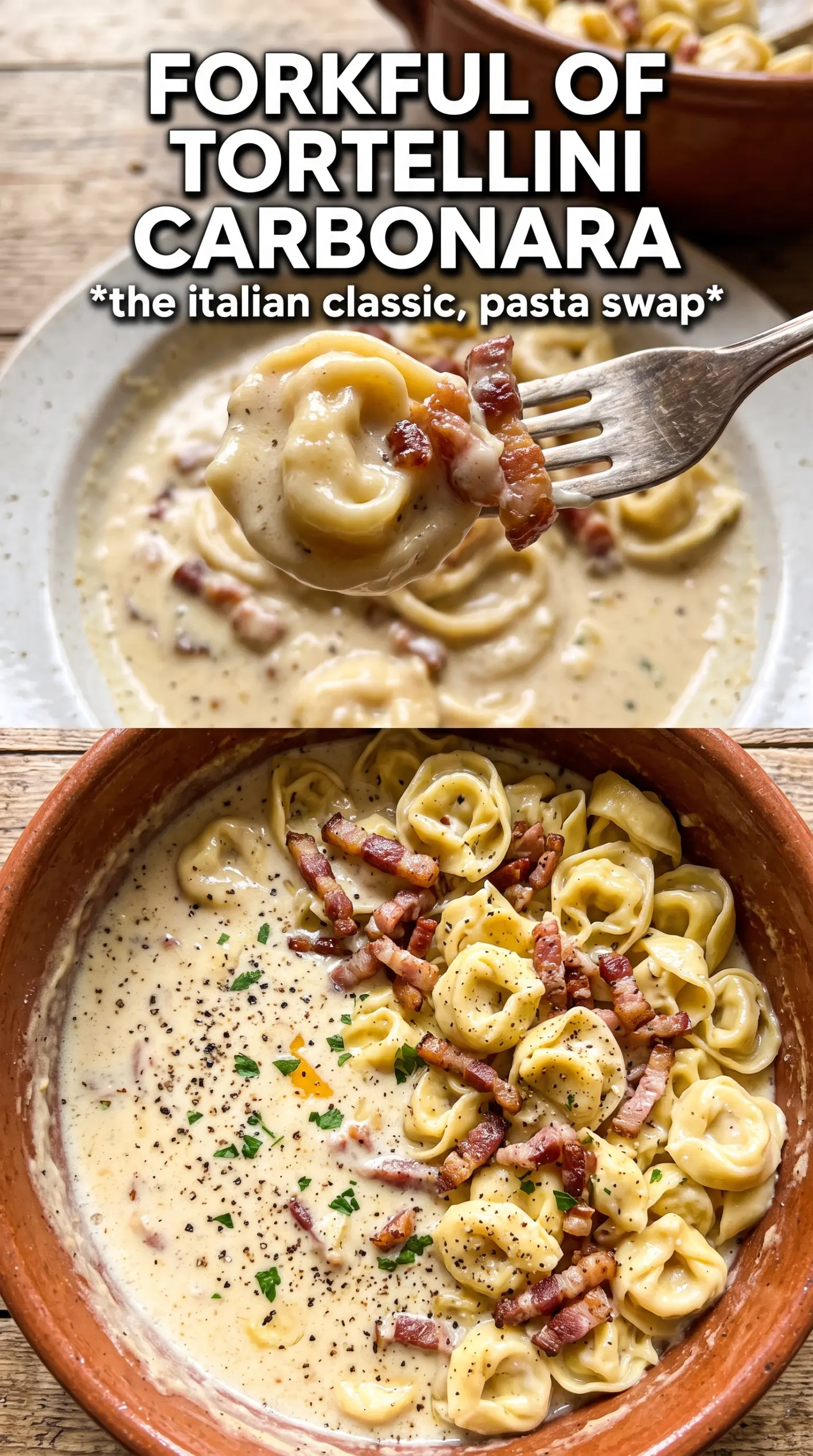
- Refrigerated cheese tortellini — This is the shortcut that makes the dish feel bigger than the effort. Fresh refrigerated tortellini cooks quickly and stays tender, which matters because you need it hot when it hits the sauce. Frozen tortellini works too; just cook it until barely tender so it doesn’t collapse when tossed.
- Pancetta or thick-cut bacon — Pancetta gives the cleanest, most savory flavor, while bacon adds a smokier edge. Either one needs to be rendered until crisp so it can stand up to the creamy sauce. If you use bacon, drain off excess fat so the finished dish doesn’t turn greasy.
- Egg yolks plus one whole egg — The yolks build that classic carbonara body. The whole egg loosens the mixture just enough so the sauce stays fluid instead of turning pasty. Whisk them until completely smooth before they touch the pan.
- Finely grated parmesan — Fine grating matters here because coarse shreds melt slowly and can turn grainy. Use the best parmesan you can buy; this is one place where the cheese does most of the flavor work. Pre-grated shelf cheese can work in a pinch, but it won’t melt as cleanly.
- Nutmeg and black pepper — Nutmeg is quiet but important; it adds warmth that keeps the sauce from tasting flat. Black pepper should be generous enough that you can see it. That’s what makes carbonara taste like carbonara.
How to keep the eggs creamy instead of scrambled
Render the pancetta until the fat runs clear
Cook the pancetta over medium heat until the edges are deep golden and crisp, and the fat in the pan looks mostly rendered. If it browns too fast, turn the heat down; burnt pancetta tastes bitter and the garlic will go with it. Add the garlic at the end and cook just until fragrant, about a minute, because garlic can turn sharp the second it starts to color.
Whisk the sauce before the pasta is ready
Mix the egg yolks, whole egg, parmesan, nutmeg, and black pepper in a bowl before you drain the tortellini. The mixture should look thick, sandy, and a little loose from the cheese. If you wait until the pasta is in the pan to start whisking, the tortellini cools too much and you lose the window where the sauce can turn glossy.
Toss fast and add water in small splashes
Once the tortellini hits the pancetta pan, take the pan off the burner and immediately add the egg mixture while tossing hard. The sauce will look broken for a moment, then it will smooth out as you add pasta water a tablespoon or two at a time. Stop as soon as it looks silky and coats the pasta in a thin sheen; too much water can wash out the parmesan and make the sauce thin instead of creamy.
Finish with pepper and parsley
Taste before you add salt, because pancetta and parmesan can already bring plenty. Add salt only if the bowl needs it, then finish with fresh parsley and more parmesan. The final hit of pepper should be obvious on top, not just hidden inside the sauce.
How to adapt this when you want a lighter bowl or a different finish
Gluten-free version
Use a gluten-free cheese tortellini and keep the rest of the method the same. The key is to cook it just until tender, because gluten-free pasta can soften fast and break apart when tossed with the hot sauce. Check the package for the exact timing and pull it a minute early if it looks fragile.
Dairy-free workaround
This one is harder to fake because parmesan does the heavy lifting, but you can get close with a dairy-free tortellini and a cashew-based parmesan-style topping. The sauce won’t have the same salty bite or melt, so lean harder on black pepper and a little extra pancetta for depth.
Swap pancetta for bacon
Bacon gives the dish a smokier, sweeter edge. Use thick-cut bacon and drain off excess fat if it leaves the pan oily, since too much rendered fat can keep the egg sauce from clinging properly.
Make it meatless
Skip the pancetta and build flavor with a little extra garlic and a good knob of butter in the pan before you add the tortellini. It won’t taste like traditional carbonara, but it still gives you a rich, peppery cheese sauce around the pasta.
Storage and Reheating
- Refrigerator: Store leftovers for up to 3 days. The sauce will tighten as it chills, and the pasta will absorb some of it.
- Freezer: I don’t recommend freezing this dish. Egg-based sauces and stuffed pasta turn grainy and soft after thawing.
- Reheating: Warm it gently in a skillet over low heat with a splash of water or milk, tossing often. High heat will scramble the eggs and make the sauce split, which is the fastest way to ruin the texture.
Questions I Get Asked About This Recipe
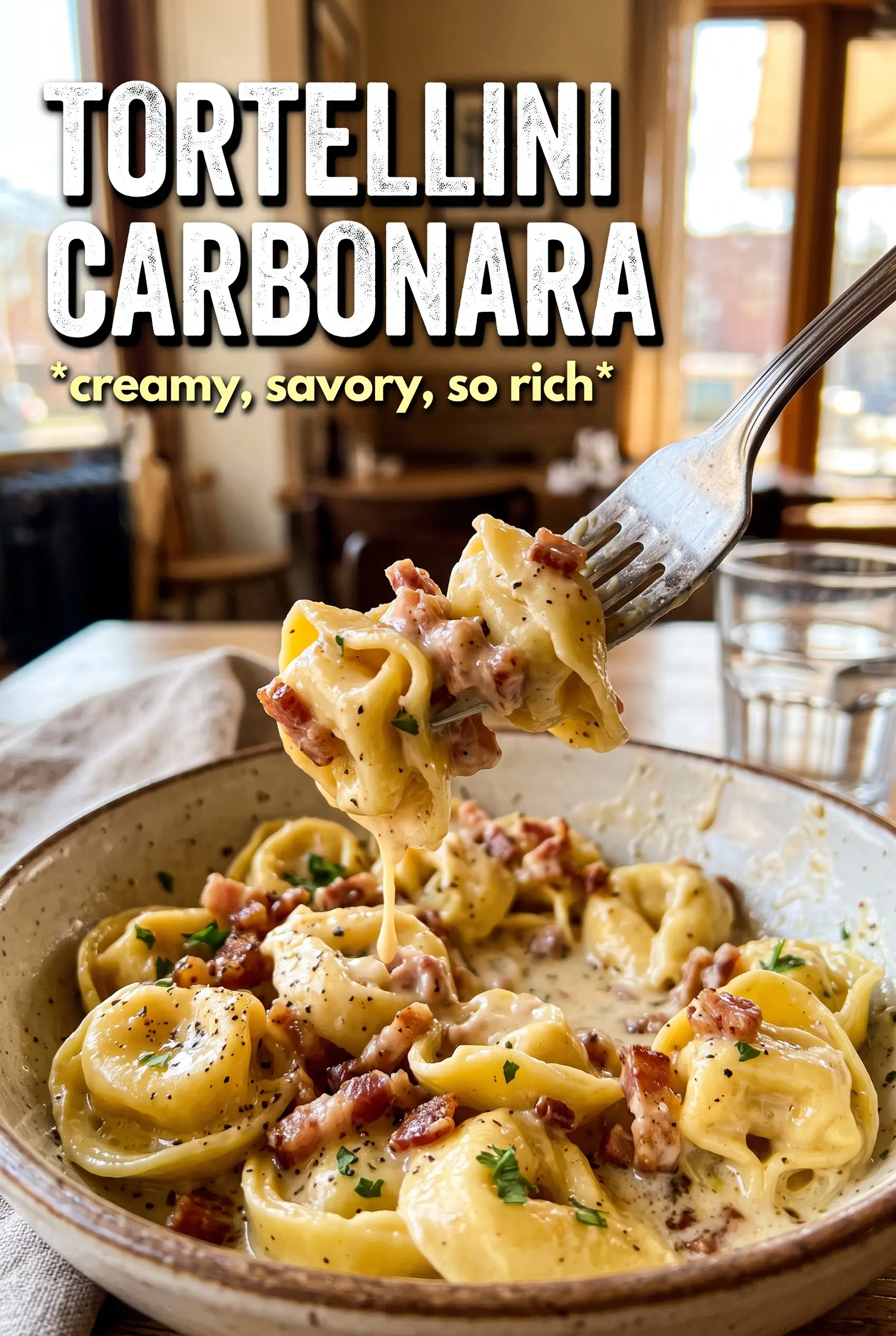
Tortellini Carbonara
Ingredients
Equipment
Method
- Bring a pot of well-salted water to a rolling boil, then cook the refrigerated cheese tortellini for 8–12 minutes until tender. Reserve 1 cup of pasta cooking water, then drain the tortellini.
- In a cast iron skillet over medium heat, cook the diced pancetta until crispy, about 6–10 minutes. Add the minced garlic and cook 1 minute, then remove the pan from the heat.
- Whisk the egg yolks, whole egg, grated parmesan, nutmeg, and lots of freshly cracked black pepper in a bowl until smooth and uniform. Keep the mixture ready for immediate tossing.
- Add the hot tortellini to the pancetta pan off the heat, then quickly pour in the egg mixture. Toss vigorously so the sauce thickens from residual heat.
- While tossing, add pasta water a splash at a time until silky and creamy, 30–60 seconds total. Season with salt to taste, then top with fresh parsley and extra parmesan.