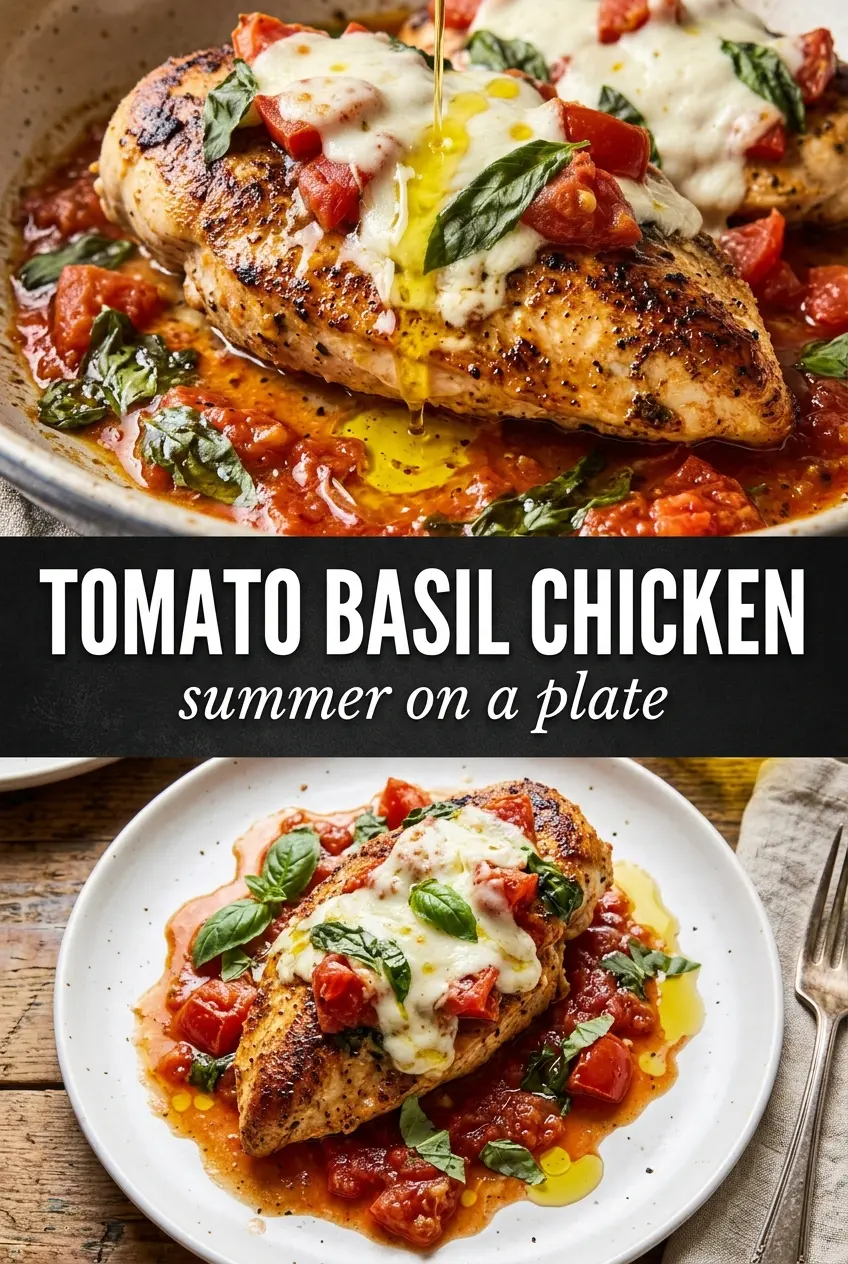
Golden seared chicken breasts tucked into a bright tomato basil sauce are the kind of skillet dinner that disappears fast. The chicken stays juicy, the tomatoes break down just enough to make their own sauce, and the basil at the end keeps everything tasting fresh instead of heavy. It lands in that sweet spot between quick weeknight cooking and something you’d happily serve to company.
The trick here is building the sauce in the same pan you used for the chicken. Those browned bits on the bottom carry a lot of the flavor, and a short simmer with cherry tomatoes, wine, and balsamic turns them into something glossy and spoonable. I also like shaving the Parmesan instead of grating it fine; it melts in soft little ribbons and gives the whole dish a cleaner finish.
Below, you’ll find the timing that keeps the chicken from drying out, the ingredient swaps that still keep the sauce balanced, and a few fixes for the most common skillet mistakes. If you’ve ever had tomato sauce turn flat or watery, this version gives you a better path.
The tomatoes burst down into a real sauce, not just a pile of juices, and the chicken stayed tender even after the quick simmer. I used the white wine, and the pan tasted like a restaurant skillet dinner.
Tomato Basil Chicken Breasts stays bright, juicy, and saucy enough to spoon over pasta, rice, or crusty bread.
The Reason This Chicken Stays Juicy Instead of Getting Tight and Dry
Chicken breasts usually dry out in recipes like this for one of two reasons: they start in a pan that isn’t hot enough, or they simmer too long after the sauce goes in. The sear here matters because it builds color fast before the meat has time to overcook, and the short finish in the sauce is just enough to warm the chicken through without squeezing out the juices.
The other piece that keeps this dish from turning flat is the balance between tomatoes, wine, and balsamic. Cherry tomatoes bring sweetness, the wine adds a little lift, and the balsamic sharpens everything at the end so the sauce tastes finished instead of one-note. If your skillet sauce ever tastes dull, it usually needs either salt or acid — not more herbs.
What Each Ingredient Is Actually Doing in the Skillet
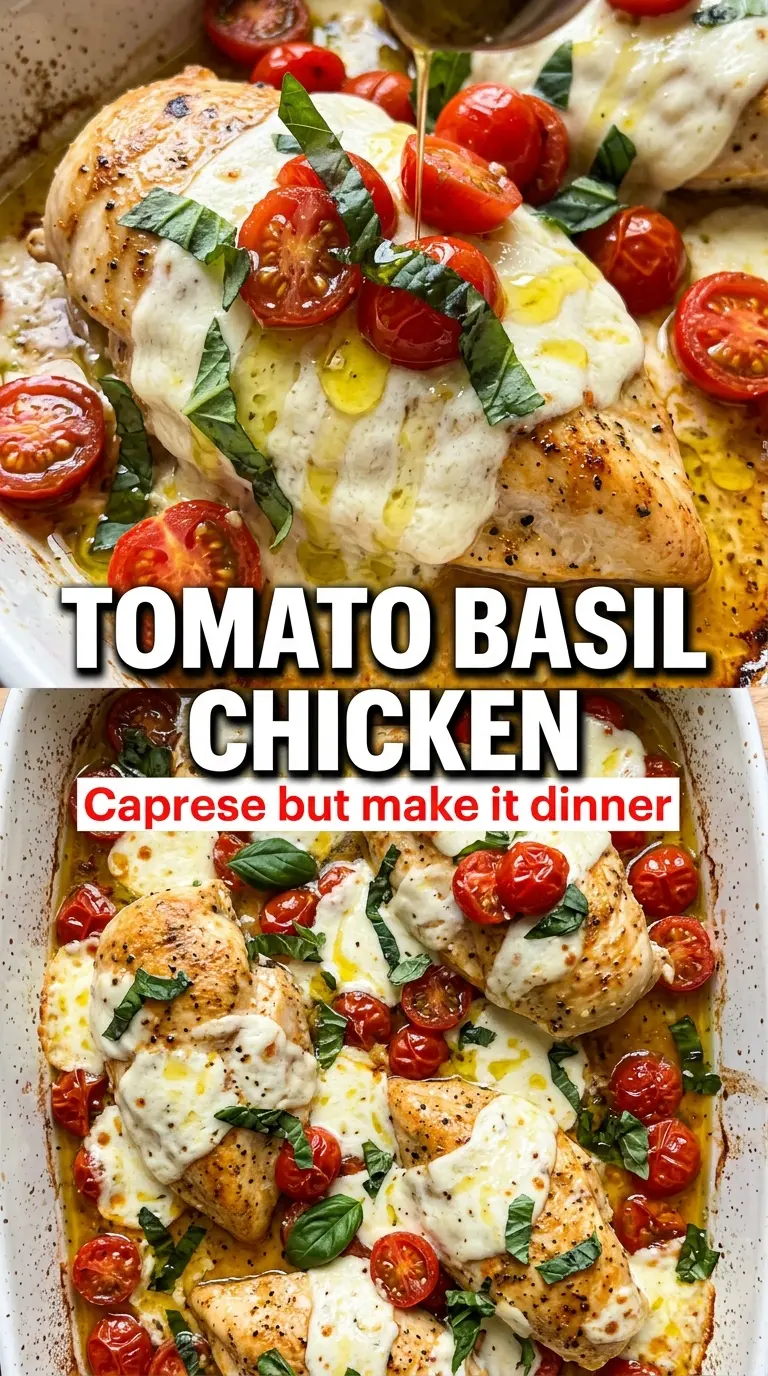
- Chicken breasts — Use even-sized pieces if you can. If one side is much thicker, pound it lightly so the chicken finishes at the same time and doesn’t need extra simmering.
- Cherry tomatoes — These are worth using here because they burst into a sweeter, silkier sauce than chopped regular tomatoes. If you only have larger tomatoes, dice them small and cook a minute longer so they soften properly.
- Dry white wine or chicken broth — Wine gives the sauce more depth and a little edge, but broth still works if that’s what you have. Choose a broth you’d drink on its own, since a salty, thin one will leave the pan sauce flat.
- Fresh basil — Add it at the end only. Basil loses its bright aroma fast in high heat, so stirring it in after the pan comes off the strongest heat keeps the flavor fresh.
- Balsamic vinegar — This is the ingredient that pulls the tomatoes into focus. Don’t skip it unless you replace it with another acid, because without that last sharp note the sauce can taste soft and unfinished.
- Parmesan — Shaved Parmesan gives a cleaner, less heavy finish than a thick blanket of grated cheese. If you use pre-grated Parmesan, add it off the heat so it doesn’t clump into the sauce.
Building the Sauce in the Same Pan Without Losing the Browning
Searing the Chicken Fast and Even
Season the chicken well before it hits the pan, then sear it in hot olive oil until you get a deep golden crust, about 5 to 6 minutes per side depending on thickness. If the pan is crowded or too cool, the chicken will steam and turn pale instead of browning. Pull it once it reaches 165°F, then let it rest on a plate while you build the sauce.
Waking Up the Tomatoes
Cook the garlic for just 30 seconds, long enough for it to smell fragrant but not long enough to brown. Add the halved cherry tomatoes and give them time to blister and collapse; that’s when they start releasing the juices that become the base of the sauce. If the tomatoes look dry, the heat is too low or the pan is too crowded.
Finishing With Acid and Herbs
Pour in the wine and let it bubble for a minute so the harsh alcohol cooks off and the pan starts to look glossy. Stir in the Italian seasoning, red pepper flakes, and balsamic, then return the chicken and spoon the sauce over the top for a short simmer. Finish with basil and Parmesan at the very end so the herbs stay bright and the cheese softens into the sauce instead of disappearing into it.
Three Ways to Work This Into Your Routine
Dairy-Free Finish
Skip the Parmesan and finish with a little extra olive oil plus a pinch more salt. You lose the salty, savory edge from the cheese, but the sauce stays bright and the tomato-basil flavor comes through cleanly.
Gluten-Free by Default
This recipe is already gluten-free as written, as long as your broth is certified gluten-free. It’s one of those dinners that doesn’t need a special conversion because the sauce is built from tomatoes, wine, and herbs instead of flour.
Make It a Little Richer
Add a tablespoon of butter at the very end if you want the sauce to feel silkier and a touch rounder. That gives you a more luxurious pan sauce, but it softens the bright edge a bit, so use it when you want comfort over sharpness.
Storage and Reheating
- Refrigerator: Store in an airtight container for up to 3 days. The sauce will thicken a bit and the basil will darken, but the flavor holds up well.
- Freezer: Freeze the chicken and sauce without the fresh basil or Parmesan for up to 2 months. Thaw overnight in the fridge so the chicken reheats evenly and doesn’t turn rubbery.
- Reheating: Warm gently in a covered skillet over low heat with a splash of broth or water. High heat dries out the chicken fast, and microwaving too long can make the tomatoes split into an odd, watery sauce.