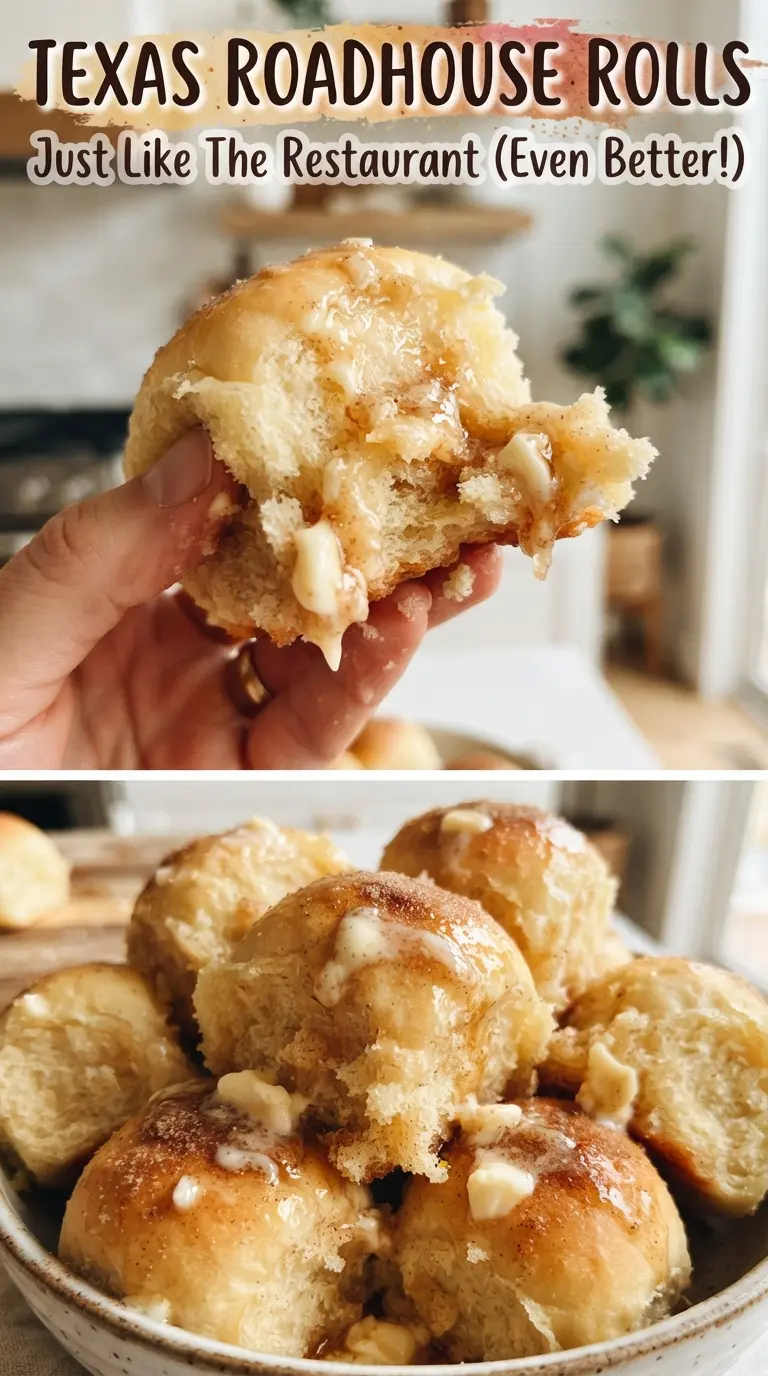
Texas Roadhouse rolls come out soft enough to pull apart in wispy layers, with a lightly sweet crumb and a buttery top that soaks up cinnamon honey butter without turning soggy. The texture is the whole draw here: pillowy inside, tender outside, and just sturdy enough to split open while still warm.
What makes this version work is the balance of enriched dough and a patient rise. Warm milk feeds the yeast gently and helps create a softer crumb than water alone, while the melted butter and egg add richness without making the dough heavy. Cutting the rolled dough into squares instead of shaping tight rolls keeps the edges tender and gives you that classic bakery-style pull-apart feel.
Below, I’ve included the small details that matter most, from what the dough should look like after kneading to how the cinnamon honey butter gets that fluffy, spreadable texture. If you’ve ever had rolls turn out dense or dry, the fix is usually in the rise and the bake, not the ingredients list.
The rolls were unbelievably soft, and the cinnamon honey butter whipped up so light that it melted right into the warm centers. I baked them until just golden and they tasted just like the restaurant.
Save these Texas Roadhouse rolls for the softest homemade dinner rolls with that cinnamon honey butter finish.
The Detail That Keeps These Rolls Soft Instead of Dense
The biggest mistake with rolls like these is adding too much flour too soon. The dough should feel soft and slightly tacky after kneading, not dry and stiff. If it feels firm in the bowl, the finished rolls will bake up tight instead of airy.
The second detail that matters is the double rise. The first rise develops flavor and structure; the second gives the cut squares time to puff before they hit the oven. Skip that second rise and you’ll get something closer to dinner biscuits than the cloudlike rolls people expect from this recipe.
What the Butter, Honey, and Flour Are Doing Here
- Whole milk — Warm milk gives the dough richness and helps the yeast wake up gently. Keep it around 110F; if it gets too hot, it can kill the yeast and the dough won’t rise properly.
- Active dry yeast — This is what gives the rolls their lift and that airy crumb. If it doesn’t foam in the first few minutes, start over with fresh yeast instead of hoping it’ll recover later.
- Butter — Melted butter goes into the dough for tenderness, and softened butter gets whipped into the honey cinnamon spread for that light, fluffy finish. Use good butter if you can, since it’s one of the main flavors here.
- All-purpose flour — This gives the rolls enough structure to hold their shape while still staying soft. Add it gradually; the exact amount can shift a little based on humidity and how you measure.
- Powdered sugar and honey — These turn the spread into something smooth and airy, not gritty. Granulated sugar won’t whip the same way, and the texture won’t be as close to the restaurant version.
Building the Dough, Shaping the Squares, and Baking to a Light Gold
Waking up the yeast
Stir the warm milk, water, yeast, and a spoonful of sugar together, then leave it alone for about 5 minutes. You’re looking for a foamy surface and a smell that turns bready and alive. If it stays flat, the yeast is weak or the liquid was too hot or too cool, and the dough won’t rise the way it should.
Mixing until soft and smooth
Add the remaining sugar, egg, melted butter, salt, and flour, then knead until the dough turns smooth and elastic, about 8 minutes. It should clear the sides of the bowl but still feel soft to the touch. If it’s stiff, you’ve gone too far with the flour; the rolls will bake up heavy instead of tender.
Letting the dough double
Cover the bowl and let the dough rise until doubled in size, about an hour. The dough should look puffy and hold a gentle fingerprint when touched. A cold room can slow this down, so trust the look of the dough more than the clock.
Shaping for that square roll look
Roll the dough into a half-inch thick rectangle, fold it in half, and cut it into squares. That fold creates a little extra softness in the middle, and the square shape keeps the rolls from becoming overly tight and round. Place them close enough to encourage rise, but not so close that they smear together before baking.
Baking and brushing at the end
Let the cut rolls rise again until puffy, then bake at 350F until the tops are lightly golden, 12 to 15 minutes. Pull them before they get deep brown; overbaking dries out the crumb fast. Brush with melted butter as soon as they come out so the tops stay soft and glossy.
Whipping the cinnamon honey butter
Beat the softened butter, powdered sugar, honey, and cinnamon until pale and fluffy. The mixture should spread easily and hold soft swirls. If the butter is cold, it stays dense and won’t whip properly, so let it sit out long enough to lose the chill before you start.
How to Adapt These Rolls Without Losing the Soft Texture
Make them ahead for a holiday table
Shape the rolls, cover the pan tightly, and refrigerate them overnight after the second rise starts. The cold slows the yeast without stopping it, so the rolls finish puffing while the oven preheats. Bake them straight from the fridge, but give them a few extra minutes if they still look slightly underproofed.
Dairy-free rolls
Swap the milk for an unsweetened non-dairy milk and use a plant-based butter that bakes well. The rolls will still be soft, though the flavor loses a little of that classic dairy richness. Keep the cinnamon honey butter dairy-free too, and whip it the same way so it stays light.
Lower sweetness version
Cut the sugar in the dough a little if you want a less sweet roll, but don’t remove it completely. Sugar feeds the yeast and helps the crust brown, so taking it all out changes both the rise and the color. Keep the honey butter as written if you still want the signature restaurant-style finish.
Storage and Reheating
- Refrigerator: Store baked rolls in an airtight container for up to 3 days. They’ll firm up a little in the fridge, but they stay soft once warmed.
- Freezer: Freeze the baked rolls for up to 2 months, tightly wrapped and sealed in a freezer bag. You can also freeze the shaped dough before the second rise, then thaw overnight in the fridge before baking.
- Reheating: Warm rolls in a low oven, wrapped loosely in foil, until just heated through. High heat dries them out fast, so don’t blast them uncovered in the microwave unless you don’t mind a chewy edge.
Questions I Get Asked About This Recipe

Texas Roadhouse Rolls
Ingredients
Equipment
Method
- Combine warmed whole milk, warm water, active dry yeast, and 1 tablespoon of the sugar, then let stand 5 minutes at room temperature until foamy with a creamy surface.
- Add the remaining sugar, large egg, melted butter, salt, and all-purpose flour, then knead 8 minutes until soft and smooth, with the dough pulling together and looking elastic.
- Cover the dough and let rise 1 hour until doubled, until it looks puffy and has expanded noticeably.
- Roll the dough into a 1/2-inch thick rectangle, fold it in half, and cut into 2-inch squares, keeping edges neat so the squares rise evenly.
- Place the squares on a parchment-lined sheet, cover, and rise 1 hour until puffy, filling out the spaces between rolls.
- Preheat the oven to 350F, then bake 12-15 minutes until golden, with the tops turning lightly brown and the centers springy.
- Brush the hot rolls with melted butter right after baking so it melts into the surface and creates a glossy finish.
- Whip softened butter, powdered sugar, honey, and ground cinnamon until fluffy, with the mixture looking pale, thick, and spreadable.
- Serve the rolls warm with the cinnamon honey butter so it melts slightly into the fluffy centers.