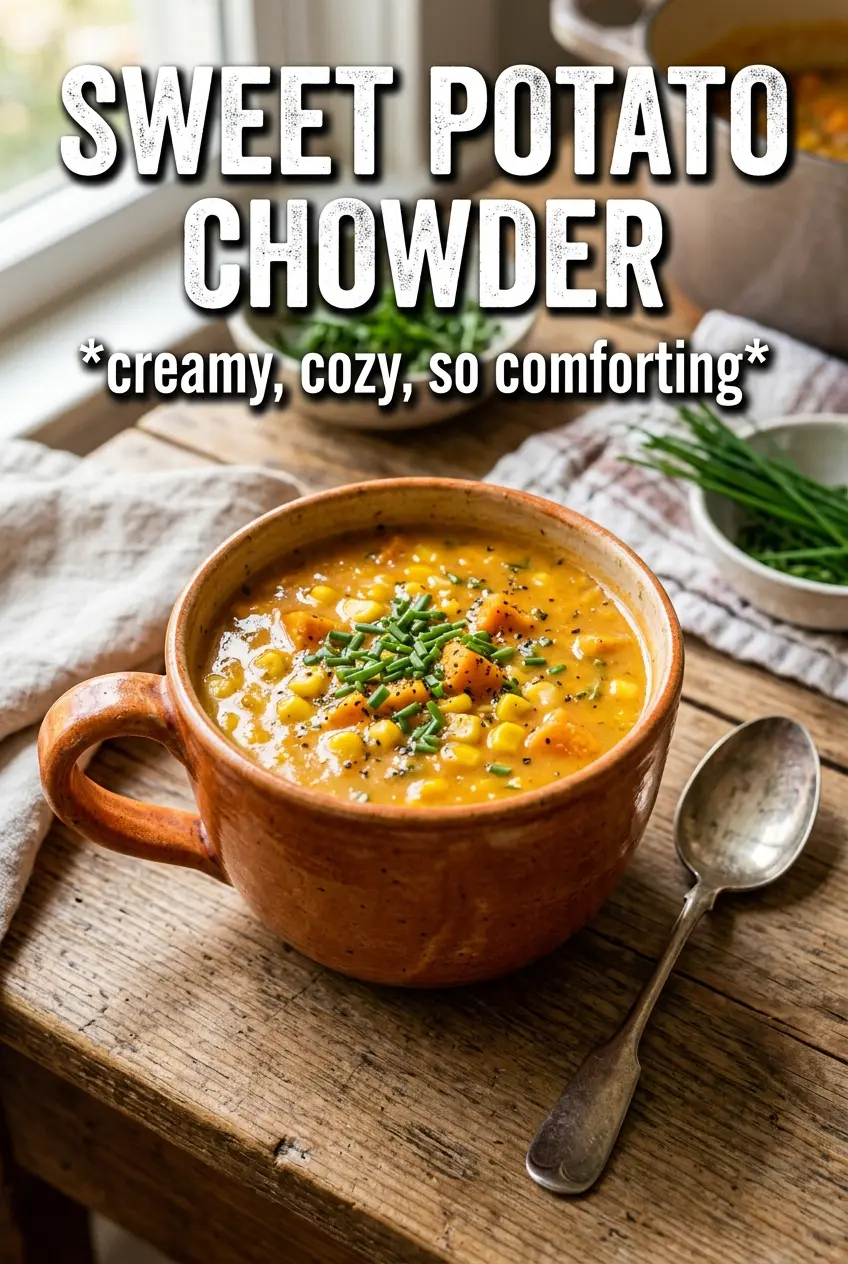
Sweet potato chowder lands in that sweet spot between comforting and bright. It’s thick without feeling heavy, creamy without turning bland, and full of little bites of sweet potato, corn, and bell pepper that keep every spoonful interesting. The bacon adds a smoky backbone, and the lime at the end wakes everything up instead of letting the bowl taste flat.
What makes this version work is the way it builds texture in layers. Half the sweet potatoes stay chunky while the rest get mashed right in the pot, which gives you body without needing flour. The spices bloom in the bacon fat before the broth goes in, so the chowder tastes round and savory instead of just sweet and creamy.
Below you’ll find the small details that matter most: when to mash for the best texture, how to keep the cream from dulling the flavor, and a few smart swaps if you need to make it dairy-free or skip the bacon.
The sweet potatoes broke down just enough to thicken the chowder, but it still had plenty of texture. I added the lime at the end like you said and it made the corn and smoked paprika pop.
Like this sweet potato chowder? Save it to Pinterest for a smoky, creamy bowl that finishes with lime and chives.
The Trick to Keeping Sweet Potato Chowder Thick Without Turning It Gloppy
Sweet potatoes can go from silky to pasty fast if you puree them hard. The better move is to cook them until a knife slips in easily, then mash only part of the pot. That gives you a creamy base with enough intact cubes to remind you this is chowder, not soup.
The other place people run into trouble is heat. Once the cream goes in, keep the pot at a gentle simmer, not a rolling boil. Hard boiling can make the dairy taste flat and can thin out the texture you just built.
- Mashing half the potatoes — this thickens the broth naturally and keeps the chowder from needing flour or cornstarch.
- Smoked paprika and chipotle powder — these give depth and a little heat, which keeps the sweet potato from tasting one-note.
- Limiting the final boil — the cream stays smoother and the corn keeps a fresher bite.
What Each Ingredient Is Actually Doing in This Bowl

- Sweet potatoes — these are the body of the chowder. Choose firm potatoes with smooth skin; older, dry ones can turn stringy instead of creamy.
- Bacon — the rendered fat starts the whole pot with savory depth. If you skip it, use butter or olive oil, but you’ll lose some of the smoky base.
- Red bell pepper and corn — they bring sweetness and color, and they keep the chowder from tasting heavy. Frozen corn works beautifully here; canned is fine if you drain it well.
- Heavy cream or coconut cream — cream gives the richest finish, while coconut cream makes a dairy-free version that still feels lush. Use full-fat coconut cream, not thin coconut milk, or the chowder can taste watery.
- Smoked paprika, cumin, and chipotle powder — this trio turns the pot from sweet to savory. Chipotle is the one to adjust first if you want less heat.
- Lime wedges — they matter more than they sound like they should. A squeeze at the end sharpens the sweetness and makes the whole bowl taste more alive.
Building the Flavor Before the Cream Goes In
Crisping the Bacon First
Cook the bacon in a large pot until the pieces are crisp and the fat has rendered out. Pull the bacon out and leave the fat behind. That fat carries the onion, pepper, and spices better than any added oil, and it gives the chowder its first layer of smoke. If the bacon starts to burn instead of browning, lower the heat right away — burnt fat will make the whole pot taste bitter.
Softening the Vegetables
Add the onion and bell pepper to the bacon fat and cook until the onion turns translucent and the pepper loses its raw edge. Stir in the garlic for just a minute; longer than that and it can turn sharp. You want the vegetables soft enough to melt into the broth later, but not browned hard, which can make the chowder taste stewy instead of fresh.
Waking Up the Spices
Stir in the smoked paprika, cumin, and chipotle powder and let them cook for about a minute. You’ll smell the difference right away: the spices go from dusty to fragrant. This step is where the bowl gets depth, and it only works if the pan isn’t dry or scorching hot. If the spices cling to the bottom, add the broth quickly so they don’t burn.
Simmering the Sweet Potatoes
Add the broth and sweet potatoes, bring everything to a boil, then drop it to a steady simmer until the potatoes are tender. They should yield easily when pierced, but not collapse completely. If you cook them until they’re falling apart before you mash, the texture can go muddy. This is the point where the chowder starts to thicken naturally, so don’t rush it.
Finishing with Cream, Corn, and Lime
Mash about half the potatoes right in the pot, then stir in the cream and corn. Let it simmer gently for five minutes so the corn warms through and the broth turns velvety. Taste before serving and adjust the salt, pepper, and lime. The lime belongs at the very end; if you cook it too long, the brightness disappears and the chowder tastes flatter than it should.
How to Adapt This Sweet Potato Chowder Without Losing the Good Part
Dairy-Free Version with Coconut Cream
Swap the heavy cream for full-fat coconut cream. It keeps the chowder rich and silky, but you’ll get a faint coconut note that works well with the sweet potato and corn. If you want the flavor to stay more savory, add the lime at the end and don’t skip the smoked paprika.
Vegetarian Version with Olive Oil Instead of Bacon
Leave out the bacon and sauté the vegetables in olive oil or butter. The chowder will still be hearty, but it loses the smoky edge, so use the full amount of smoked paprika and consider an extra pinch of chipotle. A tiny drizzle of smoked olive oil at serving can help bring back some of that savory depth.
Thicker Chowder for a Bigger Crowd
Mash a little more than half the sweet potatoes if you want a spoon standing-up texture, or simmer uncovered for a few extra minutes before adding the cream. That concentrates the broth and makes the chowder feel denser. Don’t overdo it after the cream goes in, or it can turn too thick and lose its silky finish.
Storage and Reheating
- Refrigerator: Store in an airtight container for up to 4 days. It thickens as it sits, so expect a denser texture the next day.
- Freezer: This freezes, but the cream can separate a little. If you want to freeze it, do so before adding the cream, then stir the cream in after reheating.
- Reheating: Warm it slowly over low heat, stirring often. A hard boil can make the dairy grainy and can break the texture you worked to build.