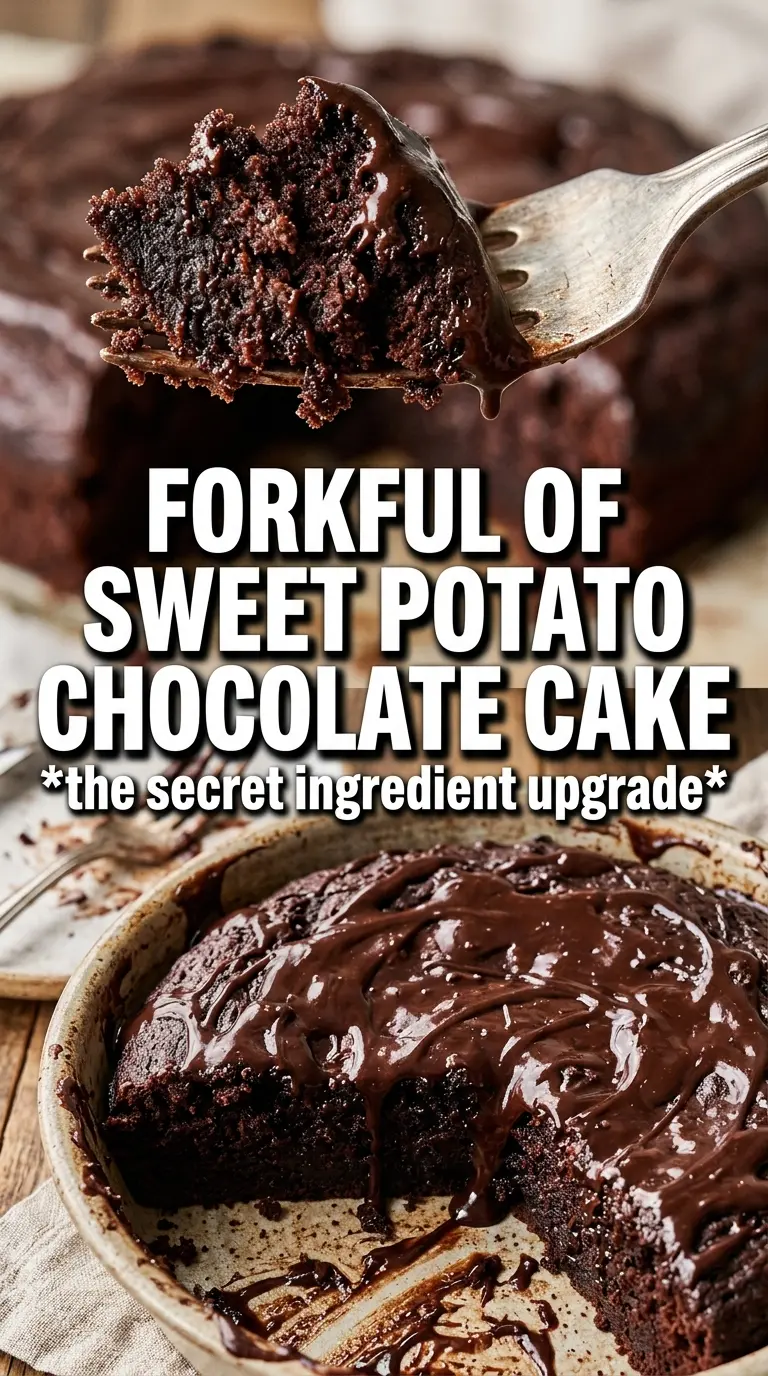
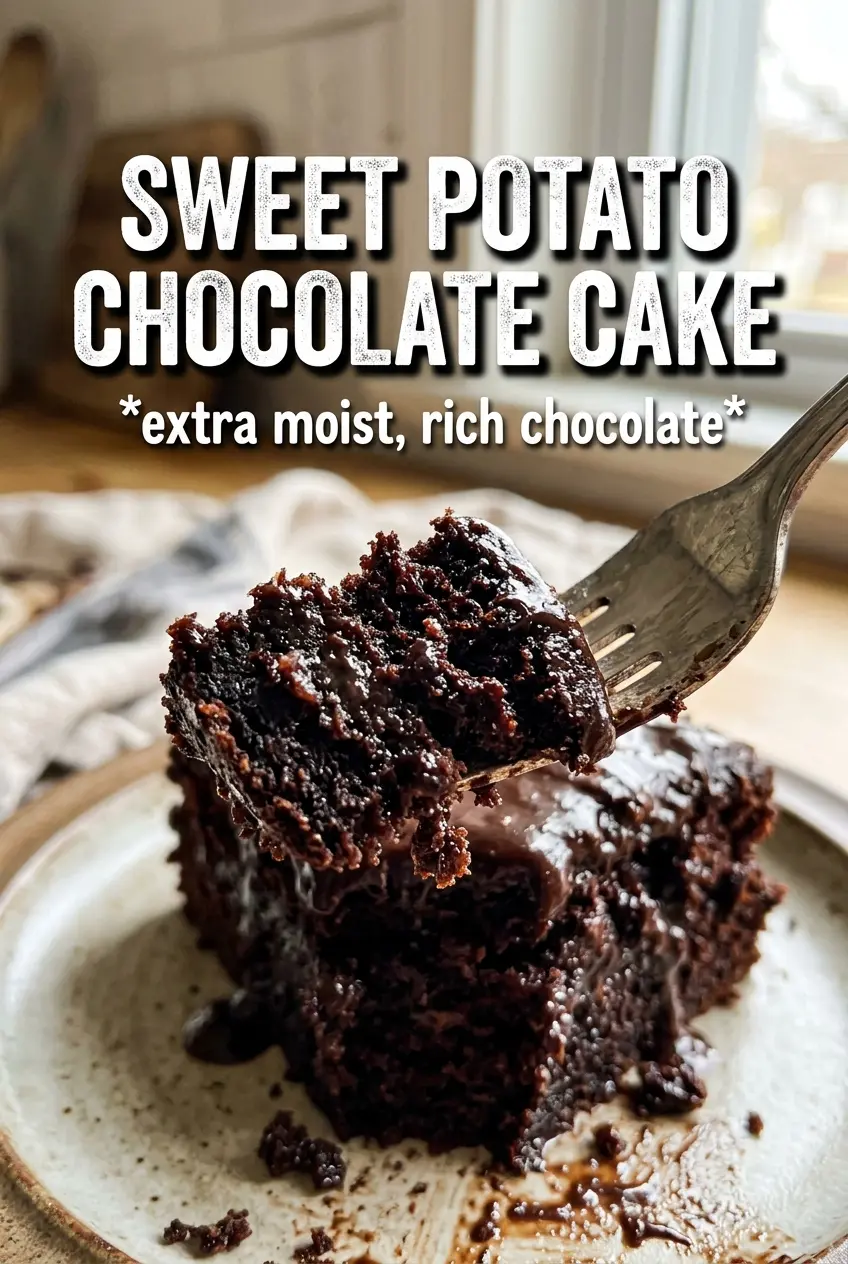
Sweet potato chocolate cake bakes up with a deep, fudgy crumb and a softness that holds together cleanly when sliced. The sweet potato doesn’t make it taste like dessert disguised as vegetables; it makes the chocolate fuller, the texture moister, and the layers stay tender for days instead of drying out by the next afternoon. Paired with a dark chocolate ganache frosting, the whole cake lands rich without feeling heavy.
What makes this version work is the balance. Cocoa brings the bitterness, cinnamon adds warmth in the background, and sweet potato puree adds body without thinning the batter. The buttermilk keeps the crumb soft and gives the baking soda something to react with, so the cake rises evenly instead of baking up dense at the center. The ganache needs a little patience as it cools, but that waiting time is what turns it from a glaze into a spreadable frosting that clings to the layers.
Below you’ll find the details that matter most: how to keep the cake from turning dry, when the ganache is ready to frost, and the simplest swaps if you need to work with what you’ve got on hand.
The cake stayed unbelievably moist for three days, and the ganache thickened up into this smooth frosting that spread like a dream. The sweet potato made the chocolate taste even richer.
Save this sweet potato chocolate cake for the days when you want a moist chocolate layer cake with a silky ganache finish.
The Secret to Keeping This Cake Fudgy Instead of Dry
The biggest mistake with chocolate layer cakes is overbaking. Once the center has set and a toothpick comes out with a few moist crumbs, pull the pans. Sweet potato gives you extra insurance here because it holds moisture, but it won’t rescue a cake left in the oven too long. If the cake looks slightly domed and the edges are just starting to pull from the pan, that’s the right moment.
Another place this cake can go wrong is in the mixing. Once the dry ingredients go in, stop as soon as the batter looks smooth and no streaks of flour remain. Overmixing builds structure you don’t want, and with cocoa in the batter, that usually turns into a tighter, less tender crumb. This cake should slice cleanly, but it shouldn’t eat like a brick.
What Each Ingredient Is Actually Doing in the Batter
- Sweet potato puree — This is what keeps the crumb plush and moist. Use smooth puree, not chunky mashed sweet potato, or you’ll get little pockets in the batter. Canned puree works if it’s plain sweet potato with no added sugar or spice.
- Buttermilk — It softens the crumb and reacts with the baking soda for lift. If you don’t have it, mix 1 cup milk with 1 tablespoon lemon juice or vinegar and let it sit 5 minutes, but the flavor and texture will be a little less tangy and tender.
- Cocoa powder — This is the backbone of the cake’s chocolate flavor, so use a cocoa you actually like to taste. Natural cocoa is a better fit here because the baking soda helps it rise.
- Dark chocolate chips — These form the ganache frosting, so better chocolate makes a noticeable difference. If the chips are very sweet, the frosting will taste flatter; a bittersweet chip gives you more contrast against the cake.
- Butter in the frosting — It adds gloss and helps the ganache beat into something spreadable instead of stiff and brittle. Don’t skip the cooling time before beating it, or the frosting will stay thin and slide off the cake.
Building the Batter and Frosting at the Right Temperature
Mixing the Wet Ingredients
Start by beating the butter and sugar until the mixture looks pale and fluffy. That step traps air, which gives the cake a little lift before the baking soda even gets to work. Add the eggs one at a time so the batter stays smooth, then mix in the sweet potato puree, buttermilk, and vanilla until everything looks evenly blended. If the mixture looks slightly curdled after the buttermilk goes in, don’t panic; the flour will pull it back together.
Bringing the Batter Together
Whisk the dry ingredients separately so the cocoa and leavening are evenly distributed, then fold them into the wet mixture just until combined. The batter will be thick and dark. Divide it evenly between the pans so the layers bake at the same rate; uneven batter usually means one layer overbakes while the other is still catching up. Give the pans a gentle tap on the counter to release big air pockets, not to flatten the batter.
Turning Cream and Chocolate Into Frosting
Heat the cream until it’s steaming and just beginning to show tiny bubbles around the edge, then pour it over the chocolate chips and butter. Let it sit untouched for 2 minutes so the heat can melt the chocolate evenly, then stir from the center outward until the mixture turns glossy and smooth. If you stir too soon, you’ll leave little unmelted bits behind. Let it cool until thick but still pliable before beating in the powdered sugar and vanilla; if it’s warm, the frosting will be runny instead of spreadable.
Dairy-Free Version
Swap the butter for a good plant-based baking stick, the buttermilk for unsweetened non-dairy milk plus 1 tablespoon lemon juice, and the cream for full-fat coconut cream in the frosting. The cake still bakes up moist, but the frosting will taste faintly coconut unless you use a very neutral dairy-free cream substitute.
Gluten-Free Swaps
Use a 1:1 gluten-free baking flour blend with xanthan gum already included. The cake will still be tender, but it may need a few extra minutes in the oven and should cool completely before frosting so the layers don’t crumble.
Make It a Little More Chocolate-Forward
Add 1 to 2 teaspoons espresso powder to the dry ingredients. It won’t make the cake taste like coffee; it sharpens the cocoa and makes the chocolate layer taste deeper and less sweet.
Storage and Reheating
- Refrigerator: Store covered for up to 5 days. The frosting will firm up, but the crumb stays moist.
- Freezer: Freeze the unfrosted layers tightly wrapped for up to 2 months, or freeze individual frosted slices on a tray before wrapping. Thaw in the refrigerator so the ganache doesn’t sweat.
- Reheating: Let slices sit at room temperature for 20 to 30 minutes before serving. Microwaving softens the frosting too much and can make the cake taste gummy.
Questions I Get Asked About This Recipe
Sweet Potato Chocolate Cake
Ingredients
Equipment
Method
- Preheat oven to 350F, then grease two 9-inch round pans. Keep the pans ready so the batter goes in right after mixing.
- Beat butter and sugar until smooth and well combined. Scrape the sides as needed for even creaming.
- Add eggs one at a time, then mix in sweet potato puree, buttermilk, and vanilla. Stop when the batter looks uniform and glossy.
- Fold in flour, cocoa powder, baking powder, baking soda, cinnamon, and salt until no dry streaks remain. The batter should be thick and cohesive.
- Divide the batter evenly between the two prepared pans. Tap each pan gently to level the batter.
- Bake at 350F for 35-40 minutes until a toothpick in the center comes out clean or with a few moist crumbs. The tops should spring back lightly when pressed.
- Cool the cakes completely in the pans, then remove and prepare for frosting. Letting them cool fully prevents ganache from melting off.
- Heat heavy cream until steaming but not boiling, then pour it over dark chocolate chips and unsalted butter. Make sure the chocolate is mostly submerged for even melting.
- Rest the mixture for 2 minutes, then stir until smooth. The ganache should look shiny and fully emulsified.
- Cool the ganache until spreadable, then beat in powdered sugar and vanilla until fluffy. Stop when it holds softer peaks suitable for layering.
- Frost between the layers and spread ganache frosting all over the cake. Use an offset spatula to smooth the sides and create clean edges.