Sweet Alabama pecan bread bakes up with a tender, buttery crumb and a crackly brown sugar top that gives way to toasted pecans in every slice. It’s the kind of loaf that works just as well at breakfast with coffee as it does after dinner with a drizzle of caramel, and the texture is what keeps people coming back for another piece.
What makes this version work is the balance between buttermilk, brown sugar, and butter. Buttermilk keeps the crumb soft and a little tangy, while the brown sugar brings moisture and a deeper caramel note than white sugar ever could. Toasted pecans matter here, too, because they hold onto their crunch instead of fading into the batter.
Below, I’ve included the small details that keep the loaf from turning dense or dry, plus a few smart swaps if you need them. The topping is worth paying attention to, because that thin layer of brown sugar and pecans is what gives each slice its signature finish.
The top baked into this gorgeous crackly layer and the loaf stayed unbelievably moist for days. I toasted the pecans first like you suggested, and that made the whole bread taste deeper and more buttery.
Save this Sweet Alabama Pecan Bread for the loaf with the crackly brown sugar top and buttery pecan crumb.
The Trick to Keeping This Loaf Tender Instead of Dense
The biggest mistake with pecan bread is overmixing once the flour goes in. That’s how you end up with a tight, heavy loaf instead of a soft crumb that slices cleanly. This batter should look just combined, with no dry flour streaks, but it doesn’t need to be perfectly smooth.
The other place people lose texture is in the butter-and-sugar step. Beat them until the mixture looks lighter in color and a little fluffy; that gives the loaf air before the flour ever hits the bowl. If the butter is too cold, the sugar won’t aerate it properly, and the bread will bake up more compact than it should.
What Each Ingredient Is Actually Doing in the Batter
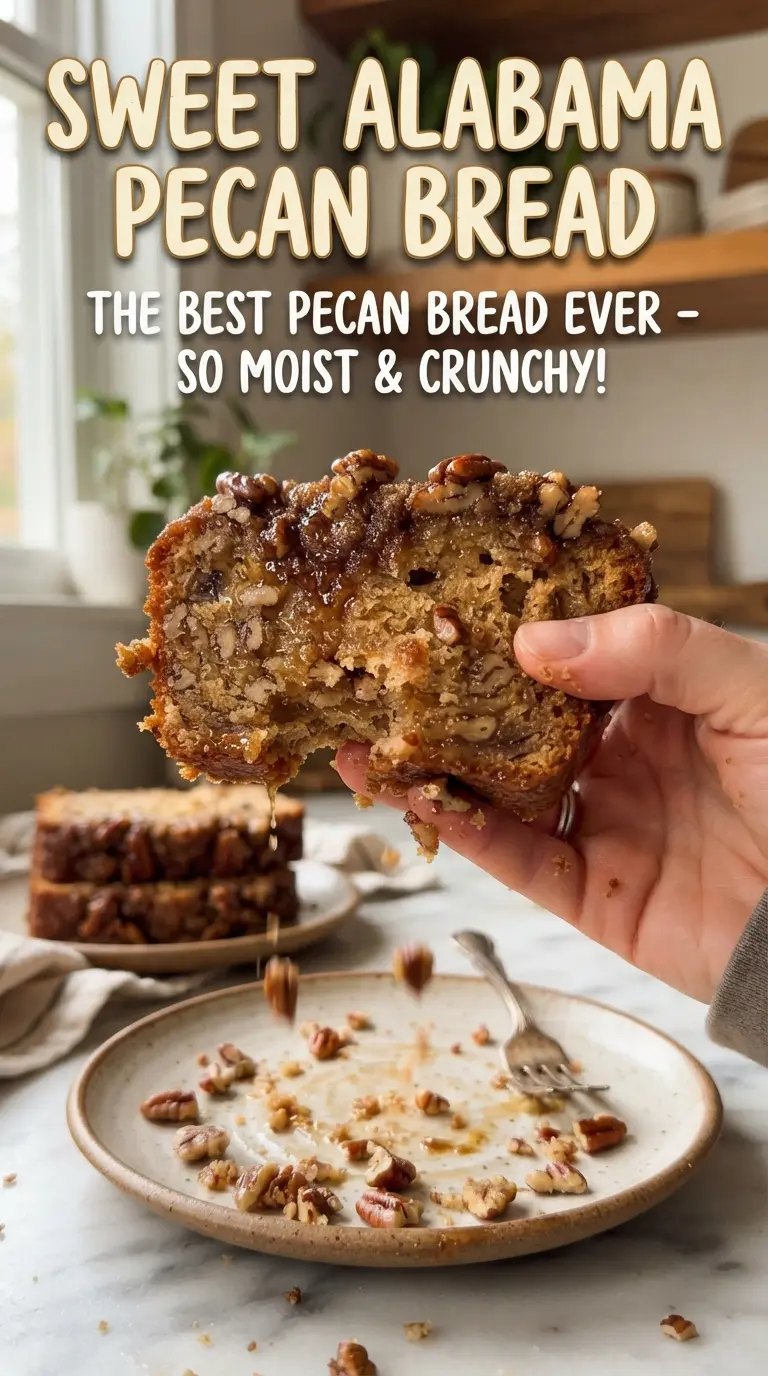
- All-purpose flour — This gives the loaf its structure without making it bready. A lower-protein flour keeps the crumb tender, so don’t swap in bread flour unless you want a chewier result.
- Butter — Butter carries the flavor and helps the loaf feel rich instead of plain. It needs to be softened, not melted; melted butter won’t trap air with the sugar.
- Brown sugar — This is doing more than sweetening the batter. It adds moisture, a soft caramel note, and the darker color that makes the loaf taste deeper than a standard quick bread.
- Buttermilk — The acidity helps the baking soda do its job, and it also keeps the crumb soft. If you don’t have it, use milk mixed with a tablespoon of lemon juice or vinegar and let it sit for a few minutes before using.
- Pecans — Toasting them first is worth the extra few minutes because it wakes up their oil and gives the bread a stronger, nuttier flavor. Add half into the batter and save the rest for the top so you get texture in every slice.
- Cinnamon — It’s not there to turn this into spice bread. It rounds out the brown sugar and pecan flavor without taking over.
Building the Batter Without Losing the Texture
Whisking the Dry Ingredients First
Start by whisking the flour, baking powder, baking soda, salt, and cinnamon together until the color looks even. That takes the pressure off later mixing and keeps the leaveners from clumping in one bite. If you skip this, you can end up with uneven rise or a pocket of baking soda flavor in the finished loaf.
Beating the Butter and Brown Sugar
Beat the softened butter and brown sugar until the mixture looks fluffy and a shade lighter. This is where the loaf gets its lift and fine crumb, so don’t rush it. Add the eggs one at a time so the batter stays smooth instead of curdling, then stir in the vanilla.
Alternating the Flour and Buttermilk
Add the dry ingredients and buttermilk in alternating additions, beginning and ending with the dry mixture. That keeps the batter emulsified and prevents the flour from lumping up into a paste. Stop mixing as soon as the last streaks disappear; if the batter starts looking stretchy or glossy, you’ve gone too far.
Finishing with Pecans and the Topping
Fold in the chopped pecans gently so they stay distributed instead of sinking. Once the batter is in the pan, scatter the remaining pecans and brown sugar across the top in an even layer. That topping melts into a crackly finish while the loaf bakes, and it’s what gives each slice that bakery-style look.
Baking Until the Center Sets
Bake at 350°F until a toothpick comes out clean from the center, usually around 55 to 60 minutes. If the top is browning too quickly before the middle is done, lay a loose piece of foil over it for the last stretch of baking. Letting the loaf cool in the pan for 15 minutes helps it set; slice too early and the crumb can tear instead of cutting neatly.
How to Adapt This Pecan Bread for Different Kitchens and Different Cravings
Dairy-Free Version with the Same Soft Crumb
Use a plant-based butter that’s meant for baking and replace the buttermilk with unsweetened non-dairy milk mixed with 1 tablespoon lemon juice or vinegar. You’ll still get tenderness and lift, though the flavor will lose a little of the tang that buttermilk brings.
Extra Toasted, Deeper Pecan Flavor
Toast the pecans in a dry skillet or low oven until fragrant before chopping them. That small step makes the loaf taste richer and less one-note, especially since the nuts are doing a lot of the flavor work here.
Gluten-Free Swaps That Still Slice Cleanly
A 1:1 gluten-free baking blend can work here as long as it includes xanthan gum. The loaf may bake up a little more delicate, so let it cool fully before slicing or it can crumble at the center.
Storage and Reheating
- Refrigerator: Store tightly wrapped for up to 5 days. The crumb stays moist, but the topping softens a bit after the first day.
- Freezer: This loaf freezes well. Wrap the cooled loaf or individual slices tightly and freeze for up to 3 months.
- Reheating: Warm slices in a 300°F oven for a few minutes or toast them lightly. The biggest mistake is microwaving too long, which turns the butter-rich crumb rubbery.
Answers to the Questions Worth Asking
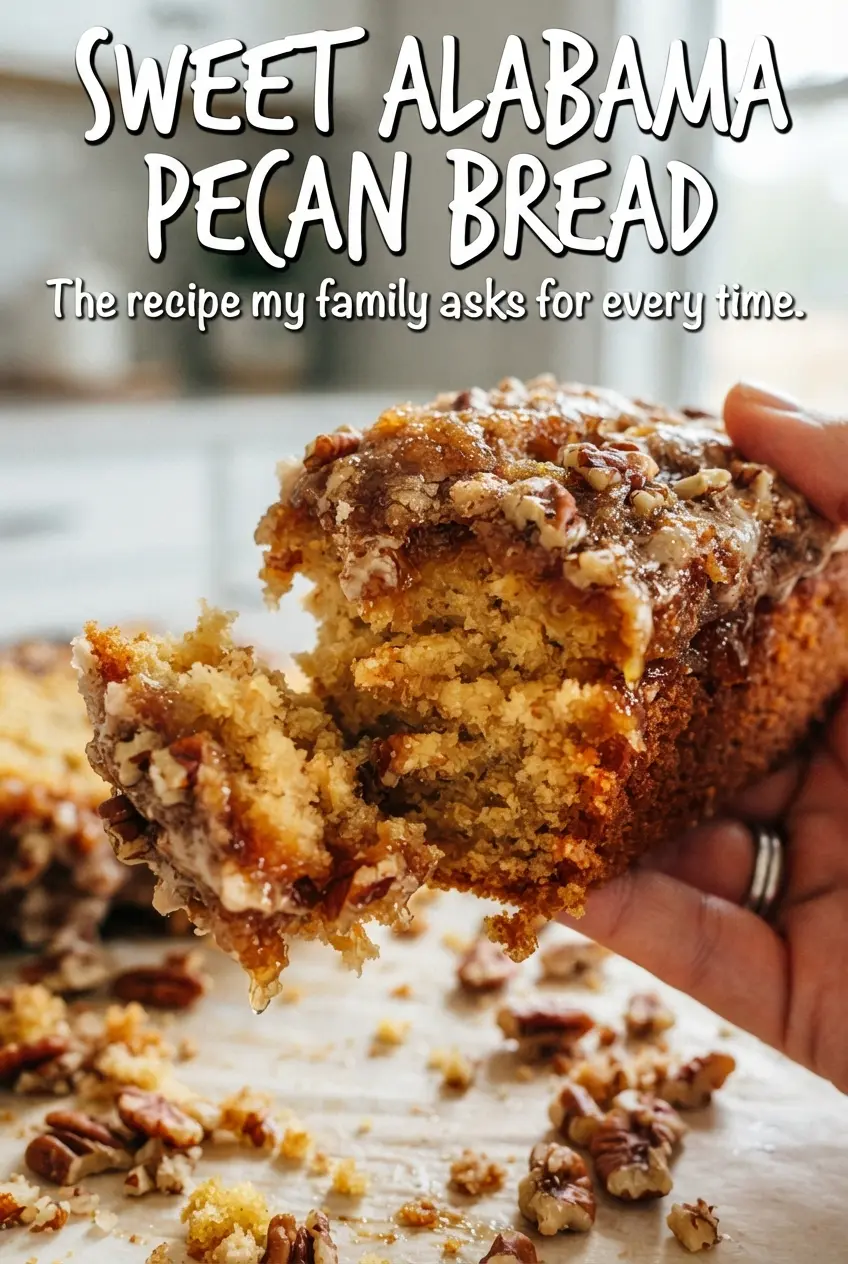
Sweet Alabama Pecan Bread
Ingredients
Equipment
Method
- Preheat the oven to 350°F, then grease and line a 9x5-inch loaf pan. The pan should be ready for batter as soon as mixing finishes.
- Whisk together all-purpose flour, baking powder, baking soda, salt, and ground cinnamon. Stop when the mixture looks evenly speckled with cinnamon.
- Beat butter and brown sugar until fluffy, then beat in the eggs one at a time and the vanilla extract. Continue until the mixture looks lighter in color and smoother.
- Add the dry ingredients alternately with buttermilk, mixing just until combined. The batter should look thick and no dry streaks remain.
- Fold in 1 cup pecans, then pour the batter into the prepared loaf pan. Spread it into an even layer and scatter over the remaining pecans.
- Top with the brown sugar for topping, then bake for 55–60 minutes at 350°F. It’s done when a toothpick comes out clean and the top looks crackly and browned.
- Cool the loaf in the pan for 15 minutes before slicing. The loaf should firm up slightly so slices hold their shape.