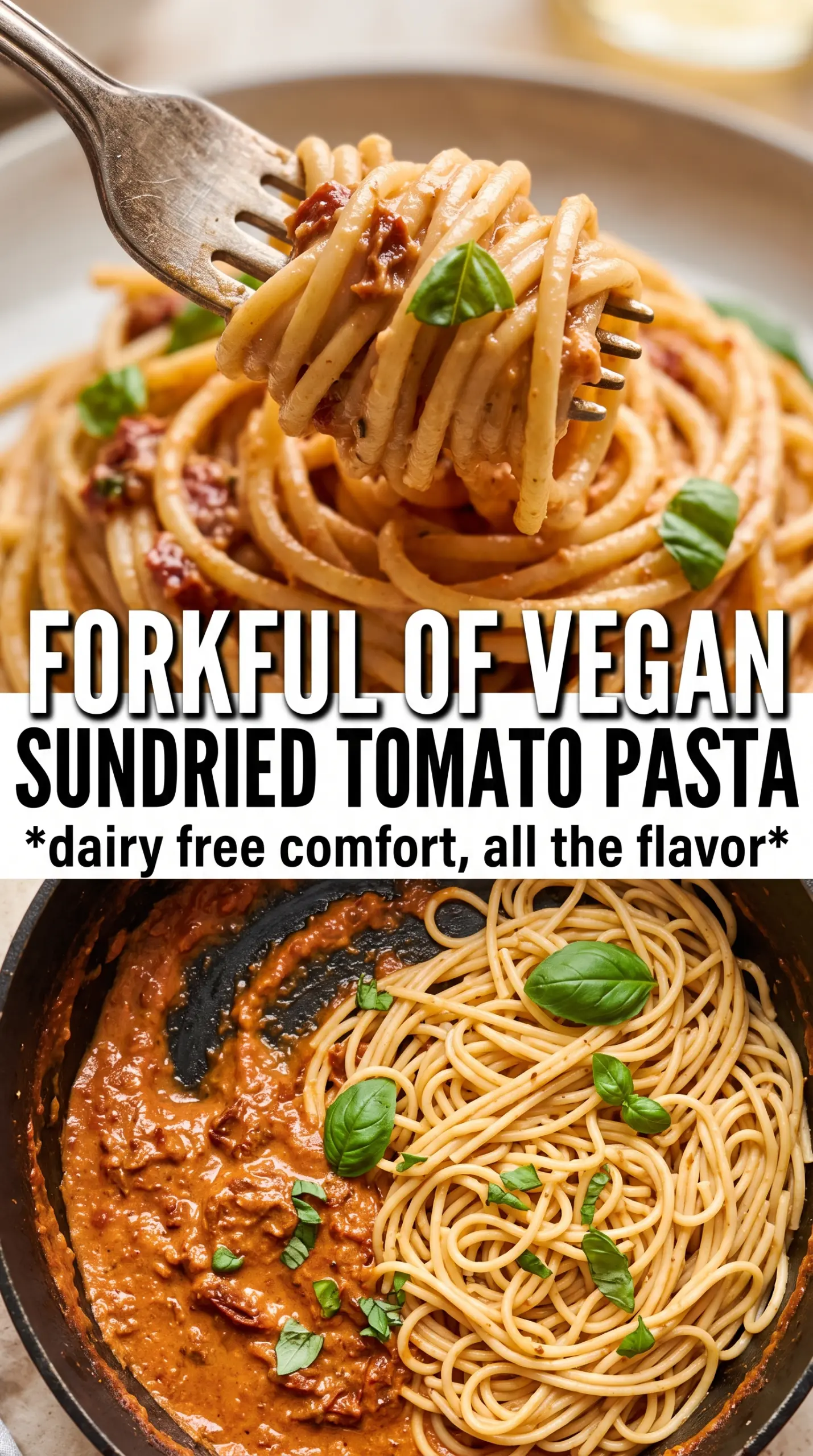
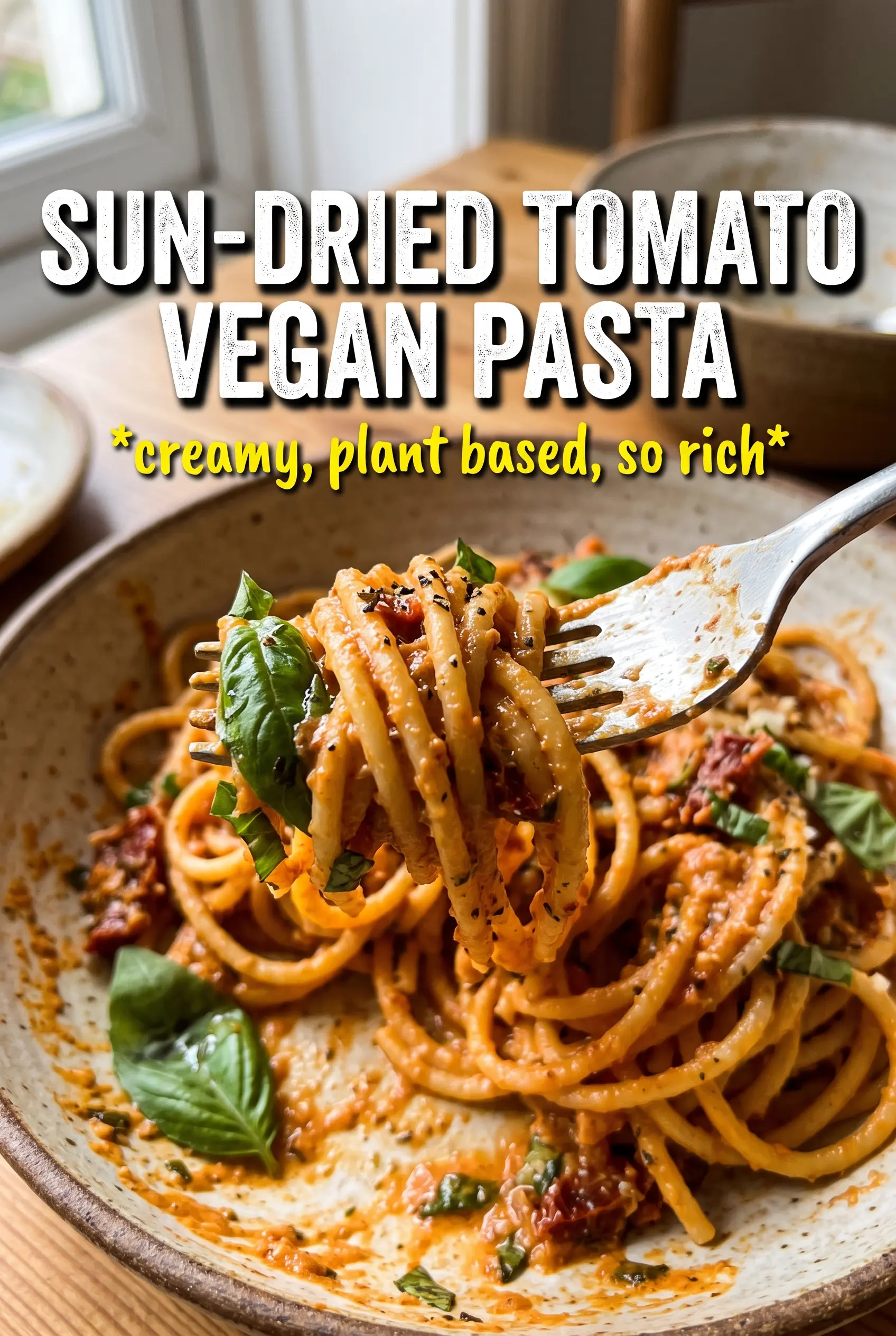
Silky, savory, and just a little smoky, this sun-dried tomato vegan pasta lands in the bowl with a sauce that clings to every ridge of the rigatoni. The coconut cream gives it that rich, glossy finish you want from a cream sauce, while nutritional yeast and tomato paste keep it tasting layered instead of flat. It’s the kind of meatless dinner that feels substantial enough to stand on its own.
What makes this version work is the balance. Sun-dried tomato oil builds the base, garlic and tomato paste deepen it, and a splash of pasta water loosens everything into a sauce that coats instead of puddles. Spinach goes in at the end so it stays bright and tender, not muddy and overcooked. The result is creamy without dairy and bold without needing a long ingredient list.
Below, I’ve included the small details that matter most: how to keep the sauce smooth, which ingredient gives the best payoff, and a few smart swaps if you need to work with what’s in the pantry.
The sauce turned out creamy and coated the rigatoni perfectly. I added the pasta water a little at a time like you suggested, and it stayed silky instead of getting thick and pasty.
Save this creamy sun-dried tomato vegan pasta for the nights when you want a rich, pantry-friendly dinner that still tastes layered and fresh.
The Trick to Keeping Coconut Cream from Turning Heavy
The biggest mistake with a coconut-based pasta sauce is rushing it. If the heat is too high, the sauce can taste flat and the coconut flavor can get louder than everything else. A gentle simmer gives the tomato paste time to caramelize a little and lets the nutritional yeast melt into the sauce instead of sitting on top of it.
The reserved pasta water is the other piece people skip, then wonder why the sauce feels thick and clumpy. Starchy pasta water helps the sauce emulsify and grab onto the noodles. Add it in small splashes until the sauce looks glossy and moves easily through the pasta, not stiff like frosting.
What Each Ingredient Is Actually Doing in This Bowl
- Sun-dried tomatoes in oil — These do double duty: they bring concentrated tomato flavor and their packing oil helps start the sauce with more depth than plain olive oil. If yours are packed dry, soak them briefly in hot water and use olive oil in the pan, but the flavor won’t be quite as round.
- Full-fat coconut cream — This is what gives the sauce its body. Light coconut milk won’t thicken the same way and can leave the sauce thin, especially once the pasta goes in. Shake or stir the can before measuring so you get a smooth, even base.
- Nutritional yeast — This adds the savory, cheesy note that keeps the dish from tasting like tomato cream alone. There isn’t a true substitute that gives the same flavor, but a little white miso can add some of the same depth if you’re out of it.
- Tomato paste — It sharpens the sauce and deepens the tomato flavor without making it watery. Cook it for a full minute in the oil so it loses that raw, tinny edge.
- Spinach — Add it at the very end. It should wilt into the pasta from the residual heat, not cook down to a dull green tangle.
Building the Sauce So It Stays Creamy, Not Gluey
Starting the Aromatics in the Sun-Dried Tomato Oil
Warm the sun-dried tomato oil first, then add the garlic and chopped tomatoes. You want the garlic fragrant, not browned; once it goes golden too fast, the sauce picks up a bitter edge that can’t be fixed later. Two minutes is enough to wake everything up and pull the flavor into the oil.
Cooking the Tomato Paste Until It Darkens
Stir in the tomato paste and let it cook for a minute before the coconut cream goes in. It should darken a shade and smell sweeter, not raw. This step matters because paste that isn’t cooked long enough can make the finished sauce taste sharp instead of rounded.
Letting the Sauce Simmer Before the Pasta Goes In
Once the coconut cream, Italian seasoning, red pepper flakes, and nutritional yeast are in the pan, keep the heat low and let the sauce bubble gently. A hard boil can make the coconut base feel greasy instead of smooth. After about five minutes, the sauce should look slightly thicker and glossy on the spoon.
Tossing in the Pasta and Finishing with Greens
Add the cooked rigatoni straight into the sauce and loosen it with reserved pasta water a splash at a time. Toss until every piece is coated and the sauce clings to the ridges. Add the spinach last and keep tossing just until it collapses; if you wait too long, it turns limp and watery.
How to Adapt This Without Losing the Creamy Finish
Gluten-Free with a Better Sauce-to-Pasta Ratio
Use a sturdy gluten-free penne or rigatoni so the sauce has something to grip. Gluten-free pasta can go from firm to overcooked fast, so pull it when it still has a little bite and finish it in the sauce for the best texture.
Dairy-Free and Nut-Free as Written
This recipe already skips dairy and nuts, which makes it handy for a lot of tables. The coconut cream carries the richness here, so if coconut isn’t your thing, the texture changes a lot if you swap it out.
Adding Protein Without Weighing Down the Sauce
White beans, crispy tofu, or chickpeas all work well here. Add them after the sauce has thickened so they warm through without stealing the glossy texture, and season them well since the sauce does most of the heavy lifting.
Making It Milder or Spicier
Leave out the red pepper flakes if you want a softer, rounder sauce. If you like more heat, add a pinch more near the end instead of dumping in a lot at the start; that keeps the spice bright instead of buried.
Storage and Reheating
- Refrigerator: Store leftovers in an airtight container for up to 4 days. The sauce thickens as it chills, and the pasta absorbs some of the liquid.
- Freezer: It freezes, but the texture is better fresh. If you do freeze it, cool it completely first and freeze in portions for up to 2 months; the coconut sauce may separate a little after thawing.
- Reheating: Warm it slowly on the stove or in the microwave with a splash of water to bring the sauce back to life. High heat can make the sauce look split before the pasta has a chance to loosen back up.
Answers to the Questions Worth Asking
Sun-Dried Tomato Vegan Pasta
Ingredients
Equipment
Method
- Bring a large pot of salted water to a boil and cook the rigatoni or penne until al dente. Reserve 1 cup of pasta water before draining.
- Heat the sun-dried tomato oil in a Dutch oven over medium heat. Sauté the garlic and chopped sun-dried tomatoes for 2 minutes, until fragrant and slightly softened.
- Stir in the tomato paste and cook for 1 minute to deepen the flavor. Keep the mixture moving to prevent scorching.
- Add the coconut cream, Italian seasoning, red pepper flakes, and nutritional yeast. Simmer for 5 minutes, stirring occasionally, until the sauce looks creamy and cohesive.
- Add the drained pasta to the sauce and toss to coat. Add reserved pasta water as needed to loosen into a silky clingy sauce.
- Add the baby spinach and toss until wilted, about 1 minute. Turn off the heat once the spinach is bright green and tender.
- Season with salt and pepper to taste and top with fresh basil. Finish with extra nutritional yeast if desired.