Glossy, tart cranberry sauce doesn’t need much to earn its place on the table, but this sugar free version has the kind of bright, clean finish that makes people go back for another spoonful. The berries cook down into a jammy sauce with just enough texture left behind to keep it interesting, and the orange zest lifts the whole bowl without making it taste candy-sweet.
The trick here is using a sweetener that dissolves smoothly and doesn’t turn gritty as the sauce reduces. Monk fruit or allulose both work well because they keep the flavor balanced without fighting the cranberries. I also add the zest at the end, after the pot comes off the heat, so the orange stays fresh instead of fading into the background.
Below, you’ll find the small timing details that keep the sauce from getting too loose or too thick, plus a few easy ways to adjust the sweetness depending on how tart your berries are.
The sauce thickened beautifully as it cooled, and the orange zest gave it a fresh finish without any weird aftertaste. I served it with turkey and leftover pork the next day, and it held its texture perfectly.
Save this sugar free cranberry sauce for a bright, glossy side that sets up perfectly as it chills.
The Reason Sugar Free Cranberry Sauce Thickens Without Turning Jammy
Cranberries have their own pectin, which is why they thicken beautifully as they burst. The mistake people make is boiling them hard for too long, which can push the sauce from glossy and spoonable into something stiff once it cools. A steady simmer gives you control: the berries break down, the liquid reduces, and the sauce finishes with a soft set instead of a sticky paste.
The other thing worth knowing is that cranberry sauce always looks looser in the pan than it does after chilling. If it coats a spoon and leaves a clean path when you drag your finger through it, you’re close enough. Pull it off the heat before it seems fully finished, then let the refrigerator do the rest.
What the Sweetener and Citrus Are Doing in This Sauce
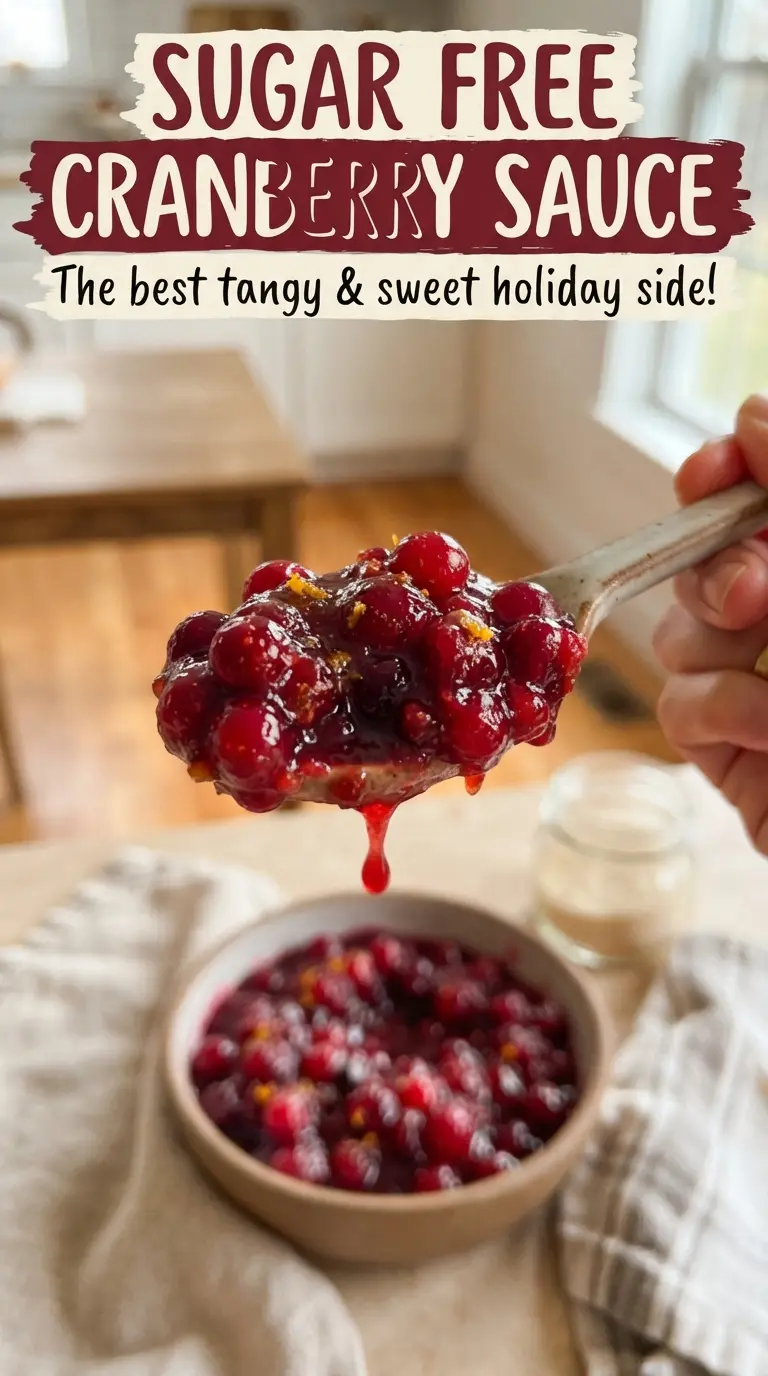
- Cranberries — Fresh cranberries give you the sharp, clean tartness this sauce needs. Frozen cranberries also work without thawing first, and they usually break down a little faster, so keep an eye on the pot near the end.
- Monk fruit or allulose sweetener — This is what balances the tart berries without adding sugar. Allulose gives the smoothest finish and behaves most like sugar as it cools; monk fruit blends work too, but some brands taste sharper, so start with the listed amount and adjust after cooking.
- Orange zest — The zest adds aroma, not extra liquid, which keeps the sauce bright. Stir it in at the end so the citrus stays fresh instead of cooking flat.
- Cinnamon — A small amount rounds out the cranberry sharpness without making the sauce taste like pie filling. Too much cinnamon takes over fast, so stay light-handed.
Cooking the Berries Until the Sauce Sets Up Right
Dissolving the Sweetener First
Bring the water and sweetener to a boil before anything else goes in. You want the granules fully dissolved so the finished sauce tastes smooth instead of sandy. If the sweetener is still crunchy at the bottom of the pan when the berries go in, it can linger in the texture even after the cranberries break down.
Letting the Cranberries Burst at a Steady Simmer
Once the cranberries, cinnamon, and salt hit the pan, the mixture should settle into an active simmer, not a rolling boil. You’ll hear the berries pop as they split open, then the sauce will start to look thicker and slightly foamy before it turns glossy. Stir now and then so the bottom doesn’t catch, especially once the berries begin to soften.
Finishing With Zest and Cooling Properly
Take the pan off the heat when most of the berries have burst and the liquid has reduced enough to coat a spoon. Stir in the orange zest after the burner is off so the citrus stays bright. The sauce will still look loose when hot, but it firms up as it cools, so move it to a bowl and chill it before judging the final texture.
How to Adjust This Cranberry Sauce for Your Table
Less Tart, More Rounded
Add another tablespoon or two of sweetener after the sauce comes off the heat if your cranberries are especially sharp. This keeps the texture intact because you’re adjusting at the end, after the fruit has already broken down.
Orange-Free Version
Leave out the zest and use a tiny splash of vanilla or a pinch more cinnamon if you want a softer finish. You’ll lose the bright citrus note, but the sauce still tastes clean and balanced.
Dairy-Free, Gluten-Free, and Low-Carb Friendly
This recipe already fits all three of those needs as written, which is one reason I like it so much. Just use a sweetener that measures like sugar and dissolves cleanly, since the wrong blend can leave an aftertaste or a grainy finish.
Storage and Reheating
- Refrigerator: Store in a covered container for up to 1 week. It will thicken as it chills, so don’t judge the texture while it’s still warm.
- Freezer: Cranberry sauce freezes well for up to 2 months. Thaw it overnight in the refrigerator; the texture may loosen slightly, but it still serves beautifully.
- Reheating: Serve it cold, or warm it gently over low heat just until loosened. High heat can make it splash and reduce too far, which leaves you with a tighter sauce than you probably wanted.
Answers to the Questions Worth Asking
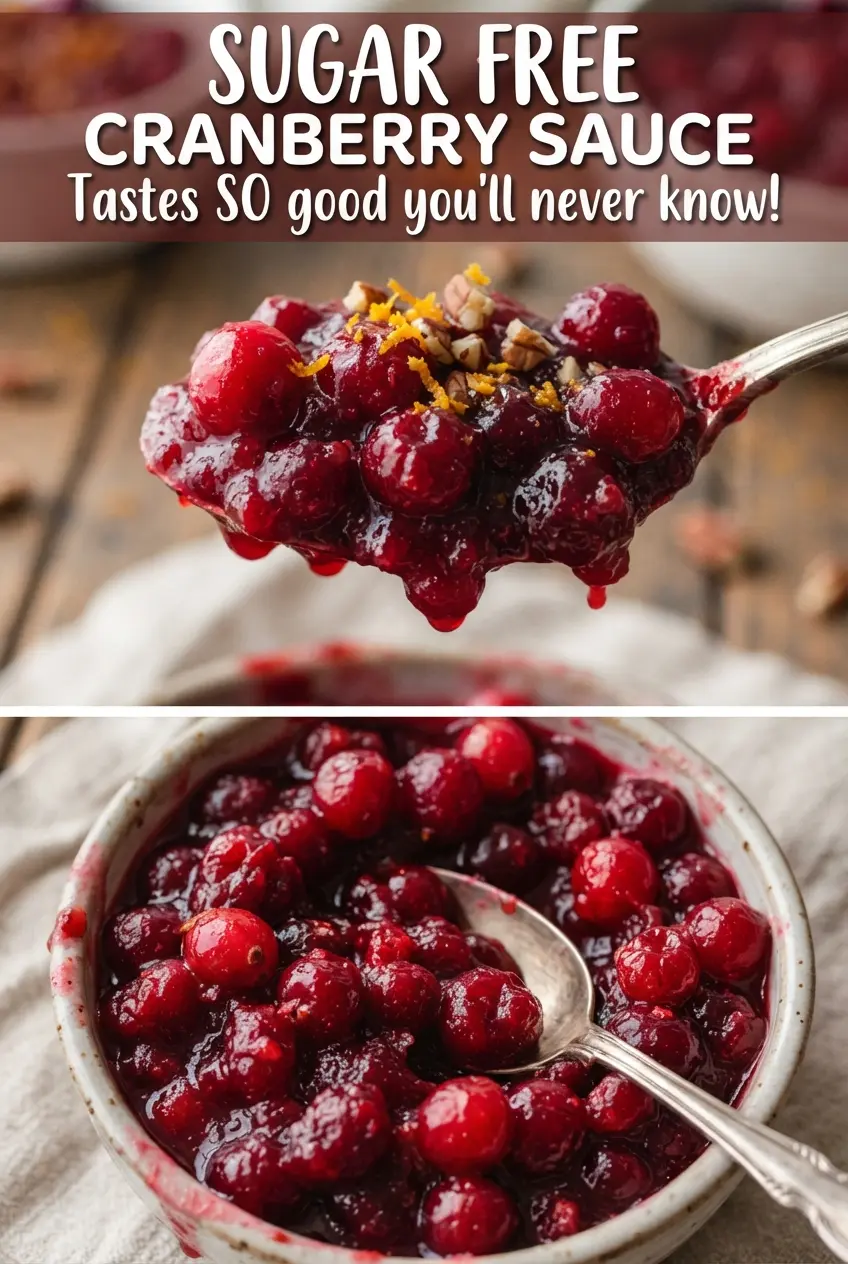
Sugar Free Cranberry Sauce
Ingredients
Equipment
Method
- Bring the water and granular monk fruit or allulose sweetener to a boil in a saucepan, stirring until fully dissolved, about 2-3 minutes, with a clear bubbling boil.
- Add the fresh cranberries, ground cinnamon, and salt, then stir so the berries are evenly coated and start bubbling again.
- Simmer for 10-12 minutes until the berries burst and the sauce thickens, using a gentle simmer with a noticeably reduced, syrupy look.
- Remove from heat and stir in orange zest; taste and add more sweetener if needed, then let the zest streak through the glossy sauce.
- Cool to room temperature, then chill before serving so the sauce sets thick and spoonable.