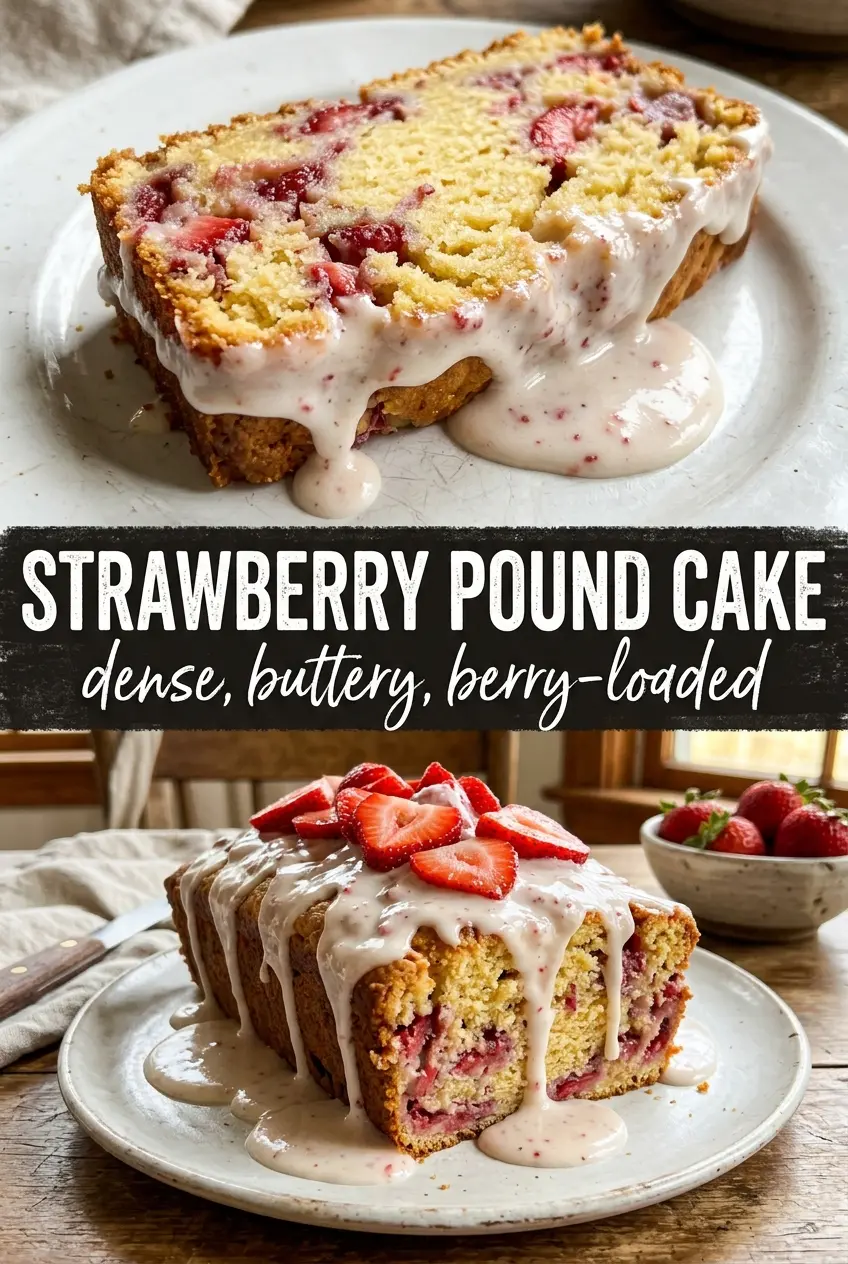
Strawberry pound cake should slice like a dream and taste like butter, vanilla, and fresh berries all settled into one dense, tender crumb. When it’s done right, the outside bakes into a deep golden shell while the inside stays moist enough to hold those strawberry pieces without turning gummy or heavy. The pink glaze on top doesn’t just look pretty; it adds a bright, tart finish that keeps each slice from eating too sweet.
The trick is treating this like a pound cake first and a strawberry cake second. The butter and sugar need to go pale and fluffy so the batter can hold the eggs and stay fine-textured. The strawberries are diced small, patted dry, and folded in at the end so they don’t bleed through the batter or sink to the bottom. A little sour cream keeps the crumb plush, and strawberry extract helps the flavor read clearly even after baking, which is important because fresh berries alone can fade in the oven.
Below, I’ll show you how to keep the cake from getting dense in the middle, how to handle the berries so they stay where they belong, and a few useful swaps if you want to adjust the glaze or bake this as a loaf instead of a Bundt.
The cake came out with that classic pound-cake crumb, and the strawberry glaze set up just enough to drip красиво without sliding off. I followed the tip about patting the berries dry, and mine baked evenly with no soggy spots.
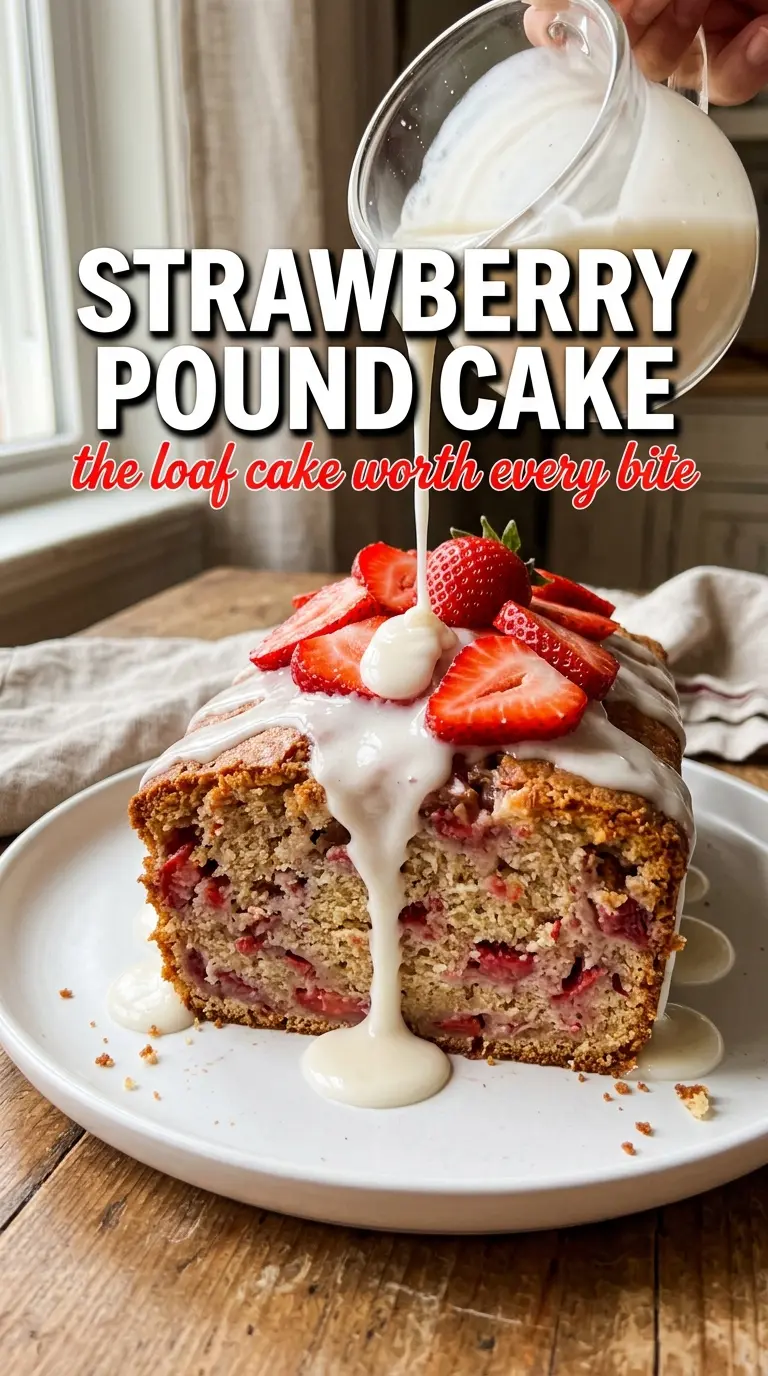
Save this strawberry pound cake for the kind of dessert that needs a buttery crumb, fresh berries, and that vivid pink glaze dripping down every ridge.
The Batter Needs Air Before the Strawberries Go In
With pound cake, the mixing method matters as much as the ingredients. If the butter and sugar don’t get properly beaten, the cake can bake up tight and dense instead of plush and even. That first stage builds the structure that holds up the fruit, especially in a Bundt pan where the batter has a long bake time.
The other place people get into trouble is with the strawberries. Too much moisture from the berries can streak the batter or leave wet pockets near the bottom, so patting them dry and folding them in at the very end makes a real difference. You want the cake to taste like strawberry, not like it has burst pockets of fruit juice hiding in a heavy crumb.
- Butter — Use softened butter, not melted butter. Softened butter traps air when beaten with sugar, which gives the cake its lift and that classic pound-cake texture.
- Sour cream — This is what keeps the crumb tender and moist without making the batter loose. Full-fat sour cream gives the best texture, but plain full-fat Greek yogurt works if that’s what you have.
- Fresh strawberries — Dice them small so they disperse through the batter instead of sinking. Pat them dry after washing; that step matters more than the variety you buy.
- Strawberry extract — Fresh berries add real fruit, but the extract carries the strawberry flavor through baking. If you leave it out, the cake will still taste good, but the strawberry note will be much softer.
- Strawberry juice or puree for the glaze — Juice gives a thinner, cleaner glaze; puree makes it thicker and more opaque. Either works, but strain the puree if you want a smoother finish.
What Each Ingredient Is Actually Doing in This Recipe
- Primary ingredient (the star) — Quality matters most. Choose the best you can find.
- Cooking medium (oil, butter, or broth) — This carries flavors and prevents dryness.
- Seasonings (salt, pepper, spices, herbs) — Layer flavors so nothing overpowers. Build depth gradually.
- Aromatics (garlic, onion, herbs) — Cook with fat to bloom flavors. Become the foundation.
- Supporting ingredients — Complement the main ingredient without overpowering it.
- Sauce or liquid (if applicable) — Brings flavors together. Balance richness with acid.
- Acid (lemon, vinegar, wine, or other) — Brightens and prevents flat-tasting results.
- Final finish (garnish, glaze, or sauce) — Prevents one-dimensional taste and adds visual appeal.
Building the Crumb Without Crushing the Berries
Whipping the Butter and Sugar
Beat the butter and sugar until the mixture looks very pale and fluffy, not just combined. That can take several minutes, and it’s worth every second because this is what gives the cake its structure. If you rush this part, the batter stays heavy and the finished cake won’t have that fine, sliceable crumb.
Adding the Eggs Slowly
Mix in the eggs one at a time and let each one disappear before adding the next. If the batter starts to look curdled, it usually means the eggs were too cold or added too quickly, but it comes back together once you add some of the flour. Scrape the bowl well so the butter at the bottom gets fully incorporated.
Alternating Dry Ingredients and Sour Cream
Add the flour mixture and sour cream in alternating additions, beginning and ending with flour. This keeps the batter from breaking and helps it stay smooth instead of greasy. Stop mixing as soon as the flour disappears; overmixing at this point can make the cake tough.
Folding in the Strawberries
Use a spatula and fold the strawberries in gently at the very end. A few streaks are fine, but you don’t want to smash the berries into the batter or they’ll bleed too much color and juice. Once the pan is filled, tap it firmly on the counter to release air pockets, then bake until a toothpick comes out clean or with only a few moist crumbs.
How to Adjust the Cake for Different Pans and Tastes
Gluten-Free Version
Swap in a good 1:1 gluten-free baking flour that includes xanthan gum. The cake will still be rich and tender, though the crumb may be a touch more delicate when sliced. Let it cool completely before cutting so it holds together cleanly.
Loaf Pan Instead of Bundt
You can bake this in two loaf pans if you don’t have a Bundt pan, but the bake time will be shorter and the top may dome more. Start checking early and use the toothpick test, because a loaf pan concentrates the batter and can dry the edges before the center is done.
Extra Bright Strawberry Glaze
Add the lemon juice exactly as written if you want the glaze to taste lively instead of flat. If you want a thicker drizzle, use less strawberry juice; if you want a thinner glaze that runs farther down the cake, add a teaspoon more at a time.
Storage and Reheating
- Refrigerator: Store covered for up to 4 days. The glaze may soften slightly, but the cake itself stays moist.
- Freezer: Freeze the unglazed cake tightly wrapped for up to 2 months. Thaw at room temperature, then glaze after it’s fully thawed so the topping stays pretty.
- Reheating: Let slices come to room temperature or warm them for a few seconds in the microwave. Don’t heat glazed slices too long or the icing will melt and the crumb can turn dry at the edges.
Questions I Get Asked About This Recipe
Strawberry Pound Cake
Ingredients
Equipment
Method
- Preheat oven to 325°F and generously grease and flour a Bundt pan so the cake releases cleanly. Look for a fully coated pan surface, including the ridges.
- Beat butter and granulated sugar until very light and fluffy, with a paler color and airy texture. Continue mixing until the batter looks thick and smooth.
- Add the eggs one at a time, beating after each addition until combined. The batter should stay glossy and cohesive, not curdled.
- Mix the flour, baking soda, and salt together, then alternately add this flour mixture and the sour cream to the batter. Stir just until you don’t see dry streaks.
- Stir in vanilla extract and strawberry extract until evenly distributed. The batter should smell strongly of vanilla and strawberry with no streaks.
- Fold in the diced fresh strawberries that have been patted dry. The strawberries should be dispersed throughout the dense batter.
- Pour the batter into the prepared Bundt pan and smooth the top. Bake at 325°F for 60-70 minutes, until a toothpick comes out clean.
- Cool the cake in the pan for 15 minutes. The cake should feel set and slightly firm before inverting.
- Invert the cake onto a rack and cool completely. Make sure it’s fully cool to prevent the glaze from melting off.
- Whisk the powdered sugar, strawberry juice or puree, and lemon juice until smooth. The glaze should look thick and pourable with no lumps.
- Pour the glaze over the completely cooled cake, letting it fall dramatically into the ridges. Stop when the top is coated and the glaze glistens.
- Let the glaze set before slicing. The surface should look slightly firm while still shiny.
- Garnish with fresh strawberries right before serving. Arrange them alongside so the pink glaze and golden cake stay the focus.