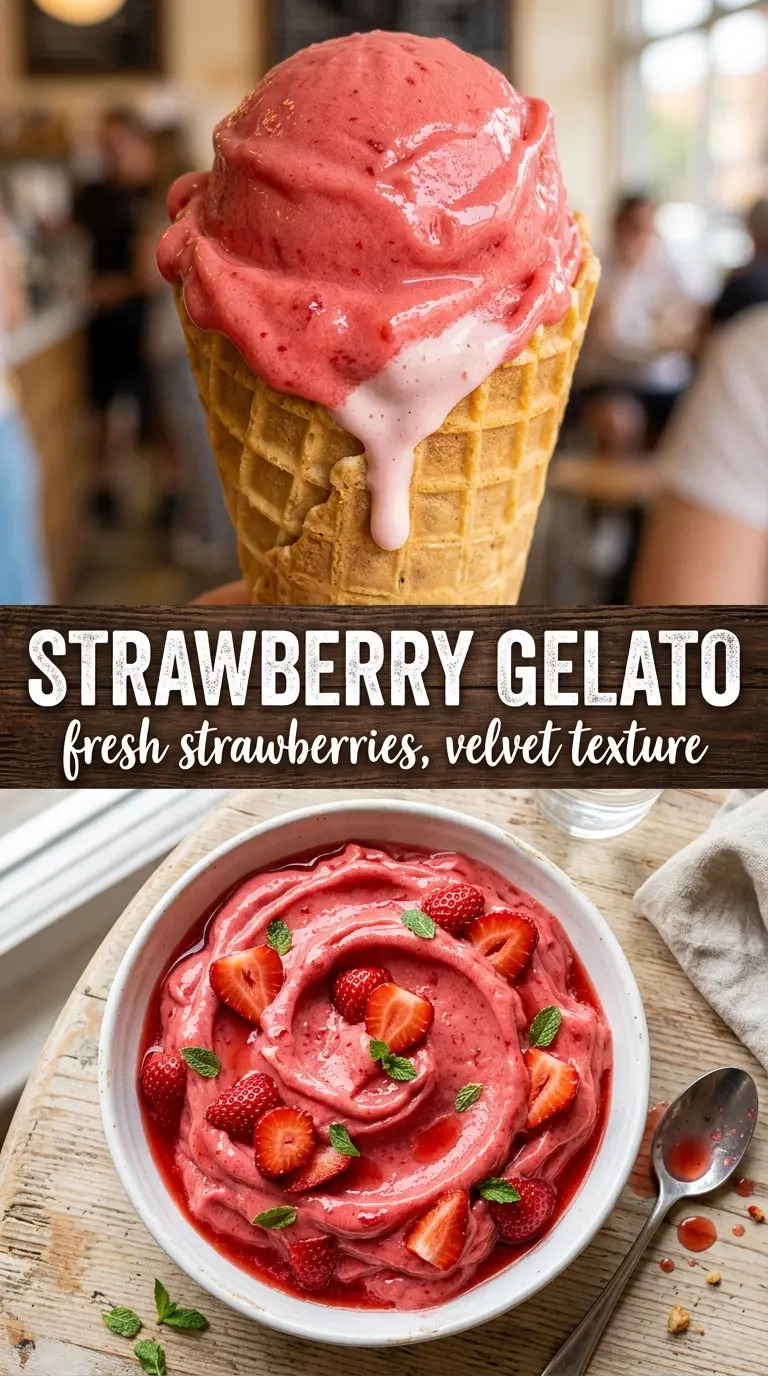
Dense strawberry gelato has a way of tasting more like the fruit itself than a frozen dessert. The color turns a vivid pink-red, the texture stays silky and tight, and every spoonful lands with that bright strawberry flavor that gets lost in a lot of homemade ice creams. This version earns its place because it doesn’t water the berries down or bury them under too much dairy.
The trick is building a smooth custard base first, then folding in a strained strawberry puree after the heat is off. That keeps the fruit fresh and vivid instead of cooked-flat. A little cornstarch helps the base thicken cleanly, which gives the gelato that dense, scoopable body without making it heavy. The result is closer to what you’d get from a good gelateria than a fluffy freezer-bowl ice cream.
Below, you’ll find the small details that matter: how to keep the custard from scrambling, why straining the berries is worth the extra minute, and what to do if you want a firmer or more intensely fruity finish.
The custard thickened up exactly when you said it would, and the strawberry flavor stayed bright instead of turning jammy. Mine was silky after the churn and my kids were fighting over the last scoop.
Like this strawberry gelato? Save it for the times when you want a dense, silky frozen dessert with real fruit flavor.
The Custard Has to Set Before the Fruit Goes In
Gelato gets its dense texture from the base, not from extra freezing time. If you rush the custard or pull it off the heat too soon, the finished gelato tastes thin and icy instead of smooth and concentrated. The cornstarch is doing quiet work here, helping the mixture thicken without relying on a lot of eggs.
The other common mistake is heating the strawberry puree with the dairy. That dulls the fruit and mutes the color. Fold it in after the custard comes off the burner so the strawberries keep their bright, fresh edge.
- Egg yolks — These give the gelato body and a richer mouthfeel. Whisk them with the sugar before adding hot milk so they temper gradually instead of scrambling.
- Cornstarch — This is what helps the base thicken into that gelato-style spoonable texture. If you skip it, the final dessert will freeze harder and feel a little flatter on the tongue.
- Fresh strawberries — Fresh berries bring cleaner flavor and better color than frozen fruit for this recipe. If you use frozen, thaw them completely and drain off excess liquid first so the puree doesn’t thin the base.
- Lemon juice — A small amount sharpens the strawberry flavor and keeps the gelato from tasting heavy. It doesn’t make the dessert sour; it just wakes the fruit up.
What Each Ingredient Is Actually Doing in This Ice Cream
- Base ingredient (cream, milk, or custard) — This provides the foundation and richness. Quality matters.
- Sweetener (sugar, honey, or condensed milk) — This sweetens and prevents ice crystals. The ratio is critical.
- Flavor element (vanilla, fruit, chocolate, cookie, or other) — This defines the ice cream personality. Use quality ingredients.
- Egg yolks (if making custard base) — These create richness and silky texture. Optional but elevates ice cream.
- Churning (if using ice cream maker) — This incorporates air and prevents ice crystals. Critical for smooth texture.
- Freezing temperature and time — Proper freezing prevents rock-hard texture. Store at 0°F or below.
- Mix-ins (chocolate, cookies, candy, or swirls) — These add texture and prevent one-dimensional flavor. Add near end of churning.
- Serving temperature (slightly soft, not rock hard) — This provides creamy mouthfeel. Remove from freezer 5 minutes before serving.
Building the Base Without Scrambling the Eggs
Straining the Strawberry Purée
Blend the strawberries with part of the sugar and the lemon juice until completely smooth, then strain out the seeds. That extra step gives the gelato a cleaner texture and keeps tiny seeds from showing up in every bite. Don’t press so hard that you force a lot of watery pulp through the sieve; you’re after smooth puree, not juice.
Cooking the Custard Until It Nappes
Heat the milk and cream until steaming, not boiling, then whisk them slowly into the yolks, sugar, and cornstarch. Return everything to the saucepan and cook over medium heat, stirring constantly, until it thickens enough to coat the back of a spoon like thin pudding. If the heat is too high, the eggs can curdle before the starch has a chance to do its job.
Cooling Fast for a Cleaner Freeze
Once the base thickens, take it off the heat and stir in the strawberry puree and vanilla. Set the bowl over an ice bath and cool it all the way down before refrigerating. A warm base in the churner makes weaker ice crystals and a softer finish than you want, so don’t skip the chill time.
Churning to Keep It Dense
Churn the mixture in your ice cream maker on the lowest setting if your machine allows it. You want a thick, smooth ribbon that looks more compact than airy. Stop when it reaches a soft-serve consistency; if you overchurn it, the texture can turn buttery instead of creamy.
How to Adjust the Strawberry Gelato for Your Kitchen
Dairy-Free Strawberry Gelato
Swap the milk and cream for full-fat canned coconut milk, keeping the total liquid amount the same. The gelato will lose a little of the classic dairy richness, but it stays creamy and the strawberry flavor still comes through clearly. Use the same custard method and chill thoroughly before churning.
Extra-Bright Strawberry Flavor
If your berries are especially good, reserve a small spoonful of the puree and swirl it in after churning instead of mixing everything into the base. That gives you pockets of fresh fruit flavor and a deeper strawberry aroma, but it also makes the texture a little less uniform.
Lower-Sugar Version
You can reduce the sugar slightly, but don’t cut it too far. Sugar doesn’t just sweeten the gelato; it also keeps the frozen texture softer and more scoopable. If you lower it much more than a few tablespoons, the finished dessert will freeze harder.
Storage and Reheating
- Refrigerator: Keep the cooked base covered for up to 2 days before churning. The flavor actually improves after the chill, but the fruit layer should stay cold and sealed so it doesn’t pick up fridge odors.
- Freezer: The churned gelato keeps well for about 1 week. Press parchment or plastic wrap directly on the surface before covering to help prevent ice crystals.
- Reheating: Not applicable. For serving, let the gelato sit at room temperature for 5 to 10 minutes so it softens enough to scoop cleanly. If it gets rock hard, don’t microwave it; you’ll melt the edges before the center is usable.
Questions I Get Asked About This Recipe
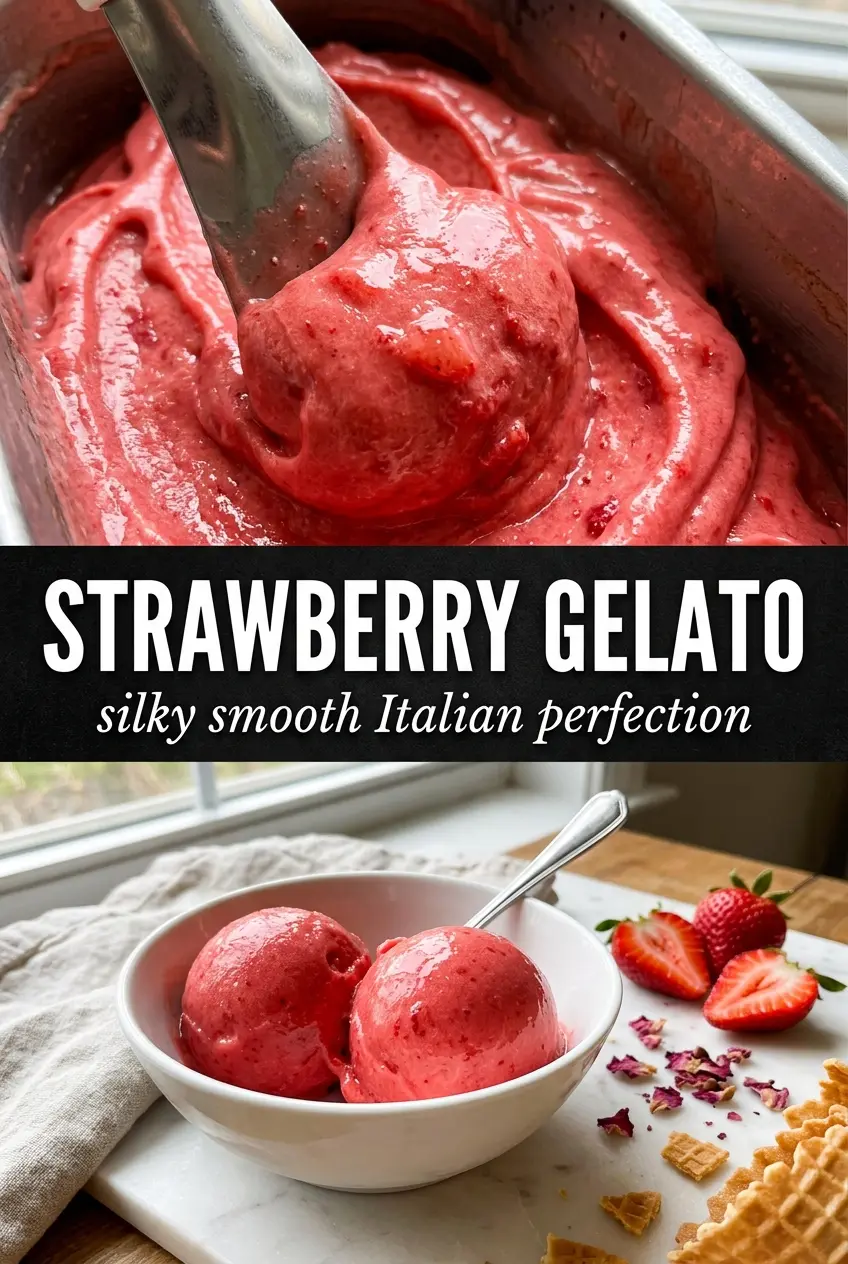
Strawberry Gelato
Ingredients
Equipment
Method
- Blend fresh strawberries with 1/4 cup granulated sugar and lemon juice until smooth, then strain to remove seeds and set aside.
- Keep the strained strawberry puree covered at room temperature while you prepare the custard base.
- Heat whole milk and heavy cream in a saucepan until steaming, about 3 to 5 minutes.
- In a bowl, whisk egg yolks, remaining 1/2 cup granulated sugar, and cornstarch until smooth, with no visible lumps.
- Slowly whisk the steaming milk mixture into the egg yolk mixture to temper it.
- Return everything to the saucepan and cook over medium heat, stirring constantly, until thickened like a pudding, about 5 minutes.
- Remove from heat and stir in the strawberry puree and vanilla extract until the mixture is evenly pink-red.
- Cool completely using an ice bath, then refrigerate at least 4 hours to chill thoroughly.
- Churn in an ice cream maker on the lowest setting for a dense, gelato-style texture.
- Serve soft right away, or transfer to a container and freeze 1 to 2 hours for firmer gelato.