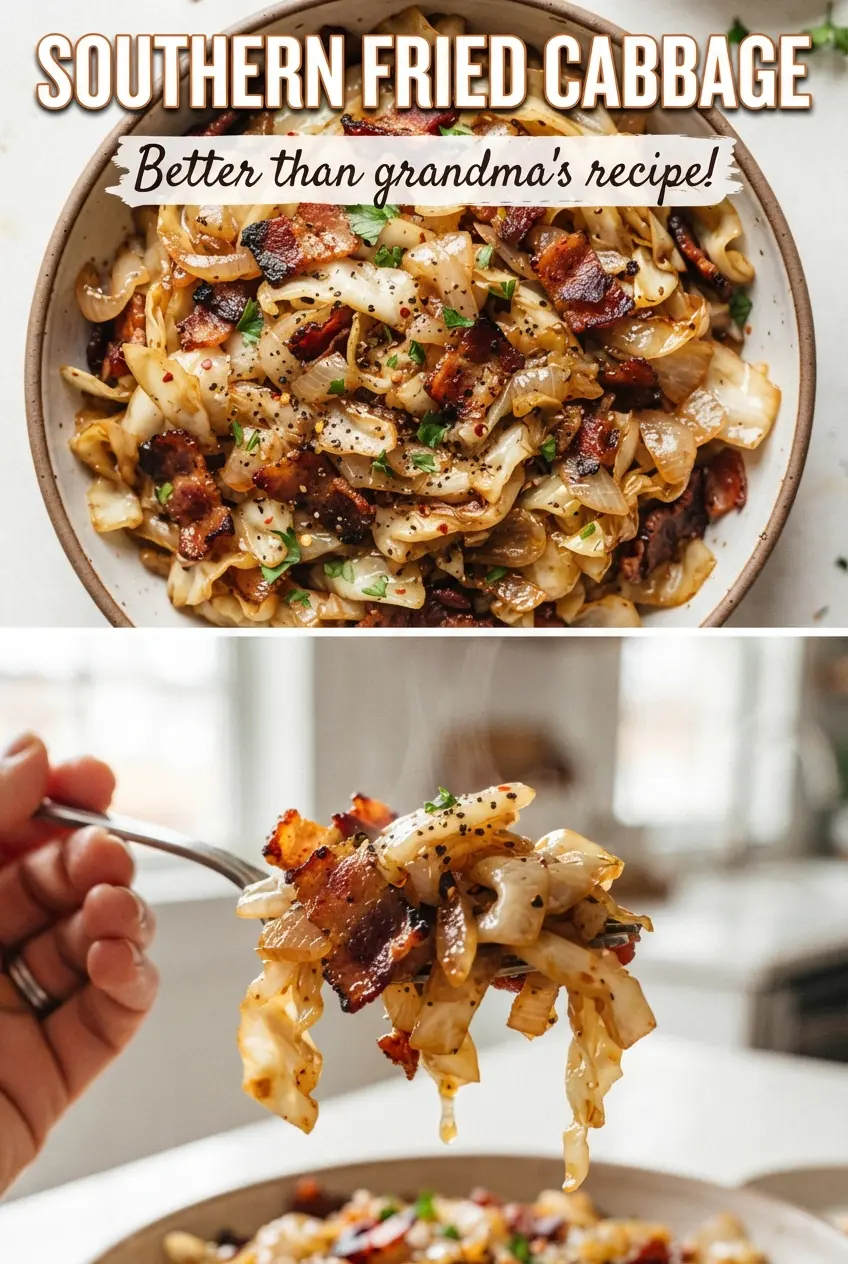
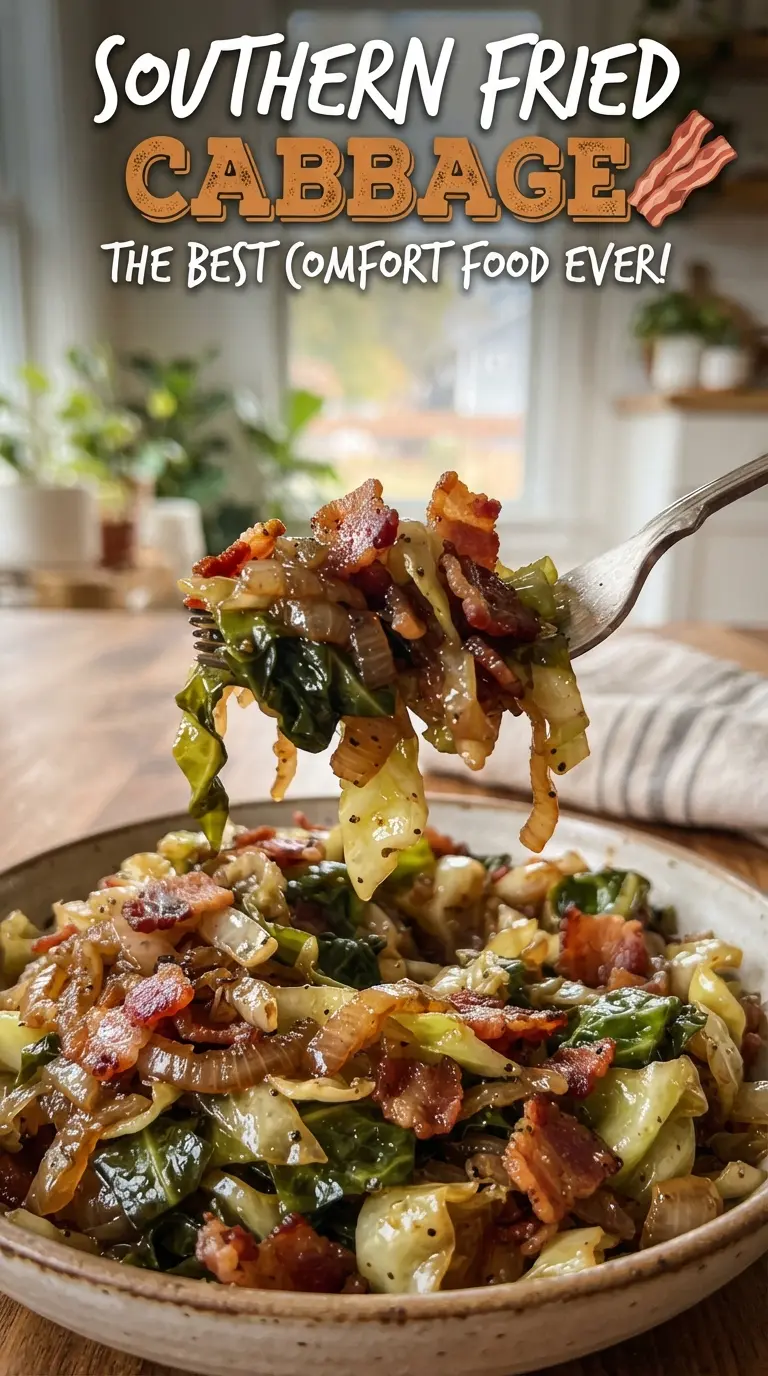
Southern fried cabbage turns humble cabbage into a skillet full of tender ribbons, crisp bacon, sweet onion, and those little caramelized edges that make you keep sneaking bites from the pan. It’s the kind of side dish that disappears fast because it tastes rich without being heavy, and it goes with just about anything you’d serve from a Southern-style supper table.
The key is giving the bacon time to render enough fat to season the whole skillet, then cooking the cabbage long enough for it to soften and pick up color without going limp. The onion brings sweetness, the vinegar at the end wakes everything up, and just a touch of sugar nudges the cabbage toward deep golden edges instead of a flat, steamed finish.
Below, you’ll find the small details that matter most here: how to keep the cabbage from turning watery, when to add the vinegar so it sharpens instead of dulls, and a few easy ways to adjust the dish for what you’ve got on hand.
The cabbage got those caramelized edges I was hoping for, and the splash of vinegar at the end kept it from tasting heavy. Even my picky eater went back for seconds.
Love the bacon, onion, and caramelized cabbage in this Southern fried cabbage? Save it to Pinterest for an easy skillet side that hits smoky, sweet, and tangy all at once.
The Step That Keeps Fried Cabbage From Going Soft and Watery
The mistake with fried cabbage is crowding the pan and rushing the cook. Cabbage holds a lot of moisture, and if the heat is too low or the skillet is too full, it steams instead of browns. What you want is enough surface contact for the edges to pick up color while the center turns tender.
Bacon fat does a lot of the heavy lifting here, but it can’t rescue soggy cabbage if the pan never gets hot enough. Let the onion soften first, then give the cabbage time to sit against the hot skillet before you stir. That pause is what starts the caramelization and keeps the finished dish from tasting boiled.
- Bacon — The bacon isn’t just a garnish. It seasons the whole pan with fat and smoke, and the crisp pieces added back at the end keep their texture instead of turning chewy. Thick-cut bacon works, but regular bacon renders faster and gives you a little more drippings to work with.
- Yellow onion — Onion brings sweetness that balances the cabbage and bacon. Slice it fairly thin so it softens at the same pace as the cabbage; chunky onion leaves you with uneven bites.
- Green cabbage — This is the main event, and fresh cabbage matters. It should feel firm and heavy for its size. If you need to use pre-shredded cabbage, shorten the cook time a bit because it softens faster and can break down before it browns.
- Apple cider vinegar — Add it at the end. If it goes in early, the sharpness cooks off and the dish tastes flat. A splash right before serving cuts through the richness and makes the cabbage taste brighter.
What Each Ingredient Is Actually Doing in This Recipe
- Primary ingredient (the star) — Quality matters most. Choose the best you can find.
- Cooking medium (oil, butter, or broth) — This carries flavors and prevents dryness.
- Seasonings (salt, pepper, spices, herbs) — Layer flavors so nothing overpowers. Build depth gradually.
- Aromatics (garlic, onion, herbs) — Cook with fat to bloom flavors. Become the foundation.
- Supporting ingredients — Complement the main ingredient without overpowering it.
- Sauce or liquid (if applicable) — Brings flavors together. Balance richness with acid.
- Acid (lemon, vinegar, wine, or other) — Brightens and prevents flat-tasting results.
- Final finish (garnish, glaze, or sauce) — Prevents one-dimensional taste and adds visual appeal.
Building the Skillet So the Cabbage Cooks, Browns, and Stays Crisp-Tender
Rendering the Bacon
Start the bacon in a cold skillet and let the heat come up with it. That gives the fat time to render evenly before the meat burns, and you want enough fat left in the pan to coat the onion and cabbage. Pull the bacon when it’s crisp, not dark, because it goes back in at the end and will soften a little in the finished dish.
Softening the Onion and Garlic
Add the onion to the bacon drippings and cook until it looks glossy and translucent with a few browned edges. That sweetness is the base of the dish. Garlic only needs about 30 seconds; any longer and it turns bitter, especially in a hot skillet with very little liquid.
Cooking the Cabbage Until the Edges Color
Once the cabbage goes in, it will look like too much for the pan. That’s normal. Stir in the butter, salt, pepper, red pepper flakes, and sugar, then let the cabbage sit between stirs so it can make contact with the hot surface. You’re looking for tender strands with browned, almost nutty edges, not a pile of collapsed greens.
Finishing With Vinegar and Bacon
Stir in the vinegar after the cabbage has cooked down and the pan is off the hottest part of the burner. The acid should lift the flavor, not steam the vegetables. Add the bacon last so it stays crisp enough to stand out against the soft cabbage.
How to Adjust Southern Fried Cabbage for What’s in Your Kitchen
Make It Dairy-Free Without Losing Richness
The recipe is already close to dairy-free if you skip the butter and use a little extra bacon drippings or a tablespoon of neutral oil. You’ll lose a touch of buttery roundness, but the cabbage will still brown well and taste full.
Swap the Bacon for Smoked Sausage
Chopped smoked sausage gives you a heartier, meatier side dish and still brings smoke to the pan. Brown it first, then use the rendered fat the same way you would bacon drippings. The result is a little less crisp and a little more substantial.
Lower the Sugar for a More Savory Finish
The teaspoon of sugar encourages browning and balances the vinegar, but you can cut it in half if you want a sharper, more savory skillet. The cabbage will still caramelize; it just won’t lean quite as sweet at the edges.
Storage and Reheating
- Refrigerator: Store leftovers in an airtight container for up to 4 days. The cabbage softens a little more as it sits, but the flavor stays good.
- Freezer: It freezes, but the texture gets softer after thawing. If you do freeze it, cool it completely first and reheat gently for the best chance of keeping some bite.
- Reheating: Warm it in a skillet over medium-low heat with a small splash of water or broth. The common mistake is blasting it in the microwave until the cabbage turns mushy; gentle heat brings it back without wrecking the texture.