Fork-tender chicken thighs under a dark onion gravy is one of those dinners that feels grounded and old-school in the best way. The skin starts out crisp and golden, then gets tucked beneath a skillet gravy that tastes like it cooked all afternoon, even though it comes together in about half an hour. The mushrooms melt into the onions, the broth picks up every browned bit from the pan, and the whole thing settles into that spoon-coating texture that begs for mashed potatoes.
What makes this version work is timing and layering. The chicken gets a hard sear first, so the skin has a chance to color before it ever meets the gravy. Then the onions cook long enough to turn sweet and jammy, which keeps the sauce from tasting flat. A little flour goes in with the vegetables, not into a separate bowl, so the gravy thickens right in the skillet and carries all that browned flavor with it.
Below, you’ll find the exact points that matter most: how dark the onions should get, when to add the broth so the sauce stays smooth, and what to do if you want to stretch this into a lighter or dairy-free version without losing that classic smothered chicken feel.
The gravy turned out silky and dark, and the chicken stayed juicy even after simmering. I served it over mashed potatoes and my husband said it tasted like something from a diner in the best way.
Save this smothered chicken for the nights when you want deep onion gravy and tender skillet chicken over mashed potatoes.
The Sear Comes First, or the Gravy Never Tastes Right
Smothered chicken lives or dies on the first few minutes in the skillet. If the chicken doesn’t get properly browned before the onions go in, you lose the fond that gives the gravy its depth, and the whole dish tastes more like seasoned chicken in sauce than true smothered chicken. Use medium-high heat and leave the thighs alone until the skin releases cleanly; if you have to tug, the pan isn’t ready yet.
The second common mistake is rushing the onions. They need enough time to soften, collapse, and pick up a little color before the flour goes in. That slow cooking turns the gravy from pale and thin into something with body and a darker, rounder flavor. The mushrooms help here too, because they soak up the pan drippings and add that meaty, almost brothy note that makes the sauce taste richer than the ingredient list looks.
What Each Ingredient Is Actually Doing in the Skillet
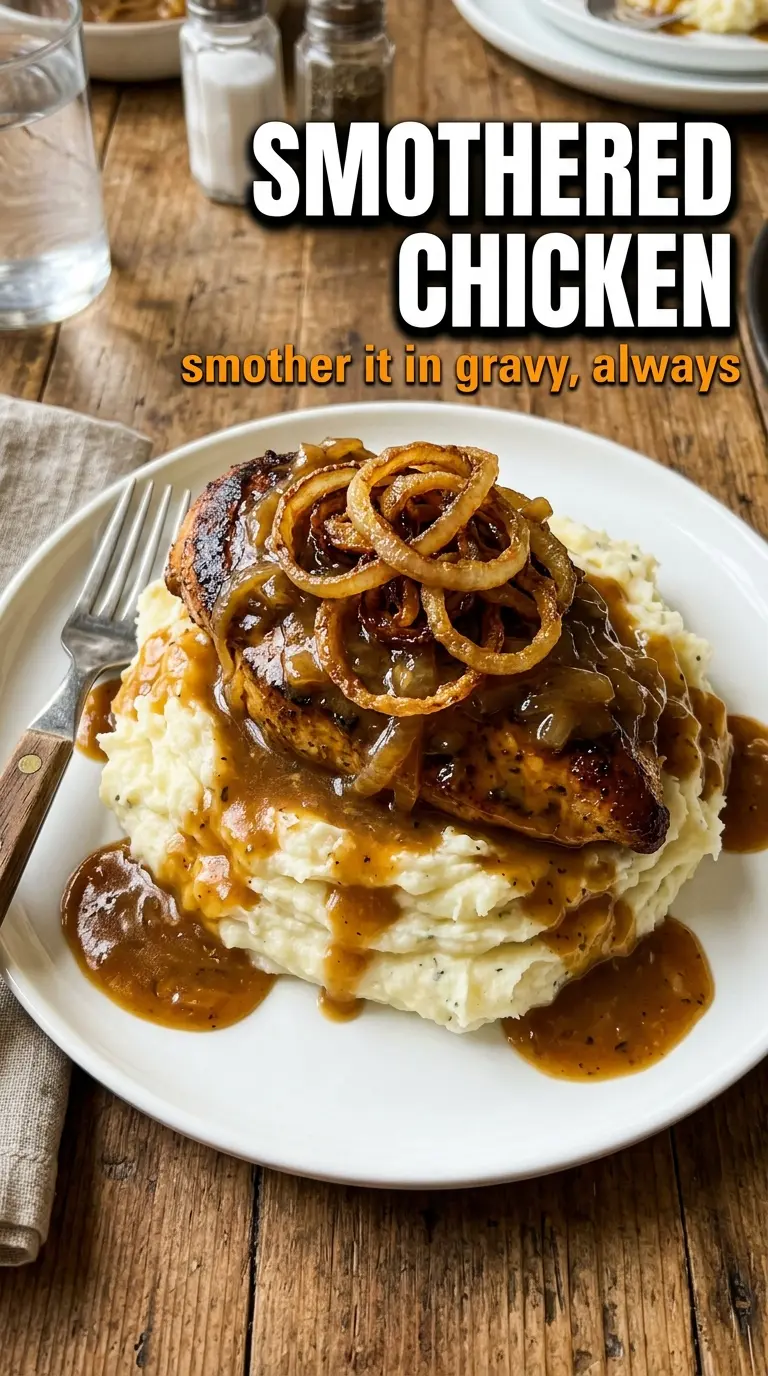
- Bone-in, skin-on chicken thighs — These stay juicy through the simmer and give you drippings that flavor the gravy. Boneless thighs work in a pinch, but you lose some of that built-in richness and the skin-on sear that makes the dish feel complete.
- Cremini mushrooms — They deepen the gravy without making it taste like a mushroom dish. White mushrooms work, but cremini give you a little more color and a fuller savory note.
- Onions — Thin slicing matters here. They cook evenly and break down into the gravy instead of staying sharp or stringy.
- Flour — It goes onto the vegetables after they cook, so it can coat everything before the broth hits. That helps prevent lumps and gives the gravy a silkier finish than adding flour directly to liquid.
- Heavy cream — This softens the edges of the gravy and rounds out the broth. Half-and-half can work, but the sauce will be thinner and a little less plush.
- Worcestershire sauce — Don’t skip it. That tiny amount adds a background tang and savory depth that keeps the gravy from tasting flat.
Getting the Chicken and Gravy to Finish in the Same Pan
Seasoning and Searing the Thighs
Coat the chicken evenly with the garlic powder, onion powder, smoked paprika, salt, and pepper before it hits the pan. The skin should go into hot oil and stay there until it’s a deep golden brown with some crisp edges, about 6 to 7 minutes, because that color is what carries into the gravy later. Flip and give the second side a shorter sear, just long enough to build more flavor without cooking the thighs through. If the skin sticks when you try to turn it, let it cook another minute; forcing it tears the crust and leaves you with patchy browning.
Building the Onion Base
After the chicken comes out, the onions go in and take their time. Stir them often enough to keep them from scorching, but not so much that they never pick up color. Once they soften and turn a rich golden brown, add the mushrooms and garlic and cook until the mushrooms shrink and stop giving off much liquid. This is the stage that makes the gravy taste slow-cooked, and if you cut it short, you’ll taste raw onion instead of smothered chicken gravy.
Thickening Without Clumps
Sprinkle the flour over the vegetables and stir for a full minute so the raw flour taste cooks off. Then whisk in the broth gradually, scraping the bottom of the skillet as you go; those browned bits dissolve into the liquid and turn the sauce darker and more savory. If you dump in the broth all at once, the flour can seize into little lumps and the texture gets gritty. Once the cream, Worcestershire, and thyme go in, the gravy should look smooth and lightly glossy before the chicken returns to the pan.
Finishing Under the Lid
Set the chicken back in skin-side up so the crust stays above the gravy. Cover and simmer just until the thighs are cooked through and the meat pulls easily from the bone, but don’t let the pan boil hard or the sauce can break and the skin turns soft faster than it should. A gentle simmer is enough. The gravy will thicken a little more as it rests, so pull the skillet when it still looks spoonable rather than paste-thick.
How to Adapt Smothered Chicken Without Losing the Soul of It
Make it dairy-free
Swap the heavy cream for full-fat canned coconut milk or an unsweetened plain dairy-free cooking cream. The sauce will still be rich, but the flavor shifts slightly softer and less classic; keep the Worcestershire and thyme in place so the gravy still tastes grounded and savory.
Use boneless thighs for a faster version
Boneless thighs cut down the simmer time and are easier to eat over rice, but they won’t contribute as much richness to the gravy. Sear them for less time and check early, because they go from tender to dry faster than bone-in pieces.
Skip the mushrooms
If mushrooms aren’t your thing, leave them out and add a few extra minutes to the onions so they get a little darker and sweeter. The gravy will be smoother and more onion-forward, which still fits the dish well.
Make it gluten-free
Use a good cup-for-cup gluten-free flour blend in place of the all-purpose flour. Whisk it in the same way, but keep the simmer gentle so the gravy stays smooth and doesn’t turn gluey.
Storage and Reheating
- Refrigerator: Store leftovers in an airtight container for up to 4 days. The gravy thickens in the fridge, and the chicken takes on even more of the onion flavor.
- Freezer: It freezes well for up to 2 months, though the cream may look a little separated after thawing. Cool it completely first and freeze in portions for the easiest reheating.
- Reheating: Warm gently on the stove over low heat with a splash of broth or water. High heat can make the cream split and dry out the chicken before the gravy loosens back up.
Answers to the Questions Worth Asking
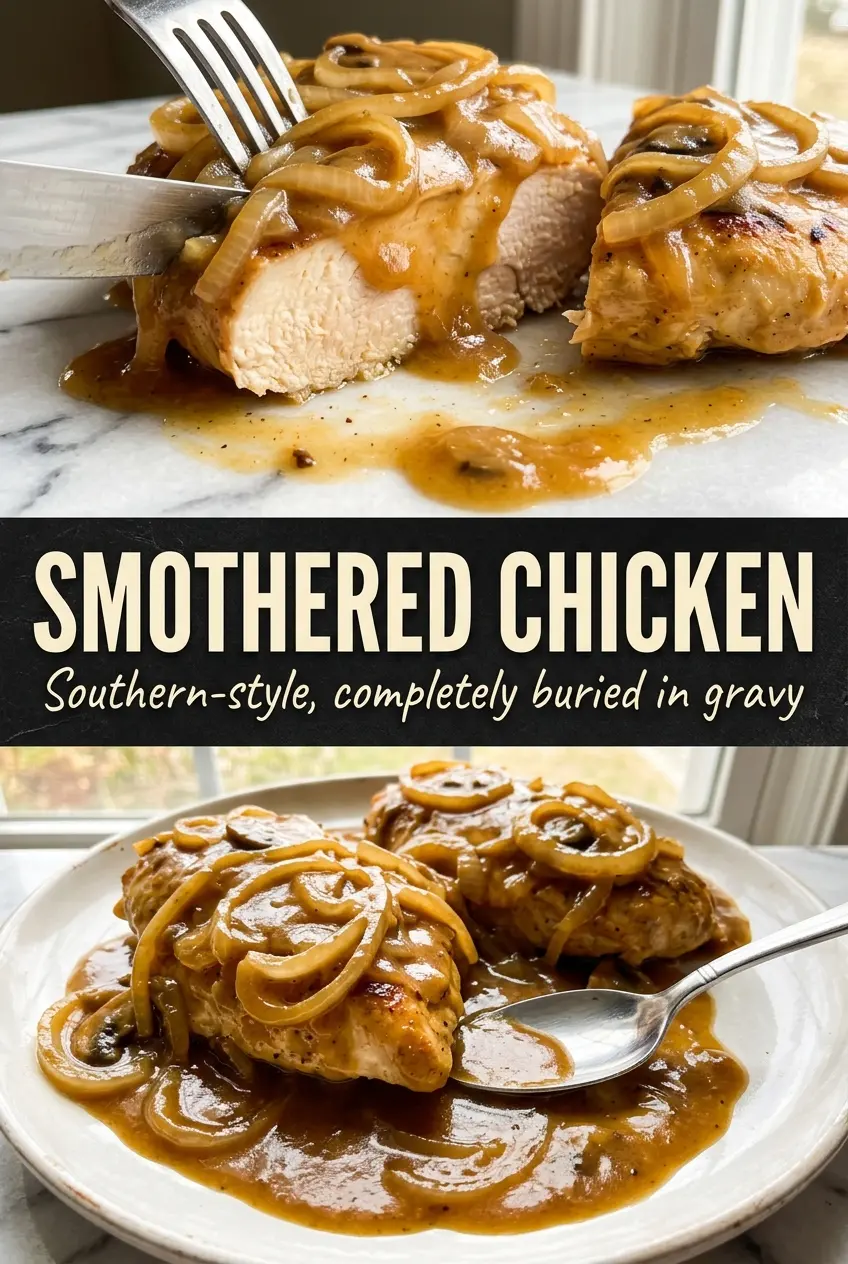
Smothered Chicken
Ingredients
Equipment
Method
- Season the chicken thighs with garlic powder, onion powder, smoked paprika, salt, and pepper.
- Heat the vegetable oil in a cast iron skillet over medium-high heat and sear the chicken skin-side down for 6-7 minutes until deeply golden; flip and sear for 4 minutes, then remove.
- In the same skillet, cook the sliced onion over medium heat for 6-7 minutes until deeply caramelized.
- Add the mushrooms and minced garlic and cook for 4-5 minutes.
- Sprinkle the all-purpose flour over the vegetables and stir for 1 minute.
- Gradually whisk in the chicken broth, scraping up the browned bits from the bottom of the pan.
- Stir in the heavy cream, Worcestershire sauce, and dried thyme.
- Return the chicken skin-side up, cover the skillet, and simmer for 15 minutes until the chicken is cooked through.
- Garnish with fresh parsley and serve the smothered chicken over mashed potatoes or rice, spooning the thick onion and mushroom gravy around the edges.