Smothered chicken and rice lands on the table with the kind of deep, savory comfort that makes a pan feel empty fast. The chicken turns fork-tender in a rich onion gravy, and the rice underneath catches every bit of that flavor as it cooks. What you end up with is not dry rice and saucy chicken sitting on top, but one unified dish where the drippings, broth, and cream all work together.
The key is building the gravy in the same pot after the chicken browns. Those browned bits on the bottom are the base of the sauce, and the sliced onions need time to soften and take on color before the flour and broth go in. That slow build gives the finished dish its dark, full-bodied flavor instead of a thin pan sauce.
Below, you’ll find the small details that keep the rice from turning gummy and the chicken from going bland. The technique is straightforward, but the order matters, and that’s what makes this one worth making again.
The gravy thickened beautifully and the rice cooked through without getting mushy. I used thighs like you suggested and the chicken was tender enough to fall apart with a spoon.
Love the dark onion gravy and tender rice in this smothered chicken dinner? Save it to Pinterest for the nights when you want one skillet of real comfort.
The Secret to Keeping the Rice Fluffy Under a Creamy Gravy
The biggest mistake with smothered chicken and rice is treating the rice like it can fix itself later. It won’t. Once the rice goes into the pot, it needs the right amount of liquid and a tight cover so it can steam evenly without turning pasty on the bottom and underdone on top. Long-grain white rice gives you the best shot at separate, fluffy grains because it stays a little drier and less sticky than short-grain rice.
The other thing that matters is where the liquid comes from. If the broth isn’t hot enough when it hits the flour-thickened onion base, the sauce can seize into little lumps. Add it gradually and scrape the bottom as you go, then stir in the rice only after the gravy is smooth. That sequence keeps the texture silky and gives the rice a chance to absorb flavor instead of just boiling in liquid.
What Each Ingredient Is Doing in the Pan
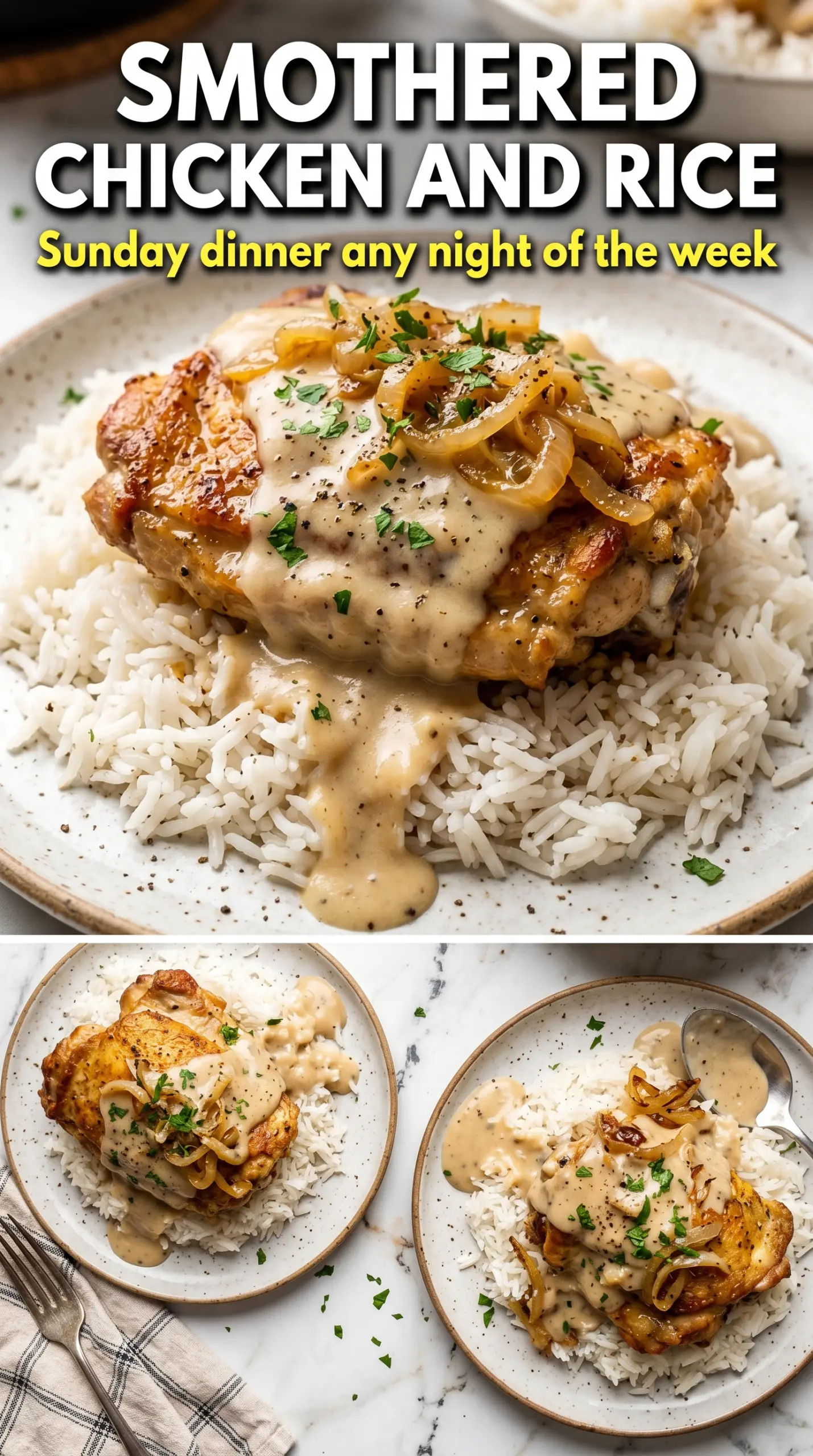
- Bone-in, skin-on chicken thighs — These bring the deepest flavor and stay juicy through the simmer. Boneless thighs work in a pinch, but the skin and bone help protect the meat and enrich the gravy.
- Onions — Thinly sliced onions are what turn this from a simple chicken-and-rice skillet into actual smothered chicken. They need time to soften and brown a little; if you rush them, the sauce tastes flat.
- Flour — This thickens the onion mixture before the broth goes in, which gives the gravy its body. Cook it for a full minute so it loses that raw flour taste.
- Chicken broth — Use a broth you’d drink on its own. A thin, salty broth makes a thin, salty gravy, and this dish depends on the liquid carrying the flavor.
- Heavy cream — Just enough to round out the sauce without turning it into Alfredo. Half-and-half can work, but the gravy will be lighter and a little less plush.
- Worcestershire sauce — This is the quiet ingredient that makes the gravy taste deeper and more savory. You don’t taste it directly, but you’d miss it if it were gone.
Building the Gravy Before the Rice Goes In
Searing the Chicken for Flavor, Not Just Color
Start with the chicken skin-side down in a hot layer of oil and leave it alone until the skin turns deep golden and releases from the pan. That takes about 6 to 7 minutes, and if it sticks when you try to flip it, it isn’t ready yet. The point here is to render some fat and build flavor in the pot, not to cook the chicken through. Pull it out once both sides are browned; it’ll finish later in the sauce.
Caramelizing the Onions Slowly
Use the same pot and let the onions cook in the chicken drippings until they’re soft, glossy, and starting to brown at the edges. This is where the dish gets its sweetness and depth. If the bottom starts to look too dark too fast, lower the heat and keep stirring, because burnt onion bits will turn the gravy bitter. Add the garlic only for the last minute so it stays fragrant instead of harsh.
Turning the Pan Bits Into a Smooth Sauce
Sprinkle the flour over the onions and stir it in until everything looks pasty and coated. After a minute, pour in the broth a little at a time and scrape the bottom well, because those browned bits dissolve into the best part of the gravy. Once the cream and Worcestershire go in, the sauce should look silky and pourable, not thick like mashed potatoes. If it gets too tight before the rice cooks, add a splash more broth.
Letting the Rice Finish Under Cover
Stir the uncooked rice straight into the gravy, then nestle the chicken skin-side up on top so the skin stays out of the liquid as much as possible. Bring it to a gentle simmer, cover tightly, and lower the heat. That tight lid matters more than people think; if steam escapes, the rice stays hard in the center. After about 20 to 22 minutes, the liquid should be absorbed and the rice tender, with the chicken at 165°F and the sauce thick around the edges.
Make It Dairy-Free Without Losing the Creamy Finish
Swap the heavy cream for full-fat coconut milk or an unsweetened dairy-free cooking cream. Coconut milk adds a faint sweetness, so keep the Worcestershire and seasoning balanced; dairy-free cream alternatives taste closer to the original but can be thinner, so simmer the gravy a minute or two longer before adding the rice.
Use Boneless Chicken Thighs for Faster Weeknights
Boneless thighs shave a few minutes off the braise and make serving easier, but they won’t enrich the gravy the same way bone-in thighs do. Keep the sear brief so they don’t dry out, and check them a little early since they’ll cook through faster once the rice goes in.
Make It Gluten-Free With One Swap
Use a 1:1 gluten-free flour blend in place of the all-purpose flour. It thickens the onions and broth the same way in this style of gravy, and the rest of the ingredients are naturally gluten-free as long as your broth and Worcestershire sauce are certified safe.
Store the Leftovers the Right Way
- Refrigerator: Keeps for 3 to 4 days. The rice will firm up as it sits, but the flavor deepens overnight.
- Freezer: Freezes well for up to 2 months in airtight containers. The rice softens a little after thawing, but the gravy protects the chicken from drying out.
- Reheating: Reheat covered over low heat on the stove with a splash of broth or water. The common mistake is blasting it in the microwave until the rice turns dry around the edges and the chicken gets rubbery.
Answers to the Questions Worth Asking

Smothered Chicken and Rice
Ingredients
Equipment
Method
- Season chicken thighs with garlic powder, onion powder, smoked paprika, salt, and pepper. Heat vegetable oil in a large Dutch oven and sear chicken skin-side down over medium-high heat for 6-7 minutes until golden, then flip and sear 4 minutes.
- Remove the chicken from the pot and set aside. Keep any browned bits in the Dutch oven for later gravy flavor.
- Cook thinly sliced onions in the same Dutch oven over medium heat for 8-10 minutes until caramelized. Add minced garlic and cook 1 minute, stirring so it doesn’t brown too quickly.
- Sprinkle flour over the onions and stir for 1 minute. Gradually add chicken broth while scraping up browned bits from the bottom of the pot.
- Stir in heavy cream and Worcestershire sauce until smooth and slightly thickened. Keep the mixture warm while you add the rice.
- Stir in uncooked long-grain white rice and mix it into the broth. Nestle chicken skin-side up into the broth so the rice sits underneath.
- Bring everything to a simmer, then cover tightly and cook over low heat for 20-22 minutes. Cook until the rice is tender and the chicken reaches 165°F, keeping the lid on to trap steam.
- Garnish with fresh parsley and serve hot. Spoon the dark onion gravy over the rice and chicken so every surface is coated.