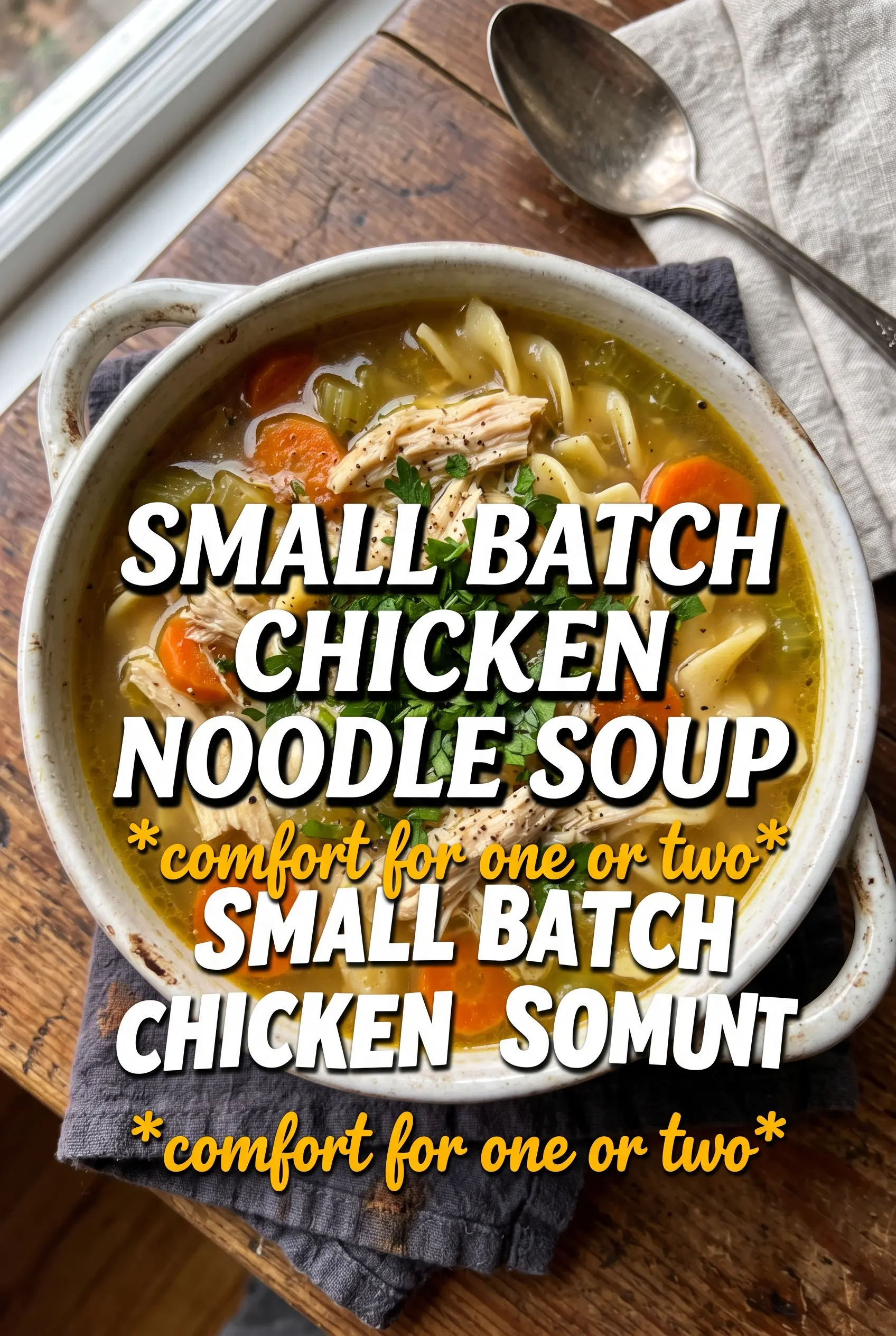
Small batch chicken noodle soup lands with the kind of quiet comfort that makes a bowl feel bigger than the ingredients list. The broth stays clear and savory, the chicken turns tender enough to shred with a fork, and the noodles cook right in the pot so they pick up the flavor instead of tasting separate from the soup. It’s the sort of dinner that feels practical on a busy night but still tastes like someone paid attention.
The key here is keeping the simmer gentle. If the broth boils hard, the chicken tightens up and the noodles can go mushy before the soup has finished tasting like itself. Cooking the breast whole also keeps the meat juicy, and adding the lemon at the end wakes up the broth without making it sour. This is a small batch on purpose, which means the vegetables stay in balance with the liquid instead of disappearing into a giant pot.
Below, I’ve included the ingredient choices that matter most, the part of the process that keeps the soup clean-tasting, and a few ways to adjust it if you want to stretch it, lighten it, or change it up without losing the comforting feel.
The broth stayed clear, the noodles were tender but not swollen, and the lemon at the end made the whole pot taste brighter. My husband asked if there was enough left for lunch tomorrow.
Save this small batch chicken noodle soup for the nights when you want a clear, lemony broth and just enough noodles for two bowls.
The Broth Stays Clear When You Keep the Simmer Calm
A strong boil is the fastest way to turn this soup cloudy and push the chicken into a firmer, stringier texture. A gentle simmer gives the breast time to cook through evenly while the vegetables soften without falling apart. You’ll also get better noodles this way, because they finish in a broth that’s already seasoned instead of getting hammered by rolling heat for too long.
The other thing that matters is the order. The onion, carrots, and celery need a few minutes in the oil first so the soup starts with a sweet, savory base. If you dump everything in at once, the broth still tastes like broth, just with vegetables floating in it. This version tastes built, not assembled.
What Each Ingredient Is Actually Doing in the Pot

- Chicken breast — Cooking it whole keeps it juicy while the broth gains body. A rotisserie chicken works in a pinch, but you’ll lose the clean, lightly poached texture that makes this soup feel fresh.
- Chicken broth — This is the backbone, so use one you’d actually sip. If yours is salty, hold back on extra seasoning until the end; if it’s thin, the lemon and herbs will help, but they can’t replace depth.
- Carrots, celery, and onion — This is the classic base for a reason. Dice the onion small so it melts into the broth, and slice the carrots and celery thin enough that they soften in the same window.
- Egg noodles — They give the soup its comfort-food feel and cook fast, which is exactly what you want in a small batch. If you swap in a different pasta, watch the timing closely because thicker shapes can drink up too much broth.
- Lemon juice — A small squeeze at the end keeps the soup from tasting flat. Add it after the noodles are tender so the acid brightens the broth instead of getting muted during the simmer.
Build the Soup in the Right Order So the Chicken Stays Tender
Softening the Vegetables First
Start with the olive oil, onion, carrots, and celery in a medium saucepan over medium heat. You’re looking for the onions to turn translucent at the edges and the carrots to lose their raw crunch, not brown. If the pan gets too hot, the vegetables will scorch before they soften, and that gives the broth a rough taste instead of a round one.
Letting the Chicken Poach Gently
Add the broth, thyme, parsley, and whole chicken breast, then lower the heat to keep the soup at a steady simmer. Tiny bubbles should rise around the edges, not a hard boil through the center. Pull the chicken as soon as it reaches 165°F and shreds easily; overcooked breast meat gets dry fast, and it won’t recover in the pot.
Finishing with Noodles and Lemon
Stir in the egg noodles and cook just until tender, usually 6 to 7 minutes. The noodles should hold their shape but still feel soft at the center when you bite one. Add the lemon juice last, then taste and season with salt and pepper; if you season before the broth reduces a little, you can end up with a soup that tastes sharp instead of balanced.
How to Adapt This Bowl for Different Nights
Make It Dairy-Free Without Changing the Texture
This recipe is already naturally dairy-free, which is part of why it feels so light and clean. Keep the broth quality high, and don’t try to replace richness with cream unless you want a different soup entirely; this version gets its comfort from the chicken and noodles, not from dairy.
Use Rotisserie Chicken for a Faster Version
Skip the raw chicken simmer and stir in about 1 to 1 1/2 cups shredded rotisserie chicken after the vegetables are tender. Since the meat is already cooked, you only need a few minutes for it to warm through, and the broth stays from getting over-reduced while you wait.
Make It Gluten-Free
Use a gluten-free egg noodle or a small gluten-free pasta shape that cooks in roughly the same time. Add it near the end and watch it closely, because gluten-free pasta can go from tender to soft faster than wheat noodles and it may thicken the broth more than expected.
Stretch It to Serve More People
Add another cup of broth, a second carrot, and a little extra noodle if you want to turn this into three smaller bowls. The soup will still taste right, but you’ll need a touch more salt and lemon at the end because the flavor gets spread out as soon as you widen the batch.
Storage and Reheating
- Refrigerator: Store for up to 3 days. The noodles will absorb broth as it sits, so expect the soup to thicken.
- Freezer: It freezes best without the noodles. Freeze the broth, chicken, and vegetables, then add fresh noodles when reheating for the best texture.
- Reheating: Warm gently over low to medium-low heat until steaming. If the noodles are already in the soup, add a splash of broth or water before reheating so they don’t turn bloated and soft.
Questions I Get Asked About This Recipe
Small Batch Chicken Noodle Soup
Ingredients
Equipment
Method
- Heat olive oil in a medium saucepan over medium heat, then sauté the onion, carrots, and celery for 4 minutes until slightly softened and fragrant.
- Stir in the garlic and cook for 1 minute, keeping it from browning, then pour in the chicken broth and add dried thyme and dried parsley.
- Add the chicken breast whole to the pot, then simmer for 18-20 minutes until cooked through and no longer pink in the center, keeping the broth at a gentle simmer.
- Remove the chicken and shred it, then return the shredded chicken to the pot so it warms through in the broth.
- Add the egg noodles and cook for 6-7 minutes until tender, stirring occasionally so they cook evenly.
- Squeeze in the lemon juice, then season with salt and black pepper to taste for a bright finish.
- Garnish with fresh parsley and serve hot with the noodles suspended in the broth.