Slow cooker chicken breasts can be dry and bland, but when they’re seasoned well and cooked just long enough, they turn into tender, sliceable chicken with a savory broth that tastes like it had a lot more work behind it. The real payoff here is texture: the meat stays juicy, pulls apart cleanly, and takes on enough flavor that you don’t need to rescue it with a heavy sauce at the end.
The trick is keeping the liquid modest and the cook time honest. Chicken breasts don’t need to be buried in broth; they need enough moisture to keep the slow cooker environment gentle while the butter and garlic melt into the cooking juices. A short rest before slicing helps the meat hold onto those juices instead of flooding the cutting board.
Below, I’ll walk you through the timing that keeps chicken breasts tender instead of stringy, plus a few smart swaps if you want to change up the seasoning or turn this into meal prep for the week.
The chicken stayed unbelievably juicy, and the cooking juices turned into the best quick sauce once I spooned them over the sliced breasts. I used the low setting for 4 hours and it was perfect — not a dry edge in sight.
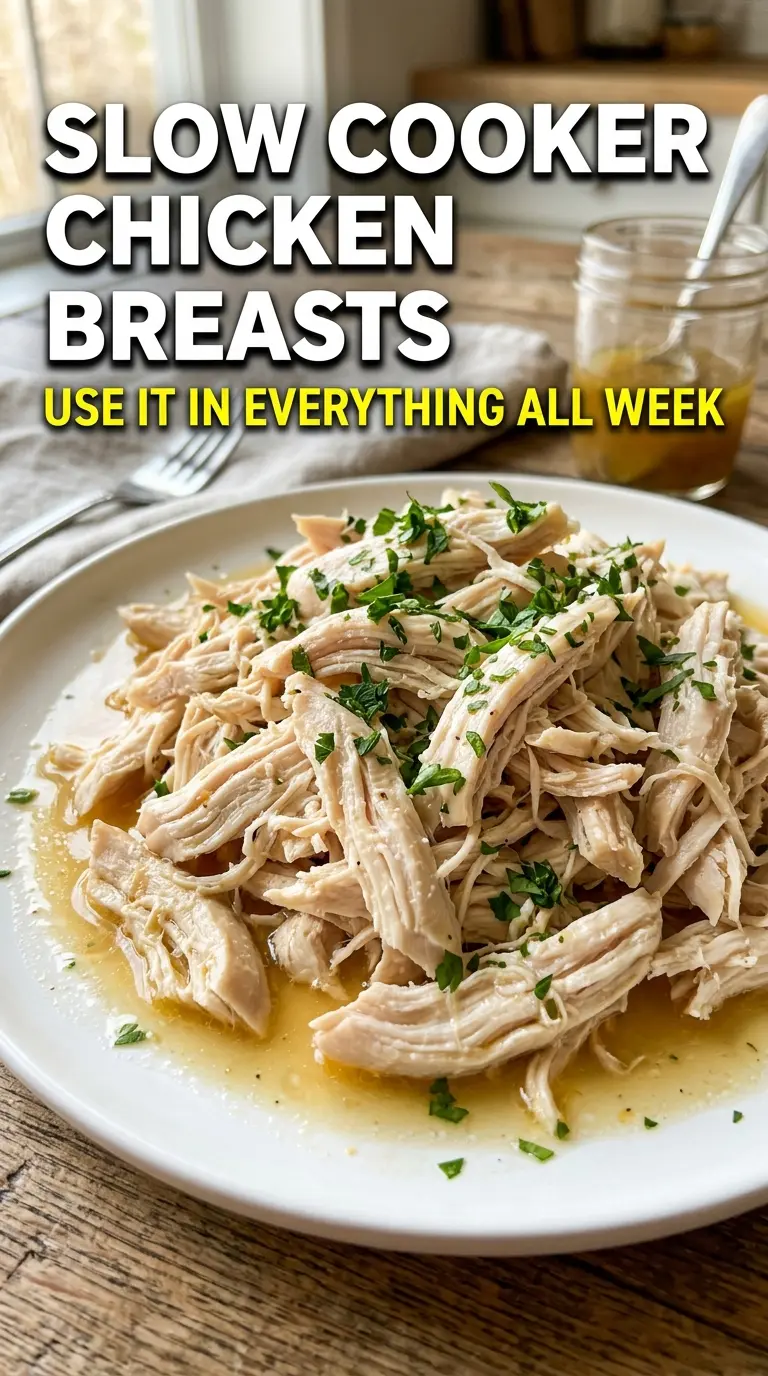
Juicy slow cooker chicken breasts with a savory garlic-butter broth — perfect for slicing, spooning over rice, or meal prep all week.
The Real Reason Chicken Breasts Turn Out Dry in the Slow Cooker
Dry slow cooker chicken usually comes down to one thing: it stayed in the cooker past the point where the meat was done. Chicken breasts are lean, and the slow cooker’s gentle heat can slide from perfect to stringy faster than people expect, especially on HIGH. The goal isn’t to cook them until they fall apart from hours of extra heat; it’s to stop as soon as the thickest part reaches done and still looks juicy when you slice it.
Another common mistake is adding too much liquid. Chicken breasts release their own juices as they cook, so a small amount of broth is enough to create steam, season the meat, and build a sauce without turning everything watery. The butter and garlic don’t just add flavor — they give the broth a richer body so the spooned-over sauce tastes finished, not thin.
- Cook on LOW for the best texture. LOW gives the chicken more time to stay tender before it tightens up. HIGH can work in a pinch, but it gives you a narrower window, which is why dry edges happen.
- Use broth, not a full bath. You only need enough liquid to cover the bottom and keep things moist. Too much broth dilutes the seasoning and leaves you with bland chicken juice instead of sauce.
- Rest before slicing. Five minutes off the heat lets the juices settle back into the meat. Slice too soon and they run straight out onto the plate.
What Each Seasoning Is Doing in This Dish
- Garlic powder and onion powder — These coat the chicken evenly and season every bite without adding extra prep. Fresh garlic alone won’t give the same all-over background flavor, which is why the powder matters here.
- Smoked paprika — This adds a little color and a quiet smoky depth that keeps the broth from tasting flat. If you only have regular paprika, use it, but the dish loses some of that savory edge.
- Italian seasoning — This brings the herb note that makes the chicken taste complete, especially once the cooking juices are spooned over the top. Dried herbs work better than fresh here because they hold up through the long cook.
- Butter and minced garlic — The butter melts into the broth and gives the sauce body, while the garlic perfumes the whole cooker. If you skip the butter, the sauce tastes thinner and less rounded.
- Chicken broth — Use a broth you’d actually sip. Since the liquid becomes the sauce, bland broth makes bland chicken, and no amount of parsley fixes that at the end.
Building the Flavor Without Overcooking the Meat
Seasoning the Chicken Evenly
Pat the chicken breasts dry first, then coat both sides with the spice mix and salt and pepper. Dry chicken holds seasoning better, and even coverage matters because the slow cooker won’t brown the surface the way a skillet does. If the seasoning looks patchy going in, it will taste patchy coming out.
Setting Up the Cooker
Pour the broth around the chicken, not directly over the top, so some of the seasoning stays on the meat instead of washing away. Drop in the butter and minced garlic, then cover the cooker right away. Lifting the lid too often steals heat and stretches the cooking time, which is the kind of thing that nudges chicken breasts from tender to chalky.
Watching for Doneness
Cook on LOW for 3 to 4 hours, or HIGH for 2 to 2.5 hours, and start checking early if your chicken breasts are on the smaller side. The meat should look opaque and feel firm but still springy when pressed in the center. If it shreds the second you touch it, it has gone a little too far for neat slices, though it can still be good for sandwiches or shredded bowls.
Finishing With the Pan Sauce
Take the chicken out and let it rest before slicing. Spoon the cooking juices over the top, and if the broth looks thin, let it sit for a minute so the fat rises and you can spoon that over too. A squeeze of lemon at the end brightens the whole dish and keeps the buttery sauce from tasting heavy.
How to Change This Without Losing the Juicy Texture
Dairy-Free Version
Skip the butter and use a tablespoon of olive oil instead, then finish with a little extra lemon juice. The sauce won’t be as silky, but it still tastes clean and savory, and the chicken stays just as tender.
Make It Meal-Prep Friendly
Cook the chicken whole, then slice it after it rests and store it with a few spoonfuls of the cooking juices. That keeps the meat from drying out in the fridge and makes reheating much easier.
Swap the Seasoning Direction
Trade the Italian seasoning for taco seasoning, Cajun seasoning, or a simple rosemary-thyme mix. Keep the garlic powder and broth the same, because they give you a reliable base no matter where you take the flavor.
Gluten-Free by Default
This recipe is naturally gluten-free as written, as long as your broth is certified gluten-free. That’s the only ingredient worth checking carefully, since the spices and butter are already fine.
Storage and Reheating
- Refrigerator: Store for up to 4 days with some of the cooking juices. The chicken stays moister this way than it does stored dry.
- Freezer: It freezes well for up to 2 months. Freeze sliced chicken with a little broth in airtight containers so the meat doesn’t turn mealy.
- Reheating: Reheat gently covered in the microwave or in a skillet with a splash of broth over low heat. High heat is the mistake that turns leftovers stringy fast.
Questions I Get Asked About This Recipe

Slow Cooker Chicken Breasts
Ingredients
Equipment
Method
- Season the chicken breasts generously on both sides with garlic powder, onion powder, smoked paprika, Italian seasoning, salt, and cracked black pepper, coating evenly so every bite tastes seasoned.
- Place the seasoned chicken breasts into the slow cooker and pour the chicken broth around the chicken (not directly on top) to form a seasoned cooking liquid.
- Add the butter and minced garlic to the slow cooker, tucking the butter in around the chicken for melting into the broth.
- Cover and cook on LOW for 3-4 hours, or on HIGH for 2-2.5 hours, until the chicken is tender and easy to slice; do not overcook (look for pull-apart tenderness rather than dryness).
- Remove the chicken and let it rest for 5 minutes before slicing so the juices redistribute; use visible steam and softened texture as your cue.
- Pour the cooking juices over the sliced chicken as a pan sauce, aiming for a glossy coating on top.
- Garnish with fresh parsley and lemon wedges for brightness right before serving.