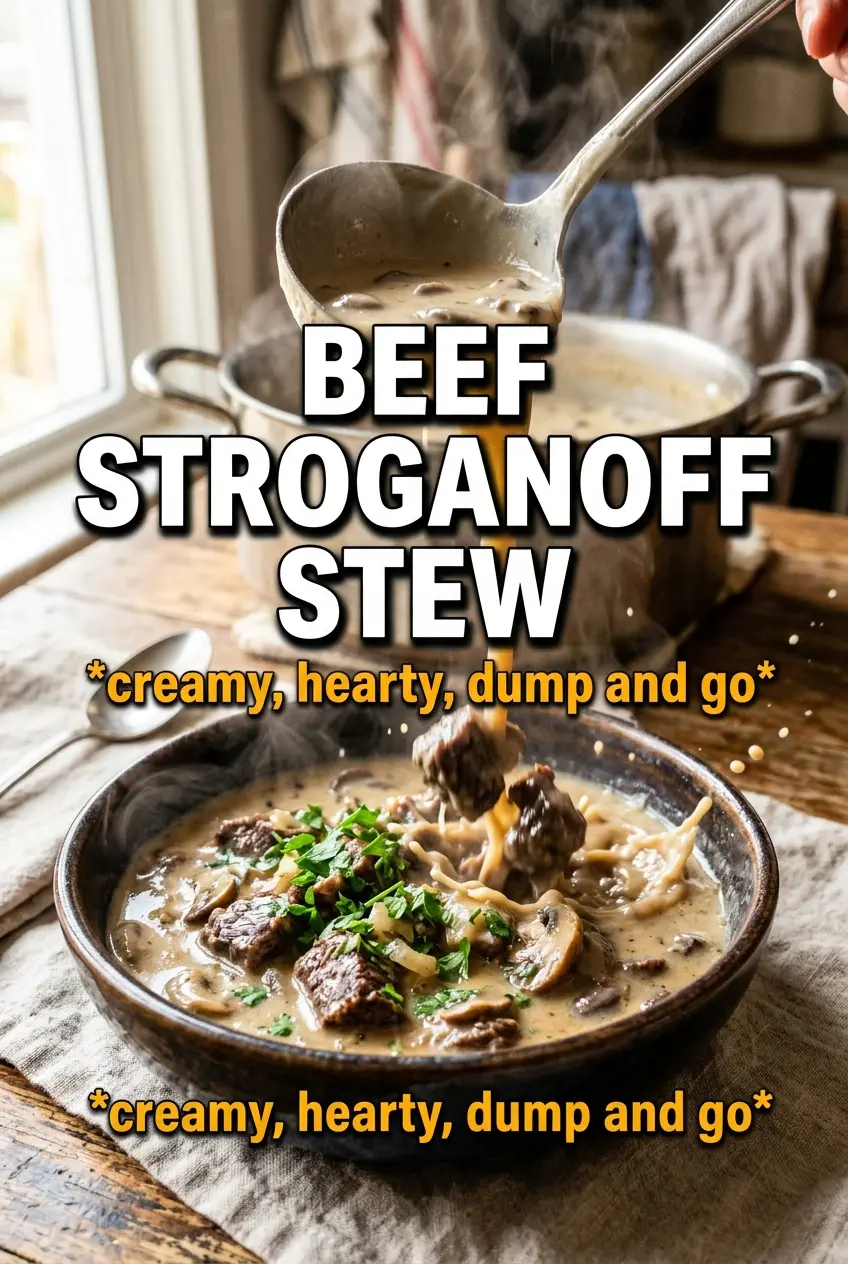
Slow cooker beef stroganoff stew lands on the table with tender beef, earthy mushrooms, and a creamy sauce that clings to every noodle. The long, gentle cook breaks down chuck into spoon-soft pieces, while the broth, Dijon, and Worcestershire build a deep savory base that tastes like it simmered all afternoon because it did. Spoon it over egg noodles and it eats like the coziest version of stroganoff, just with more body and a little more comfort in every bite.
The trick is keeping the dairy out until the end. Sour cream and cream cheese give the stew that classic stroganoff richness, but if they cook for hours they can turn grainy or split. The other thing that matters is the thickener: a cornstarch slurry added near the finish gives you a glossy, stew-like sauce instead of a thin broth with beef in it. That last 20 minutes matters more than most people think.
Below, I’ve included the exact point where the sauce comes together, the one swap that keeps the texture creamy, and a few ways to adjust the stew depending on what you have in the fridge.
The beef was fall-apart tender and the sauce thickened up beautifully at the end. I was nervous about adding the sour cream in the slow cooker, but waiting until the finish kept it smooth and creamy.
Save this slow cooker beef stroganoff stew for the nights when you want tender beef, mushrooms, and a silky sour cream sauce with almost no hands-on time.
The Reason the Dairy Goes in at the End, Not in the Slow Cooker
Beef stroganoff goes sideways fast when the dairy cooks the whole time. Sour cream can curdle, and cream cheese can turn grainy if it sits under long, steady heat for hours. The slow cooker does the heavy lifting for the beef and mushrooms; the creamy finish belongs at the end, after the meat is already tender and the sauce has been thickened.
That order gives you control over the texture. First the chuck softens in the broth, then the cornstarch slurry turns the cooking liquid into a sauce that can actually hold the dairy. If you stir in the sour cream and cream cheese too soon, they lose their smoothness. Wait until the stew is thick enough to coat a spoon, then add them off the heat or on very low heat until everything melts together.
- Beef chuck — Chuck is the cut that pays off here. It has enough connective tissue to turn rich and silky after a long low cook. Leaner beef turns dry and stringy before the sauce is ready.
- Cremini mushrooms — These bring the earthy, almost meaty flavor that makes the stew taste full and layered. White button mushrooms work in a pinch, but cremini hold up better and taste deeper.
- Dijon and Worcestershire — These are the quiet flavor builders. Dijon sharpens the sauce without making it taste mustardy, and Worcestershire adds the savory backbone that keeps the stew from tasting flat.
- Cornstarch slurry — The slurry thickens the broth without adding floury taste. Mix it with cold water first so it disperses evenly; if you dump in dry cornstarch, it clumps and leaves little pale pockets in the sauce.
What Each Layer Is Doing in the Pot

- Beef broth — This is the base of the sauce, so use one you’d actually sip. A thin or watery broth makes the whole dish taste thin; a good broth gives the stew body before the dairy goes in.
- Smoked paprika and thyme — Paprika adds a subtle warmth, and thyme keeps the sauce from feeling heavy. You don’t need much of either, but leaving them out makes the stew taste bland and one-note.
- Onion and garlic — These soften into the broth and round out the beef. Fresh garlic matters here; the jarred stuff can taste flat after a long cook.
- Sour cream and cream cheese — Both are doing different jobs. Sour cream gives the familiar tang, while cream cheese adds body and helps the sauce cling to noodles. Use full-fat if you can; low-fat dairy is more likely to separate.
Building the Stew So the Sauce Stays Smooth
Load the slow cooker in the right order
Season the beef first, then add it to the slow cooker with the mushrooms, onion, garlic, broth, Worcestershire, Dijon, paprika, and thyme. Everything can go in at the same time because this is a braise, not a sauté. The beef should be mostly submerged, but it doesn’t need to be completely covered; the mushrooms will give off liquid as they cook.
Cook until the beef gives up without a fight
Low for 7 to 8 hours is the sweet spot. The beef should be tender enough to break apart with a spoon, not just cut cleanly. If it still feels chewy at 7 hours, it needs more time, not more heat. High will work in a pinch, but low gives you the most reliable texture.
Thicken before the dairy goes in
Stir the cornstarch slurry into the hot stew, then cook on High for about 20 minutes until the liquid looks glossy and lightly coats the back of a spoon. If you skip this step, the sour cream thins into the broth instead of sitting in a creamy sauce. The stew should look like gravy before the dairy hits the pot.
Finish gently so the sauce stays velvety
Stir in the sour cream and cubed cream cheese until melted and smooth, then taste for salt and pepper. Keep the heat low at this point. If the pot is boiling when the dairy goes in, the sauce can split or turn grainy. Once everything is smooth, serve it right away over egg noodles and finish with parsley.
How to Adjust This Without Losing the Creamy Finish
Make it gluten-free with one easy swap
The stew itself is already gluten-free if your Worcestershire sauce is certified gluten-free, but the egg noodles are not. Serve it over mashed potatoes, rice, or gluten-free noodles and you still get the same creamy, savory stew without losing the texture of the sauce.
Use beef stew meat when that’s what you have
Pre-cut stew meat works fine, but it’s usually a mixed bag of cuts, so the texture can be less even than chuck you cube yourself. If you use it, still cook low and slow until every piece is fork-tender; don’t rush it just because the cubes look small.
Make it lighter without losing the sauce
You can cut the cream cheese to half and the stew will still thicken nicely, but the sauce won’t be quite as rich. If you use reduced-fat sour cream, add it off the heat and expect a looser finish. Full-fat dairy gives the smoothest result.
Add extra vegetables without watering it down
Carrots or celery can go in at the start, but don’t overload the pot with watery vegetables. Too many add-ins can dilute the sauce and make the beef taste less concentrated. Keep the mushroom-to-liquid ratio balanced so the stew still tastes like stroganoff, not vegetable soup.
Storage and Reheating
- Refrigerator: Store leftovers in an airtight container for up to 4 days. The sauce will thicken as it chills.
- Freezer: It freezes, but the sour cream can change texture a little after thawing. If you want the best result, freeze before adding the dairy and stir in fresh sour cream when you reheat.
- Reheating: Reheat gently on the stove over low heat with a splash of broth or water. High heat is the mistake that makes the sauce break and the beef dry out.
Questions I Get Asked About This Recipe
Slow Cooker Beef Stroganoff Stew
Ingredients
Equipment
Method
- Season the beef chuck cubes with salt and pepper, then place them in the slow cooker with mushrooms, onion, and garlic. Add beef broth, Worcestershire sauce, Dijon mustard, smoked paprika, and dried thyme, and stir to combine.
- Cover and cook on Low for 7 to 8 hours, or on High for 4 to 5 hours, until the beef is very tender. Keep the lid on during cooking so the stew stays hot and steams through.
- Whisk the cornstarch with water to form a smooth slurry, then stir it into the slow cooker. Switch to High and cook for 20 minutes, stirring once, until the sauce thickens.
- Stir in the sour cream and cream cheese until melted and smooth. Season again with salt and pepper, then turn off the heat once the sauce is fully incorporated.
- Serve the stew over egg noodles and top with fresh parsley and a light dusting of paprika if desired. Let it rest for 2 minutes after finishing so the sauce clings to the noodles.