Sausage and cabbage stir fry hits the table with that fast, skillet-cooked comfort that feels bigger than the short ingredient list. The sausage turns deeply browned, the cabbage softens just enough to stay a little crisp at the edges, and the Dijon-vinegar glaze pulls everything into one savory, tangy pan. It’s the kind of dinner that tastes like you worked harder than you did.
What makes this version worth keeping is the order of operations. Browning the sausage first leaves flavorful bits in the pan, and those bits become the base for the cabbage and onion instead of getting washed away. The mustard, apple cider vinegar, and brown sugar add just enough sharpness and balance to keep the dish from tasting flat or greasy. A little butter helps the cabbage take on color without drying out.
Below, I’ll walk through the one pan step that matters most, the ingredient swaps that still keep the dish solid, and a few ways to adjust it depending on what’s in your fridge.
The cabbage got those little browned edges I always hope for, and the Dijon sauce coated everything without turning soggy. I used kielbasa and my husband went back for seconds before I’d even sat down.
Save this sausage and cabbage stir fry for a fast skillet dinner with browned sausage, tender cabbage, and that tangy Dijon glaze.
The Trick Is Browning the Sausage Before the Cabbage Goes In
The biggest mistake with cabbage stir fry is crowding the pan with everything at once. When that happens, the cabbage steams, the sausage turns bland, and the whole dish tastes flat. Browning the sausage first gives you crisped edges and leaves behind rendered fat plus browned bits, which is where the depth comes from. That base matters more than any single seasoning here.
Cabbage needs space and heat to soften without collapsing into a watery pile. If your pan looks crowded, work in batches or use a larger skillet. You want the cabbage to shrink, pick up some color, and still have enough structure to catch the glaze at the end.
- Browned sausage: Smoked kielbasa gives you the easiest path to flavor because it brings salt, smoke, and fat to the pan. Andouille works if you want more heat. Pre-sliced sausage is fine, but cut it thicker if you want better browning.
- Green cabbage: Green cabbage holds up best here. Napa cabbage cooks faster and turns softer, while red cabbage changes the look and gives a slightly earthier bite.
- Dijon mustard: This is not just for tang. It helps emulsify the butter and vinegar into a glossy sauce that clings to the cabbage instead of sitting in the bottom of the skillet.
- Apple cider vinegar: The acidity cuts through the sausage and butter. White vinegar works in a pinch, but it tastes sharper and less rounded.
What Each Ingredient Is Doing in the Skillet
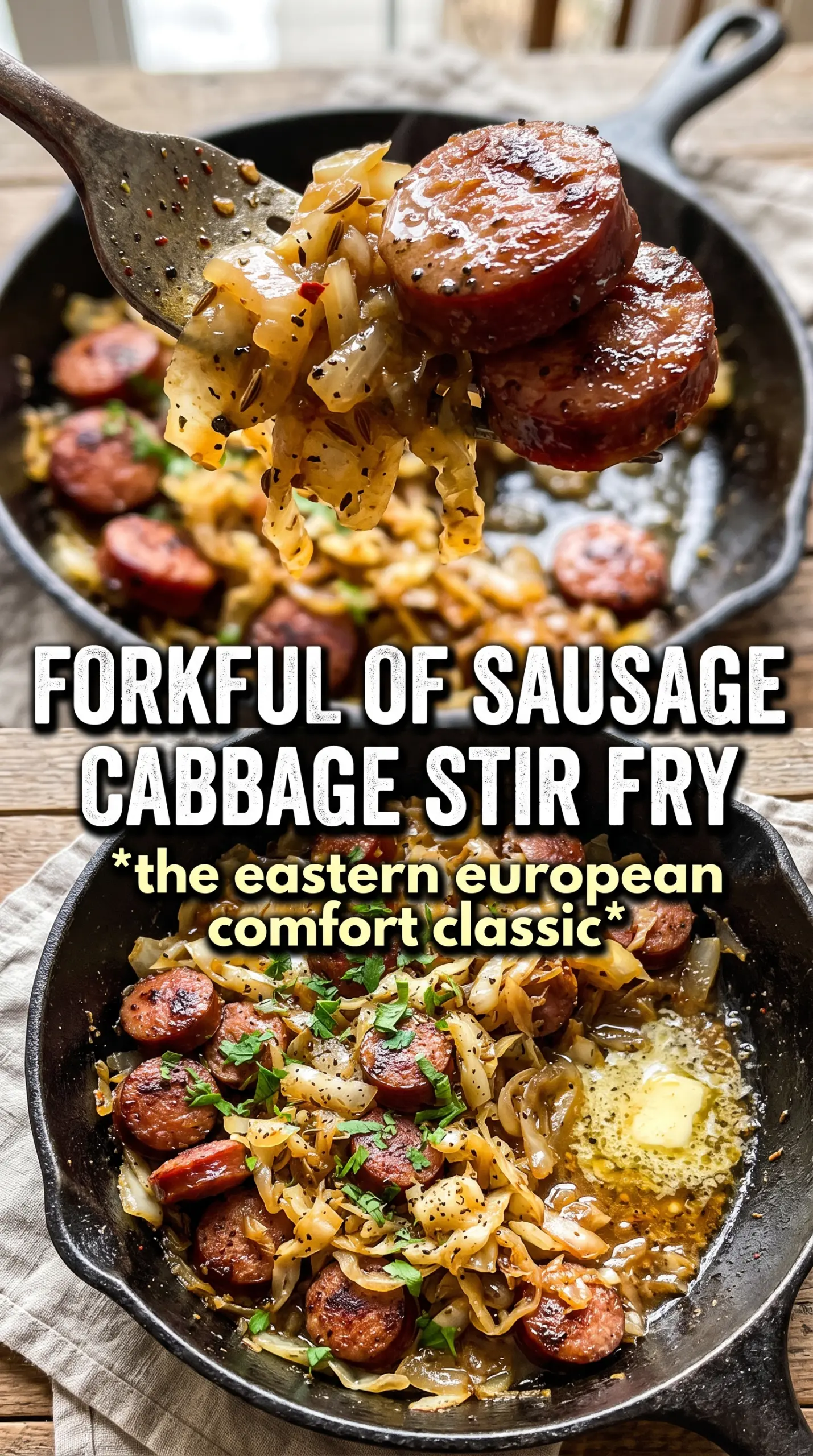
- Smoked sausage: This is the anchor. It brings the salty, smoky backbone, and the rendered fat helps cook the onion and cabbage. If you use a leaner sausage, the pan will need a little more butter.
- Butter: Butter softens the onion and helps the cabbage brown at the edges. Olive oil works, but you’ll lose some of the roundness that makes the glaze taste finished.
- Onion: The onion should turn golden and sweet before the cabbage goes in. That slight caramelization keeps the dish from tasting like boiled vegetables.
- Caraway seeds: Optional, but they make the cabbage taste a little more classic and earthy. If you’ve never cooked with them, start small — they’re noticeable. Fennel seed is not a direct substitute, but it can work if you want a different kind of savory lift.
- Brown sugar: Just enough sugar balances the vinegar and mustard. If you skip it, the sauce can taste abrupt instead of rounded.
How to Keep the Cabbage Tender Without Turning It Soupy
Build the sausage fond first
Set the sausage slices in a hot skillet and let them sit long enough to pick up a deep brown edge before you turn them. If they slide around too easily, the pan isn’t hot enough. You want color, not just warmth. Pull them out once they’re browned so they don’t overcook while the vegetables finish.
Soften the onion before adding the cabbage
The onion needs a head start in the butter, about five minutes, until it looks translucent with a little gold at the edges. That step sweetens the base and keeps raw onion from hanging around in the finished dish. Add the garlic and caraway for only a minute; any longer and the garlic can turn bitter.
Let the cabbage collapse and color in stages
Add the cabbage and stir occasionally, not constantly. If you stir nonstop, it never sits still long enough to brown. The leaves should wilt first, then go tender, then pick up little caramelized spots around the edges. If the skillet gets dry before the cabbage softens, add the smallest splash of water and let it evaporate before finishing.
Finish with the glaze off the hottest part of the flame
Whisk the Dijon, apple cider vinegar, and brown sugar together, then pour it over the cabbage once it has some color. Return the sausage and toss everything together until the glaze coats the pan. If the sauce seems thin, give it another minute or two over medium heat; it should look glossy and clingy, not watery. Taste at the end and salt carefully, because the sausage already brings plenty.
How to Adapt This for a Different Pantry or Diet
Make It Dairy-Free Without Losing the Gloss
Swap the butter for olive oil or a neutral oil, then add an extra teaspoon of Dijon at the end for body. You’ll lose a little of the buttery finish, but the glaze will still cling nicely if you don’t overcook the cabbage.
Use Turkey Sausage for a Lighter Pan
Turkey sausage works, but it won’t render much fat, so the skillet needs the full amount of butter. Browning still matters just as much, because that’s where the flavor comes from when the meat itself is milder.
Make It Low-Carb by Skipping the Brown Sugar
Leave out the brown sugar and use the full amount of vinegar and mustard. The dish will taste sharper and a little more savory, so it helps to let the onion cook until it’s genuinely golden before the cabbage goes in.
Swap in Bratwurst or Kielbasa
Kielbasa keeps the flavor closest to the original and gives you the smokiest result. Bratwurst is milder and a little juicier, so the final dish tastes softer and less punchy. Both work as long as you brown them well first.
Storage and Reheating
- Refrigerator: Keeps for up to 4 days in a sealed container. The cabbage softens a little more as it sits, but the flavor gets even better.
- Freezer: Freezes reasonably well for about 2 months, though the cabbage will be softer after thawing. Cool it fully before freezing and use a tight container to keep out extra moisture.
- Reheating: Warm it in a skillet over medium-low heat with a small splash of water if needed. The common mistake is blasting it in the microwave until the sausage turns rubbery and the cabbage gets mushy.
Questions I Get Asked About This Recipe
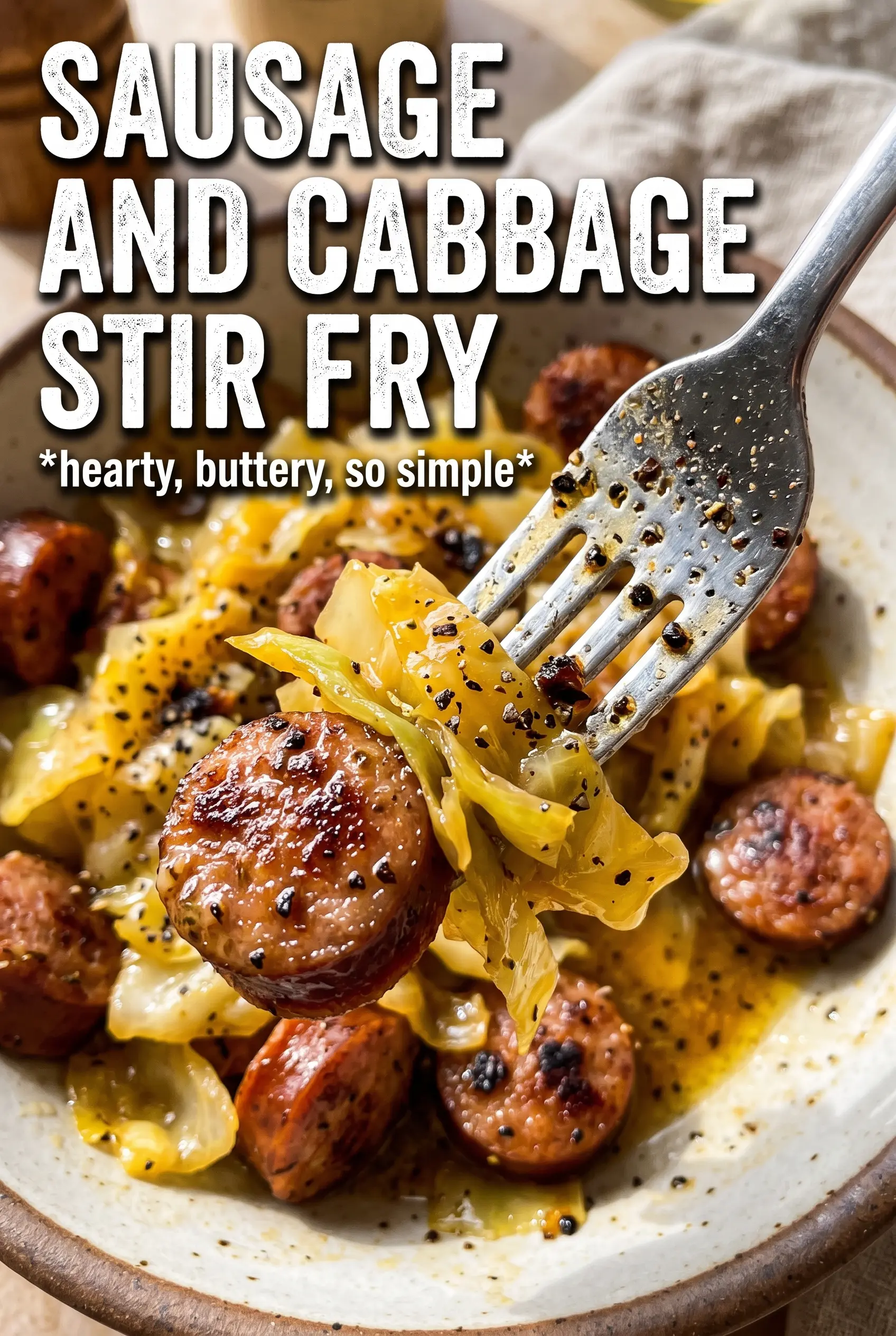
Sausage And Cabbage Stir Fry
Ingredients
Equipment
Method
- Heat a large cast iron skillet over medium-high heat and add the sliced smoked kielbasa or andouille sausage. Brown until caramelized, about 5 to 7 minutes, then remove and set aside with any pan drippings.
- Melt the unsalted butter in the same skillet over medium heat. Sauté the onion until softened and golden, about 5 minutes, stirring as needed for even browning.
- Add the minced garlic and optional caraway seeds and cook for 1 minute. Stir constantly so the garlic doesn’t darken too fast.
- Add the chopped green cabbage and cook for 8 to 10 minutes, stirring occasionally. Cook until wilted and slightly caramelized at the edges.
- Whisk together the Dijon mustard, apple cider vinegar, and brown sugar until smooth. Pour the glaze over the cabbage and stir to coat.
- Return the browned sausage to the skillet and toss everything together. Cook for 1 to 2 minutes to heat through and lightly bind the glaze to the cabbage.
- Season with salt and pepper to taste. Top with fresh parsley right before serving.