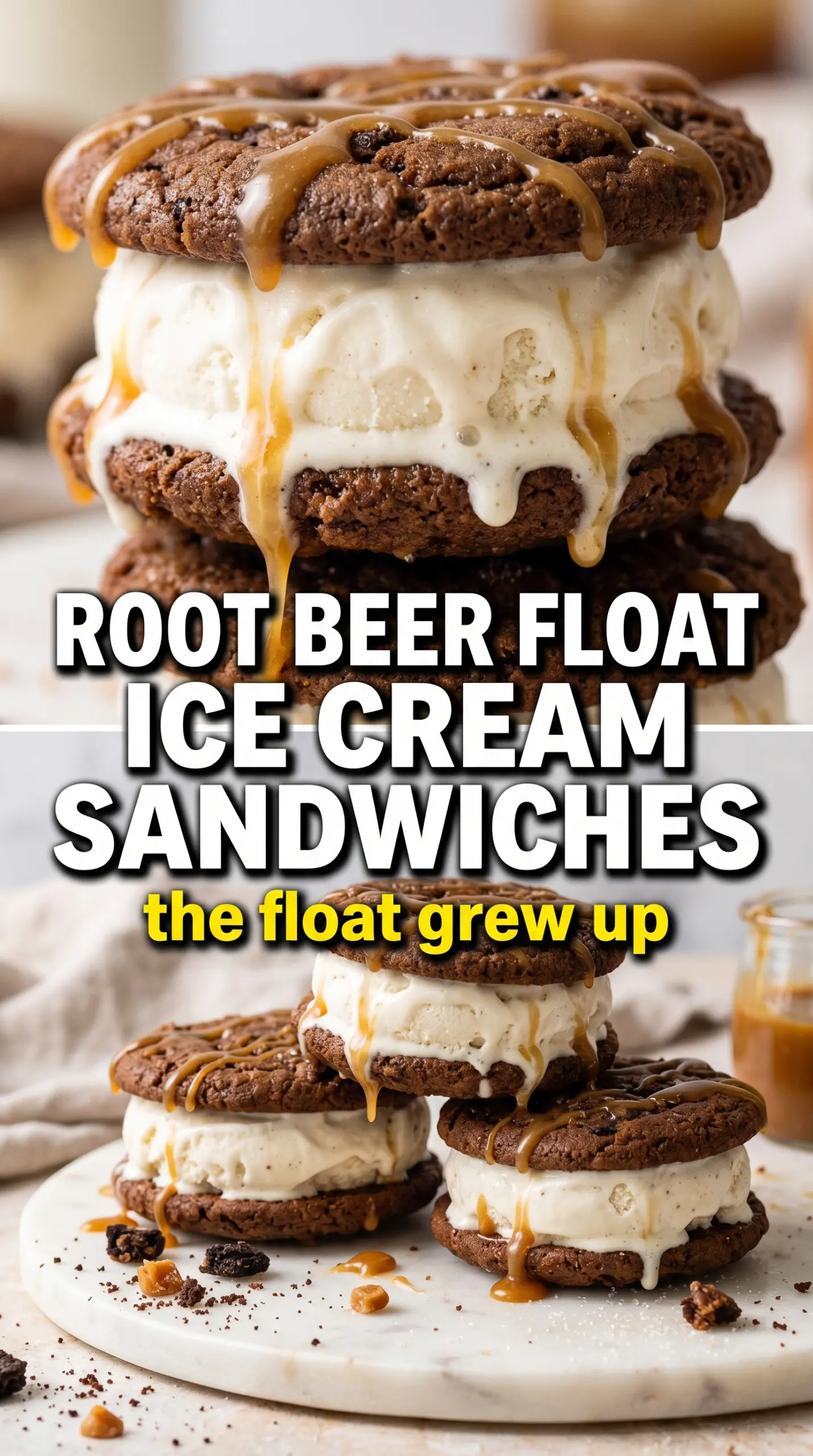
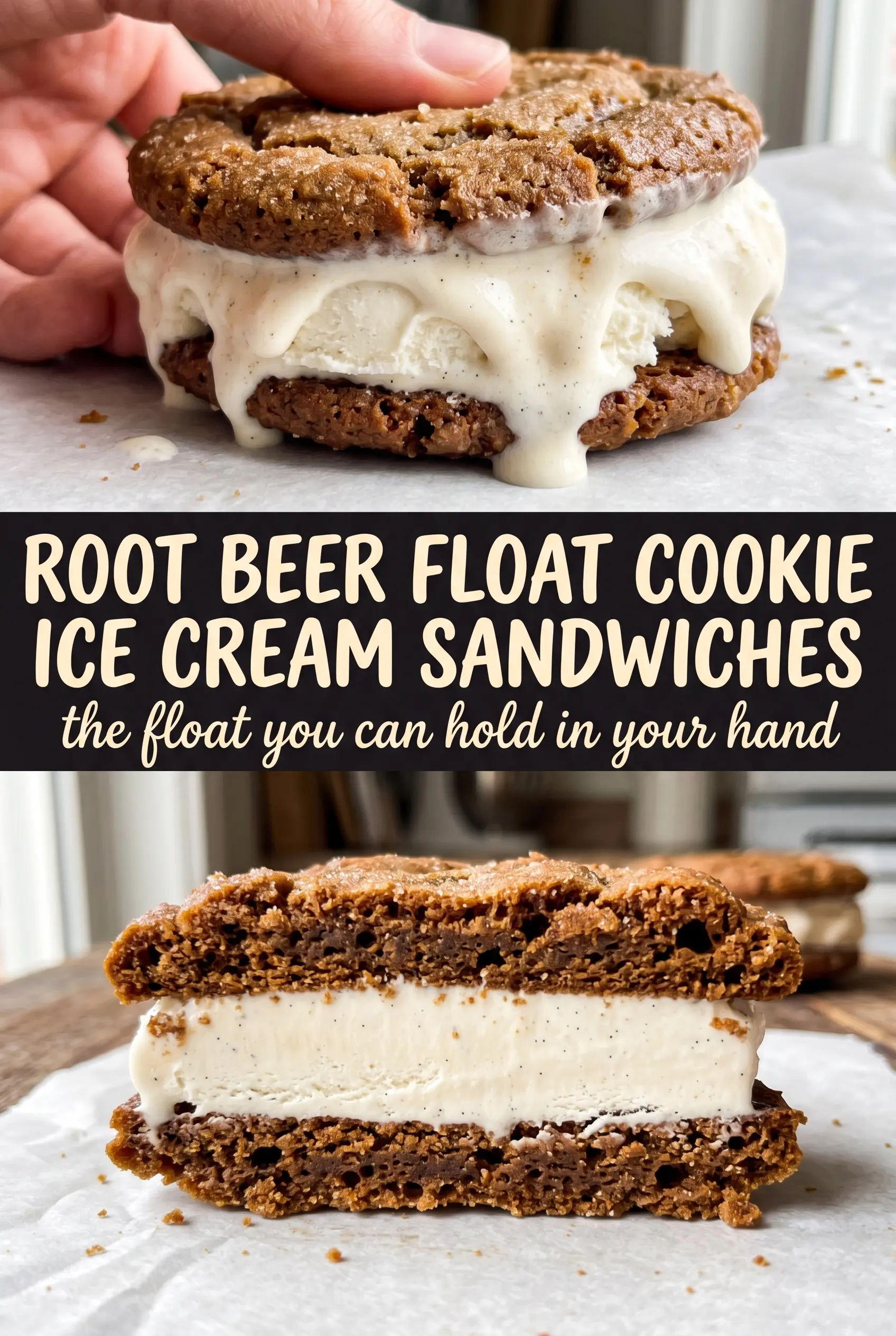
Root Beer Float Cookie Ice Cream Sandwiches bring the old-school soda fountain idea into a handheld frozen dessert that actually eats cleanly. The cookies are soft, deeply flavored with molasses and root beer, and sturdy enough to hold a thick layer of vanilla bean ice cream without turning soggy before you get to the last bite. A ribbon of root beer caramel over the top gives you that fizzy, creamy, nostalgic finish in one neat package.
The trick here is balancing flavor and structure. Molasses gives the cookies their dark color and chew, while root beer extract does the heavy lifting on flavor without adding extra liquid that would make the dough loose. Baking the cookies until just set keeps them tender after freezing, which matters because an overbaked cookie turns hard once it comes out of the freezer. The ice cream layer also needs a little patience — a short rest in the freezer after assembling helps everything firm up so the sandwiches slice and serve like they should.
Below, you’ll find the detail that keeps the cookies soft instead of crumbly, plus the easiest way to assemble them without melting the ice cream all over the counter.
The cookies stayed soft after freezing and the root beer caramel on top made them taste like a real float, not just vanilla ice cream between cookies. My kids kept asking for “one more half” because the texture was perfect.
Save these Root Beer Float Cookie Ice Cream Sandwiches for the next time you want a frozen dessert with soft molasses cookies and root beer caramel drizzle.
The Reason These Cookies Stay Soft After Freezing
Frozen sandwiches fail when the cookie goes dry and brittle. That usually happens because the dough is baked too long or because the cookie base doesn’t have enough moisture to stay tender once it’s chilled. Here, molasses and butter do the work together: molasses keeps the crumb supple, and the butter gives the cookies enough richness to feel like a real dessert instead of a frozen afterthought.
The other thing that matters is size. These cookies should be pressed flat before baking so they cool into wide, even rounds. Thick domes make the sandwich unstable and leave you with a tall middle that cracks when you bite into it. A slightly underbaked center is your friend here; the cookies finish setting as they cool and stay softer after freezing.
What Each Ingredient Is Actually Doing in This Ice Cream
- Base ingredient (cream, milk, or custard) — This provides the foundation and richness. Quality matters.
- Sweetener (sugar, honey, or condensed milk) — This sweetens and prevents ice crystals. The ratio is critical.
- Flavor element (vanilla, fruit, chocolate, or other) — This defines the ice cream personality. Use quality ingredients.
- Egg yolks (if making custard base) — These create richness and silky texture. Optional but elevates ice cream.
- Churning (if using ice cream maker) — This incorporates air and prevents ice crystals. Critical for smooth texture.
- Freezing temperature and time — Proper freezing prevents rock-hard texture. Store at 0°F or below.
- Mix-ins (chocolate, cookies, fruit, or swirls) — These add texture and prevent one-dimensional flavor. Add near end of churning.
- Serving temperature (slightly soft, not rock hard) — This provides creamy mouthfeel. Remove from freezer 5 minutes before serving.
What Each Ingredient Is Doing in the Float Flavor
- Molasses — This gives the cookies that dark, old-fashioned root beer float color and a deeper caramel note. There’s no substitute that matches the same chew and bitterness-sweet balance, though dark corn syrup can soften the flavor in a pinch.
- Root beer extract — This is the main flavor, and it’s worth buying a good one. Since root beer in liquid form would throw off the dough, the extract gives you that nostalgic soda-fountain taste without making the cookies spread too much.
- Vanilla bean ice cream — Use a full-flavored vanilla here, not a thin-tasting light version. It plays the role of the float creaminess and stays recognizable after freezing.
- Caramel sauce — The caramel catches the root beer extract and turns it into a drizzle that tastes like the top of a float. Store-bought is fine as long as it’s thick enough to cling instead of running off the cookies.
- Butter and sugar — Creaming these until fluffy helps the cookies bake up tender, not dense. If the butter is too warm and oily, the dough can spread too much, so softened should still mean cool to the touch.
Building the Sandwiches Without Melting the Ice Cream
Mixing the Dough to the Right Texture
Start by whisking the dry ingredients so the baking soda and cinnamon are evenly distributed. Beat the butter and sugar until the mixture looks pale and fluffy, then add the molasses, egg, root beer extract, and vanilla. The dough should smell like root beer candy at this point and look smooth, not greasy. Once the flour goes in, stop mixing as soon as the streaks disappear; overmixing makes the cookies tough and gives you a dry bite after freezing.
Baking for Soft Edges and a Tender Center
Scoop the dough into rounds and press each one flat before baking. That small step keeps the cookies from doming too much and makes the final sandwiches easier to stack. Bake just until the cookies look set around the edges and still a little soft in the middle, about 10 to 12 minutes. If they look fully dry in the oven, they’re already overbaked for this recipe.
Assembling and Freezing the Sandwiches
Let the cookies cool completely before you start building, or the ice cream will melt into the crumb and turn the filling icy later. Work with ice cream that’s soft enough to scoop but not soupy, then sandwich it between two cookies and press gently until the filling reaches the edges. Drizzle the root beer caramel on top, then freeze the sandwiches for at least an hour so everything firms into a neat handheld dessert. If you freeze them uncovered too long, the cookies can dry out, so wrap them once they’re solid.
Three Ways to Adjust the Float Flavor and Texture
Make it dairy-free
Use a plant-based butter in the cookies and swap in a dairy-free vanilla frozen dessert for the filling. The cookies will still bake up soft, but the ice cream layer may freeze a little firmer, so let the sandwiches sit at room temperature for 3 to 5 minutes before serving.
Use cream soda flavor instead of root beer
If you want a lighter vanilla-soda vibe, use cream soda extract in both the cookies and the caramel drizzle. The result tastes sweeter and less spicy than root beer, with a softer, more custard-like finish.
Make them smaller for a crowd
Use a smaller scoop and build mini sandwiches for parties. They freeze faster, serve cleaner, and give you more pieces from the same batch, though you’ll want to reduce the bake time by a minute or two so they stay soft.
Storage and Reheating
- Refrigerator: Not the best storage for these. The ice cream softens too fast and the cookies lose their frozen structure.
- Freezer: Wrap each sandwich tightly and freeze up to 2 weeks. After that, the cookies start to pick up freezer flavor and the ice cream gets icy.
- Reheating: No reheating needed. For the best texture, let a sandwich sit out for 3 to 5 minutes before eating so the cookies soften just enough to bite cleanly.
Questions I Get Asked About This Recipe
Root Beer Float Cookie Ice Cream Sandwiches
Ingredients
Equipment
Method
- Preheat the oven to 350F. Whisk all-purpose flour, baking soda, cinnamon, and salt in a bowl until evenly combined.
- Beat the softened unsalted butter and granulated sugar until fluffy. Add molasses, egg, root beer extract, and vanilla extract and mix until smooth.
- Stir the flour mixture into the butter mixture until just combined. Mix until no dry streaks remain.
- Scoop the dough into rounds and press flat. Bake for 10-12 minutes until set, then cool completely.
- Stir root beer extract into the caramel sauce until smooth. Set the sauce aside for drizzling.
- Sandwich vanilla bean ice cream between two root beer cookies. Press gently so the ice cream is evenly contained.
- Drizzle root beer caramel over the sandwich tops. Freeze at least 1 hour until firm.