Remi’s Ratatouille Soup turns a pile of summer vegetables into a bowl that tastes slow-cooked and layered, even though it comes together in under an hour. The broth ends up rich with tomato and herbs, while the zucchini, squash, and eggplant keep enough shape to give every spoonful some texture. It’s the kind of soup that feels rustic and polished at the same time.
The trick is treating the vegetables differently instead of dumping everything in at once. Salting the eggplant first pulls out excess moisture and keeps it from turning spongy. Building the base with onion, bell pepper, and garlic gives the broth a deeper start, and adding the squash later helps it stay tender instead of fading into mush. That last drizzle of olive oil matters too; it rounds out the tomato and makes the soup taste finished.
Below, I’ve included the exact order that keeps the vegetables distinct, plus a few smart swaps if you need to work with what’s in the kitchen. There’s also a note on what to do if you want the soup thicker, which is useful if you prefer a more stew-like bowl.
The vegetables held their shape and the broth got silky from the tomatoes and olive oil. I added a little parmesan at the table and my husband went back for seconds before I even sat down.
Like this ratatouille soup? Save it for the nights when you want a tomato-rich vegetable bowl with tender bites and a good olive oil finish.
The Reason the Vegetables Stay Distinct Instead of Turning to Mush
Most ratatouille-style soups fail for one simple reason: every vegetable gets the same treatment at the same time. Eggplant, zucchini, squash, and tomatoes all cook at different speeds, and if you ignore that, the faster-cooking vegetables disappear before the broth has any real body. This version keeps the pieces recognizable because the vegetables are layered in stages, not all dumped in together.
Salting the eggplant first is worth the extra few minutes. It draws out moisture and keeps the cubes from soaking up the pot like sponges. Starting with onion and bell pepper builds sweetness in the base, then the garlic and eggplant pick up that flavor before the softer zucchini and squash go in. That order matters if you want a soup with visible vegetables instead of a soft, blended stew.
What Each Ingredient Is Actually Doing in the Pot
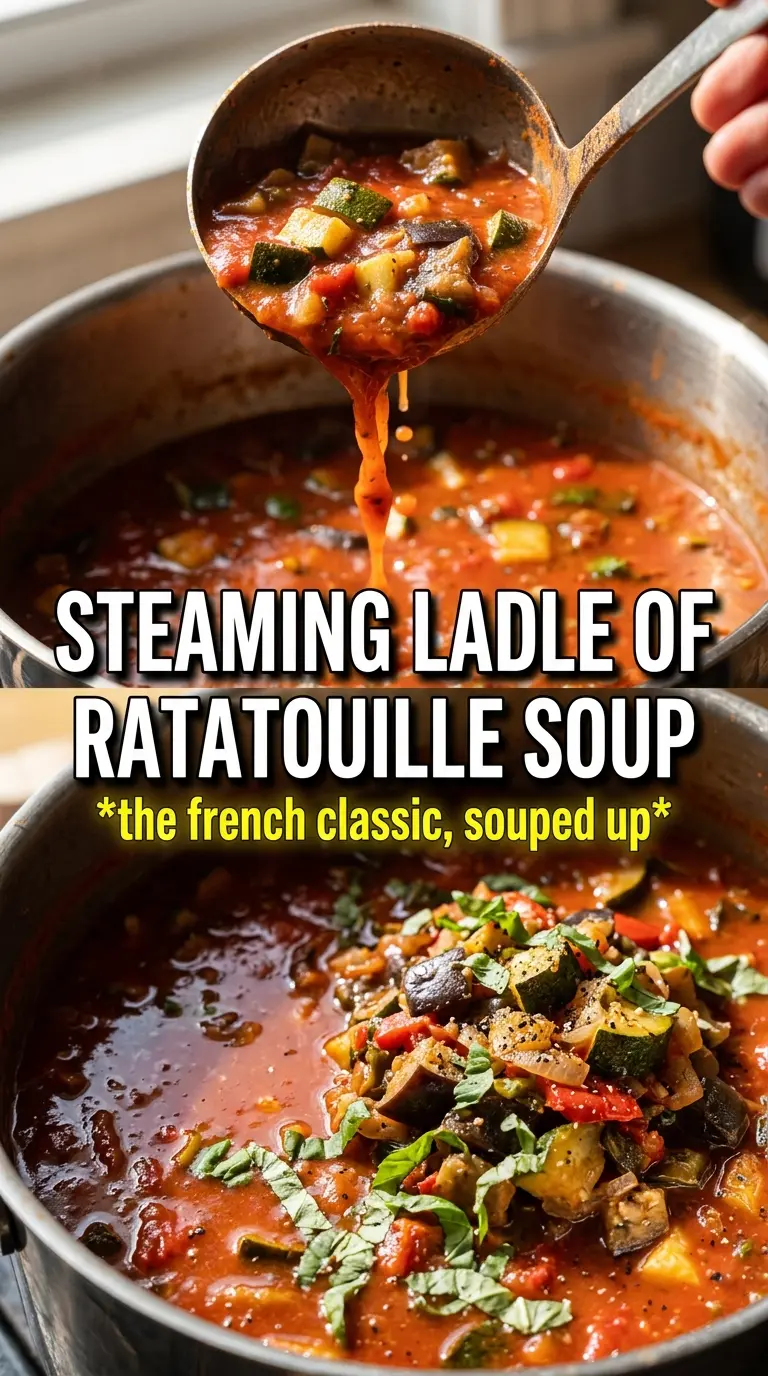
- Eggplant — This is the vegetable that needs the most attention. Salting it first helps it cook up creamy instead of gummy, and a short rinse and dry keeps the soup from tasting salty. If you skip the salting, the eggplant can drink up oil and stay dense.
- Zucchini and yellow squash — These soften quickly, so they go in after the eggplant has started cooking. That keeps their edges intact and gives the soup a nicer bite. If you cut them too small, they break down faster, so a medium dice is the sweet spot.
- Red bell peppers and onion — They make the base sweeter and more savory before the tomatoes go in. The onion should turn translucent and the peppers should lose their raw edge, not brown hard. That gentle sauté gives the broth depth without overpowering the vegetables.
- Crushed tomatoes and diced tomatoes — The crushed tomatoes build the body, while the diced tomatoes leave little bursts of tomato throughout the soup. Using both gives better texture than relying on one can alone. If you only have one type, use it, but the soup will lean either smoother or chunkier.
- Herbes de Provence, basil, thyme, and red pepper flakes — This mix makes the soup taste Provençal without needing a long ingredient list. Herbes de Provence gives the backbone, thyme adds earthiness, and the red pepper flakes keep the tomato broth from tasting flat. Fresh basil goes in at the end because cooked basil loses some of its brightness.
- Good olive oil and parmesan for serving — The oil is not decorative. It softens the acidity of the tomatoes and gives the broth a glossy finish. Parmesan is optional, but a little on top adds salt and umami in a way that works especially well with the eggplant.
How to Layer the Pot So the Soup Tastes Slow-Cooked
Starting with the Eggplant
Toss the diced eggplant with salt and let it sit for about 15 minutes, then rinse and dry it well. You’re looking for pieces that feel a little softened and have given up some moisture. If you leave them wet, they won’t brown or soften evenly in the pot. Dry eggplant also picks up the olive oil and aromatics more cleanly.
Building the Aromatic Base
Heat the olive oil in a large pot, then cook the onion and red bell peppers until the onion turns translucent and the peppers start to soften. Add the garlic and eggplant and cook until the garlic smells sweet, not sharp. If the garlic goes in too early, it can burn before the vegetables are ready. Keep the heat at medium so the vegetables sweat and soften instead of scorching.
Adding the Faster Vegetables
Stir in the zucchini and yellow squash and cook just until they start to give slightly at the edges. They don’t need long, and this is the stage that decides whether they stay in tidy pieces or collapse. If your dice is very small, shave a minute off here. The goal is tenderness later, not immediate softness now.
Simmering the Broth
Add both tomatoes, the vegetable broth, herbs de Provence, dried basil, thyme, and red pepper flakes. Bring the pot to a steady simmer, not a hard boil, then cook until the vegetables are very tender and the broth tastes round. A rough boil can break the vegetables apart and make the soup cloudy. The soup is done when the eggplant is silky and the tomatoes have lost their sharp edge.
Finishing With Fresh Basil
Turn off the heat and stir in the fresh basil, then season with salt and pepper. The basil should smell bright the second it hits the pot. Finish with a drizzle of good olive oil right before serving. That last hit of fat makes the broth taste fuller and pulls everything together.
Three Ways to Adjust This Soup Without Losing What Makes It Good
Make It Heartier With White Beans
Stir in a can of drained cannellini beans with the tomatoes and broth. They thicken the soup a little and make it more filling without changing the vegetable-forward character. If you add them too early, they can turn soft and start to break apart.
Dairy-Free and Still Rich
Skip the parmesan at serving and finish with a little extra olive oil instead. The soup already has enough body from the tomatoes and vegetables, so you won’t miss the cheese for texture. A spoonful of pesto works too if you want a sharper herbal finish.
Gluten-Free as Written
This soup is naturally gluten-free as long as your vegetable broth is certified gluten-free. The texture comes from the vegetables themselves, so there’s no flour or roux to adjust. That makes it a good one to serve to a mixed crowd without changing a thing.
Storage and Reheating
- Refrigerator: Keeps well for 4 days. The vegetables soften a little more as it sits, and the broth gets even better by day two.
- Freezer: Freezes well for up to 3 months. Cool it completely first and leave a little space in the container for expansion. The zucchini will be softer after thawing, but the flavor holds up.
- Reheating: Warm it gently on the stovetop over medium-low heat until steaming. Don’t boil it hard or the vegetables will fall apart and the broth can taste flat. Stir in a fresh drizzle of olive oil after reheating to wake it back up.
Answers to the Questions Worth Asking

Remi's Ratatouille Soup
Ingredients
Equipment
Method
- Toss diced eggplant with salt and let sit 15 minutes, then rinse and dry. This helps temper bitterness and keeps the pieces from getting watery.
- Chiffonade the fresh basil for finishing. Set it aside so it stays bright when stirred in at the end.
- Heat the olive oil in a large pot over medium heat, then sauté the onion and red bell peppers for 5 minutes. Cook until they soften and look glossy.
- Add the minced garlic and diced eggplant, then cook for 5 minutes. Stir until the eggplant is lightly coated and fragrant.
- Add the zucchini and yellow squash, then cook for 3 minutes. Keep stirring until the vegetables are just starting to soften.
- Add the crushed tomatoes, diced tomatoes, vegetable broth, herbs de Provence, dried basil, dried thyme, and red pepper flakes. Stir well so the seasonings disperse evenly.
- Simmer for 20-25 minutes, stirring occasionally, until all vegetables are very tender. Watch for a thickened Provençal broth and tender eggplant that breaks easily.
- Stir in the fresh basil, then season with salt and pepper to taste. Turn off the heat once the basil wilts for a fresher green color.
- Finish with a drizzle of good olive oil and serve hot. For serving, add parmesan if desired.