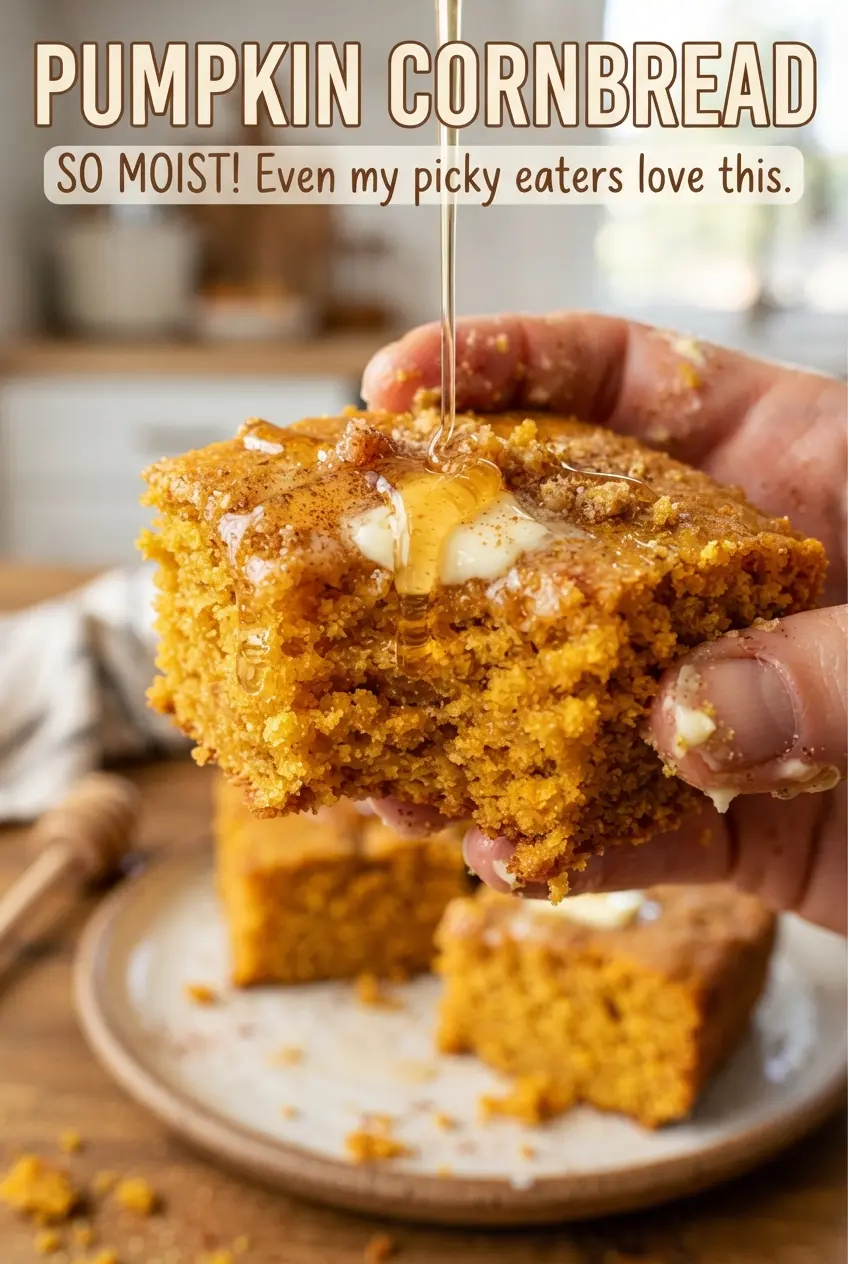
Pumpkin cornbread comes out tender, warmly spiced, and just sweet enough to eat alongside chili, roasted vegetables, or a bowl of soup. The edges bake up with that classic cornbread crunch, while the center stays soft and moist from the pumpkin puree and buttermilk. It’s the kind of side dish that disappears fast, especially when it’s served warm with butter melting into the top.
What makes this version work is the balance. Pumpkin can easily turn cornbread heavy or cakey, but the mix of cornmeal and flour keeps the crumb sturdy and still gives you that familiar corn flavor. Brown sugar and maple syrup add depth without pushing it into dessert territory, and the melted butter keeps the texture rich without needing any complicated steps. The batter also comes together in one bowl for the dry ingredients and one for the wet, which keeps the mixing gentle and the cornbread tender.
Below, I’ll walk through the small details that keep pumpkin cornbread from getting dense, plus a few swaps if you need to work with what’s already in your kitchen.
The crumb stayed soft but not gummy, and the maple butter on top made the pumpkin flavor taste even richer. I baked it in my cast iron skillet and the edges came out perfectly crisp.
Save this pumpkin cornbread for the days you want a tender, maple-kissed side with crisp golden edges.
The Trick to Keeping Pumpkin Cornbread Tender Instead of Heavy
Pumpkin adds moisture, but it also adds weight. That’s why pumpkin cornbread can turn dense fast if the batter gets overmixed or if there’s not enough lift from the leavening. The baking powder does the heavy lifting here, and the batter should look a little rough when it goes into the pan. Once the flour is fully hydrated, stop stirring. That small restraint is what keeps the crumb soft instead of tight.
The other thing worth watching is the pan. An 8×8-inch pan gives you a thicker, softer cornbread, while a cast iron skillet gives you more edge and a deeper crust. Both work. What matters is getting the batter into a hot oven right away so the baking powder starts working before the pumpkin can weigh everything down.
What Each Ingredient Is Doing in This Cornbread
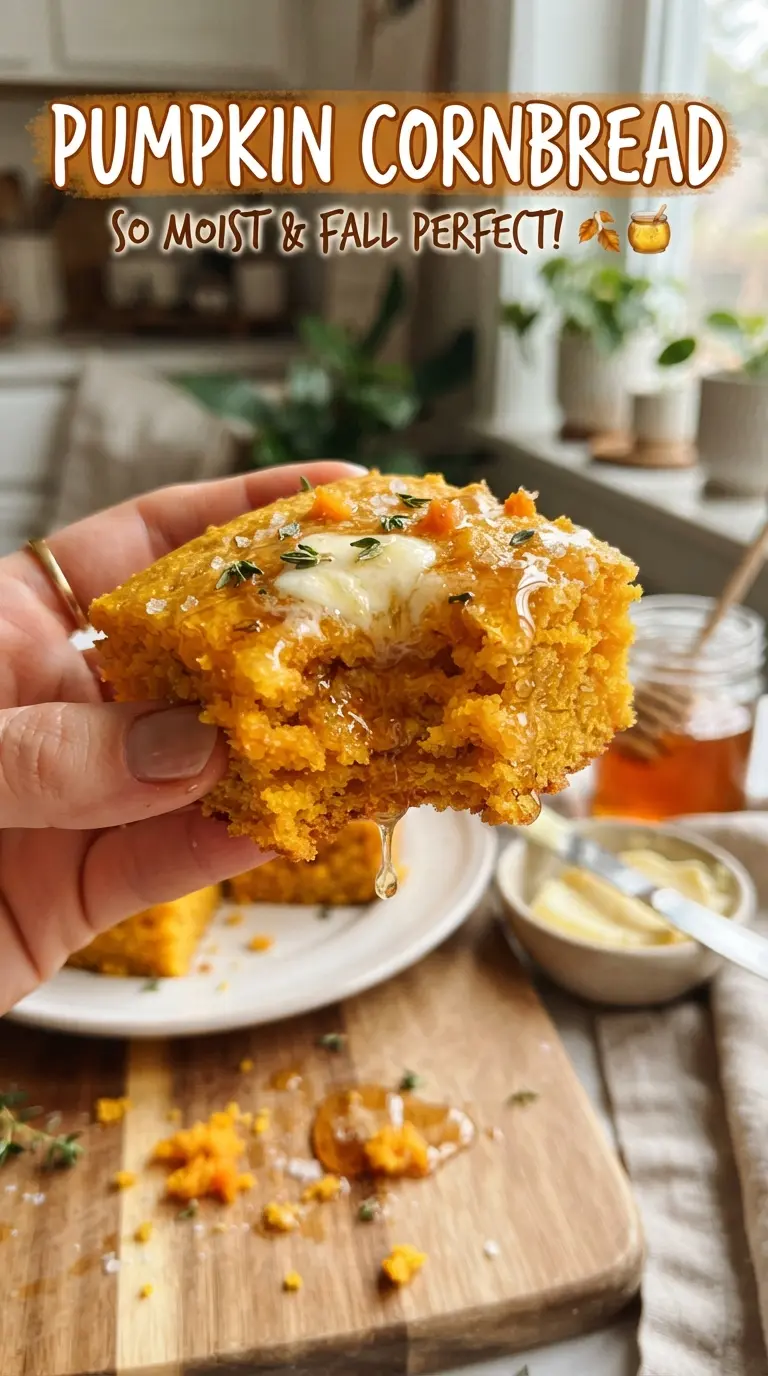
- Cornmeal — This gives the cornbread its grainy, classic texture and keeps it from tasting like pumpkin cake. Yellow cornmeal works best for that deep golden color and gentle corn flavor.
- All-purpose flour — Flour softens the crumb and helps the bread hold together. If you swap in whole wheat, use only part whole wheat or the cornbread gets too heavy.
- Pumpkin puree — This adds moisture, color, and that earthy pumpkin flavor. Use plain pumpkin puree, not pumpkin pie filling, or the sugar and spice balance will be off.
- Buttermilk — The acidity helps the baking powder lift the batter, and it adds a subtle tang that keeps the sweetness in check. If you don’t have it, use milk mixed with a little lemon juice or vinegar, then let it sit for a few minutes.
- Brown sugar and maple syrup — These sweeteners round out the pumpkin and cornmeal without making the bread cloying. The brown sugar adds depth, while the maple syrup gives the top a gentler warmth.
- Melted butter — Butter brings richness and a softer bite. It also helps the edges brown in the oven, especially in a cast iron skillet.
Building the Batter So It Bakes Up Light
Mix the Dry Ingredients First
Whisk the cornmeal, flour, brown sugar, baking powder, salt, and pumpkin pie spice until everything looks even. That step matters because baking powder clumps can leave bitter pockets or uneven lift. You want the spice distributed all the way through so every bite tastes balanced.
Bring the Wet Ingredients Together
Whisk the pumpkin puree, eggs, buttermilk, melted butter, and maple syrup until smooth. If the butter looks a little streaky at first, keep whisking until it disappears into the mixture. The eggs need to be fully incorporated before the wet hits the dry, or you’ll end up chasing streaks around the bowl when the batter is already partly mixed.
Stop as Soon as the Flour Disappears
Pour the wet ingredients into the dry and stir just until no dry flour remains. The batter should look thick and a little rustic, not glossy and overworked. If you keep stirring for the sake of smoothness, the cornbread bakes up chewy and tight instead of tender.
Bake Until the Center Springs Back
Spread the batter into the prepared pan and bake at 400°F for 22 to 25 minutes. The top should be golden, the edges should pull slightly from the pan, and a toothpick should come out clean or with just a few moist crumbs. If the middle still looks wet, give it another couple of minutes and check again rather than guessing, because pumpkin batter can look done before the center actually sets.
How to Adapt This Pumpkin Cornbread for Different Kitchens
Dairy-Free Version
Swap the buttermilk for an unsweetened dairy-free milk mixed with 1 teaspoon lemon juice or vinegar, and use melted plant-based butter. The texture stays tender, though the flavor loses a little of that classic tangy cornbread finish.
Less Sweet, More Savory
Cut the brown sugar to 2 tablespoons and leave the maple syrup as written. That keeps the pumpkin from disappearing under sweetness and makes the cornbread better next to chili, stew, or roasted meat.
Cast Iron Skillet Version
Heat the skillet in the oven while it preheats, then add the batter carefully to the hot pan. You’ll get deeper browning and a crispier edge, but you need to work quickly so the batter doesn’t start setting before it goes in.
Storage and Reheating
- Refrigerator: Store in an airtight container for up to 4 days. The crumb softens a bit as it sits, but the flavor stays good.
- Freezer: Freeze slices tightly wrapped for up to 2 months. Thaw at room temperature or overnight in the fridge before reheating.
- Reheating: Warm in a 300°F oven for about 10 minutes or in short bursts in the microwave. Reheat only until warmed through, because too much heat dries out the edges fast.
Questions I Get Asked About This Recipe
Pumpkin Cornbread
Ingredients
Equipment
Method
- Preheat the oven to 400°F, then grease an 8x8-inch pan or a 10-inch cast iron skillet.
- Set the greased pan on a flat rack so it’s ready for batter once mixed.
- Whisk the yellow cornmeal, all-purpose flour, brown sugar, baking powder, salt, and pumpkin pie spice until evenly combined.
- Whisk the pumpkin puree, eggs, buttermilk, melted butter, and maple syrup until smooth and uniform.
- Stir the wet mixture into the dry mixture just until combined, avoiding overmixing for a tender crumb.
- Spread the batter into the prepared pan and smooth the top.
- Bake for 22-25 minutes at 400°F, until golden and a toothpick comes out clean.
- Serve warm with butter so it melts into the hot cornbread.