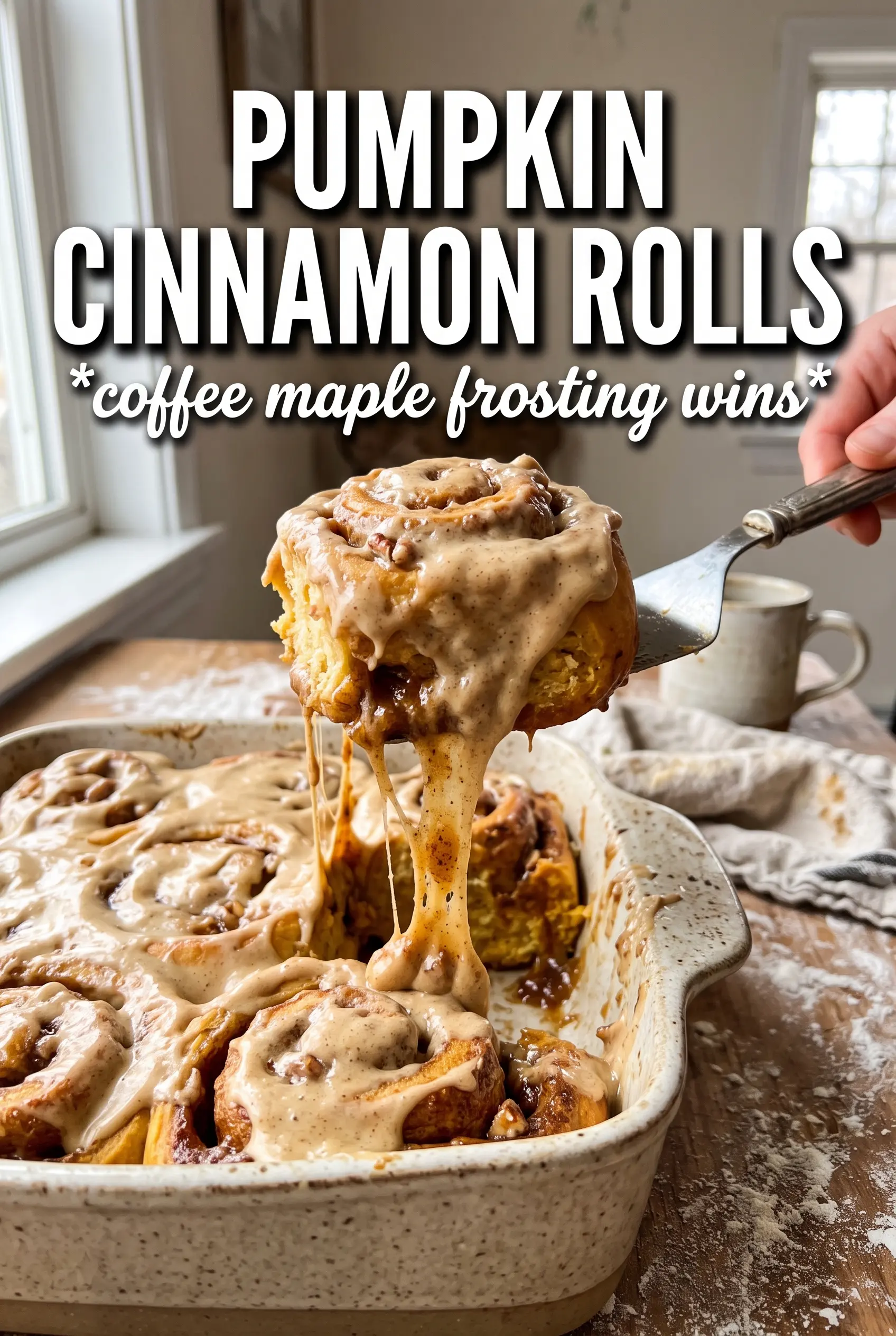
Soft pumpkin dough, a buttery cinnamon swirl, and a coffee maple frosting that melts into every ridge make these rolls the kind of breakfast people hover over while they’re still warm. The pumpkin doesn’t shout; it just gives the dough a tender crumb, a golden color, and enough moisture to stay pillowy the next day. The frosting brings a gentle coffee bitterness that keeps the sweetness in check, which is exactly why these don’t taste flat or one-note.
The dough is built like a classic enriched roll, but pumpkin changes the game in a few important ways. It adds moisture, so the dough should feel supple and a little tacky before the first rise. If you keep adding flour until it feels dry, the rolls bake up dense instead of fluffy. The filling also matters: soft butter spreads cleanly, brown sugar melts into that sticky center, and the extra pumpkin pie spice ties the whole pan together without making the rolls taste like pie.
Below, I’m walking through the part that matters most: how to keep the dough soft, how to roll the spiral tight enough to hold its shape, and how to get the frosting to drizzle instead of clump. Those small details are what turn a good pan of rolls into the kind people remember.
The dough rose beautifully and baked up pillowy, and the coffee in the frosting kept the maple from getting too sweet. My kitchen smelled amazing for hours.
Save these pumpkin cinnamon rolls with coffee maple frosting for the mornings when you want a soft, bakery-style pan with a frosting that tastes grown-up, not overly sweet.
The Part That Keeps Pumpkin Rolls Soft Instead of Heavy
Pumpkin is wonderful in enriched dough, but it changes the texture fast. The biggest mistake is treating it like plain sweet dough and adding flour until the bowl looks tidy. You want the dough to clear the sides as it kneads, but the bottom can still cling a little. That slight tackiness is what keeps the rolls soft after baking.
Yeast also needs a gentle start here. Warm milk is enough to wake it up, but hot milk will slow it down or kill it, and cold milk will leave you waiting around for proofing that never quite happens. Once the dough has risen, it should look puffy and elastic, not just a little larger. If it hasn’t doubled, give it more time instead of rushing the shaping.
What Each Ingredient Is Doing in These Rolls
- Warm milk — This helps activate the yeast and gives the dough a softer, richer texture than water would. Keep it warm, not steaming; if it’s too hot to hold your finger in comfortably, it’s too hot for the yeast.
- Pumpkin puree — This adds moisture, color, and a subtle earthy sweetness. Use pure pumpkin puree, not pumpkin pie filling, or the dough will turn too sweet and spiced in the wrong way.
- Egg plus yolk — The extra yolk adds richness and tenderness, which matters in a dough this soft. It helps the rolls stay plush instead of bready.
- Brown sugar and cinnamon filling — Brown sugar melts into a sticky layer that keeps the swirl from feeling dry. The softened butter matters more than melted butter here because it spreads evenly without running out of the dough.
- Cream cheese frosting — Cream cheese gives the frosting body and a slight tang so the maple and coffee don’t taste sugary. If the cream cheese is cold, the frosting will stay lumpy no matter how long you beat it.
- Strong coffee — This doesn’t make the frosting taste like a latte. It sharpens the maple and keeps the topping from becoming one-dimensional. Brew it strong and use only a tablespoon so the frosting stays thick.
Rolling, Rising, and Baking the Spiral the Right Way
Building the Dough
Stir the yeast into the warm milk with the sugar and let it get foamy before adding the pumpkin, butter, egg, and yolk. That foam tells you the yeast is alive, and it’s worth waiting for because a dead start means a dense pan. Add the flour gradually and knead until the dough feels smooth, supple, and a little elastic. If it tears easily or stays shaggy, it needs more kneading, not more flour.
Shaping the Log
Roll the dough into a 12×18 rectangle with even thickness from corner to corner. Uneven spots create skinny rolls and bulky ones in the same pan, which bake at different rates. Spread the filling all the way to the edges except for a small clean strip along one long side, then roll tightly from the opposite long edge so the spiral stays neat. A loose roll leaks filling and spreads more in the oven.
Baking Until the Center Springs Back
After the second rise, the rolls should look puffy and joined at the edges. Bake at 375°F until the tops are golden and the centers spring back lightly when touched, usually 22 to 25 minutes. If the tops brown too quickly before the center is done, lay a loose sheet of foil over the pan for the last few minutes. Let them cool just enough that the frosting softens on contact instead of sliding straight off.
The Frosting Finish
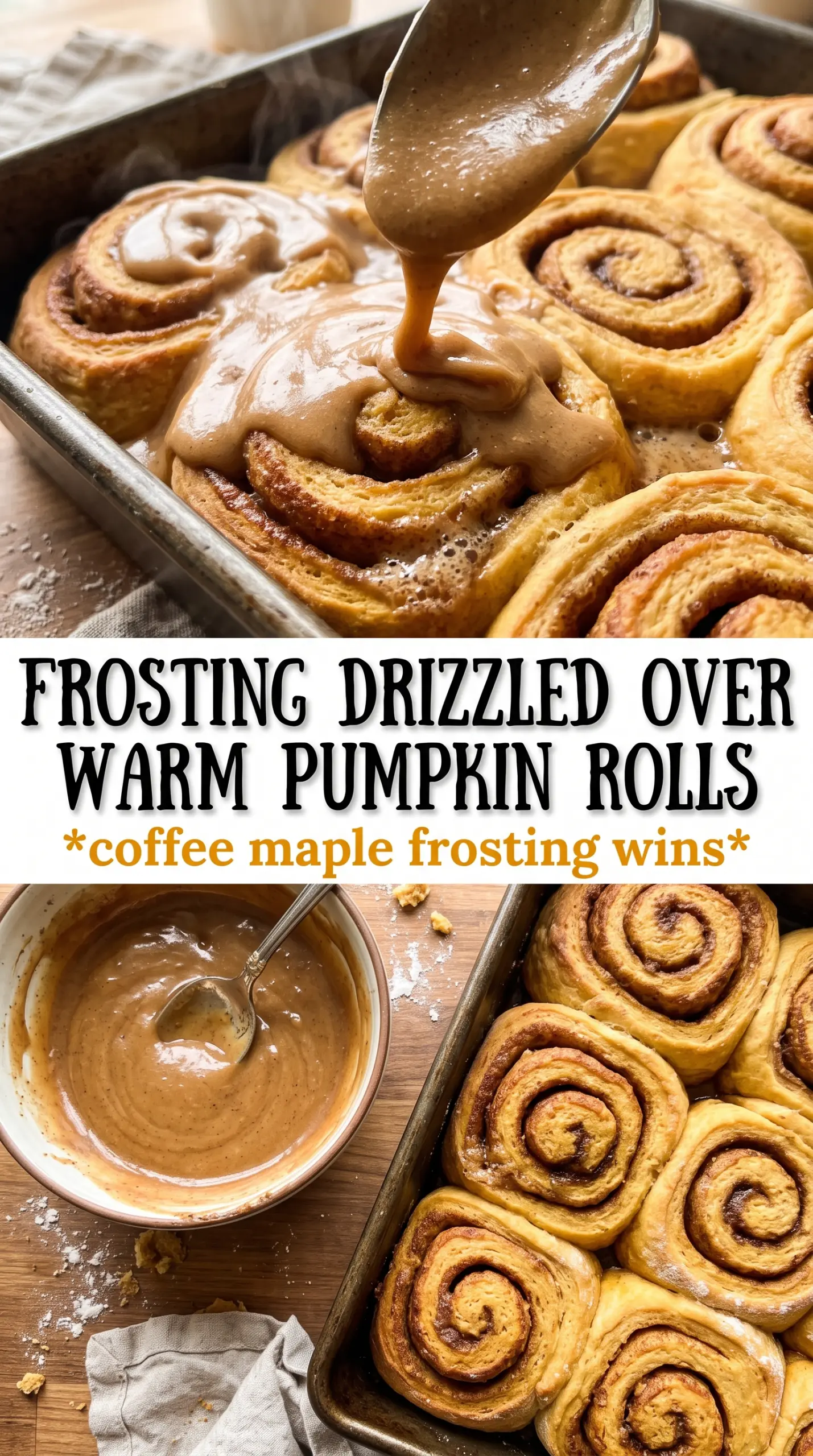
Beat the cream cheese, butter, maple syrup, and coffee until smooth before adding the powdered sugar. If you add the sugar before the base is creamy, you’ll chase lumps the whole time. The frosting should be thick but pourable. Drizzle it over warm rolls, not piping hot ones, so it melts into the swirls without disappearing completely.
How to Adapt These Rolls for Different Mornings
Dairy-Free Version
Use a good plant-based butter for both the dough and filling, and swap the milk for an unsweetened non-dairy milk with enough fat to behave similarly. The rolls will still rise well and stay soft, but the frosting will taste a little cleaner and less rich unless you use a dairy-free cream cheese with decent body.
Make-Ahead Overnight Rise
Shape the rolls and place them in the pan, then cover and refrigerate overnight before the second rise finishes. In the morning, let them sit at room temperature until noticeably puffy, then bake. Cold dough needs that extra time or the centers stay tight while the edges overbake.
Extra Coffee Forward
If you want the frosting to lean more coffeehouse than maple, add a second teaspoon of strong coffee and hold back a spoonful of powdered sugar until the end. That gives you a sharper finish without thinning the frosting too much.
Storage and Reheating
- Refrigerator: Store covered for up to 4 days. The frosting firms up in the fridge, but the rolls stay soft.
- Freezer: Freeze unfrosted rolls tightly wrapped for up to 2 months. Thaw overnight, warm, and frost after reheating for the best texture.
- Reheating: Warm individual rolls in the microwave for 20 to 30 seconds or cover the pan and reheat in a 300°F oven until just heated through. Don’t blast them too long or the dough turns dry and the frosting separates.