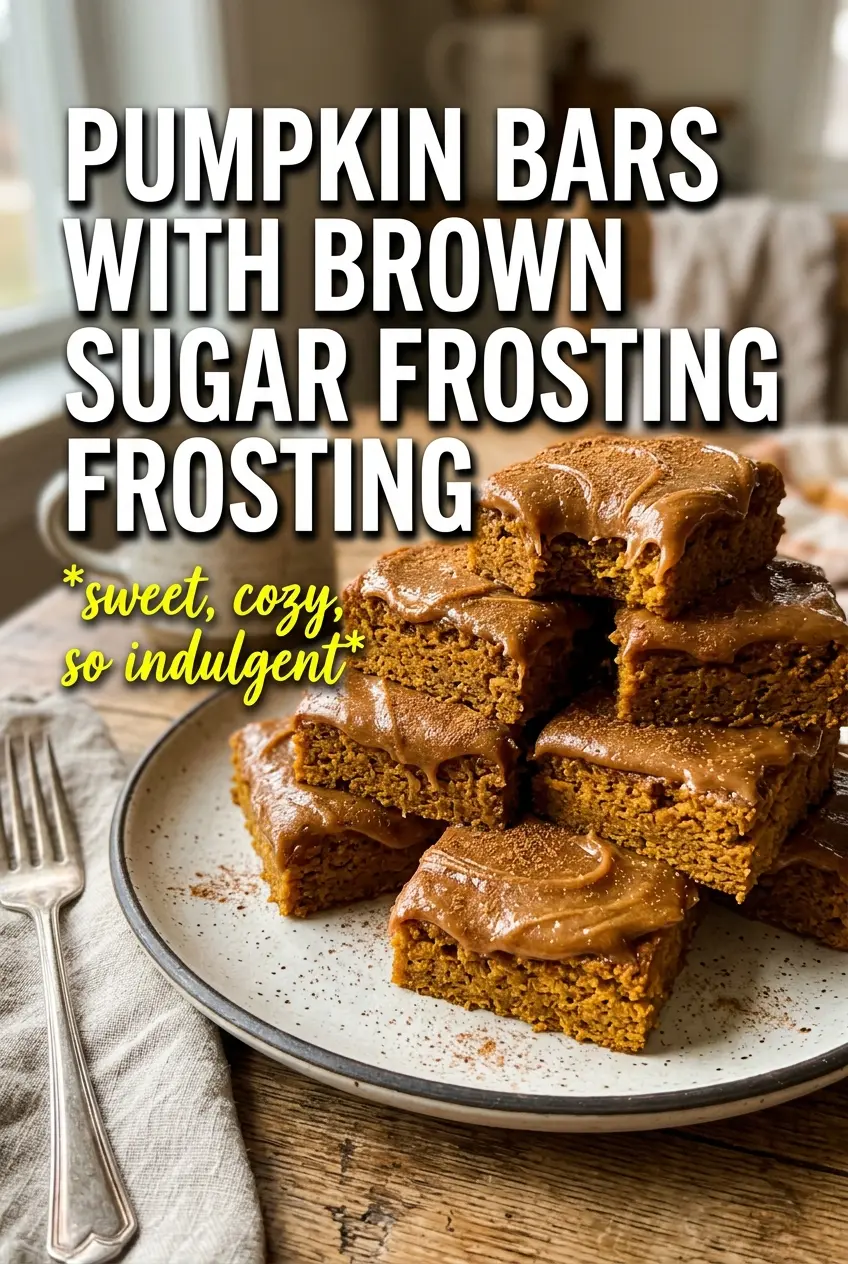
Soft pumpkin bars with brown sugar frosting are the kind of dessert that disappears fast because they hit that perfect middle ground between cake and bar cookie. The crumb stays tender and plush, the top gets just enough structure to hold a thick layer of frosting, and the cinnamon-brown sugar finish gives every bite a little caramel note that plain cream cheese frosting just can’t match.
What makes these work is the balance. The bars use plenty of pumpkin for moisture, but the batter is still sturdy enough to bake in a sheet pan without turning dense or gummy. The frosting starts with melted butter and brown sugar, which gives it a deep, cooked flavor before the powdered sugar goes in. That extra step is what keeps it from tasting flat or overly sweet.
Below, I’m walking through the part that matters most: how to keep the bars tender, how to cook the frosting base without graininess, and how to spread it at the right moment so it sets into that smooth, satiny layer on top.
The bars baked up tender and the frosting set with that caramel-y finish I was hoping for. I waited the full 15 minutes before beating it smooth, and it spread like a dream without sliding off.
Save these pumpkin bars with brown sugar frosting for the kind of dessert that bakes in a sheet pan, cuts cleanly, and brings a caramel-like finish to every square.
The Part That Keeps the Bars Tender Instead of Heavy
These bars live or die by the batter’s texture. The pumpkin brings moisture, but the oil is what keeps the crumb soft after chilling, and the eggs give the bars enough structure to slice without crumbling. If the batter looks thick, that’s fine; pumpkin bars should spread like a dense cake batter, not pour like brownie batter.
The most common mistake here is overmixing once the flour goes in. That tightens the crumb and makes the bars feel bready instead of tender. Stir just until the last streaks of flour disappear, then get it into the pan. The other thing worth watching is the bake time: pull them when the center is set and a toothpick comes out with a few moist crumbs, not a wet smear.
What the Pumpkin, Oil, and Brown Sugar Are Doing Here
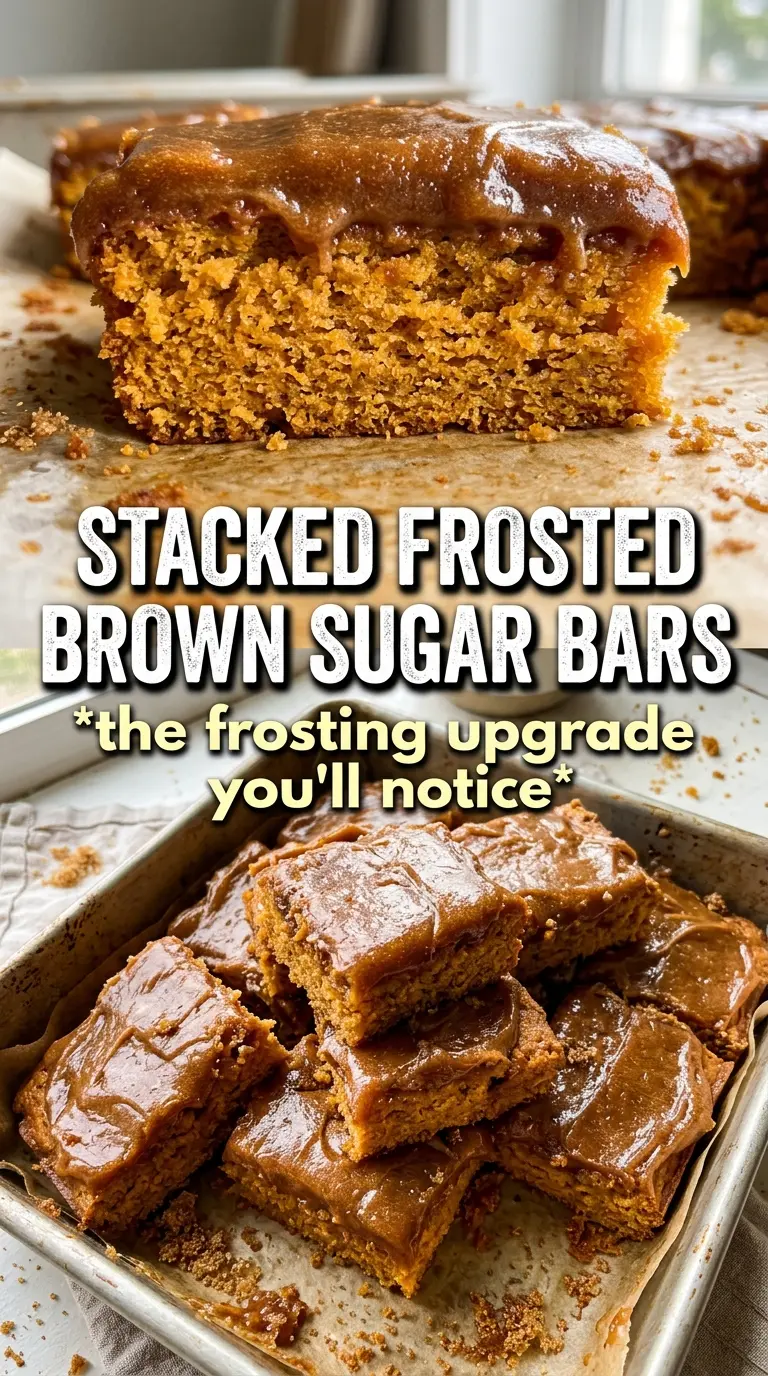
- Pumpkin puree — Use plain canned pumpkin, not pumpkin pie filling. Pie filling already has sugar and spice mixed in, which throws off both the texture and the seasoning.
- Oil — This is what gives the bars their soft, moist crumb even after they cool. Butter can be used in a pinch, but the bars will bake up a little firmer and less plush.
- Brown sugar — In the frosting, brown sugar adds depth and a light caramel taste that plain white sugar can’t mimic. Pack it tightly so the frosting base has enough body before the powdered sugar goes in.
- Heavy cream — This loosens the cooked frosting base without making it thin. Whole milk can work, but the frosting won’t feel as rich and may need a touch less powdered sugar to stay spreadable.
- Powdered sugar — This gives the frosting its smooth, fluffy finish after the brown sugar mixture cools. Add it only after the base has cooled for about 15 minutes, or the frosting can turn grainy and loose.
Building the Bars and Finishing the Frosting at the Right Moment
Mix the batter without overworking it
Whisk the dry ingredients first so the baking powder, soda, and spices are evenly distributed, then beat the eggs, sugar, oil, pumpkin, and vanilla until smooth. Once the dry ingredients go in, switch to a gentle fold. The batter should look thick and evenly orange with no flour patches, but it shouldn’t be whipped. Overbeating here makes the bars tough, especially in a wide pan where they bake fast.
Bake until the center is just set
Spread the batter into a greased 15×10 pan and smooth it into the corners. The edges should start pulling a little from the pan and the top should look matte, not wet, when it’s done. If the center still sloshes when you move the pan, give it a few more minutes. Pulling them too early leaves a gummy middle that doesn’t slice cleanly once the frosting goes on.
Cook the frosting base until it loses its raw edge
Melt the butter and brown sugar over medium heat and cook for about 2 minutes, stirring constantly. You want the sugar dissolved and the mixture looking glossy, not sandy. Add the cream and bring it back to a boil, then take it off the heat and let it cool for 15 minutes. If you beat the powdered sugar in while it’s too hot, the frosting goes loose and can separate instead of turning fluffy.
Spread fast and let it set
Beat in the powdered sugar, vanilla, cinnamon, and salt until smooth, then spread the frosting immediately over the cooled bars. This frosting firms as it cools, so don’t wait around once it’s ready. If it starts dragging or setting in the bowl, stir in a spoonful of cream to loosen it just enough to finish the top in clean swoops.
How to Make These Bars Work for Different Kitchens and Crowds
Dairy-Free Frosting With the Right Finish
Use a plant-based butter and full-fat coconut cream instead of the butter and heavy cream in the frosting. The flavor will shift slightly, and the frosting won’t have quite the same caramel depth, but it still sets nicely if you let the brown sugar mixture cool before beating in the powdered sugar.
Gluten-Free Bars That Still Slice Cleanly
A good 1:1 gluten-free baking blend works here as long as it includes xanthan gum. The bars may be a touch more delicate, so let them cool completely before frosting and cutting. If your blend is very starchy, the crumb can turn a little more cakey, but the pumpkin keeps it from drying out.
Make-ahead for a Crowd
Bake the bars a day ahead, cool them completely, and frost them the next day. The flavor gets even better overnight, and the bars cut more neatly once they’ve had time to settle. If you frost them warm, the topping softens and can slide around when you slice.
Storage and Reheating
- Refrigerator: Store in an airtight container for up to 5 days. The frosting firms up in the fridge, but the bars stay moist.
- Freezer: Freeze unfrosted bars for up to 2 months, wrapped well. The frosting can separate after thawing, so it’s better made fresh.
- Reheating: These are best served at room temperature. If they’ve been chilled, let them sit out for 20 to 30 minutes before serving so the frosting softens and the crumb isn’t cold and dense.