Pot roast twice baked potatoes turn leftover beef into a full dinner that eats like comfort food with a little extra backbone. The potato shells stay sturdy, the filling turns creamy instead of dry, and the shredded pot roast brings the kind of savory depth you only get from a slow braise. Broiled cheese on top gives you that crisp, salty lid that cracks under the fork, then gravy ties the whole thing together.
The key is treating the baked potato as both a vessel and an ingredient. The flesh gets mashed with butter, sour cream, milk, and cheddar until smooth enough to spoon but still thick enough to hold its shape after baking. The roast goes in warmed with a little gravy first, which keeps the meat juicy and stops it from tasting like reheated leftovers. If your roast is a little lean or the gravy has thickened in the fridge, a splash of broth brings it right back.
Below you’ll find the little details that keep the shells from collapsing, the filling from going gluey, and the cheese from browning before the center is hot. It’s a smart way to make yesterday’s roast feel deliberate tonight.
The potato shells held up perfectly and the filling stayed creamy even after baking. I added a little extra gravy on top and it tasted like a complete meal, not just leftovers.
Love the cheesy, gravy-drizzled comfort of these pot roast twice baked potatoes? Save them to Pinterest for using up leftover roast in the most satisfying way.
The Trick That Keeps the Filling Creamy Instead of Heavy
Twice baked potatoes go wrong when the filling gets overworked. Once the potato flesh is mashed, stop as soon as it looks smooth and cohesive. If you beat it too long, the starch turns paste-like and the final texture lands thick in the wrong way. That’s even more noticeable here because the shredded pot roast adds heft, so the potato base has to stay light enough to balance it.
The other thing that matters is moisture. Leftover roast can be dry, and cold gravy can seize up in the filling. Warming the beef with the gravy before folding it in keeps everything juicy and helps the meat distribute evenly instead of clumping in the center. You want every bite to have potato, beef, cheese, and just enough sauce to pull it together.
What Each Ingredient Is Actually Doing in This Dish

- Russet potatoes — These are the right choice because the skins bake up sturdy and the flesh mashes fluffy. Waxy potatoes stay too dense and don’t give you that classic twice-baked texture.
- Leftover pot roast — Shred it instead of chopping it into chunks. Shredded beef folds into the potato base more evenly and feels tender in every bite. If your roast is very lean, keep a little extra gravy on hand so the filling doesn’t dry out in the oven.
- Pot roast gravy — This is what keeps the beef tasting like part of the dish instead of a reheated add-in. Beef broth works in a pinch, but gravy adds body and flavor. If it’s thick from the fridge, warm it before mixing.
- Sour cream and butter — They give the filling richness and that tangy potato-bake flavor. Milk loosens the mixture just enough so it spoons cleanly into the shells without turning runny.
- Sharp cheddar — Use a good sharp cheddar here. Mild cheese disappears under the beef and gravy, while sharp cheddar stays present after baking and browning.
- Green onions — Add them at the end for freshness and a little bite. If you skip them, the dish gets heavier, which is fine for a full-meal dinner but less balanced.
Building the Shell, Filling, and Topping So They Bake as One
Turning the Baked Potatoes Into Sturdy Shells
Slice the baked potatoes lengthwise and scoop out the flesh, leaving about a 1/4-inch shell so the skins can hold their shape. If you scoop too aggressively, the sides collapse once the filling goes back in. A little potato stuck to the skin is a good thing here because it helps the shell stay flexible instead of brittle.
Making the Filling Smooth Before the Beef Goes In
Mash the potato flesh with butter, sour cream, milk, and most of the cheddar until it’s smooth and spreadable. Season it before adding the roast, because once the beef goes in, it’s harder to adjust evenly. If the mixture looks stiff, add a splash more milk; if it looks loose, it will still tighten a little in the oven.
Warming the Roast So It Stays Tender
Heat the shredded pot roast in the gravy before folding it into the potatoes. Cold meat drags the filling temperature down and can leave you with a hot top and lukewarm center after baking. Stir just until the beef is warmed through and coated, then stop so it stays juicy.
Finishing Under Heat and Broil
Pack the filling into the shells, top with the remaining cheddar, and bake until everything is hot and the cheese has melted into the edges. The broiler is for color, not cooking, so watch it closely. Two minutes can be enough to move from pale and soft to golden and bubbling, and it goes from perfect to burnt fast.
Three Ways to Adapt Pot Roast Twice Baked Potatoes Without Losing the Point
Use braised beef instead of pot roast
Any slow-cooked shredded beef works here. If the beef was braised with onions, wine, or tomato, the flavor will shift a little, but the texture and structure stay the same. Just keep enough sauce with the meat so the filling doesn’t dry out.
Make it gluten-free
The potatoes themselves are naturally gluten-free. The only thing to check is the gravy; use a gluten-free gravy or thicken the beef juices with a cornstarch slurry if needed. That keeps the same rich finish without changing the texture of the filling.
Swap the cheddar for pepper jack
Pepper jack adds a little heat and melts smoothly, which works well if your pot roast is on the milder side. You lose some of cheddar’s sharpness, so the dish tastes softer and a bit creamier. I like this version when I want the potatoes to lean more savory than classic.
Make the filling a little lighter
You can cut the butter back slightly and replace part of the sour cream with plain Greek yogurt. The texture will be a touch tangier and less rich, but it still bakes up creamy. Keep the beef and gravy amount the same so the dish doesn’t feel dry.
Storage and Reheating
- Refrigerator: Store covered for up to 3 days. The skins soften a little, but the flavor holds well.
- Freezer: Freeze after stuffing and before the final bake for best texture. Wrap tightly and thaw overnight in the fridge before baking; fully baked potatoes can get a little grainy after freezing.
- Reheating: Warm in a 350F oven until the center is hot and the cheese starts to melt again. The biggest mistake is blasting them in the microwave, which makes the shells chewy and the filling unevenly hot.
Questions I Get Asked About This Recipe
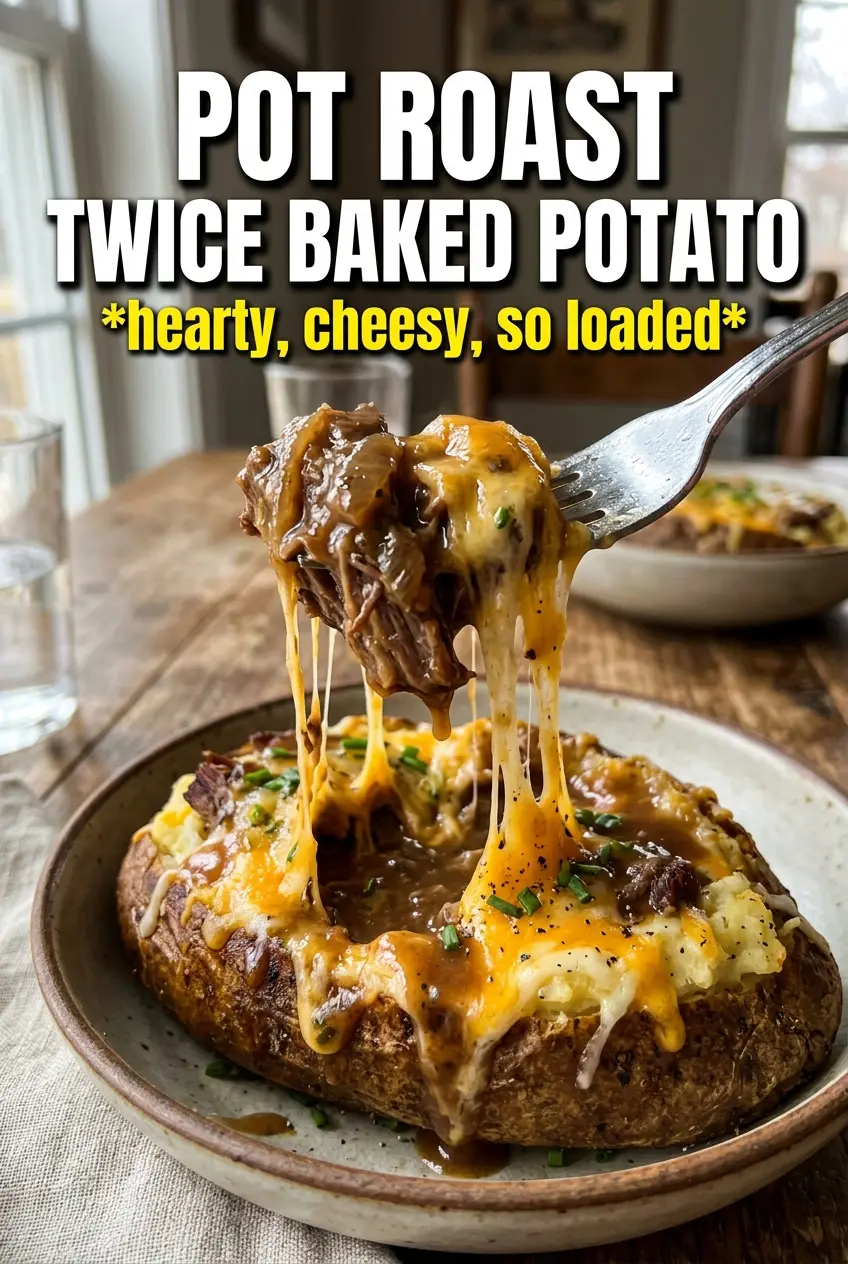
Pot Roast Twice Baked Potatoes
Ingredients
Equipment
Method
- Preheat the oven to 400F. Halve the baked potatoes lengthwise and scoop out the flesh, leaving a 1/4-inch shell for stuffing.
- Mash the potato flesh with butter, sour cream, milk, 1 cup cheddar, salt, and pepper until smooth. Keep mashing until no lumps remain and the mixture looks creamy.
- Warm the pot roast in the gravy. Fold the warm shredded beef into the mashed potato mixture until evenly combined.
- Fill the potato shells with the pot roast mixture and top each with the remaining cheddar. Arrange on a sheet pan so they bake evenly.
- Bake at 400F for 15-18 minutes until heated through and the cheese is bubbly. Look for bubbling edges and hot centers when you gently press a potato.
- Broil for 2 minutes until golden. Top with green onions and drizzle with extra gravy right before serving.