Tropical coconut ice cream gets its best texture when the base is rich enough to freeze smoothly but still light enough to let the pineapple come through. This version lands right in that sweet spot: creamy, scoopable, and dotted with little juicy pineapple pieces that keep every bite from feeling heavy. The toasted coconut adds a little chew and a nutty edge that makes the whole thing taste fuller than the ingredient list looks.
The key is building a proper custard base before the fruit goes in. Coconut milk brings body, heavy cream keeps the texture soft, and egg yolks give you that custard-style scoop without ice crystals taking over. The pineapple gets folded in at the end so it stays bright instead of melting down into the base, and the toasted coconut goes in late too so it keeps some texture.
Below, I’ve included the timing that matters most, the substitutions that still keep the ice cream smooth, and the one small step that keeps the pineapple from watering down the churn.
The pineapple pieces stayed tender instead of icy, and the coconut base churned up smooth even after a night in the freezer. My kids kept sneaking spoonfuls from the container before it was fully set.
Like this pineapple coconut ice cream? Save it for the nights when you want creamy scoops, real pineapple chunks, and a toasted coconut finish.
The Custard Temperature That Keeps This Ice Cream Smooth
The biggest mistake with homemade ice cream is rushing the custard or letting it run too hot. Egg yolks thicken the base gently; if the mixture boils, the yolks scramble and the texture turns grainy instead of silky. Cook it until it reaches 175F and coats the back of a spoon, then pull it off the heat right away and strain it.
That straining step matters more than it sounds. It catches any tiny bits of cooked egg and gives you a cleaner, smoother churn. The long chill after cooking is just as important, because a cold base freezes faster in the machine and picks up less air and less iciness.
What Each Ingredient Is Doing in This Tropical Base
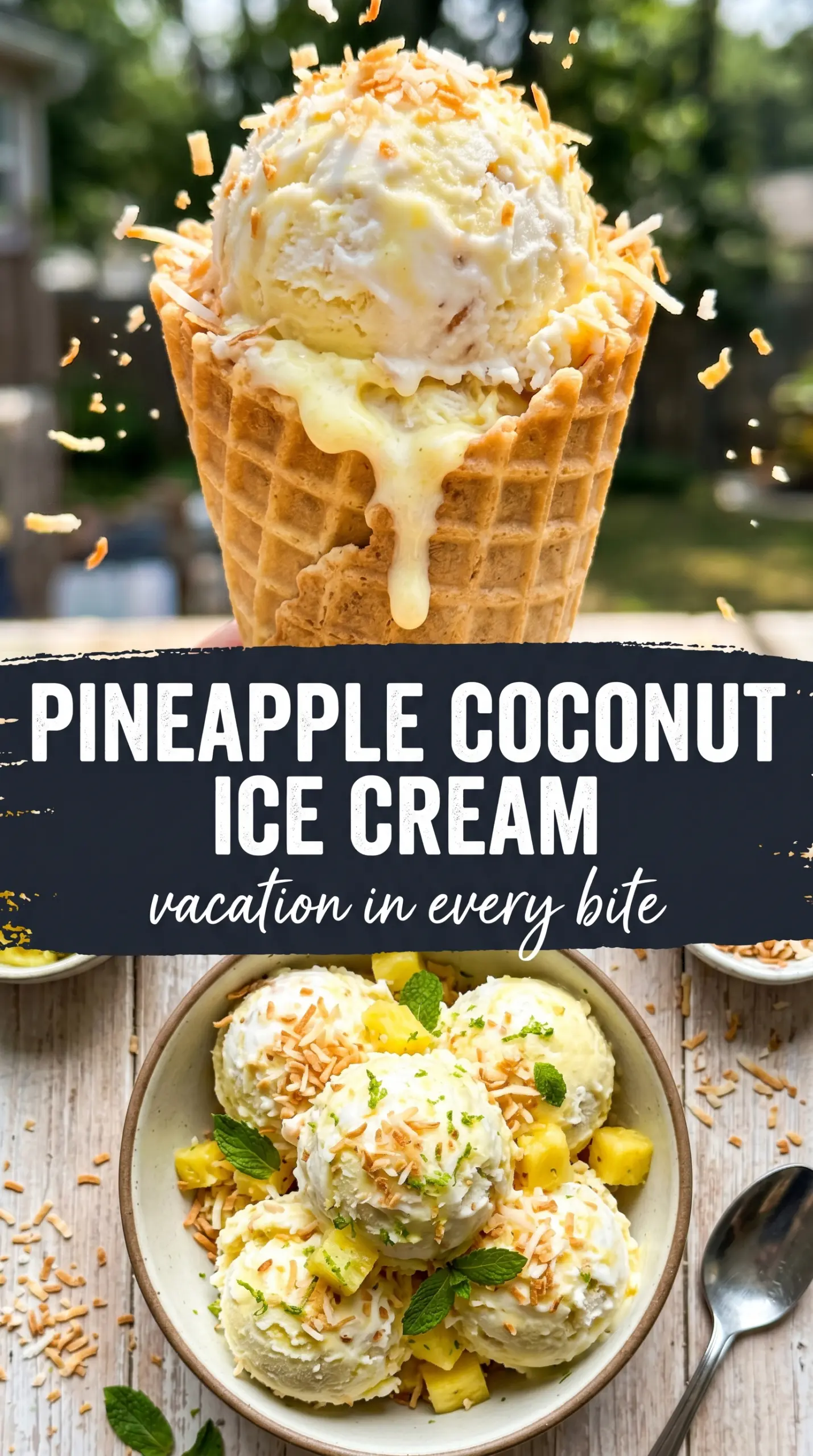
- Full-fat coconut milk — This is the coconut flavor backbone and a big part of the creamy texture. Light coconut milk won’t give the same body, and the ice cream will freeze harder.
- Heavy cream — Cream keeps the finished ice cream soft enough to scoop straight from the freezer. You need the fat here; swapping it out for milk makes the texture lean and icy.
- Egg yolks — These thicken the base into a custard and help it churn up richer. If you want to skip them, you’ll need a different base entirely, because they’re doing real structural work here.
- Fresh pineapple — Fresh pineapple gives bright flavor and small bursts of fruit throughout the ice cream. Dice it finely so it distributes evenly, and don’t use large wet chunks or they’ll freeze into hard pockets.
- Coconut extract — This sharpens the coconut note without making the base taste heavy. Use it sparingly; too much can taste artificial fast.
- Toasted shredded coconut — Toasting adds nuttiness and keeps the coconut from tasting flat. Stir it in near the end so it keeps some bite.
Churning, Folding, and Freezing Without Losing the Texture
Heating the Base Gently
Warm the coconut milk, cream, and sugar just until the sugar dissolves and the mixture is hot but not boiling. Whisking the yolks slowly with a little of the warm dairy first keeps them from seizing, then you can return everything to the saucepan. If you dump the yolks into a very hot pan all at once, they’ll cook on contact.
Cooking to Custard Stage
Stir constantly over medium-low heat and watch for the mixture to thicken enough to lightly coat a spoon. A thermometer is your best friend here; 175F is the sweet spot. Go much higher and the eggs tighten up, which gives you a custardy grain instead of a smooth base.
Chilling Before the Churn
Cool the custard completely before it goes into the refrigerator, then chill it for at least 4 hours. If it goes into the machine warm, it won’t freeze fast enough and the result will be softer, denser, and more likely to get icy later. A fully cold base also helps the coconut flavor taste cleaner.
Adding the Fruit at the End
Churn the base until it’s thick and almost like soft serve, then add the pineapple and toasted coconut during the last few minutes. That timing keeps the mix-ins from sinking or breaking down too much. If you add the pineapple too early, the fruit can turn the churn slushy instead of studded.
Make It Dairy-Free
Swap the heavy cream for more full-fat coconut milk or canned coconut cream. The result will be a little firmer and more coconut-forward, and it may freeze harder, so let it sit at room temperature for a few minutes before scooping.
Use Frozen Pineapple When Fresh Isn’t Great
Thaw the pineapple first and drain it well, then dice it small if the pieces are large. Frozen pineapple can work, but extra moisture is the main thing that can make the finished ice cream icy.
Skip the Coconut Flakes for a Smoother Finish
Leave out the toasted shredded coconut if you want a more classic scoopable ice cream texture. You’ll lose a little chew and nuttiness, but the pineapple will stand out more cleanly.
Storage and Reheating
- Refrigerator: The churned ice cream doesn’t belong in the fridge, but the custard base can be held up to 2 days before churning if it stays covered and cold.
- Freezer: Store in an airtight container with parchment pressed against the surface for up to 2 weeks. After that, the pineapple can start to dull and the texture gets icier.
- Reheating: Let it stand at room temperature for 5 to 10 minutes before scooping. Microwaving melts the edges fast and leaves the center hard, which ruins the texture.
Answers to the Questions Worth Asking
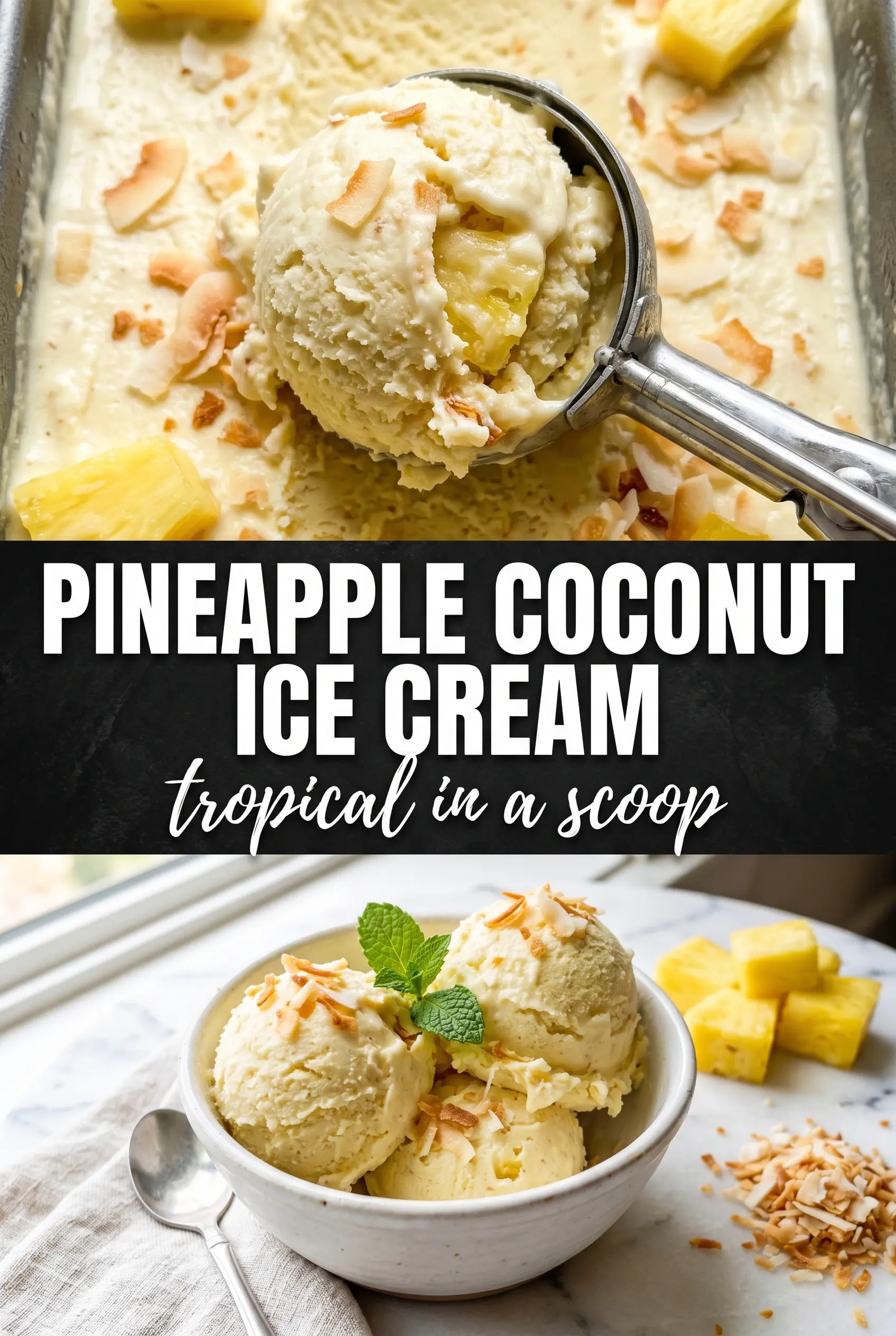
Pineapple Coconut Ice Cream
Ingredients
Equipment
Method
- In a saucepan, heat the full-fat coconut milk, heavy cream, and granulated sugar until the sugar dissolves, whisking as it warms to keep it smooth.
- In a bowl, slowly whisk the hot coconut mixture into the 4 egg yolks to temper them, keeping the flow steady to avoid scrambling.
- Return everything to the saucepan and cook at 175F, stirring constantly, until thick enough to coat the back of a spoon.
- Strain the custard, then stir in the coconut extract, vanilla extract, and salt until evenly combined.
- Cool completely, then refrigerate at least 4 hours (chilling + freezing schedule) until very cold.
- Churn the cold custard in an ice cream maker until it thickens to soft-serve consistency.
- Add the finely diced fresh pineapple and toasted shredded coconut in the last 5 minutes of churning so the pineapple pieces stay visible.
- Transfer to a freezer-safe container and freeze until scoopable, about 4 hours total chilling + freezing time.