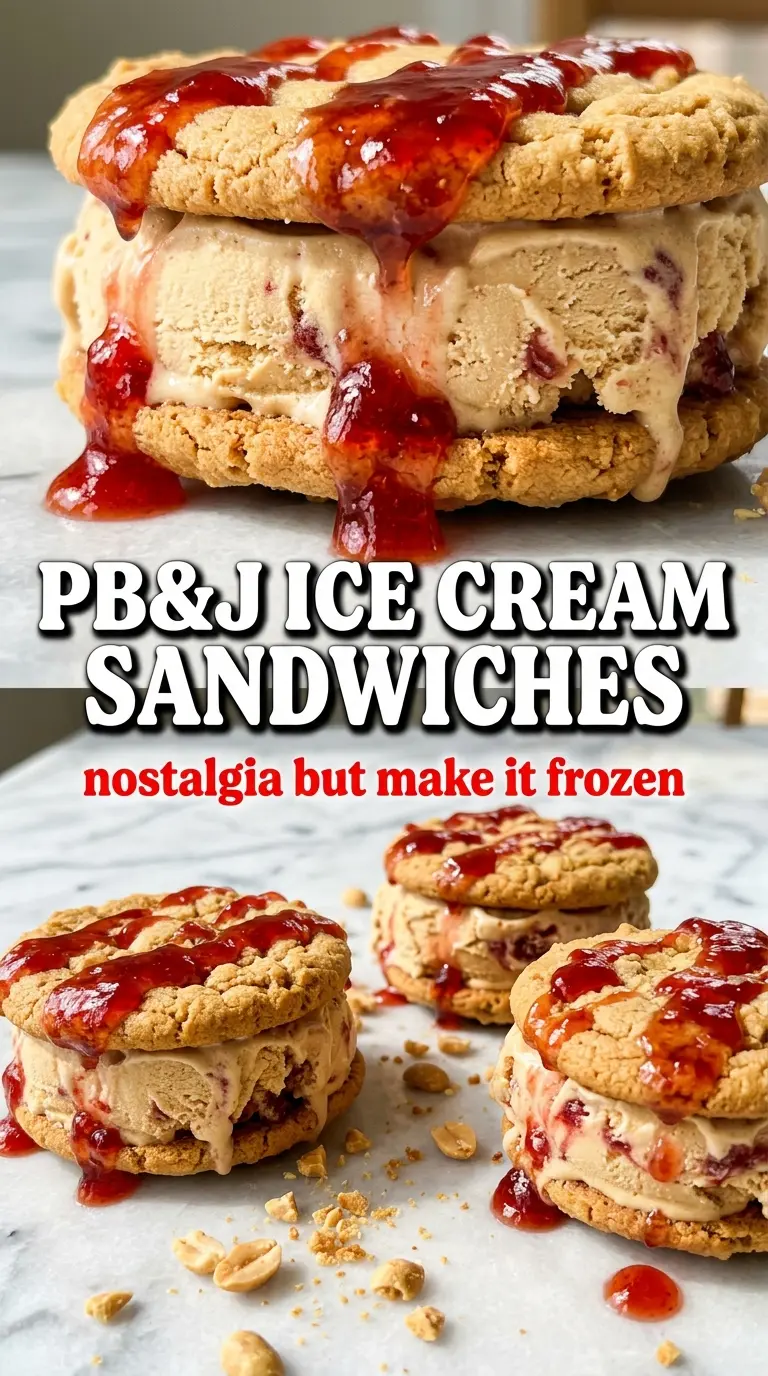
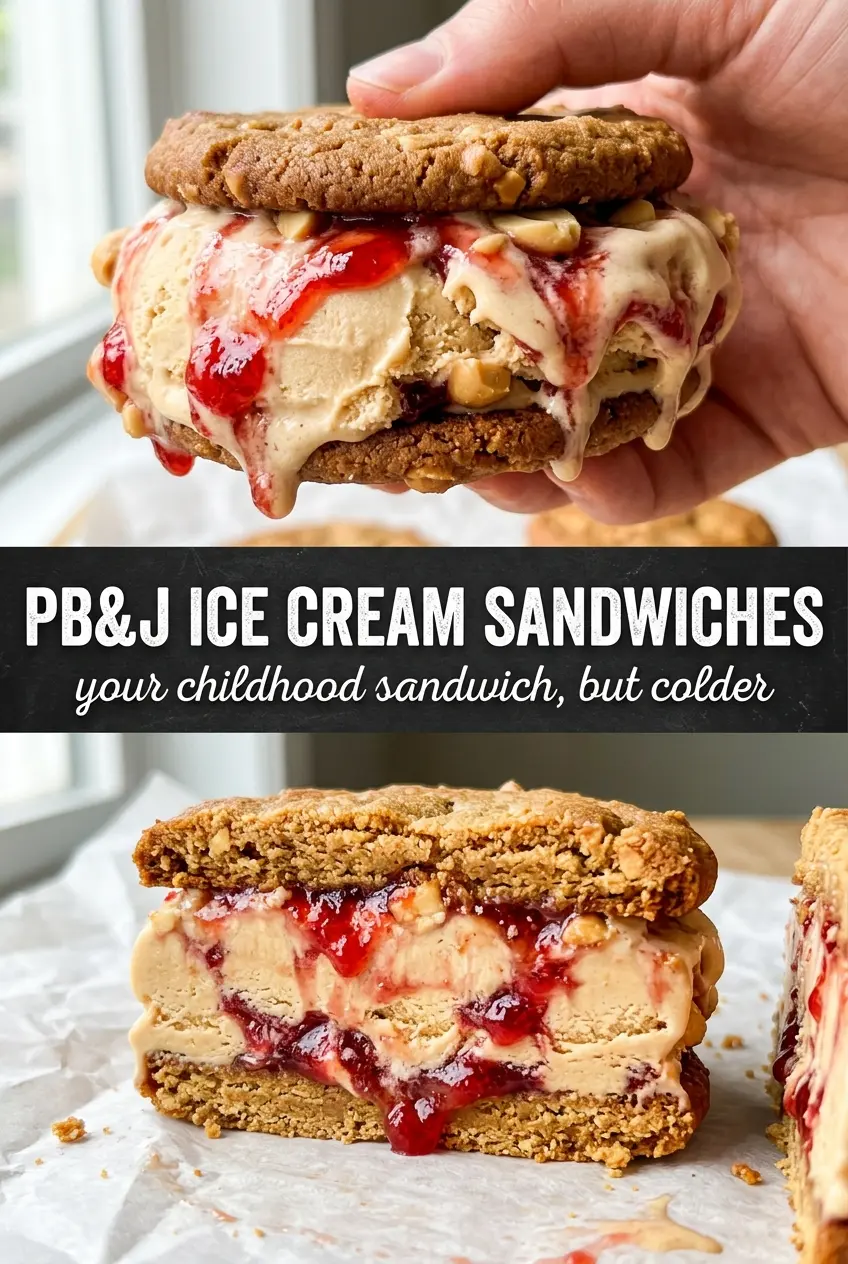
Thick peanut butter cookies and strawberry-jam swirled vanilla ice cream make these peanut butter and jelly ice cream sandwiches taste like the lunchbox classic grew up and landed in the freezer. The cookies stay soft enough to bite cleanly, but they still hold their shape, and the salty peanuts on the edges give each sandwich a little crunch right where you want it. It’s the kind of frozen dessert that disappears fast because every bite hits sweet, salty, creamy, and familiar all at once.
The trick here is in the textures. The cookies need to cool all the way before the ice cream goes on, or they’ll melt the filling and slide apart when you try to sandwich them. Softened ice cream also matters, because that’s what lets the jam ribbon through instead of clumping in streaks. A brief freeze after assembly tightens everything up just enough to slice and serve without the filling squishing out the sides.
Below, I’ll walk through the small details that keep the cookies tender, how to get a clean jam swirl, and the easiest way to store these so they’re ready whenever a peanut butter-and-jelly craving hits.
The cookies baked up soft instead of hard, and the strawberry jam stayed swirled through the ice cream instead of turning icy. I froze them for an hour and they sliced cleanly without the filling oozing everywhere.
Save these peanut butter and jelly ice cream sandwiches for the days when you want a nostalgic freezer treat with soft cookies and a real jam swirl.
The Reason the Cookies Stay Soft Instead of Turning Hard in the Freezer
Ice cream sandwiches fail when the cookie is too crisp before freezing. Once they’re cold, a dry cookie turns even drier, and the first bite shatters instead of yielding. These peanut butter cookies are baked just until set at the edges, which gives you a tender bite that stays pleasant after an hour in the freezer.
The other thing that matters is size. Large rounds work best here because they give you enough surface area to hold the ice cream without forcing it into a thin layer that melts too fast in your hands. If the cookies spread too much, the sandwich will be messy; if they’re too small, the filling gets squeezed out as soon as you press them together.
What Each Ingredient Is Actually Doing in This Ice Cream
- Base ingredient (cream, milk, or custard) — This provides the foundation and richness. Quality matters.
- Sweetener (sugar, honey, or condensed milk) — This sweetens and prevents ice crystals. The ratio is critical.
- Flavor element (vanilla, fruit, chocolate, or other) — This defines the ice cream personality. Use quality ingredients.
- Egg yolks (if making custard base) — These create richness and silky texture. Optional but elevates ice cream.
- Churning (if using ice cream maker) — This incorporates air and prevents ice crystals. Critical for smooth texture.
- Freezing temperature and time — Proper freezing prevents rock-hard texture. Store at 0°F or below.
- Mix-ins (chocolate, cookies, fruit, or swirls) — These add texture and prevent one-dimensional flavor. Add near end of churning.
- Serving temperature (slightly soft, not rock hard) — This provides creamy mouthfeel. Remove from freezer 5 minutes before serving.
What the Peanut Butter, Jam, and Ice Cream Each Bring to the Sandwich
- Creamy peanut butter — This is the backbone of the cookie flavor and the reason the sandwich tastes like PBJ instead of just a sweet peanut cookie. Natural peanut butter can work, but it’s looser and can make the dough spread more, so the classic shelf-stable style gives the most dependable cookie.
- Vanilla ice cream — A simple vanilla base lets the jam stay front and center. Use a good, dense ice cream if you can; very airy ice cream melts faster and can feel less rich once frozen.
- Strawberry or grape jam — Jam, not jelly, gives you the fruit flavor and those visible swirls. Strawberry reads a little brighter and fruitier, while grape leans more nostalgic and classic. Both work best when the ice cream is softened just enough to marble through.
- Crushed salted peanuts — These add crunch and keep the edges from tasting flat. Salted peanuts matter here because the salt wakes up the peanut butter in the cookies and balances the sweetness of the filling.
- Butter and brown sugar — Butter gives tenderness, while brown sugar keeps the cookies soft for the freezer. If you swap in all white sugar, the cookies bake up drier and snap more easily after chilling.
Getting the Assembly Right Before the Freeze
Mixing the Cookie Dough
Start by whisking the flour, baking soda, and salt so the leavener is evenly distributed. Beat the butter, granulated sugar, brown sugar, and peanut butter until the mixture looks pale and fluffy, then add the eggs and vanilla. If the dough looks greasy or loose at this point, the butter was too warm; stop and chill it briefly before scooping.
Baking for a Tender Bite
Scoop the dough into large rounds and press a fork crosshatch on top. Bake just until the edges are set and the centers no longer look wet, usually 10 to 12 minutes. Pull them early rather than late; overbaked peanut butter cookies harden noticeably once cold. Let them cool completely on a rack before you build anything, because warm cookies will melt the ice cream on contact.
Swirling the Ice Cream and Building the Sandwiches
Let the ice cream soften until it’s spoonable but not soupy, then fold in the jam in a few broad strokes so the ribbons stay visible. If you stir too aggressively, the jam disappears into the base and the filling loses its marbled look. Spoon the mixture onto one cookie, top with a second cookie, and press just until the filling reaches the edges.
Finishing and Freezing
Roll the exposed ice cream edges in crushed salted peanuts right away, before the surface firms up. Set the sandwiches on a parchment-lined tray and freeze for at least 1 hour so the filling firms enough to slice cleanly. If you skip that rest, the ice cream will smear when you handle them and the cookies may slide apart.
How to Adapt These Peanut Butter and Jelly Ice Cream Sandwiches for Different Freezers and Diets
Dairy-Free Version
Use a dairy-free vanilla ice cream with a dense, scoopable texture. Coconut-based versions work well, but they bring a faint coconut note that changes the flavor away from classic PBJ. The cookies themselves are already dairy-free if you swap the butter for a plant-based stick butter that behaves similarly in baking.
Grape Jelly for a More Classic PBJ Flavor
Swap the strawberry jam for grape jelly if you want the version that tastes closest to the sandwich most of us grew up with. Jelly blends more smoothly and gives a cleaner swirl, though you lose some of the fruit bits and a little brightness.
Gluten-Free Cookie Option
A 1:1 gluten-free flour blend usually works here, but the cookies may spread a touch more and come out a little more delicate. Chill the dough for 20 minutes before baking if your blend is especially soft, and keep an eye on the bake time so the edges don’t overbrown.
Making Them Ahead for a Party
Assemble the sandwiches, freeze them solid, then wrap each one tightly in parchment and plastic wrap. That keeps the cookies from drying out and keeps the peanut coating from absorbing freezer odors. Set them out just a few minutes before serving so the filling softens enough to bite cleanly.
Storage and Reheating
- Refrigerator: Not the best storage for these. The cookies dry out and the ice cream gets icy, so keep them chilled only if you need to hold them briefly before serving.
- Freezer: Freeze up to 2 weeks for the best texture. Wrap each sandwich individually once frozen solid so the cookies don’t pick up freezer smells.
- Reheating: Don’t reheat these; let them sit at room temperature for 3 to 5 minutes before serving. That short rest softens the filling just enough without making the cookies soggy.
Answers to the Questions Worth Asking
Peanut Butter and Jelly Ice Cream Sandwiches
Ingredients
Equipment
Method
- Preheat the oven to 350F, then whisk the all-purpose flour, baking soda, and salt in a bowl.
- In a stand mixer, beat the unsalted butter, granulated sugar, brown sugar, and creamy peanut butter until fluffy.
- Add the eggs and vanilla extract, then mix until the batter is smooth.
- Stir the flour mixture into the peanut butter mixture until no dry streaks remain.
- Scoop the dough into large rounds and place them on a sheet pan.
- Press a crosshatch into the tops of each round with a fork, then bake for 10-12 minutes at 350F.
- Cool the cookies completely before assembling.
- Stir the strawberry or grape jam through the softened vanilla ice cream until you see pink or purple swirls.
- Sandwich the jam-swirled vanilla ice cream between two peanut butter cookies.
- Roll the edges of each sandwich in crushed salted peanuts so the sides are coated.
- Freeze the sandwiches for at least 1 hour to set.