Parmesan roasted Brussels sprouts turn into something you’ll want to eat straight off the pan: tender centers, shattering edges, and a salty, lacy cheese crust that clings to the cut side of each sprout. The best parts are the little frizzled bits where the Parmesan meets the hot pan and the outer leaves crisp up into almost chip-like pieces.
This version works because the sprouts go cut-side down on a layer of cheese, not the other way around. That gives the Parmesan direct contact with the heat, so it melts, browns, and sets into a crust before the sprouts overcook. Garlic gets mixed in with the oil first, which keeps it from burning too quickly in the oven, and a quick hit of lemon at the end wakes up the whole pan.
Below, I’ll walk through the one step that matters most for getting that crust instead of steamed sprouts, plus a few swaps and fixes for when you want to change the seasoning or work with what’s in the fridge.
The Parmesan formed that crispy bottom layer I was hoping for, and the sprouts stayed tender instead of mushy. The lemon at the end kept it from feeling heavy, and my kids kept picking off the crunchy cheese bits.
Save these Parmesan roasted Brussels sprouts for the nights when you want a crispy, cheesy side with almost no prep.
The Step That Turns Brussels Sprouts Into a Crispy Side Dish
The difference between roasted Brussels sprouts that taste flat and sprouts with a real crust comes down to pan contact. When the cut side faces down against the Parmesan, the cheese melts directly into the hot surface and browns before the sprouts start giving off too much steam. If you toss everything together and spread it loosely, you lose that built-in cheese layer and end up with tasty, but ordinary, roasted sprouts.
The other part that matters is space. A crowded pan traps moisture, which softens the leaves and keeps the cheese from crisping. One even layer is enough here, and parchment helps the finished cheese release instead of welding itself to the pan. If the sprouts look like they’re steaming halfway through roasting, the pan is too full or the oven isn’t hot enough.
What Each Ingredient Is Doing in This Pan
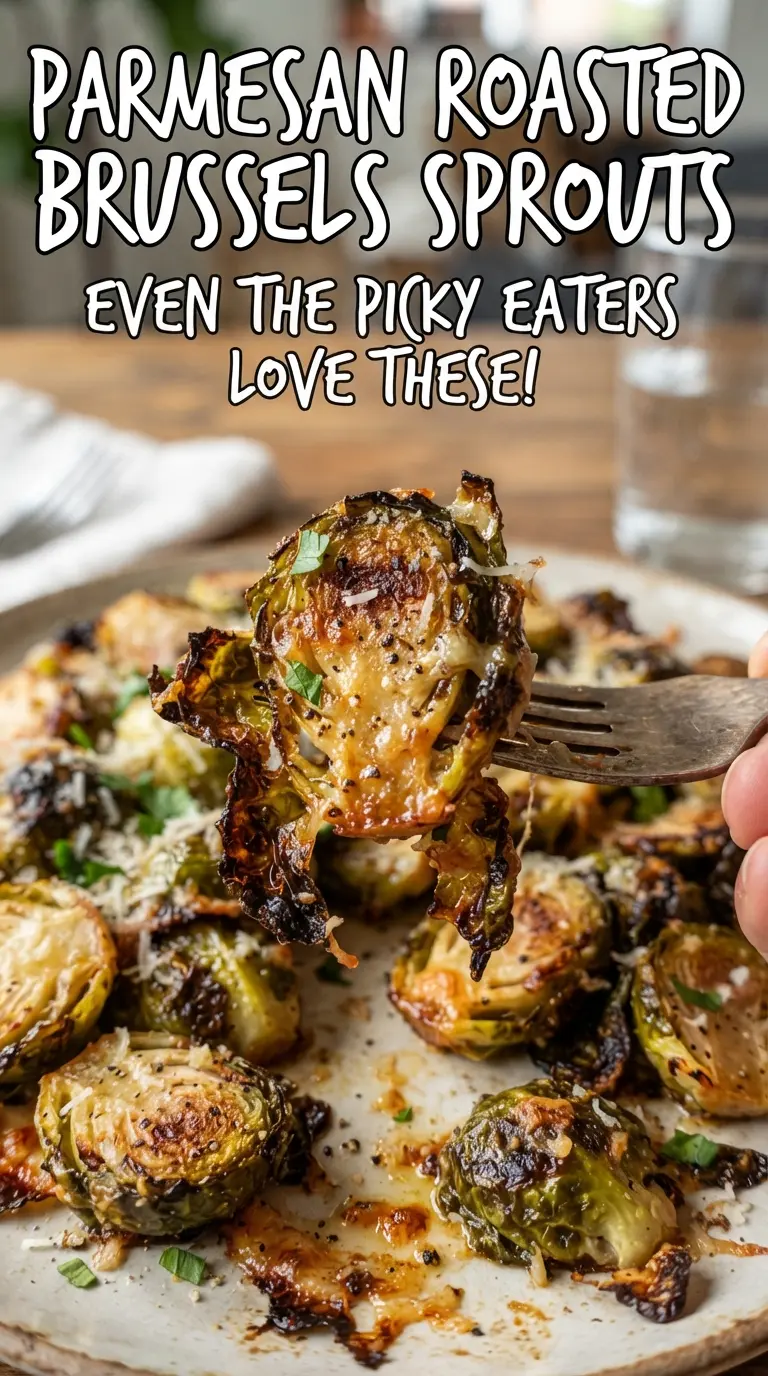
- Brussels sprouts — Trim the dry ends and halve them so the cut side can make contact with the cheese. Smaller sprouts caramelize faster, while very large ones may need an extra few minutes in the oven. If some are much bigger than others, quarter the biggest so everything finishes together.
- Olive oil — This coats the sprouts so the edges brown instead of drying out. It also helps the garlic and seasoning cling evenly. Don’t use so much that the sprouts look slick; a thin coating is enough.
- Garlic — Fresh minced garlic gives the sprouts a savory backbone, but it can scorch if the pieces are too large. Mince it finely so it perfumes the oil without leaving bitter burnt bits. Garlic powder works in a pinch, but the flavor is flatter.
- Parmesan — Use finely grated Parmesan for the best crust. Pre-shredded cheese can work, but it often has anti-caking agents that keep it from melting into that lacy layer. Freshly grated melts more cleanly and browns more evenly.
- Lemon juice — This goes on after roasting, not before. Heat dulls fresh citrus, and the acid is what cuts through the richness of the cheese. Even a small squeeze makes the whole tray taste brighter.
Getting the Cheese to Crisp Before the Sprouts Overcook
Coating the Sprouts Evenly
Start by tossing the halved sprouts with olive oil, garlic, salt, and pepper until every cut surface looks lightly glossed. You’re not marinating them; you’re giving the seasonings something to stick to and helping the outer leaves blister. If the sprouts look dry in spots, the dry areas will roast unevenly and lose that caramelized edge.
Building the Parmesan Layer
Sprinkle the Parmesan directly over the parchment-lined sheet pan in an even layer, then set the sprouts cut-side down on top of it. That order matters. The cheese needs to sit under the sprouts so it can melt against the hot pan and form a crust underneath. If you put the cheese on top, it tends to brown too fast and fall off instead of clinging to the sprouts.
Roasting Until the Edges Frizzle
Roast at 425°F until the sprouts are tender and the Parmesan underneath is deep golden, 20 to 25 minutes. You’ll know they’re close when the outer leaves have gone papery and crisp and the bottoms release with a little nudge from a spatula. If the cheese is browning before the centers are tender, the pan is too high in the oven; move it to a lower rack and give it a few more minutes.
Finishing with Lemon
Squeeze the lemon juice over the hot tray right before serving. That last step keeps the flavor bright and keeps the cheese from tasting heavy. Serve them immediately while the crust is still crisp, because the steam from the hot sprouts softens it as they sit.
How to Adapt These Sprouts Without Losing the Crunch
Dairy-Free with Crispy Edges
Leave out the Parmesan and roast the sprouts on parchment with a little extra oil. You’ll lose the lacy cheese crust, but the cut-side-down method still gives you browned, crispy edges. A finishing sprinkle of nutritional yeast adds a savory note, though it won’t caramelize the same way cheese does.
Gluten-Free as Written
This recipe is naturally gluten-free, as long as your Parmesan is plain and not mixed with additives. The roasting method and ingredient list don’t rely on breadcrumbs or flour, so there’s nothing to change. It’s a good one to keep in your back pocket when you need a side that works for mixed tables.
Bacon or Pancetta for a Meatier Side
Scatter cooked, crumbled bacon or crisp pancetta over the finished sprouts instead of mixing it in before roasting. Pork fat can make the Parmesan layer greasy if it goes into the oven with the cheese, but adding it at the end gives you salty, smoky contrast without losing the crust.
Storage and Reheating
- Refrigerator: Store leftovers in an airtight container for up to 3 days. The cheese crust softens, but the flavor stays good.
- Freezer: I don’t recommend freezing these. Brussels sprouts lose their texture and the Parmesan turns grainy after thawing.
- Reheating: Reheat on a sheet pan in a 400°F oven until hot and crisp at the edges again, about 8 to 10 minutes. The microwave makes the sprouts soft and pulls the crust apart, so skip it if you want any crunch left.
Answers to the Questions Worth Asking
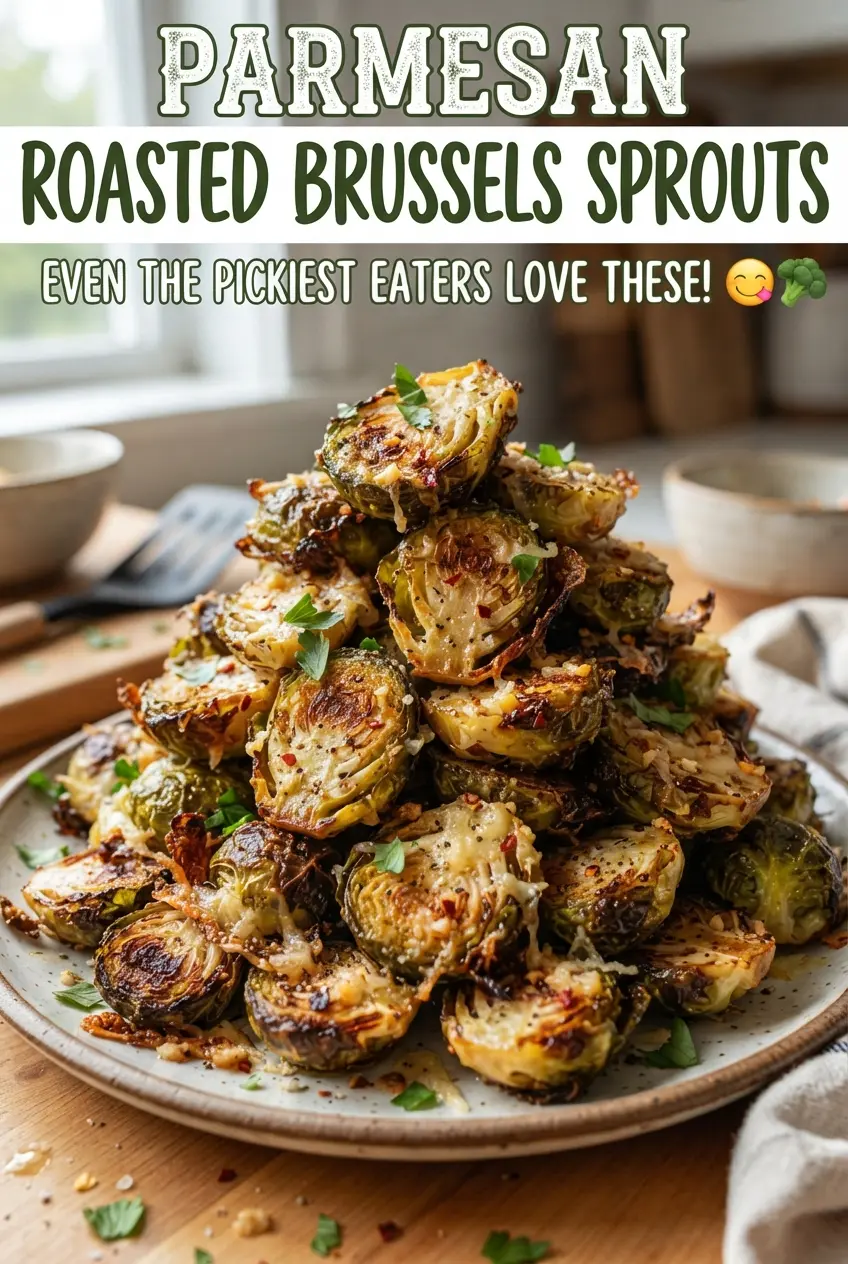
Parmesan Roasted Brussels Sprouts
Ingredients
Equipment
Method
- Preheat oven to 425F and line a sheet pan with parchment, creating a hot, nonstick surface. Look for the oven to fully reach 425F before roasting.
- Toss Brussels sprouts with olive oil, garlic, salt, and black pepper until evenly coated. You should see glossy, evenly seasoned sprouts.
- Sprinkle grated Parmesan evenly over the pan, then place the sprouts cut-side down on top of the cheese. The cut faces should sit directly on the Parmesan to form a crust.
- Roast for 20-25 minutes at 425F until the sprouts are tender and the Parmesan turns golden with charred spots. Visual cue: the cheese should look lacy and browned around the edges.
- Squeeze lemon juice over the top and serve hot. The surface should smell bright and look slightly glossy from the fresh juice.