Parmesan herb roasted acorn squash lands on the plate with caramelized edges, tender centers, and a crisp, salty cheese crust that keeps every bite interesting. The squash softens just enough to turn buttery, but it still holds its shape as rings, which makes the whole dish look polished without any extra work. It’s the kind of side that disappears fast because it tastes like you paid attention, even though the oven does most of the work.
The part that makes this version stand out is the two-stage roast. The squash gets time to soften and concentrate in the first round, then the Parmesan goes on after the slices are already partially cooked so it can brown instead of melting into a greasy blanket. Fresh thyme and rosemary matter here too; dried herbs can work in a pinch, but the fresher version gives the cheese something bright to cling to.
Below, I’ll walk through the one mistake that keeps squash from browning well, which Parmesan works best, and how to keep the slices from turning mushy before the crust sets.
The squash turned tender all the way through, and the Parmesan formed those crisp little lacy edges instead of sliding off. I served it with roast chicken and there wasn’t a ring left.
Save this Parmesan Herb Roasted Acorn Squash for a side dish with crisp edges, tender centers, and a golden Parmesan crust.
The Trick to Crisp Parmesan Instead of Melted Cheese
Roasted squash can go one of two ways: caramelized and crisp-edged, or soft and soggy with cheese that disappears into the pan. The difference is timing. If the Parmesan goes on too early, it melts before the squash has released enough moisture, and you lose that crunchy, browned top. Giving the squash a head start lets the surface dry a little, which is what the cheese needs to turn golden instead of greasy.
The other thing that matters is spacing. If the rings are crowded, they steam. You want a single layer with a little breathing room so the hot air can move around each slice. That’s what gives you the scalloped edges and the browned underside that tastes deeper than plain roasted squash.
- Cut size — Half-inch rings are the sweet spot. Thinner slices can collapse before the Parmesan browns, and thicker ones take longer to soften, which makes the cheese overcook.
- Single layer — This matters more than most people think. Overlapping slices trap moisture and keep the squash from caramelizing.
- Parmesan timing — Add it after the first roast so it can crisp on top instead of dissolving into the oil.
What the Garlic, Herbs, and Cheese Are Each Doing Here
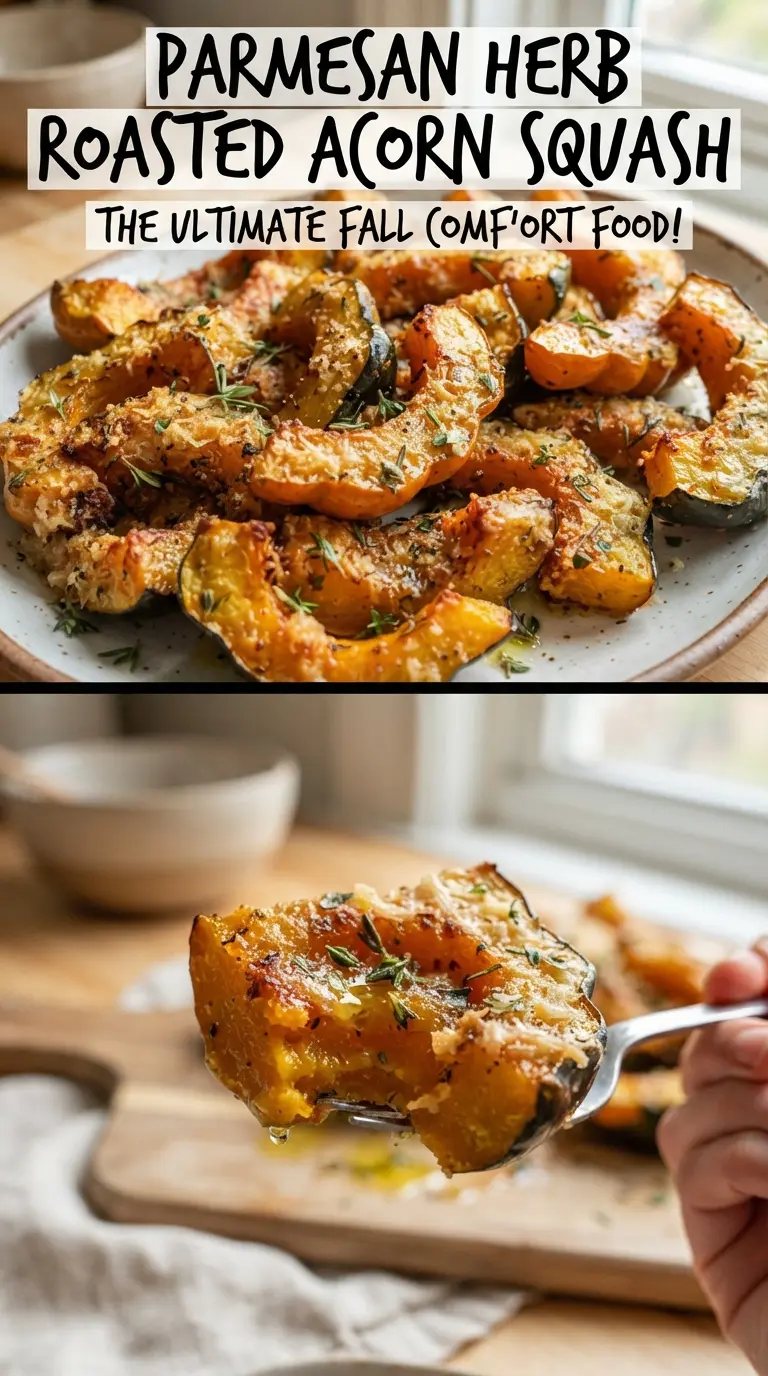
- Acorn squash — This is the backbone of the dish. It softens into a creamy texture while the edges brown, and it holds its shape better than many winter squashes when sliced into rings. If you swap in delicata, the cooking time gets a little shorter because the flesh is thinner.
- Parmesan — Grated Parmesan is what gives you the salty, crisp shell. Freshly grated cheese melts and browns better than the shelf-stable powdery kind. If you use pre-shredded cheese, expect a slightly less even crust because anti-caking agents can slow down browning.
- Olive oil — This coats the squash and helps the herbs cling. It also carries the heat across the surface, which is part of what encourages browning. A neutral oil works, but you lose a little of the savory richness.
- Fresh thyme and rosemary — These herbs keep the dish from tasting one-note. Their oils stand up to the oven and add that woodsy edge that fits squash so well. Dried herbs can work, but use half as much because their flavor is more concentrated.
- Garlic — Minced garlic perfumes the squash as it roasts, but it can scorch if left in large pieces. Keep it finely minced so it clings to the oil and browns lightly instead of turning bitter.
How to Roast the Squash So the Cheese Browns, Not Burns
Coating the Slices Evenly
Toss the squash with the oil, garlic, thyme, rosemary, salt, and pepper until every ring looks lightly glossy. That coating does two jobs: it keeps the herbs in place and helps the edges brown. If you see dry patches, the squash won’t color evenly. Don’t drown the slices in oil, though, or they’ll slide around and steam on the pan.
Giving the First Roast Time to Work
Arrange the rings in a single layer and roast them at 400F for about 20 minutes. By then, the bottoms should be starting to caramelize and the squash should be just flexible enough to flip without breaking. If they still feel hard, give them a few more minutes before moving on. The goal is tenderness before the cheese goes on, not after.
Adding the Parmesan at the Right Moment
Flip the slices and scatter the Parmesan generously over the top. The hot squash will help the cheese stick, and the second roast will dry and brown it. If you pile it on in thick clumps, the center can stay pale while the edges overcook, so aim for an even layer. Watch for a deep golden color and crisp edges rather than waiting for the cheese to look fully dry in the oven.
Finishing Without Losing the Crust
Roast for another 12 to 15 minutes, just until the squash is tender and the Parmesan looks lacy and browned. Pull the pan when the cheese is set and the edges are crisp; it will keep cooking for a minute on the hot pan. If you leave it in too long, the cheese can go from crisp to bitter fast. Let it sit briefly before serving so the crust releases cleanly.
How to Adapt This for Different Tables and Pantry Days
Dairy-Free Version
Skip the Parmesan and finish the squash with toasted breadcrumbs tossed in olive oil, garlic, and a little nutritional yeast if you want that savory edge. You won’t get the same lacy crust, but you will still get browned, flavorful slices with a nice bit of crunch.
Using Delicata Squash Instead
Delicata works well because the skin is edible and the slices hold their shape. The rings will cook a little faster, so start checking a few minutes early on the second roast. The flavor is sweeter and the texture is slightly softer than acorn squash.
No Fresh Herbs on Hand
Use 1/2 teaspoon dried thyme and 1/2 teaspoon dried rosemary instead of the fresh herbs. Dried herbs are more concentrated and a little earthier, so cutting the amount keeps them from taking over. Crush the rosemary between your fingers before adding it so it spreads more evenly.
Storage and Reheating
- Refrigerator: Store leftovers in an airtight container for up to 4 days. The Parmesan loses some crispness, but the flavor stays strong.
- Freezer: It doesn’t freeze well. The squash turns watery after thawing, and the cheese crust softens too much to recover.
- Reheating: Warm it on a sheet pan in a 375F oven until heated through and the edges crisp back up. The microwave makes the squash soft and the cheese rubbery, which is the fastest way to lose the texture that makes this dish worth making.
Answers to the Questions Worth Asking

Parmesan Herb Roasted Acorn Squash
Ingredients
Equipment
Method
- Preheat the oven to 400°F and line a sheet pan with parchment for easy release and browning.
- In a large bowl, toss the acorn squash rings with olive oil, garlic, fresh thyme leaves, fresh rosemary, salt, and black pepper until evenly coated.
- Arrange the squash in a single layer on the sheet pan with space between pieces, then roast for 20 minutes while the edges start to caramelize.
- Flip the squash slices, then sprinkle generously with grated Parmesan so it melts and forms a crust.
- Roast for 12-15 minutes more at 400°F until the squash is tender and the Parmesan is golden and crisp, watching for deep golden spots.