Crispy-skinned chicken thighs sitting over creamy garlic Parmesan rice is the kind of one-pan dinner that disappears fast and doesn’t leave much behind except a pan worth scraping clean. The rice cooks underneath the chicken, so every grain picks up the rendered fat, browned bits, broth, and cheese as it bakes. You get a dish that feels layered and slow-cooked, even though the active work stays tight and manageable.
The trick is starting the chicken skin-side down so it renders and crisps before it ever goes into the oven. That step gives you the golden top everyone wants and leaves just enough fat in the skillet to season the rice without making it greasy. Toasting the rice for a couple of minutes before the broth goes in also matters; it keeps the grains separate and gives the finished dish a better texture instead of turning it soft and mushy.
Below, I’ll walk you through the exact points that matter most: getting the skin crisp, keeping the rice creamy without overcooking it, and knowing which shortcuts won’t wreck the final dish.
The chicken skin stayed crisp even after baking, and the rice soaked up all that garlic Parmesan flavor without getting gummy. My husband went back for seconds before I even sat down.
Love the crispy chicken and creamy Parmesan rice combo? Save this one-pan dinner for the nights when you want an easy skillet meal that still feels special.
The Crisp Skin Problem Most One-Pan Chicken Dinners Get Wrong
The biggest mistake in dishes like this is rushing the sear or sliding the chicken into the oven before the skin has had time to render. If the skin is pale going in, it usually stays soft coming out, and you lose the contrast that makes the whole dish worth making. Start the thighs skin-side down in a hot skillet and leave them alone until the fat renders and the surface turns a deep golden brown.
That rendered fat is doing two jobs. It gives the rice flavor from the very start, and it keeps the dish from tasting flat or watery. The rice also needs a quick toast after the onion and garlic soften; that tiny step helps it hold its shape in the oven instead of collapsing into a heavy, pasty layer.
What Each Ingredient Is Actually Doing In This Dish
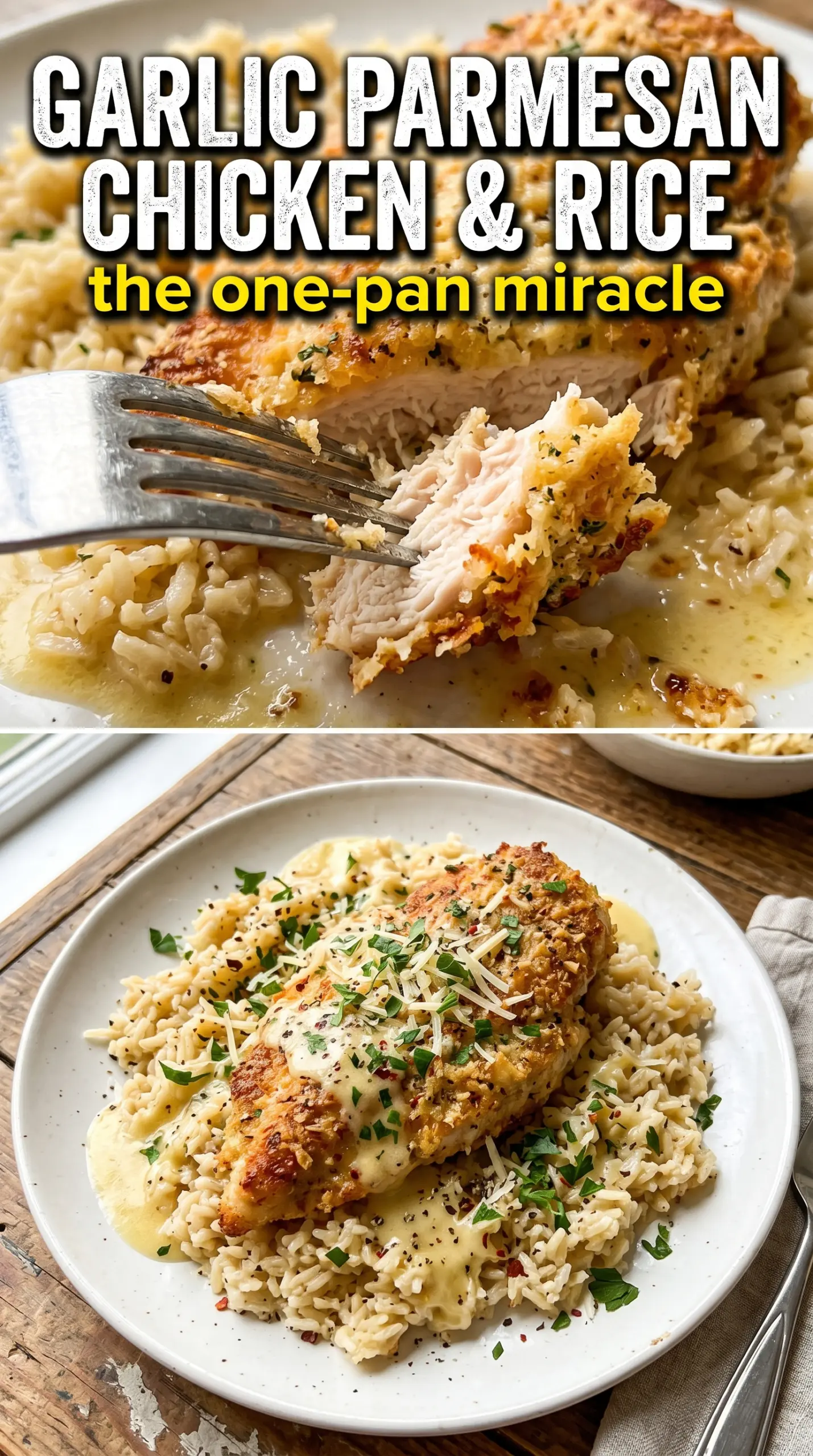
- Bone-in, skin-on chicken thighs — These stay juicy through the full bake and give you the best chance at crisp skin. Boneless thighs work in a pinch, but they cook faster and won’t baste the rice the same way.
- Long-grain white rice — This is the right rice for a fluffy, separate texture. Short-grain rice turns softer and stickier here, while brown rice needs more liquid and a much longer bake, which throws off the chicken.
- Parmesan cheese — Use grated Parmesan, not the shelf-stable powdery kind. It melts into the broth and gives the rice body; the cheaper version can turn grainy or salty without adding the same richness.
- Chicken broth — This seasons the rice from the inside out. Low-sodium broth is the safest choice because the Parmesan adds salt on its own.
- Garlic, onion, and Italian seasoning — These build the base flavor before the rice ever hits the oven. Fresh garlic matters here; dried garlic won’t give the same mellow, savory background once it cooks with the onion.
Building the Skillet So the Rice Stays Creamy and the Chicken Stays Crisp
Render the Chicken Before You Touch the Rice
Heat the oil in an oven-safe skillet, then set the thighs skin-side down and leave them there until the skin is deeply golden and the fat has rendered out. If the chicken sticks at first, it usually means it needs another minute; once the skin is ready, it releases more cleanly. Pull the thighs out as soon as they’ve browned, not after they’re cooked through, because the oven finish handles the rest.
Build the Rice in the Fat Left Behind
Cook the onion in the same pan until it softens and takes on a little color, then stir in the garlic just until it smells fragrant. Add the rice and toast it for about two minutes so the grains get coated and slightly translucent at the edges. This is the point that keeps the final dish from tasting like plain boiled rice under chicken.
Finish in the Oven Without Overworking It
Once the broth, Parmesan, and seasoning go in, bring the pan to a simmer before the chicken returns to the skillet. Nestle the thighs skin-side up so they stay above the liquid and keep their crust. Bake uncovered until the rice is tender and the chicken registers done; if you cover the pan, the skin steams and the top loses its crunch.
How to Adapt This for a Lighter Pantry or a Different Table
Make it gluten-free without changing the texture
This recipe is naturally gluten-free as long as your broth and Parmesan are certified gluten-free. The rice structure stays the same, so you don’t need any special flour or thickener.
Use boneless chicken thighs for a faster dinner
Boneless thighs cook quicker and are easier to serve, but they won’t give you quite the same rendered fat or dramatic crispy skin. Start checking them earlier so the rice doesn’t overcook while the chicken catches up.
Swap in mozzarella for a milder finish
A little mozzarella melts into the rice in a softer, stretchier way, but it won’t give the same salty backbone as Parmesan. I’d keep at least half the Parmesan in the pan so the dish still tastes seasoned instead of just creamy.
Add a vegetable without breaking the dish
Stir in a handful of frozen peas or chopped spinach near the end of the bake. Peas keep their bite, and spinach wilts into the rice without adding extra liquid that could throw off the texture.
Storage and Reheating
- Refrigerator: Store leftovers in an airtight container for up to 4 days. The rice firms up a bit as it chills, but the flavor holds well.
- Freezer: This freezes, though the rice softens slightly after thawing. Pack portions tightly and freeze for up to 2 months for the best texture.
- Reheating: Reheat covered in the oven at 325°F with a splash of broth, or warm gently on the stove over low heat. Don’t blast it in the microwave on high or the rice can dry out while the chicken skin turns rubbery.
Answers to the Questions Worth Asking
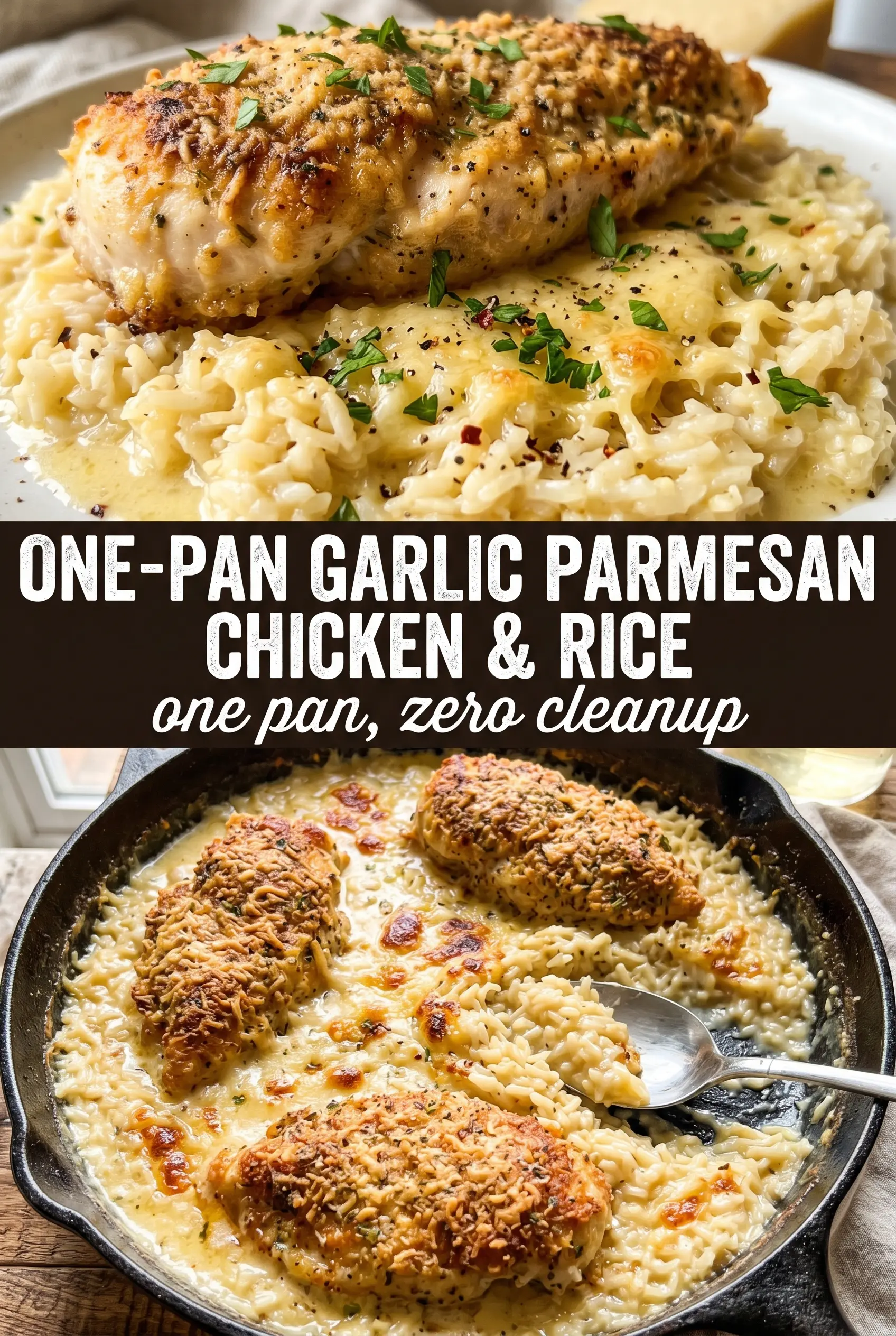
One-Pan Garlic Parmesan Chicken and Rice
Ingredients
Equipment
Method
- Preheat the oven to 400°F, then set out a large oven-safe skillet for the bake.
- Season the chicken thighs all over with salt, pepper, garlic powder, Italian seasoning, and smoked paprika to taste.
- Heat the olive oil in the skillet and sear the chicken skin-side down for 6-7 minutes until the skin is golden; remove the chicken to a plate.
- In the same skillet, cook the diced onion for 3 minutes until softened.
- Add the minced garlic and cook for 1 minute until fragrant.
- Add the uncooked long-grain white rice and toast for 2 minutes, stirring so the grains are lightly coated.
- Pour in the chicken broth and stir in Parmesan and dried Italian seasoning; bring the mixture to a simmer.
- Nestle the chicken thighs skin-side up into the rice, then sprinkle with extra Parmesan.
- Transfer to the oven and bake uncovered for 30-35 minutes until the rice is cooked through and the chicken skin is golden.
- Garnish with fresh parsley and serve hot.