Soft oatmeal cookies and vanilla bean ice cream make a frozen sandwich that tastes like the lunchbox treat grew up and got better. The cookies stay chewy instead of turning hard in the freezer, and the vanilla layer melts just enough on the first bite to tie everything together. It’s nostalgic in the best way, but this version has deeper spice, a richer cookie, and a cleaner cream filling than the packaged original.
The key is baking the cookies until they’re just set at the edges and still pale in the middle. That sounds underdone, but it’s exactly what keeps them tender after freezing. Molasses and brown sugar bring the oat-cookie flavor closer to the classic oatmeal cream pie, while cinnamon and cloves give the cookies enough warmth to stand up to the ice cream without tasting heavy.
Below, I’ll walk through the little details that keep the cookies soft, how to sandwich them without a mess, and the easiest way to freeze them so they slice and bite cleanly.
The cookies stayed soft even after freezing, and the molasses really gave them that oatmeal cream pie taste. My kids said it was better than the store-bought ones.
Save these oatmeal cream pie ice cream sandwiches for when you want a chewy cookie layer and a creamy frozen center in one nostalgic dessert.
The Reason These Cookies Stay Soft After Freezing
The freezer is brutal to cookies that were baked too long. If the edges are crisp before they go in, they’ll turn hard as rocks once frozen. These need to come out when the centers still look slightly underbaked and the tops have just lost their raw shine. That gives you a cookie that stays bendable and chewy instead of becoming brittle around the ice cream.
Molasses does quiet work here. It deepens the color, gives the cookies that classic oatmeal cream pie taste, and helps hold moisture in the dough. Quick-cooking oats matter too, because they soften faster and create a tighter, more uniform crumb that makes biting into the sandwich easier after freezing. Old-fashioned oats can work, but the texture gets looser and a little rougher.
What the Oats, Molasses, and Ice Cream Are Each Bringing Here
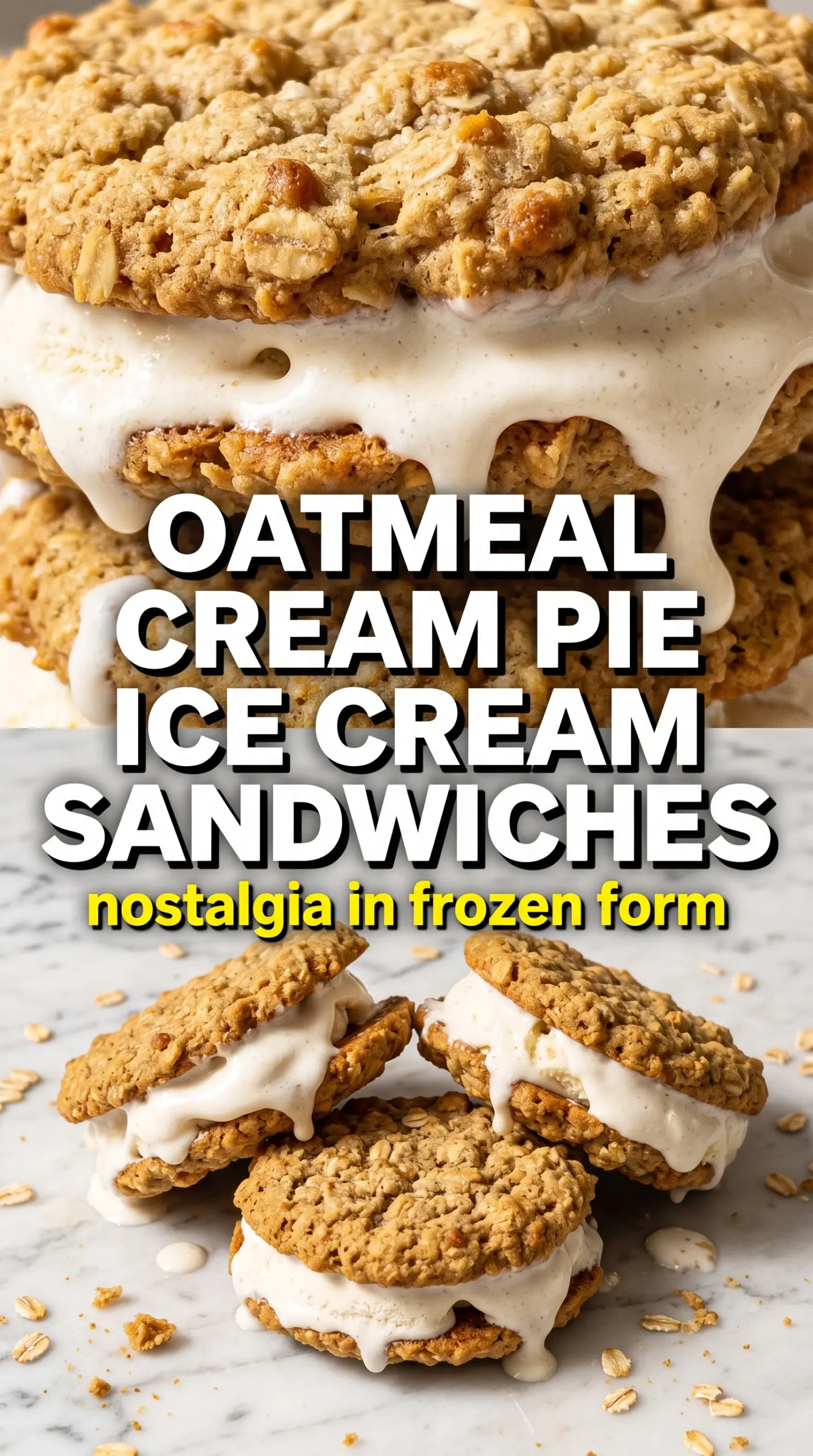
- Quick-cooking oats — These soften just enough during baking to keep the cookies tender in the freezer. Old-fashioned oats give a more rustic bite, but they also make the cookies feel more jagged once frozen.
- Molasses — This is the ingredient that pushes the cookies toward true oatmeal cream pie territory. If you skip it, the cookies still taste good, but they lose that warm, caramel-dark note that makes the filling taste more like a nostalgic treat than a plain oatmeal cookie.
- Vanilla bean ice cream — Use a good vanilla here, since it’s the whole center of the sandwich. Softened ice cream spreads without smashing the cookies, but don’t let it melt into soup or it’ll ooze out the sides instead of staying in a neat layer.
- Brown sugar — This adds moisture and chew, which is exactly what you want in a cookie that’s headed for the freezer. A dark brown sugar gives even more molasses depth; light brown sugar still works if that’s what you have.
Building the Sandwich Before the Ice Cream Melts
Mix the dough until it’s just combined
Start by whisking the dry ingredients so the baking soda and spices are evenly distributed. Beat the butter with both sugars until the mixture looks fluffy and a little lighter in color, then add the eggs, molasses, and vanilla. When the flour goes in, stop mixing as soon as you no longer see dry streaks, then fold in the oats by hand. Overmixing at this stage tightens the cookies and makes them tougher after freezing.
Shape, flatten, and bake for softness
Scoop generous rounds of dough, about 3 tablespoons each, and press them flat before baking. These cookies don’t spread into thin discs; they hold their shape and need that gentle press to become sandwich-friendly. Bake just until the edges are set and the centers look puffed and soft, then pull them from the oven. If you wait for deep browning, they’ll bake up too dry for a frozen sandwich.
Cool completely before filling
The cookies need to be fully cool before you add the ice cream. If there’s any warmth left, the filling starts sliding and the bottoms of the cookies soften unevenly. I like to move them to a rack and wait until the pan and the cookies both feel completely room temperature. At that point, they’re sturdy enough to handle but still soft enough to bite cleanly later.
Assemble and freeze until set
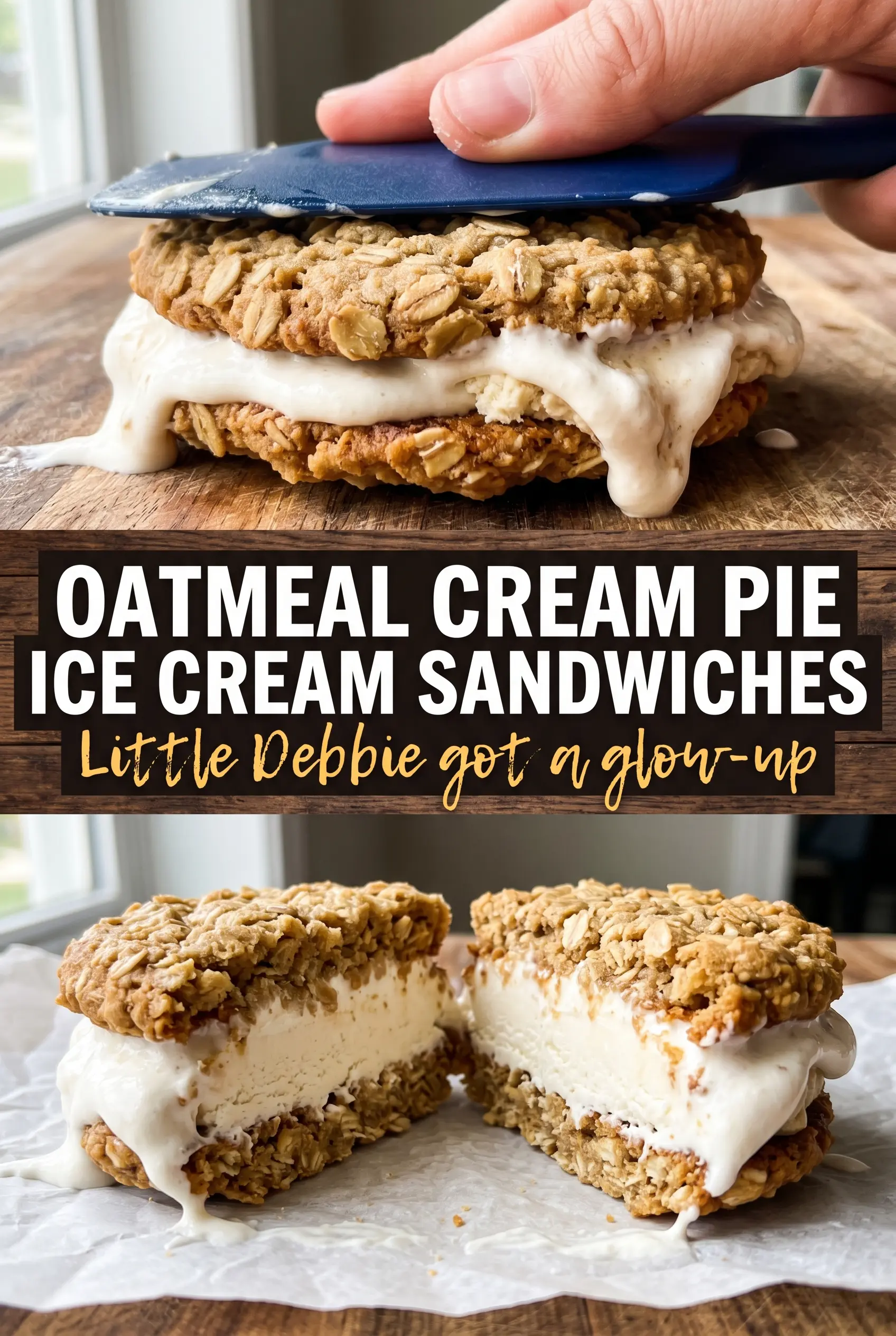
Scoop softened vanilla bean ice cream onto the flat side of one cookie, top with a second cookie, and press gently until the filling reaches the edges. Work quickly but don’t rush the pressing; a firm, even squeeze gives you a neat ring of ice cream instead of a squished center. Freeze the sandwiches for at least an hour so they firm up enough to hold together. If you serve them too early, the filling smears before the cookies can settle around it.
How to Adapt These for Different Kitchens and Different Cravings
Gluten-Free Version
Use a cup-for-cup gluten-free flour blend in place of the all-purpose flour. The oats still give the cookies their chew, but the dough may need a minute or two of resting before baking so the flour hydrates evenly. The texture will be a little more delicate, but the sandwiches still hold together well once frozen.
Dairy-Free Swap
Use your favorite plant-based butter and a dairy-free vanilla ice cream with a firm churn style. The cookies will still bake up soft, but the ice cream needs to be sturdy enough to slice or scoop without turning soupy. Coconut-based ice cream gives the creamiest texture, while oat-based versions keep the flavor closer to the cookie.
More Spice, Less Sweet
Add an extra 1/4 teaspoon cinnamon and a pinch more cloves if you want the cookie to taste warmer and less candy-like. If you also want a sharper contrast with the ice cream, use a vanilla bean ice cream that leans less sweet and more dairy-forward. That makes the sandwich taste a little more grown-up without losing the nostalgic feel.
Storage and Reheating
- Refrigerator: Not recommended. The ice cream softens too quickly and the cookies lose their frozen texture.
- Freezer: Freeze wrapped sandwiches for up to 2 weeks. After that, the cookies are still safe to eat, but the texture starts to pick up freezer flavor.
- Reheating: No reheating needed. Let the sandwiches sit at room temperature for 3 to 5 minutes before serving so the cookies soften just enough to bite cleanly. If they sit longer, the filling starts to spill out.
Answers to the Questions Worth Asking
Oatmeal Cream Pie Ice Cream Sandwiches
Ingredients
Equipment
Method
- Preheat the oven to 375°F and prepare a sheet pan for baking.
- Whisk all-purpose flour, baking soda, cinnamon, cloves, and salt until evenly combined.
- Beat unsalted butter and granulated sugar with brown sugar until fluffy, then mix in eggs, molasses, and vanilla extract.
- Stir in the flour mixture until just combined, then fold in quick-cooking oats.
- Scoop dough into large rounds (3 tablespoons each), press flat, and bake for 10-12 minutes until just set.
- Cool the cookies completely until no longer warm, noting they will be soft.
- Place vanilla bean ice cream between two oatmeal cookies to form sandwiches.
- Press the cookies together firmly until the ice cream reaches the edges.
- Freeze the sandwiches for at least 1 hour, then serve while still chilled.