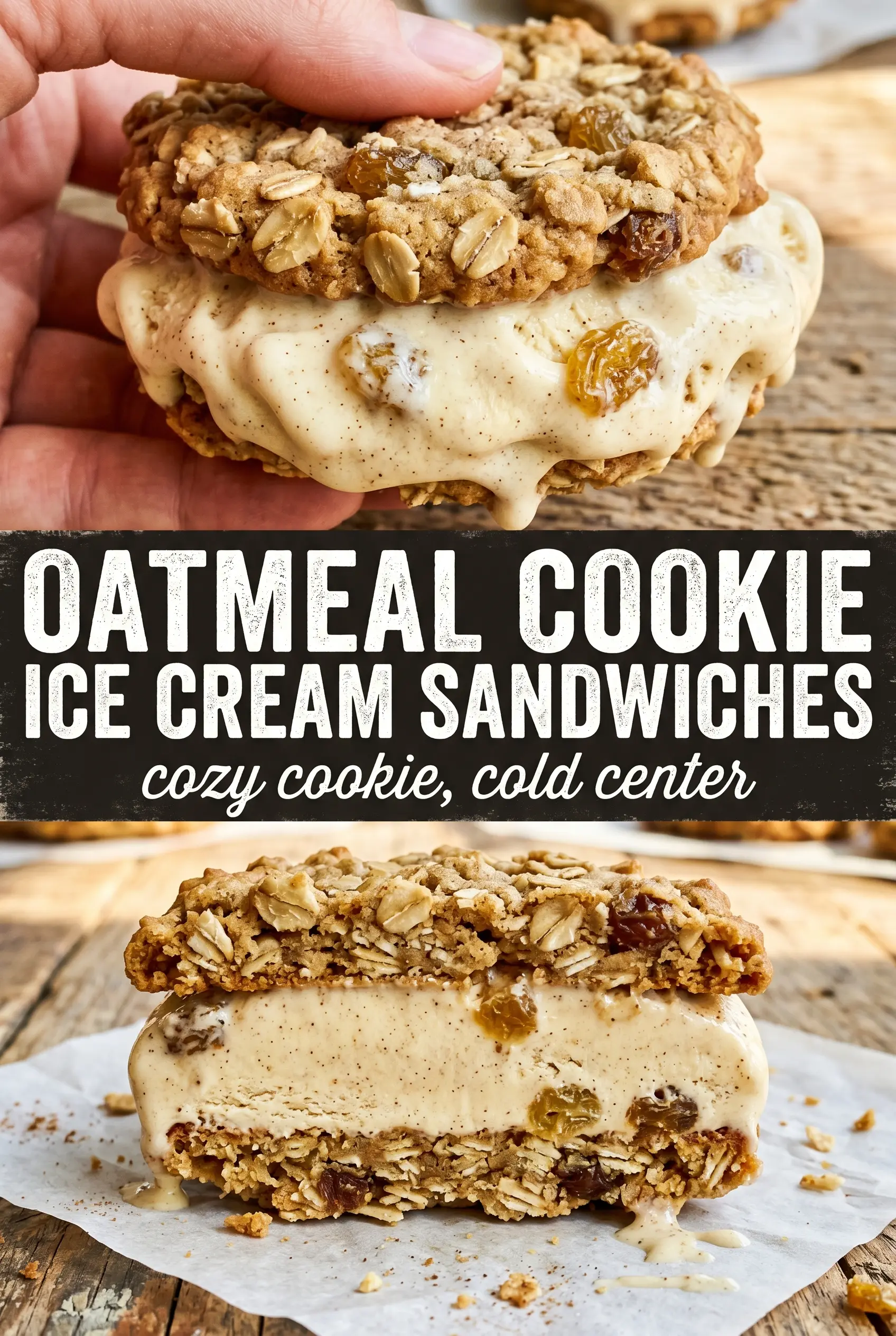
Thick oatmeal cookies and cold vanilla or cinnamon ice cream are a pairing that never gets old, and these ice cream sandwiches hit that sweet spot between cozy and refreshing. The cookies stay chewy after freezing, with crisp edges that soften just enough against the ice cream, so every bite has a little give instead of turning hard and brittle. A dusting of cinnamon sugar or mini chocolate chips on the edges finishes them with a little extra texture and a clear homemade look.
What makes this version work is the cookie base. The dough is sturdy enough to hold a generous scoop of ice cream, but it still bakes up soft in the center because of the brown sugar, oats, and just enough butter. Pressing the cookies flat before baking helps them spread into the right shape for stacking later, and cooling them completely keeps the ice cream from melting into the filling before you even get them into the freezer.
Below, I’ll walk through the small details that matter here, including how thick to make the cookies, what kind of ice cream gives the cleanest bite, and how to freeze them so they slice and serve neatly.
The cookies stayed chewy after freezing and the cinnamon ice cream didn’t squish out the sides. I added the little chocolate chip edge and they looked bakery-made.
Save these oatmeal cookie ice cream sandwiches for the kind of dessert that stays chewy, scoops clean, and tastes like cinnamon and vanilla in the best possible way.
The Part That Keeps the Cookies Chewy After Freezing
The biggest mistake with ice cream sandwiches is using cookies that bake up too dry or too crisp. They taste fine on day one, but after an hour in the freezer they turn hard enough to fight back. These oatmeal cookies stay flexible because the brown sugar brings moisture, the oats add body without making them cakey, and the bake time stops right when the edges set and the centers are still soft.
That softness matters twice. First, it gives you a cookie that compresses around the ice cream instead of cracking. Second, it keeps the frozen sandwich from feeling dense and chalky once it sits at room temperature for a few minutes. Pull them from the oven when the centers still look slightly underdone, then let them finish on the tray. Overbaking here costs you texture later.
What the Oats, Cinnamon, and Ice Cream Are Each Doing

- Rolled oats — These give the cookies their chew and that rustic, crinkled look. Quick oats can work in a pinch, but the texture will be less defined and a little softer. If you use them, the cookies will spread a touch more, so keep an eye on the oven.
- Brown sugar — This is what keeps the cookies from baking dry. The molasses in brown sugar adds moisture and a deeper caramel note that works with cinnamon and ice cream. Light brown sugar is fine; dark brown sugar will give you a slightly richer, warmer flavor.
- Cinnamon — The cookies need enough cinnamon to stand up to the ice cream, not just whisper in the background. Fresh cinnamon makes a difference here because it’s one of the main flavors in the final sandwich. If you want a stronger spice note, add a pinch of nutmeg, but don’t push it too far or it takes over.
- Vanilla or cinnamon ice cream — Vanilla gives you a clean, classic filling; cinnamon ice cream turns the whole dessert into a stronger spice-forward treat. Use a firm, good-quality ice cream if you want neat sandwiches. Very soft ice cream leaks at the edges before the cookies have time to set.
- Raisins — Optional, but they make the cookie read more like a classic oatmeal raisin cookie. Chop them if they’re plump so the sandwich layers more evenly. Leave them out if you want the flavor to stay focused on oats, cinnamon, and cream.
How to Shape, Bake, and Freeze Them Without a Mess
Mixing the Dough for a Thick Cookie
Start by whisking the dry ingredients together so the baking soda and cinnamon are evenly distributed. Beat the butter and sugars until they look pale and fluffy, then add the eggs and vanilla; that step builds the structure that keeps the cookies tender. Once the flour goes in, stir just until the dough comes together, then fold in the oats by hand so they stay intact. If you overmix after the flour is added, the cookies can turn tough instead of chewy.
Baking Until the Edges Set
Scoop generous mounds of dough, about 3 tablespoons each, then press them flat before they go into the oven. That shape is what makes the sandwich work later, and it also helps the cookies bake evenly without a domed center. Pull them when the edges are golden and the middles still look a little soft. They firm up as they cool, and that slight underbake is exactly what keeps them pleasant after freezing.
Building the Sandwich and Locking It In
Wait until the cookies are completely cool before you add the ice cream, or the filling will melt and slide out the sides. Let the ice cream soften just enough to scoop, then flatten it between two cookies and press gently from the top so it spreads to the edges. Roll the exposed edge in mini chocolate chips or cinnamon sugar if you want a finished look and a little extra crunch. Freeze the assembled sandwiches for at least an hour so the ice cream firms up and the cookies settle together.
Make Them Raisin-Free and Classic
Leave out the raisins and the cookies read like a classic cinnamon-oat base instead of an oatmeal raisin cookie. That makes the vanilla or cinnamon ice cream stand out more cleanly, and it’s the better route if you’re serving a crowd with mixed opinions about raisins.
Gluten-Free Version
Use a good 1:1 gluten-free flour blend and certified gluten-free oats. The cookies will still be chewy, but they may spread a little less, so flatten the scoops slightly more before baking. Let them cool fully before assembling, since gluten-free cookies can seem fragile while warm.
Chocolate Chip Edge
Rolling the edges in mini chocolate chips gives the sandwiches a bakery-style finish and adds a little crunch against the creamy filling. Use small chips so the bites stay neat and don’t fall off as the ice cream softens. Cinnamon sugar works too if you want a lighter finish.
Storage and Reheating
- Refrigerator: Not the best choice. The ice cream softens too quickly and the cookies lose their clean sandwich shape.
- Freezer: Store wrapped individually or in a sealed container for up to 2 weeks. After that, the cookies start to pick up freezer flavor and the texture dulls.
- Reheating: No reheating needed. Let them sit at room temperature for 3 to 5 minutes before serving so the cookies soften just enough to bite cleanly. If they sit too long, the ice cream will push out the sides.
Questions I Get Asked About This Recipe
Oatmeal Cookie Ice Cream Sandwiches
Ingredients
Equipment
Method
- Preheat the oven to 375°F, then line baking sheets for easy release.
- Whisk all-purpose flour, baking soda, cinnamon, and salt in a bowl until evenly combined and speckled.
- Beat unsalted butter, brown sugar, and granulated sugar until fluffy, lightened in color, and creamy.
- Add eggs and vanilla extract, then mix until the batter looks smooth and thick.
- Stir in the flour mixture until no dry streaks remain, keeping the dough cohesive.
- Fold in rolled oats and raisins if using, until the oats are evenly distributed.
- Scoop about 3 tablespoons of dough per cookie and press into large rounds on the lined baking sheets.
- Bake for 10-12 minutes, until the edges are golden and the centers still look slightly soft.
- Cool the cookies completely so they won’t melt the ice cream when assembled.
- Place cinnamon or vanilla ice cream between two cooled oatmeal cookies, pressing gently to align the edges.
- Roll the cookie edges in mini chocolate chips or cinnamon sugar to coat and give a crunchy, spiced finish.
- Freeze the assembled sandwiches for at least 1 hour before serving, until firm enough to slice or bite cleanly.