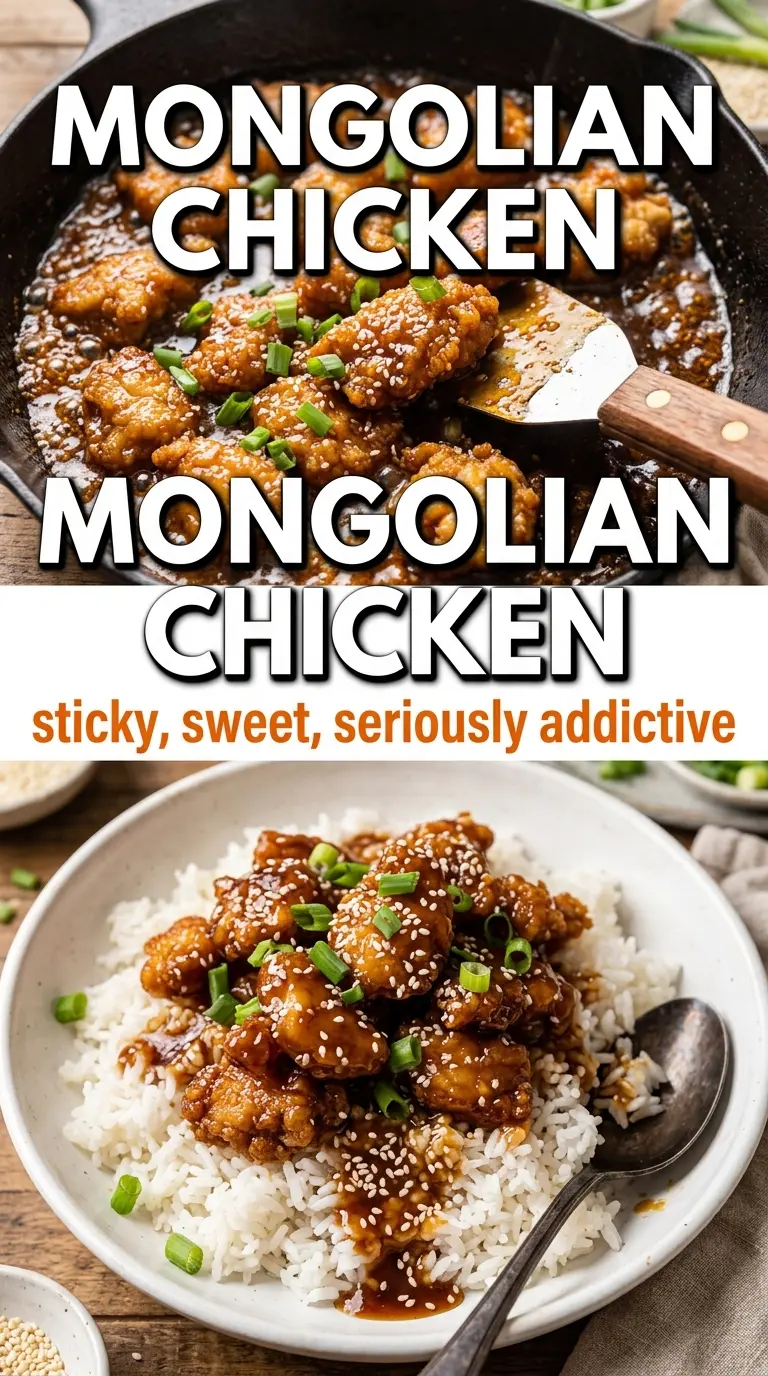
Crispy-edged Mongolian chicken is one of those skillet dinners that tastes like it took much longer than 30 minutes, even though the whole thing comes together fast. The chicken stays tender inside, gets a light crust from the cornstarch, and then takes on a dark, sticky sauce that clings to every piece instead of pooling at the bottom of the pan. With charred green onions and sesame seeds on top, it hits that sweet-salty-gingery balance that keeps people going back for another forkful.
The trick is in the order. Coating the chicken in cornstarch before it hits the pan helps it brown and gives the sauce something to grab onto later. The sauce itself is built from soy sauce, brown sugar, hoisin, ginger, and garlic, then finished with a quick slurry so it turns glossy instead of thin and watery. High heat matters here, but only for the chicken and the first boil of the sauce. Once the slurry goes in, the sauce only needs a minute or two to thicken.
Below, I’ve included the small adjustments that keep the sauce from turning dull or clumpy, plus a few swaps if you need to work with what’s already in your kitchen.
The chicken got that crisp coating even after tossing it in the sauce, and the glaze thickened up in just a minute or two. I served it with rice and my husband said it tasted better than our usual takeout.
Save this Mongolian chicken for the nights when you want sticky sauce, crispy chicken, and takeout-style dinner in one skillet.
The Chicken Needs Space, Not Steam
The most common mistake with Mongolian chicken is crowding the pan. If the chicken sits too close together, the moisture it releases turns the skillet into a steamer, and you lose the deep golden edges that make the dish worth making in the first place. Work in batches if your pan isn’t large enough to keep the pieces in a single layer with some room around them.
Cornstarch does two jobs here. It dries the surface just enough to help the chicken brown, and it gives the sauce a silky grip later. If you skip it or use too much chicken in the pan, the sauce still tastes good, but it won’t have that glossy restaurant-style finish that coats the meat cleanly.
What Each Ingredient Is Actually Doing in This Dish
- Chicken breasts — Thin slices cook fast and stay tender as long as you don’t overcook them. If you prefer thighs, they work well here and give you a little more forgiveness, but breasts give that classic takeout texture.
- Cornstarch — This is what creates the light crust and helps the sauce cling. A flour coating won’t behave the same way; it turns heavier and doesn’t give the same glossy finish.
- Soy sauce and brown sugar — These build the core of the sauce: salty, sweet, and dark enough to look right on the plate. Light brown sugar is fine; dark brown sugar will make the sauce a touch deeper and richer.
- Hoisin sauce — This adds body and that savory-sweet depth you taste in good takeout-style stir fries. If you don’t have it, the sauce still works, but it loses some of its rounded finish.
- Fresh garlic and ginger — Fresh matters here. Powdered versions taste flat in a sauce this simple, and the recipe relies on that sharp, aromatic hit in the pan.
- Green onions — They should go in at the end so they keep their shape and get a little char without turning limp. Cut them into longer pieces so they stay visible and give you that restaurant look.
Build the Sauce in the Right Order, and It Stays Glossy
Coat the Chicken First
Toss the sliced chicken with cornstarch, salt, and pepper until every piece looks lightly dusty rather than pasty. That thin coating is enough; if it clumps, there’s too much cornstarch or too much moisture on the chicken. The goal is a dry surface that sears quickly when it hits the hot oil.
Brown Before You Sauce
Heat the oil until it shimmers, then add the chicken in a single layer. Leave it alone long enough for a crust to form before turning it, because moving it too soon tears off the coating. When it’s deeply golden and cooked through, pull it out of the pan so the sauce has room to boil.
Reduce, Then Thicken
Add the garlic and ginger to the same pan for just 30 seconds, then pour in the sauce mixture and bring it to a boil. Once it’s bubbling, stir in the cornstarch slurry and keep it moving for a minute or two until the sauce turns dark, shiny, and thick enough to coat a spoon. If it looks cloudy or loose, it needs another short simmer; if it gets too thick, a splash of water loosens it back up.
Finish With the Chicken and Green Onions
Return the chicken to the skillet with the green onion pieces and toss until everything is coated. The onions should soften at the edges while keeping some bite, not collapse into the sauce. Turn off the heat, sprinkle with sesame seeds, and serve it right away over rice while the glaze is still glossy.
How to Adapt This for Different Kitchens and Different Tables
Use chicken thighs for a richer, juicier version
Boneless skinless thighs work beautifully here and are a little harder to overcook. They give the dish a softer bite and slightly richer flavor, though the finished chicken won’t look quite as lean and crisp as breast meat.
Make it gluten-free with tamari and a gluten-free hoisin
Use tamari in place of soy sauce and check your hoisin label carefully, since some brands contain wheat. The sauce still turns sticky and savory, and the cornstarch slurry keeps the texture the same.
Dial back the heat without losing the balance
The red pepper flakes bring a gentle back-of-the-throat warmth, not real heat. Leave them out for a milder version, or add a pinch of extra flakes at the end if you want the sauce to hit a little harder against the sweetness.
Store and reheat without drying out the chicken
- Refrigerator: Store leftovers in an airtight container for up to 4 days. The sauce thickens as it chills, which is normal.
- Freezer: It freezes well for up to 2 months, though the chicken will be a little softer after thawing. Cool it completely before freezing in portions.
- Reheating: Warm it in a skillet over medium-low heat with a splash of water to loosen the sauce. The biggest mistake is blasting it over high heat, which tightens the chicken and makes the glaze sticky in the wrong way.
Questions I Get Asked About This Recipe
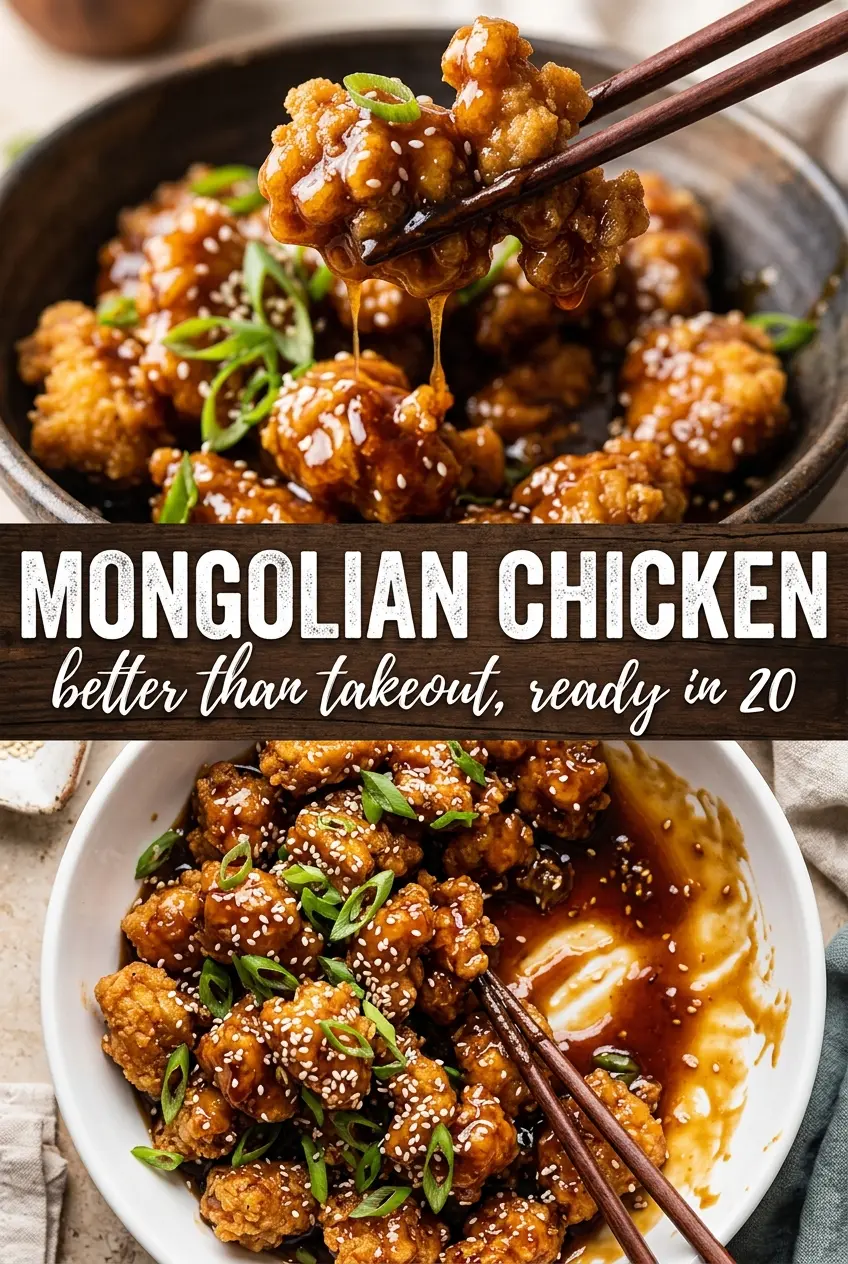
Mongolian Chicken
Ingredients
Equipment
Method
- Toss sliced chicken with cornstarch, salt, and pepper until coated and lightly dry on the outside.
- Whisk soy sauce, brown sugar, water, hoisin sauce, sesame oil, and red pepper flakes until the sugar dissolves.
- Heat vegetable oil in a large skillet or wok over high heat until shimmering, then cook chicken for 3-4 minutes per side until deeply golden and cooked through.
- Remove the chicken to a plate and add garlic and ginger to the same pan; stir-fry for 30 seconds until fragrant.
- Pour in the sauce mixture and bring it to a boil over high heat, watching it turn glossy and darker amber.
- Stir in the cornstarch slurry and cook for 1-2 minutes until the sauce thickens and clings to the pan surface.
- Return chicken to the pan with green onions and toss until the glaze coats every piece and the green onions char slightly.
- Serve the Mongolian chicken over steamed rice with sesame seeds, ensuring chicken and sauce are spooned generously on top.