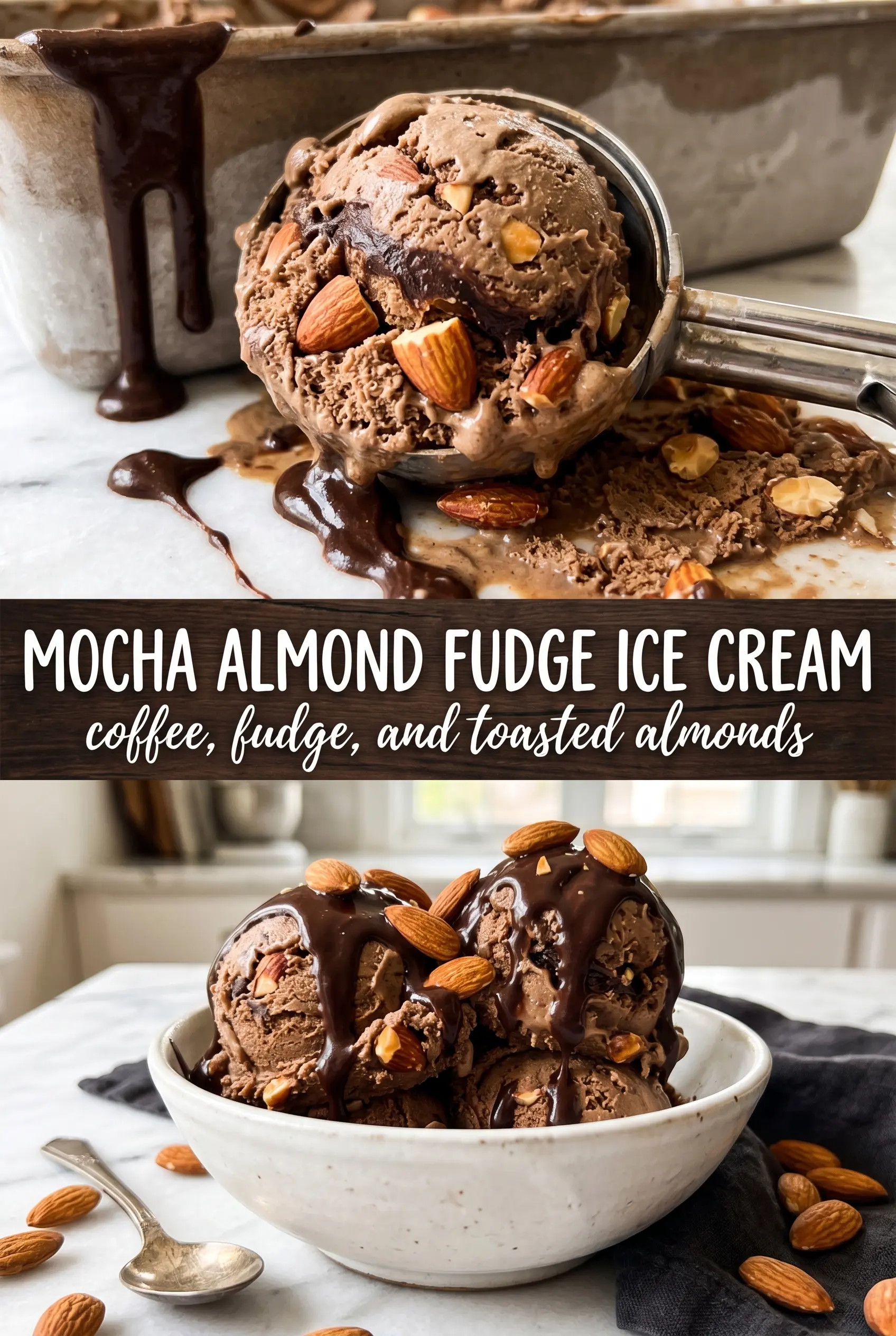
Bold espresso ice cream with fudge ribbons and toasted almonds earns its keep fast because every spoonful gives you contrast: cold and creamy, bitter and sweet, smooth and crunchy. The coffee base stays rich without tasting flat, the fudge cuts through with a deep chocolate note, and the almonds keep each bite from turning one-note. It’s the kind of ice cream that feels a little more grown-up than the usual scoop, but still hits all the comforting notes people go back for.
The key is building the custard gently enough that the eggs thicken it without scrambling, then chilling it fully before it ever hits the churn. Instant espresso powder dissolves cleanly and gives you a stronger coffee flavor than brewed coffee would, which matters here because dairy can mute it. The fudge goes in at the end in thick ribbons, not mixed all the way through, so you get those dark swirls instead of a chocolate base that takes over everything.
Below, I’ve laid out the small details that matter here: how to keep the custard smooth, when to add the almonds so they stay crunchy, and how to layer the fudge so it swirls instead of disappearing.
The custard turned out silky, and the fudge stayed in thick ribbons instead of melting into the base. Toasting the almonds made a huge difference — my husband kept picking out the crunchy bits and asked for another scoop.
Save this mocha almond fudge ice cream for the nights when you want bold coffee flavor, thick fudge swirls, and a real crunch in every scoop.
The Custard Needs Gentle Heat, Not More Patience
The biggest mistake with this kind of ice cream is pushing the custard too hot because you want it to thicken faster. Eggs don’t reward that. They reward steady heat and constant whisking, and if you rush them, you get little flecks of scrambled egg that turn a smooth base grainy. The goal is a custard that lightly coats the back of a spoon at 175°F, then stops cooking the second you move it off the burner.
That temperature matters because it gives the ice cream body without making it heavy. If you stop too early, the base churns up thin and icy. If you go too far, the custard tastes eggy and feels dense instead of plush. Straining it after cooking catches any tiny bits before they become a problem, which is worth the extra bowl every time.
What Each Ingredient Is Doing in the Bowl

- Heavy cream — This is what gives the ice cream its plush, scoopable body. A lower-fat substitute will churn up icier and less rich, so keep the cream here.
- Whole milk — It loosens the base enough that it doesn’t freeze into a brick. Skim milk won’t give the same roundness, and the texture will feel flatter.
- Instant espresso powder — This is the backbone of the mocha flavor. Brewed coffee won’t give the same intensity without adding extra liquid, and extra liquid dilutes the custard.
- Egg yolks — They turn the base into a true custard and help it freeze with a smoother, creamier finish. Whisk them with the sugar first so they thicken a little before the hot dairy goes in.
- Toasted almonds — Toasting is nonnegotiable if you want crunch that stands up to freezing. Raw almonds taste dull here and turn softer once they’re mixed in.
- Hot fudge sauce — Use one that stays thick when warm, not a thin chocolate syrup. You want ribbons that hold their shape between layers instead of disappearing into the base.
- Vanilla and salt — They don’t read as separate flavors, but they make the coffee and chocolate taste deeper. Salt is what keeps the sweetness from taking over.
Churning, Layering, and Keeping the Fudge in Swirls
Building the custard base
Heat the cream and milk together, then whisk in the espresso powder until it dissolves completely. If you still see dark specks, keep whisking before the dairy gets hot enough to move on. Slowly stream the warm dairy into the yolks and sugar while whisking the whole time so the eggs warm up gradually instead of curdling on contact. Then return everything to the pan and cook, stirring constantly, until the custard reaches 175°F and lightly coats a spoon.
Cooling before the churn
Strain the custard into a clean bowl, then stir in the vanilla and salt. Let it cool all the way down before it goes into the refrigerator, because trapping steam in the base will slow chilling and can thin the flavor. The full chill matters here; a warm base churns poorly and often freezes with a sandy, loose texture. Four hours is the minimum if you want a clean, creamy finish.
Adding the almonds at the right moment
Churn the custard until it looks like soft serve, then add the toasted almonds in the last 5 minutes. That timing keeps them from getting ground up by the paddle and helps them stay distributed instead of sinking to the bottom. If you add them too early, the machine beats the crunch out of them and the texture gets lost in the churn.
Layering the fudge ribbon
Spoon the churned ice cream into a container in layers and drizzle warm fudge sauce between each one. The sauce should be warm enough to move, not hot enough to melt the base. Run a knife through just a few times for visible swirls; if you overmix, the ribbons disappear and the whole batch turns muddy instead of marbled. Freeze until firm, and give it a few minutes on the counter before scooping if it gets extra hard.
Three Ways to Make This Ice Cream Fit Your Kitchen
Dairy-Free Version with Coconut Cream
Swap the heavy cream and milk for full-fat coconut milk and coconut cream. The texture will still be rich, but it will taste faintly coconut, which plays well with espresso and chocolate. Use a dairy-free fudge sauce and keep the almond toast the same.
No Ice Cream Maker
Pour the chilled custard into a shallow freezer-safe pan and freeze, stirring vigorously every 30 to 45 minutes until it’s mostly set. You won’t get quite the same airy texture, but you can still get a creamy result if you break up the ice crystals as it freezes. Add the almonds and fudge during the last few stirs so they stay visible.
Extra Chocolate, Less Coffee
If you want the mocha to lean more chocolate than coffee, reduce the espresso powder slightly and add a little melted dark chocolate to the custard after it comes off the heat. That gives you a deeper cocoa note, but the base will be a touch heavier and sweeter. Keep the fudge ribbon a little thinner so the chocolate doesn’t overwhelm the almond crunch.
Storage and Reheating
- Refrigerator: Not applicable once churned; keep the base chilled before churning, but don’t store finished ice cream in the fridge or it will melt.
- Freezer: Store in a tightly sealed container for up to 2 weeks. Press parchment or plastic wrap directly on the surface to slow ice crystals and protect the fudge swirls.
- Reheating: Let the container sit at room temperature for 5 to 10 minutes before scooping. Don’t microwave the whole carton; it melts the edges unevenly and ruins the texture.
Questions I Get Asked About This Recipe
Mocha Almond Fudge Ice Cream
Ingredients
Equipment
Method
- Heat the heavy cream and whole milk in a saucepan until steaming. Whisk in the instant espresso powder until fully dissolved and no granules remain.
- In a bowl, beat the egg yolks with the granulated sugar until smooth. Slowly whisk the warm espresso cream into the yolks in a steady stream.
- Return the mixture to the saucepan and cook, stirring constantly, until it reaches 175F. Keep the heat controlled so the custard thickens without scrambling.
- Strain the custard through a fine-mesh strainer into a clean container to remove any cooked bits. Stir in the vanilla extract and salt, then cool completely.
- Refrigerate the custard for 4 hours until thoroughly chilled. Visual cue: it should be cold all the way through.
- Churn the chilled custard in an ice cream maker according to the manufacturer’s instructions. Add the toasted whole almonds during the last 5 minutes so they stay crunchy.
- Layer the churned ice cream into a container, drizzling the warmed hot fudge sauce between layers. Swirl through the layers with a knife to create visible fudge ribbons.
- Freeze the ice cream until firm. Visual cue: the texture should scoop cleanly with little or no give at the center.