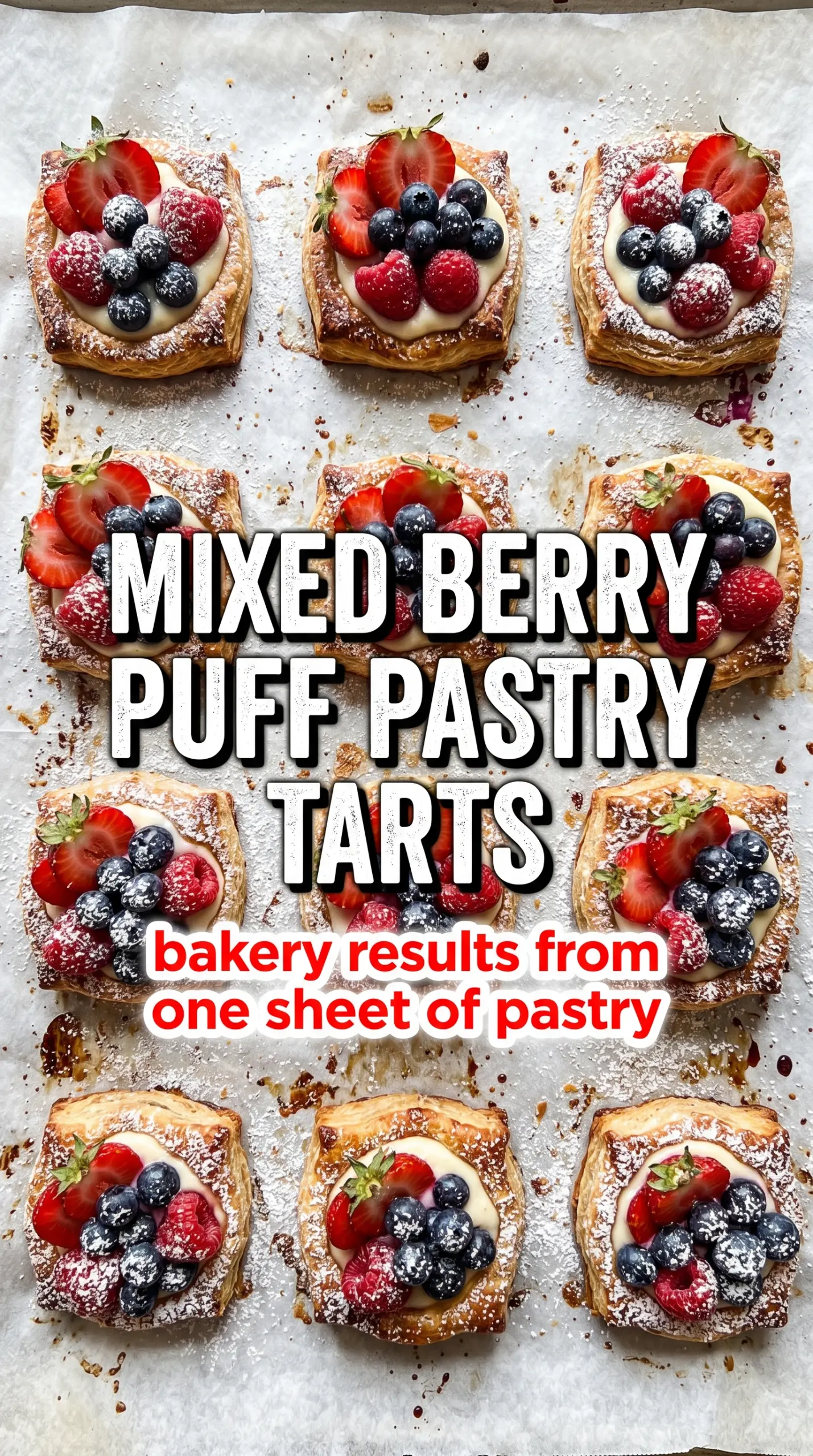
Flaky puff pastry, a tangy cream cheese center, and a glossy tumble of mixed berries make these tarts feel bakery-made without much effort at all. The edges puff into crisp, golden layers while the middle stays creamy and the fruit softens just enough to turn juicy without collapsing into jam. Every bite gives you that contrast of crunch, silk, and bright berry flavor.
What makes this version work is the balance. The cream cheese layer acts like a cushion, keeping the pastry from going soggy while also giving the berries something rich to sit on. A scored border helps the edges rise tall and clean, and a quick apricot glaze at the end gives the fruit that polished finish you usually only get from a pastry case.
You’ll find the timing cues that matter most below, plus a few smart swaps if your berry mix is leaning more tart than sweet. The method is simple, but the details make these tarts look and taste special.
The pastry puffed up around the filling just like the photo, and the cream cheese layer kept the berries from making the bottoms soggy. I brushed on the apricot glaze and they looked like something from a bakery.
Love the flaky pastry and jewel-bright berry topping? Save these mixed berry puff pastry tarts for the next time you want a fast dessert that looks polished with almost no fuss.
The Border Is What Keeps the Filling From Spilling Out
The scored border is doing more than making these look neat. It tells the pastry where to rise, so the edges lift into a defined frame while the center stays flatter and holds the cream cheese and berries. Skip the score and you get a puffier sheet with no real structure, which makes the topping slide around once the pastry starts expanding in the oven.
Press lightly when you score. You want to cut through the top layers, not all the way through the pastry. If you cut too deep, the tart can separate and leak butter instead of rising into those crisp layers that make puff pastry worth using in the first place.
What Each Ingredient Is Actually Doing in This Recipe
- Primary ingredient (the star) — Quality matters most. Choose the best you can find.
- Cooking medium (oil, butter, or broth) — This carries flavors and prevents dryness.
- Seasonings (salt, pepper, spices, herbs) — Layer flavors so nothing overpowers. Build depth gradually.
- Aromatics (garlic, onion, herbs) — Cook with fat to bloom flavors. Become the foundation.
- Supporting ingredients — Complement the main ingredient without overpowering it.
- Sauce or liquid (if applicable) — Brings flavors together. Balance richness with acid.
- Acid (lemon, vinegar, wine, or other) — Brightens and prevents flat-tasting results.
- Final finish (garnish, glaze, or sauce) — Prevents one-dimensional taste and adds visual appeal.
What the Cream Cheese Layer Is Doing Under the Berries
- Cream cheese — This is the base that keeps the tarts from turning watery. Full-fat cream cheese gives the smoothest texture and the best hold, but block-style Neufchâtel can work if that’s what you have. Soften it first, or you’ll end up with little lumps that never fully spread.
- Powdered sugar — It sweetens the filling without leaving any graininess. Granulated sugar won’t dissolve as smoothly here, and you’ll feel that in the finished tart. If your berries are especially sweet, keep the measure as written; if they’re tart, a little extra won’t hurt.
- Vanilla and lemon zest — Vanilla rounds out the filling, while lemon zest wakes up the berries and keeps the tart from tasting flat. Fresh zest matters here because the oils carry the aroma right into the cream layer. Bottled lemon juice can’t replace that brightness.
- Mixed berries — A mix gives you better texture and a more interesting finish than using one berry alone. Strawberries should be cut small so they bake at the same pace as the blueberries and raspberries. If your berries are very juicy, pat them dry first so the pastry stays crisp.
- Apricot jam — This is the glaze that gives the fruit that glossy bakery finish. Apricot is neutral enough to shine without overpowering the berries. Warm it until it loosens, then brush it gently over the fruit after baking so you don’t crush the topping.
Building the Tarts So the Pastry Stays Crisp
Thawing and Cutting the Pastry
Let the puff pastry thaw just until it unfolds without cracking. If it gets too warm, it turns sticky and hard to handle, and the layers won’t puff as neatly. Cut it into even rectangles so every tart bakes at the same pace, then move fast enough that the dough stays cool.
Mixing the Cream Cheese Filling
Beat the cream cheese, powdered sugar, vanilla, and lemon zest until the mixture is completely smooth. A lumpy filling leaves uneven pockets under the berries, and that makes the tops look messy once baked. Spread it within the scored border, leaving that rim clean so the edges can rise up around the filling.
Layering and Baking
Arrange the berries over the cream cheese in a single layer or a light mound. If you pile them too high, the center stays wet and the pastry around the edges can overbake before the middle firms up. Brush the border with egg wash for color, then bake until the pastry is deep golden and the layers have clearly separated and puffed.
Finishing With the Glaze
Brush the warm apricot jam over the berries as soon as the tarts come out of the oven. The glaze sets best on hot fruit, and it gives the tops a shine that makes them look finished. Dust with powdered sugar after the glaze has settled for a few minutes, or it can melt into the fruit and disappear.
How to Adapt These for Different Kitchens and Different Crowds
Dairy-Free Version
Use a dairy-free cream cheese that bakes well and holds its shape. The texture will be a little softer and less tangy, so lean on the lemon zest to keep the filling bright. Check the label on your puff pastry too, since some brands use butter and others don’t.
Gluten-Free Swap
Use a gluten-free puff pastry if you can find one that actually bakes into layers. Not all of them do, so look for a brand meant for laminated dough rather than a simple pie crust substitute. The filling and berries stay the same.
Using Frozen Berries
Frozen berries work when fresh berries aren’t in season, but don’t thaw them first. Add them straight from the freezer so they don’t bleed too much juice into the filling. The tarts may need an extra minute or two in the oven if the berries start the bake icy cold.
Storage and Reheating
- Refrigerator: Store in an airtight container for up to 2 days. The pastry will soften a bit, but the flavor stays good.
- Freezer: These don’t freeze well after baking because the berries release too much liquid when thawed. You can freeze the unbaked assembled tarts on a tray, then bake from frozen with a few extra minutes.
- Reheating: Warm in a 325°F oven for 6 to 8 minutes. Don’t use the microwave if you want the pastry to stay crisp; it turns the layers soggy fast.
Answers to the Questions Worth Asking

Mixed Berry Puff Pastry Tarts
Ingredients
Equipment
Method
- Preheat the oven to 400°F and line a sheet pan with parchment paper.
- Unfold the puff pastry and cut it into 6 rectangles, then score a 1/2-inch border around each rectangle without cutting all the way through.
- Beat the cream cheese, 3 tablespoons powdered sugar, vanilla extract, and lemon zest until smooth.
- Spread the cream cheese mixture within the scored border of each rectangle.
- Top the cream cheese with the mixed berries in an even layer.
- Brush the pastry border with the egg wash made from the beaten large egg and water.
- Bake for 18-20 minutes at 400°F until the pastry is deeply golden and puffed around the edges.
- Warm the apricot jam, brush it over the berries for a glossy finish, dust lightly with powdered sugar, and serve warm.