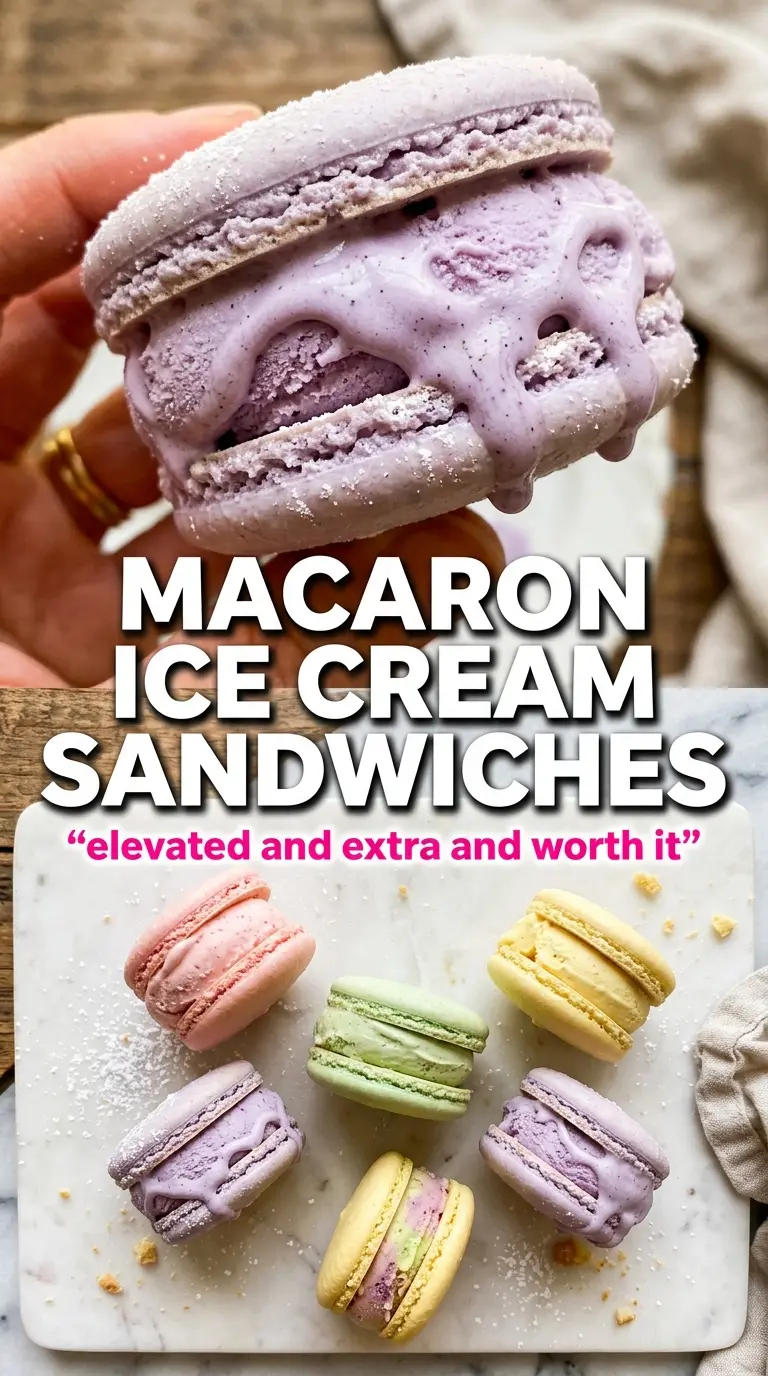
Macaron ice cream sandwiches turn a classic bakery cookie into a frozen dessert with a clean snap, a chewy center, and a cold, creamy middle that tastes a little bit fancy without being fussy. The shells keep their signature feet and delicate ruffled edges, but once they’re paired with matching ice cream, they become something even better: a crisp-meets-soft bite that melts fast enough to feel special and still holds together long enough to serve neatly.
The trick is treating the macaron shells like real macarons, not just pretty sandwich cookies. The meringue has to reach stiff, glossy peaks, the batter has to flow slowly off the spatula, and the shells need that dry resting time before baking so they don’t crack or dome. Once they’re baked and cooled, the ice cream filling should be firm enough to scoop cleanly but soft enough to press into a tidy layer without crushing the shells.
Below, I’ve included the details that matter most: how to read the batter, why the resting step changes everything, and the easiest way to keep the finished sandwiches from turning messy the second they leave the freezer.
The shells baked with perfect little feet and stayed crisp even after freezing, and the strawberry ice cream in the middle made them taste like something from a pastry shop.
Like these jewel-bright macaron ice cream sandwiches? Save them to Pinterest for the next time you want a frozen French dessert with crisp shells and a creamy center.
The Part Most Macarons Fail: Getting the Shells Stable Enough for Ice Cream
The shells have to be a little sturdier than a standard tea-time macaron. If they’re underbaked, the ice cream softens them almost immediately and the sandwich slumps; if they’re overbaked, they turn brittle and shatter when you bite in. The sweet spot is a shell that lifts cleanly from the parchment, feels dry on top, and still has a light chew in the center once cooled.
Macaronage matters more here than almost anywhere else. Stop folding when the batter falls from the spatula in a thick ribbon and melts back into itself in about 10 seconds. If it runs like pancake batter, the shells spread flat and bake up hollow; if it stays clumpy, the tops split.
- Almond flour — Use finely ground almond flour, not meal. Bigger pieces make the tops rough and can keep the shells from forming that smooth skin that bakes into a tidy dome.
- Egg whites — Aged egg whites whip more steadily and make a stronger meringue. Fresh whites can work, but they’re fussier and more likely to collapse before the dry ingredients are folded in.
- Cream of tartar — This gives the meringue a little insurance and helps it hold its shape while you fold. If you skip it, the whites can still whip, but the window for overbeating gets smaller.
- Gel food coloring — Gel is the right choice because it brings color without thinning the batter. Liquid coloring can loosen the meringue and throw off the texture before the shells even hit the oven.
What Each Ingredient Is Doing in the Filling and Shells
- Powdered sugar — This keeps the shells smooth and tender. Granulated sugar alone won’t dissolve the same way, and you’d lose that fine, delicate crumb that makes macarons feel special.
- Almond flour — The almond flavor is part of the identity of the cookie, and it also gives the shells structure without making them dense. There isn’t a true swap that gives the same result, which is why this recipe leans into the classic almond base.
- Ice cream — The filling needs to match the shell flavor so the dessert tastes intentional, not random. Softened ice cream is easiest to work with, but it should still be cold enough to hold shape; if it gets soupy, the sandwiches smear instead of layering cleanly.
How to Keep the Shells Smooth, the Feet Tall, and the Ice Cream Center Neat
Sifting and Mixing the Dry Base
Sift the powdered sugar and almond flour together and discard any hard bits of almond that stay behind. Those little pieces become bumps on the surface and can keep the shells from piping evenly. You want a mixture that looks light and snowy, not coarse or sandy.
Whipping the Meringue to the Right Peak
Beat the egg whites with cream of tartar until they’re foamy, then add the granulated sugar slowly. Keep beating until the meringue looks glossy and stands in stiff peaks that hold their shape when the whisk is lifted. If the meringue looks dry or clumpy, it’s gone too far and the batter will break during folding.
Folding to Macaronage
Add the dry ingredients and fold with a firm, deliberate motion, scraping the bowl and pressing some of the batter against the side as you turn it. Stop as soon as the batter flows like lava and the ribbon disappears back into the bowl in a few seconds. Overfolding is the fastest way to get flat shells, so watch the batter more than the clock.
Piping, Resting, and Baking
Pipe 1.5-inch rounds onto parchment and tap the pan hard on the counter to knock out air bubbles. Let the shells rest until the tops feel dry to the touch; that skin is what helps them rise with feet instead of cracking. Bake until the shells are set and peel away cleanly, then let them cool all the way before you even think about filling them.
Filling and Freezing the Sandwiches
Pair shells by size, scoop a generous disc of matching ice cream onto one shell, and press the second shell on top just until the filling reaches the edges. Work quickly but not frantically, because melted ice cream will slide out the sides and make the shells slippery. Freeze the sandwiches for at least 2 hours so the center firms up and the bite stays crisp.
Three Ways to Make These Macaron Ice Cream Sandwiches Work for Different Kitchens
Dairy-Free Ice Cream Sandwiches
Use a coconut- or almond-based frozen dessert with a flavor that matches the shells. The texture will be a little softer than dairy ice cream, so freeze the sandwiches a bit longer before serving to keep the center from squeezing out.
Natural Color, Softer Look
If you want color without gel dye, use freeze-dried fruit powder in a small amount and expect a more muted shade. It adds a faint fruit note and keeps the batter from thinning, though the final color won’t be as vivid as classic macaron coloring.
Chocolate or Coffee Variation
Swap a small portion of the almond flour for cocoa powder or pair the shells with coffee ice cream for a deeper, less sweet finish. Chocolate shells can dry out faster, so watch the bake closely and pull them as soon as the tops are set and the feet look defined.
Storage and Reheating
- Refrigerator: Don’t store these in the fridge; the shells soften too quickly and the filling melts into the cookie.
- Freezer: Store the assembled sandwiches in a single layer until firm, then wrap each one tightly and keep them frozen for up to 1 week for the best texture.
- Reheating: There isn’t a reheating step here. Serve straight from the freezer after a brief 2- to 3-minute rest at room temperature so the shells don’t taste frozen-solid and the bite stays clean.
Questions I Get Asked About This Recipe
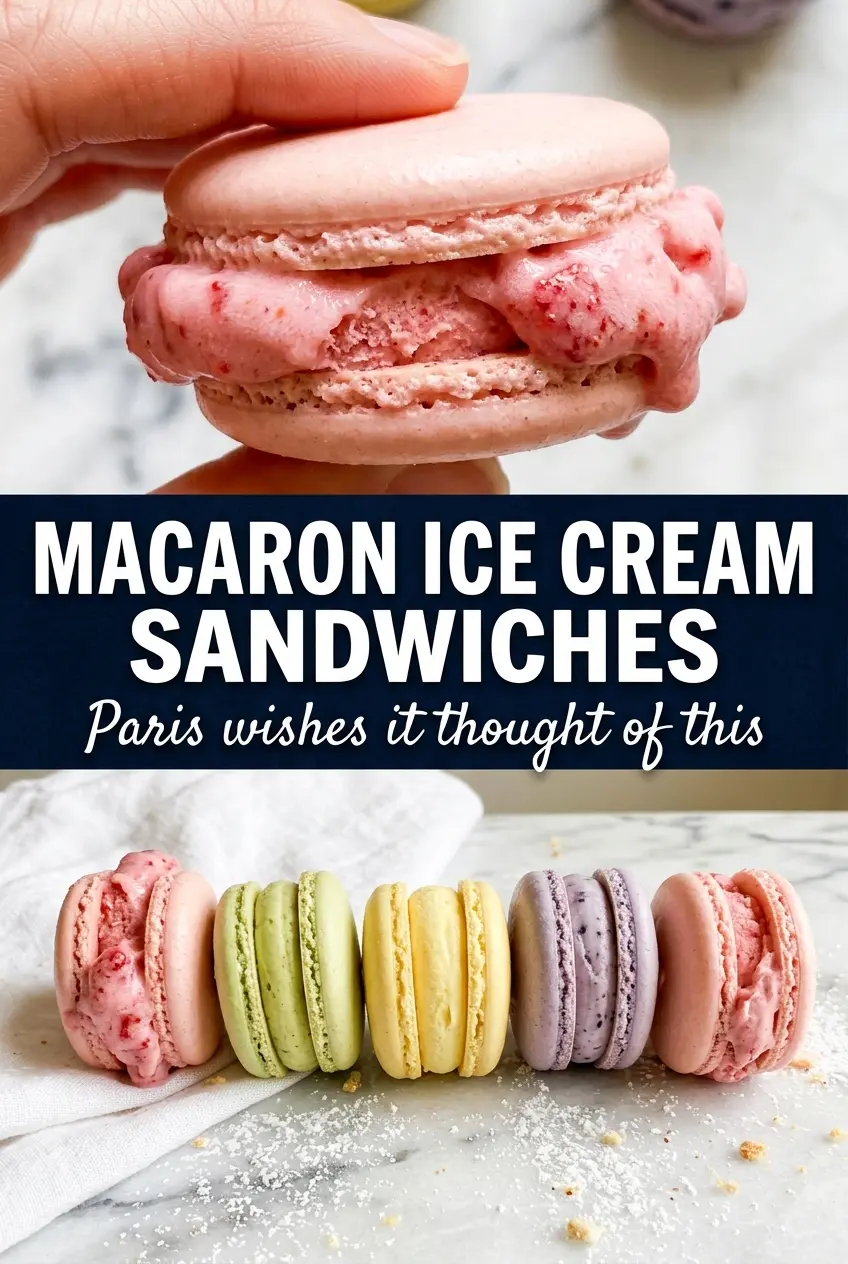
Macaron Ice Cream Sandwiches
Ingredients
Equipment
Method
- Sift powdered sugar and almond flour together, discarding large almond pieces for a smoother shell texture.
- Beat egg whites with cream of tartar to soft peaks, then add granulated sugar gradually and beat to stiff, glossy peaks.
- Fold in gel food coloring until the meringue is evenly tinted.
- Fold the dry ingredients into the meringue using the macaronage technique until the batter flows like lava.
- Pipe 1.5-inch rounds onto parchment-lined baking sheets, then bang the pan firmly to release air bubbles.
- Rest the piped shells for 30-60 minutes until the tops form a dry skin.
- Bake at 300F for 14-16 minutes until set, then cool completely.
- Sandwich a generous disc of matching ice cream between two shells to create each macaron ice cream sandwich.
- Freeze for 2 hours, then serve straight from the freezer.