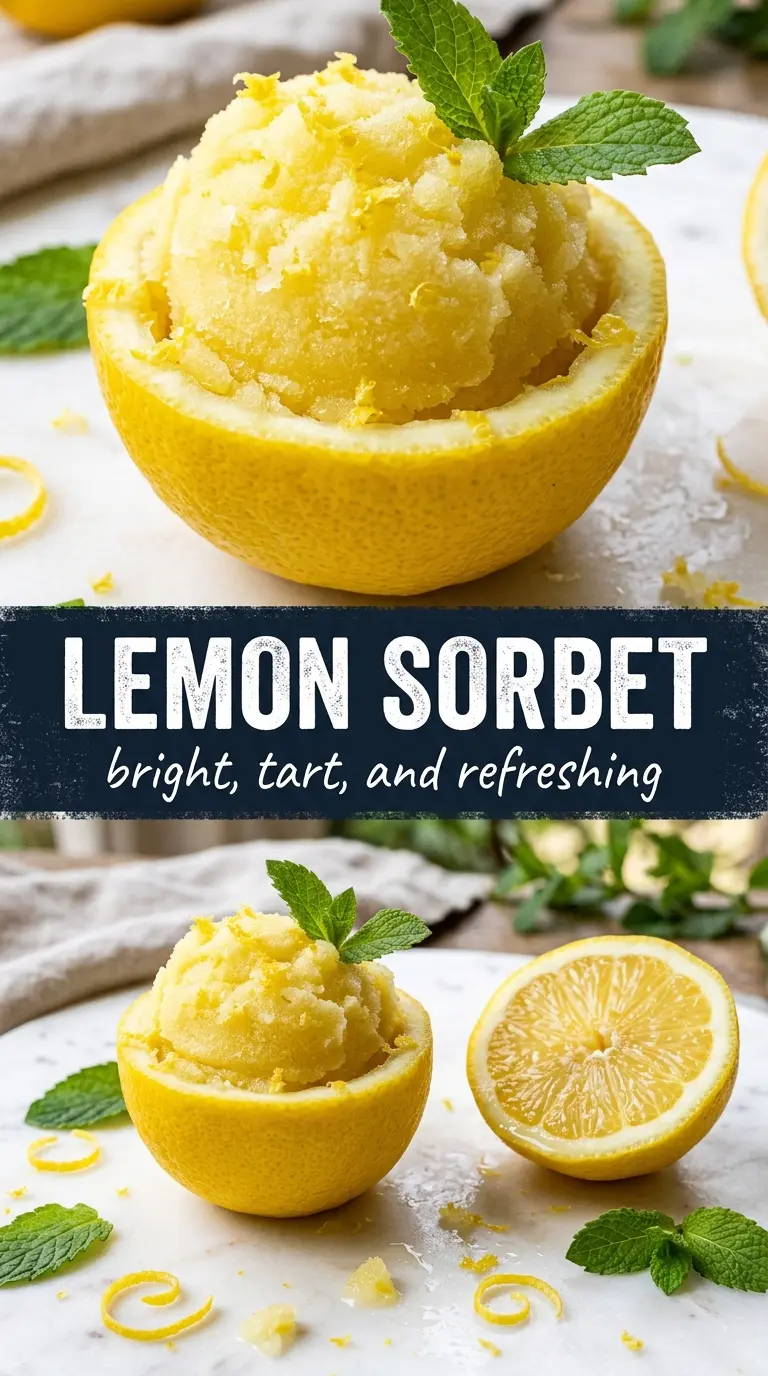
Brilliantly pale lemon sorbet hits the spoon with that clean, icy snap that only fresh citrus can give. It’s tart first, then lightly sweet, with a texture that stays scoopable instead of turning into a hard block in the freezer. This version leans into real lemon juice and zest, so the flavor tastes bright and direct instead of flat or candy-like.
The key is balance. A simple syrup smooths out the lemon juice so the base freezes evenly, and the zest adds back the fragrant oils that juice alone can’t carry. If you want a slightly richer, silkier finish, the optional egg white helps loosen up the texture without turning it creamy in the dairy sense. It just makes the sorbet feel a little less brittle on the tongue.
Below, I’ve included the small details that matter most: how cold the base needs to be before churning, why the zest should steep with the liquid, and what to do if your sorbet freezes harder than you expected.
The sorbet turned out so smooth and icy, and the lemon flavor stayed sharp even after freezing overnight. I loved that the zest gave it an extra pop without making it bitter.
Save this lemon sorbet for the days when you want pure citrus flavor and a light, icy finish.
The Little Trick That Keeps Lemon Sorbet From Freezing Rock-Hard
Sorbet fails when the sugar balance is off. Too little sugar and you get a block of lemon ice that fights the spoon; too much and the texture turns slushy and heavy. This version uses a simple syrup, which matters because dissolved sugar spreads evenly through the base and helps the finished sorbet freeze into fine, scoopable crystals instead of coarse ice.
The other thing that makes or breaks it is temperature. If the base goes into the churn even a little warm, it won’t freeze properly and the texture will stay loose. Chill it until it’s cold all the way through, not just cool on top, and the sorbet will set faster in the machine and finish smoother.
- Fresh lemon juice — Bottled juice tastes dull here. Fresh juice gives the clean, sharp citrus note that defines the whole dessert.
- Lemon zest — This is where the perfume lives. Zest adds oils and depth, and it keeps the sorbet from tasting one-dimensional.
- Sugar — Don’t reduce it much. In sorbet, sugar isn’t just sweetness; it controls texture and freezing point.
- Egg white, optional — Whipped to soft peaks and folded in, it adds a softer mouthfeel and a little extra volume. Leave it out for a firmer, straighter sorbet.
What Each Ingredient Is Actually Doing in This Ice Cream
- Base ingredient (cream, milk, or custard) — This provides the foundation and richness. Quality matters.
- Sweetener (sugar, honey, or condensed milk) — This sweetens and prevents ice crystals. The ratio is critical.
- Flavor element (vanilla, fruit, chocolate, cookie, or other) — This defines the ice cream personality. Use quality ingredients.
- Egg yolks (if making custard base) — These create richness and silky texture. Optional but elevates ice cream.
- Churning (if using ice cream maker) — This incorporates air and prevents ice crystals. Critical for smooth texture.
- Freezing temperature and time — Proper freezing prevents rock-hard texture. Store at 0°F or below.
- Mix-ins (chocolate, cookies, candy, or swirls) — These add texture and prevent one-dimensional flavor. Add near end of churning.
- Serving temperature (slightly soft, not rock hard) — This provides creamy mouthfeel. Remove from freezer 5 minutes before serving.
How to Turn Lemon Juice Into a Smooth, Scoopable Sorbet
Making the Simple Syrup
Combine the sugar and water in a saucepan and heat over medium, stirring just until the sugar disappears. Don’t boil it hard; you’re dissolving the sugar, not reducing the liquid. Cool it completely before mixing in the lemon juice, or the citrus will taste flatter and the base will take forever to chill.
Building the Lemon Base
Stir the cooled syrup with the lemon juice, zest, and salt, then refrigerate the mixture until it’s very cold. The zest needs this resting time to give up its oils, which is why the lemon flavor tastes fuller after chilling. If you’re using the egg white, whip it to soft peaks and fold it in only once the base is cold, or it can deflate and disappear.
Churning Until It Turns Slushy
Pour the cold mixture into the ice cream maker and churn until it looks thick, pale, and slushy, usually 20 to 25 minutes. At first it will move like liquid, then it will start clinging to the paddle and look almost like a lemon snow cone. Stop when it’s thick but still soft; if you churn until it seems fully firm, it usually ends up overworked and icy after freezing.
Freezing for the Final Set
Transfer the sorbet to a container and freeze until firm, at least 2 hours. Press a piece of parchment or plastic wrap directly onto the surface if you want to reduce ice crystals. If it freezes harder than you like, let it sit at room temperature for 5 to 10 minutes before scooping.
How to Adjust This Sorbet for a Lighter Finish or a Bigger Citrus Punch
Skip the Egg White for a Firmer Sorbet
Leave out the egg white if you want a cleaner, icier sorbet with a sharper lemon bite. The texture will be a little more brittle straight from the freezer, but the flavor stays bright and direct. This is the better choice if you want the sorbet to taste like frozen lemon juice in the best way.
Use Meyer Lemons for a Softer Citrus Profile
Meyer lemons give you a sweeter, rounder sorbet with less aggressive acidity. You may still want the full measure of juice, but the finished dessert will taste more floral and mellow than sharply tart. If your lemons are already very sweet, keep the sugar the same and let the fruit do the work.
Make It Dairy-Free and Naturally Gluten-Free
This recipe already fits both diets as written if you skip the egg white. There’s no dairy and no gluten in the base, so the main thing to watch is the quality of your lemons and the full chill time. That simplicity is part of why the texture tastes so clean.
Storage and Reheating
- Refrigerator: Not recommended. Sorbet loses its texture quickly in the fridge and turns watery.
- Freezer: Store in an airtight container for up to 2 weeks. After that, it starts to pick up ice crystals and the lemon flavor fades.
- Reheating: No reheating needed. Let it sit at room temperature for 5 to 10 minutes before scooping so the edges soften before the center.
Answers to the Questions Worth Asking

Lemon Sorbet
Ingredients
Equipment
Method
- Combine granulated sugar and water in a saucepan. Heat over medium, stirring, until the sugar fully dissolves, 3-5 minutes, then remove from heat.
- Cool the simple syrup completely. Pour it into a container and let it stand until room temperature, then cool further as needed so it’s no longer warm.
- Stir the cooled simple syrup with fresh lemon juice, lemon zest, and salt until evenly combined. Mix thoroughly so the tartness is uniform throughout.
- Refrigerate the lemon mixture until very cold. Chill for at least 4 hours so it’s ready for churning and helps create a finer ice texture.
- If using egg white, whip it to soft peaks. Fold the whipped egg white into the cold lemon mixture gently to keep it airy.
- Churn the mixture in an ice cream maker until thick and slushy, about 20-25 minutes. Stop when it looks like pale, spoonable sorbet.
- Transfer the churned sorbet to a container and freeze at least 2 hours until firm. Keep it covered to prevent ice crystals from forming.
- Serve in chilled bowls or scooped into hollowed lemon halves. Plate quickly so the texture stays icy and sharply tart.