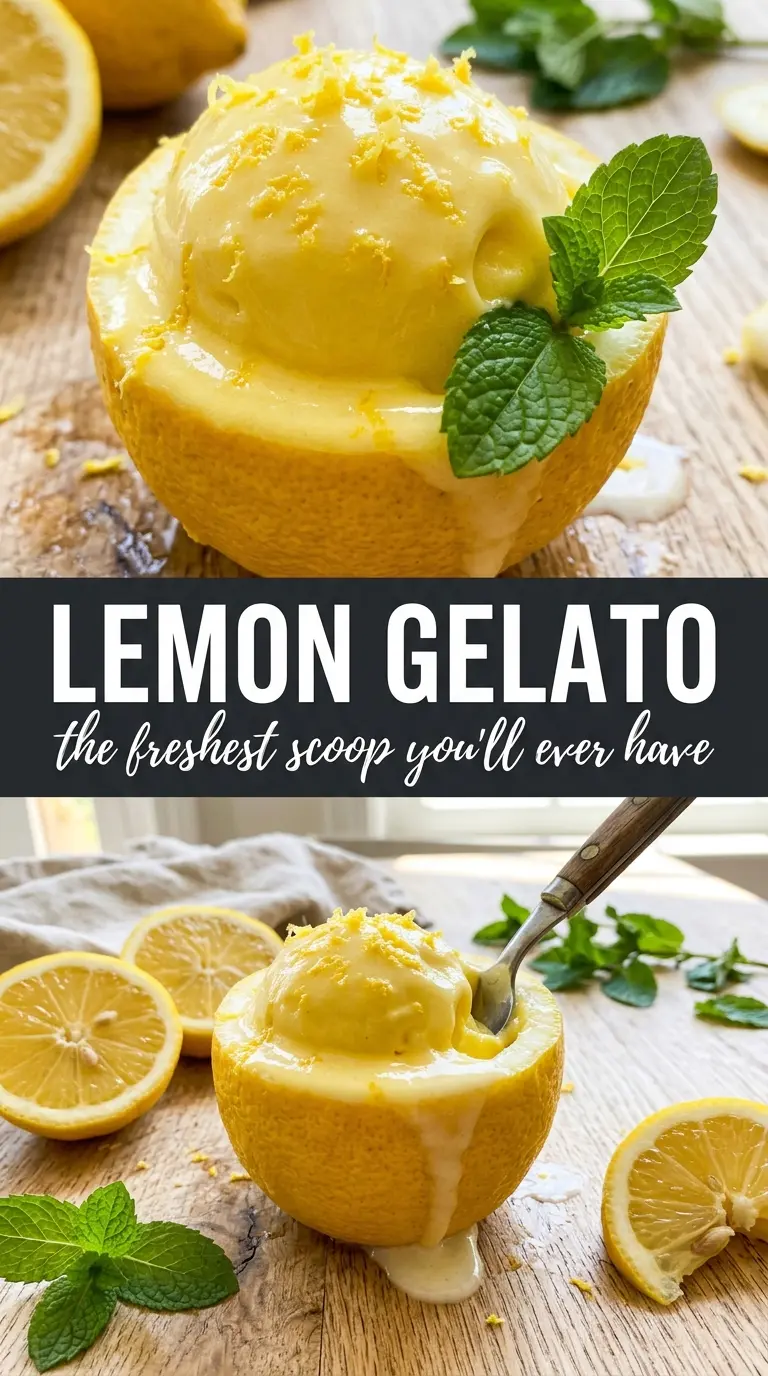
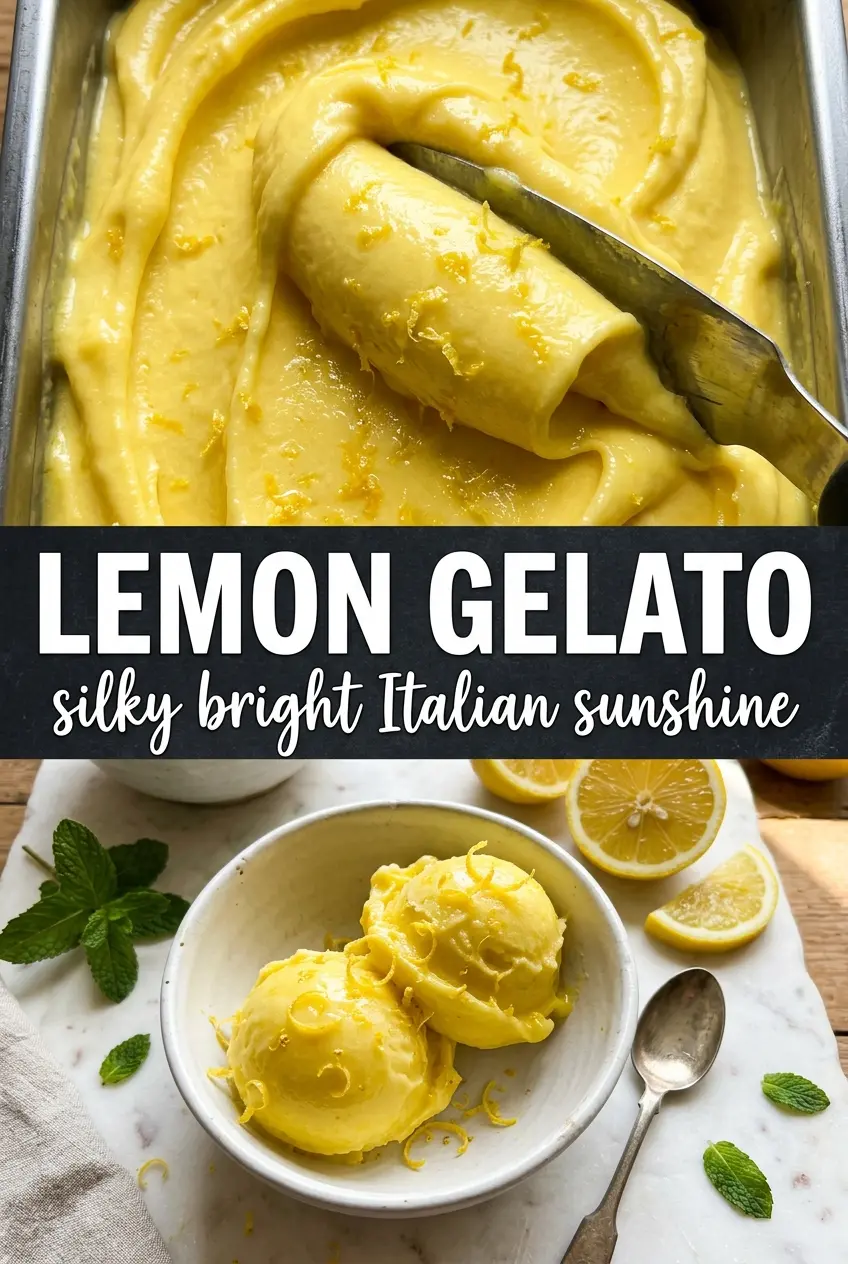
Lemon gelato lands somewhere between ice cream and sorbet, but the texture is what makes it hard to stop at one spoonful. It’s dense and silky, with a bright citrus hit that stays clean instead of turning sharp or icy. The custard base gives it body, while the lemon juice and zest keep the flavor vivid enough to cut through the cream.
The trick here is treating it like a real custard first, then adding the lemon at the right moment. Cornstarch helps the base thicken without needing a long cook, and that matters because overcooked dairy can taste flat. The lemon juice goes in off the heat so the mixture stays smooth instead of splitting or curdling.
Below, I’ve included the timing that matters most, plus a few notes on how to get that dense gelato texture at home and what to change if you want to make it a little lighter or dairy-free.
The custard thickened up beautifully and the lemon stayed bright instead of tasting cooked. After a couple hours in the freezer it scooped into the creamiest little mounds, and my husband kept sneaking spoonfuls straight from the container.
Save this lemon gelato for the nights when you want an intensely bright, scoopable Italian dessert with a silky custard base.
The Part Most Lemon Gelatos Get Wrong: Adding the Acid Too Early
The base for this gelato is a custard, which means the milk, cream, yolks, sugar, and cornstarch need to thicken first before the lemon goes in. If you add the juice while the pan is still over heat, the mixture can turn grainy or slightly curdled, especially once the eggs are in the picture. Off the heat, the lemon stays bright and the texture stays smooth.
Corntarch does a lot of quiet work here. It keeps the gelato from freezing into an icy block and gives the finished scoop a denser, more spoonable body. That’s also why this recipe doesn’t need a long stovetop cook; once the custard reaches pudding thickness, it’s done.
- Egg yolks — They build richness and help the base set with that classic gelato density. Whole eggs would make it heavier and more custardy than you want here.
- Cornstarch — It stabilizes the mixture and helps prevent iciness after freezing. Arrowroot can work in a pinch, but it doesn’t thicken quite as firmly.
- Fresh lemon juice and zest — Fresh is nonnegotiable. Bottled juice tastes flat here, and the zest carries the perfume that makes the gelato smell as good as it tastes.
- Whole milk and heavy cream — The balance matters. All cream makes it too rich and masks the citrus; all milk makes it less silky and a little lean.
What Each Ingredient Is Actually Doing in This Ice Cream
- Base ingredient (cream, milk, or custard) — This provides the foundation and richness. Quality matters.
- Sweetener (sugar, honey, or condensed milk) — This sweetens and prevents ice crystals. The ratio is critical.
- Flavor element (vanilla, fruit, chocolate, cookie, or other) — This defines the ice cream personality. Use quality ingredients.
- Egg yolks (if making custard base) — These create richness and silky texture. Optional but elevates ice cream.
- Churning (if using ice cream maker) — This incorporates air and prevents ice crystals. Critical for smooth texture.
- Freezing temperature and time — Proper freezing prevents rock-hard texture. Store at 0°F or below.
- Mix-ins (chocolate, cookies, candy, or swirls) — These add texture and prevent one-dimensional flavor. Add near end of churning.
- Serving temperature (slightly soft, not rock hard) — This provides creamy mouthfeel. Remove from freezer 5 minutes before serving.
Building the Custard, Then Shocking It Cold
Warm the dairy first
Heat the milk and cream just until steaming, not boiling. You want it hot enough to temper the yolks and help the sugar dissolve, but not so hot that it races into the eggs and scrambles them. A few wisps of steam and small bubbles around the edge are enough.
Whisk the yolks until pale
Beat the yolks with the sugar and cornstarch until the mixture turns thick and lighter in color. That stage matters because it starts dissolving the sugar and keeps the cornstarch from clumping when the hot milk goes in. Whisk in a slow stream and keep moving the bowl; if you dump the dairy in all at once, the eggs can seize into little bits.
Cook to pudding thickness
Return everything to the pan and stir constantly over medium heat. The custard should coat the back of a spoon and hold a clear path when you run a finger through it. If it looks thin, keep going for another minute or two; if it starts to bubble hard, pull it back and lower the heat because overcooked custard tastes eggy and can turn grainy.
Finish off the heat
Take the pan off the burner before you stir in the lemon juice, zest, vanilla, and salt. The mixture should smell bright and almost candied at this point. Stir well, then cool it over an ice bath before refrigerating; if you skip the fast chill, the base takes longer to set and the final texture turns less fine.
How to Change the Texture Without Losing That Lemon Punch
Make it lighter
Swap 1/4 cup of the heavy cream for whole milk if you want a slightly less rich finish. The gelato will still churn into a creamy scoop, but it won’t feel quite as plush on the tongue.
Dairy-free version
Use full-fat coconut milk in place of the milk and cream, and keep the yolks and cornstarch the same. You’ll lose a little of the clean dairy flavor, but the texture stays lush and the lemon still comes through clearly.
Stronger lemon flavor
Add an extra teaspoon of zest before chilling the base, not more juice. Extra juice pushes the acidity up and can thin the custard; zest adds fragrance without changing the structure.
Storage and Reheating
- Refrigerator: Keep the uncooked base chilled for up to 2 days before churning. After freezing, the gelato is best within 1 week, though it will stay safe longer. The texture gets firmer the longer it sits.
- Freezer: It freezes well, but like most homemade gelato, it firms up more than store-bought versions. Press a piece of parchment or plastic wrap directly on the surface before storing to slow ice crystals.
- Reheating: Not needed. Let frozen gelato sit at room temperature for 5 to 10 minutes before scooping so the edges soften first. If you try to dig in straight from the freezer, the center stays hard and the texture seems dry instead of creamy.
Questions I Get Asked About This Recipe
Lemon Gelato
Ingredients
Equipment
Method
- Heat the whole milk and heavy cream together in a saucepan until steaming, about 3–5 minutes; keep it hot but not boiling. Visual cue: small bubbles start to gather around the edges.
- Whisk the egg yolks, granulated sugar, and cornstarch until pale and thick, 2–3 minutes. Visual cue: the mixture looks lighter and slightly ribboned.
- Slowly whisk the hot milk mixture into the egg yolk mixture to temper. Visual cue: the batter loosens and looks smooth without streaks.
- Return everything to the saucepan and cook over medium heat, stirring constantly, until thickened to a pudding consistency, 6–8 minutes. Visual cue: a line drawn with a spoon holds for a beat.
- Remove from heat and stir in the fresh lemon juice, lemon zest, vanilla extract, and salt. Visual cue: the custard turns bright and fragrant, with tiny zest flecks.
- Cool completely over an ice bath. Visual cue: the surface no longer feels warm to the touch.
- Refrigerate at least 4 hours until fully cold. Visual cue: the custard is chilled through and spoonable but thick.
- Churn in an ice cream maker on the lowest setting for a dense texture. Visual cue: it thickens and looks opaque like soft gelato.
- Serve immediately, or freeze 1–2 hours for a firmer scoop. Visual cue: it holds an oval quenelle shape with clean edges.