Soft, pillowy cookies with a cheesecake-like center and a bright lemon finish disappear fast, and these are the kind I keep coming back to when I want something that feels a little special without asking for much fuss. The dough bakes up tender instead of cakey, with a subtle tang from cream cheese that keeps each bite rich but not heavy. Toasted coconut on the outside gives you a crisp-edged, nutty contrast that makes the whole cookie more interesting than a plain lemon drop.
The trick is balancing moisture and structure. Cream cheese and butter need to be beaten until truly fluffy so the dough isn’t dense, and the short chill time matters because this dough is soft before it hits the oven. The lemon zest carries more flavor than the juice, so don’t skip it; the juice adds brightness, but the zest is what gives these cookies that clean citrus aroma. A simple glaze at the end sharpens everything up and makes the coconut taste even more toasty.
Below, I’ve included the small details that matter most: how to keep the centers soft, how to toast the coconut without burning it, and what to change if you want a slightly different finish. If you’ve had cheesecake cookies spread too much or bake up dry, the notes here will help.
The dough chilled nicely and the cookies baked up thick with soft centers, not flat at all. I loved how the toasted coconut stayed on the outside and the lemon glaze gave them that bright finish without making them sticky.
Like these lemon coconut cheesecake cookies? Save them to Pinterest for the days when you want a soft, tangy cookie with toasted coconut and a bright glaze.
The Reason These Cookies Stay Thick Instead of Spreading Flat
Most cheesecake-style cookies spread when the dough is too warm or the base is too loose. Here, the cream cheese adds tenderness, but the flour and short chill give the dough enough structure to hold its shape in the oven. That means you get cookies with soft centers and defined edges instead of thin puddles.
The other thing that matters is how fully you beat the butter, cream cheese, and sugar. You want the mixture pale and fluffy before the egg goes in, because that early aeration helps the cookies bake up with a lighter bite. If the dough still feels sticky after mixing, that’s normal; the chill time is what turns it scoopable.
What Each Ingredient Is Doing in the Bowl

- Cream cheese — This is what gives the cookies their cheesecake-like tang and soft, plush texture. Use full-fat cream cheese for the best structure; low-fat versions can make the dough looser and less rich.
- Butter — Butter brings flavor and helps the cookies spread just enough. It needs to be softened, not melted, or the dough will bake up greasy and flat.
- Lemon zest and lemon juice — The zest carries the real lemon flavor, while the juice sharpens the dough and glaze. If you only have juice, the cookies will taste flatter and less fragrant.
- Coconut extract — This deepens the coconut flavor without adding more shredded coconut to the dough. If you don’t have it, use a little extra vanilla, but the tropical note will be softer.
- Toasted shredded coconut — Rolling the dough in toasted coconut gives the cookies texture and keeps the coconut flavor up front. Toast it until lightly golden; too dark and it turns bitter fast.
- Powdered sugar glaze — The glaze adds sweetness and a bright lemon finish after baking. Drizzle it on fully cooled cookies or it will melt into the tops instead of setting cleanly.
From Soft Dough to Glazed Cookies Without Losing the Texture
Making the base fluffy first
Beat the cream cheese, butter, and sugar until the mixture looks pale and almost mousse-like. That step matters more than people think, because a properly creamed base gives the cookies lift and keeps the texture tender. If the mixture still looks grainy, keep going until the sugar starts dissolving into the fat.
Adding the citrus and dry ingredients
Mix in the egg, zest, lemon juice, vanilla, and coconut extract until the batter looks smooth, then add the flour, baking powder, and salt just until the dough comes together. Overmixing at this point makes the cookies tougher and can warm the dough too much. The finished dough should be soft but not pourable.
Chilling and shaping the dough
Refrigerate the dough for 30 minutes so it firms enough to roll cleanly. If you try to shape it sooner, the cookies smear in your hands and spread too much in the oven. Roll into even 1.5-inch balls so they bake at the same rate, then coat them in toasted coconut before they hit the sheet pan.
Baking until the centers still look soft
Bake at 375°F until the edges are set and the centers still look a little underdone. That slight softness is the whole point; the cookies finish setting as they cool on the pan. If you wait until the centers look fully baked, they’ll end up dry by the time they’re cool.
Finishing with the glaze
Whisk the powdered sugar and lemon juice until smooth, then drizzle over completely cooled cookies. Warm cookies will melt the glaze and make it disappear into the top instead of sitting in pretty ribbons. Let the glaze set before stacking or the tops will smear.
Three Ways to Adjust These Cookies Without Losing the Character
Make Them Dairy-Free
Use a plant-based cream cheese and a solid vegan butter stick in place of the dairy versions. The cookies will still be soft and tangy, but the flavor will be a little less rich, so the lemon zest matters even more here.
Swap in Unsweetened Coconut for a Less Sweet Finish
If you want a slightly drier, more toasted coconut finish, use unsweetened shredded coconut for rolling. It won’t cling quite as heavily as sweetened coconut, but it gives the cookies a cleaner coconut taste and less extra sweetness on the outside.
Turn Them Into Lemon-Forward Cookies
For a brighter lemon bite, add another teaspoon of zest to the dough and keep the glaze a little thicker. That pushes the citrus forward and makes the coconut feel like a background note instead of the main event.
Storage and Reheating
- Refrigerator: Store in an airtight container for up to 5 days. The cookies stay soft, though the glaze may lose a little shine by day two.
- Freezer: Freeze the baked cookies without glaze for up to 2 months. Thaw at room temperature, then glaze after they’re fully defrosted so the topping stays neat.
- Reheating: These are best served at room temperature. If you want to soften them slightly, warm unglazed cookies for 5 to 8 seconds in the microwave; too much heat makes the centers turn bready instead of tender.
Answers to the Questions Worth Asking
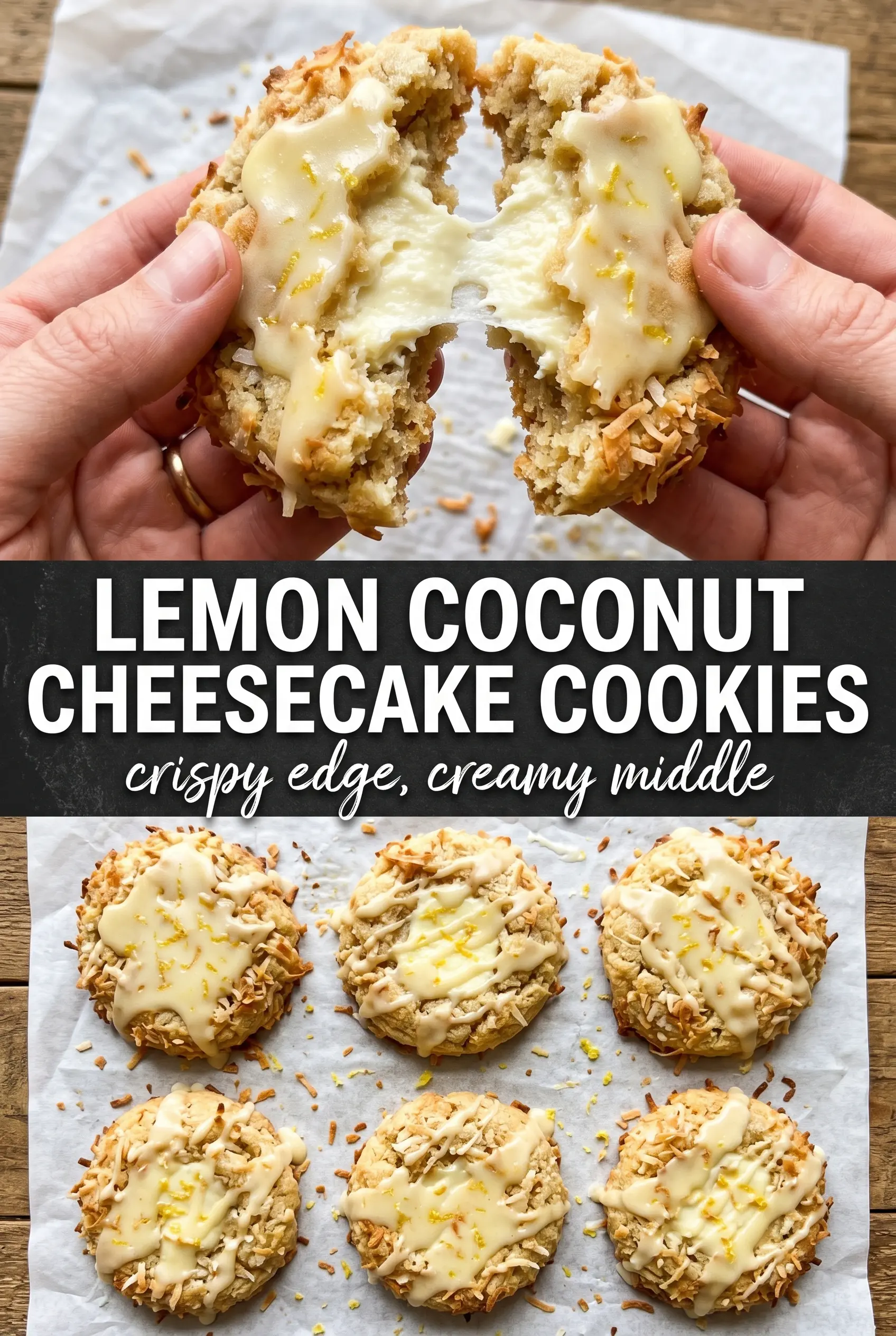
Lemon Coconut Cheesecake Cookies
Ingredients
Equipment
Method
- Beat cream cheese, butter, and sugar until very fluffy, about 2-3 minutes, with a pale and airy texture as your visual cue.
- Add egg, lemon zest, lemon juice, vanilla extract, and coconut extract, then mix until smooth and glossy, about 30-45 seconds.
- Stir in all-purpose flour, baking powder, and salt just until no dry streaks remain, keeping the dough thick for a soft center.
- Refrigerate the dough for 30 minutes to firm it up for easier rolling.
- Preheat the oven to 375°F and line baking sheets with parchment so cookies release cleanly.
- Roll dough into 1.5-inch balls, then roll each ball in toasted sweetened shredded coconut and place on the prepared sheets.
- Bake for 10-12 minutes until the edges are set and the centers look slightly underdone for that cheesecake-cookie softness.
- Cool the cookies completely on the baking sheets before glazing so the glaze won’t melt or run.
- Whisk powdered sugar with lemon juice until smooth, thick, and pourable.
- Drizzle the lemon glaze over the cooled cookies for an even, bright coating.
- Let the glaze set for 15 minutes before serving, until it looks set and no longer glossy wet.