Thin chicken cutlets with a crisp Romano crust and a bright lemon butter sauce land on the plate with the kind of crunch and tang that keeps this dish in the regular dinner rotation. The coating turns deeply golden without feeling heavy, and the sauce is sharp enough to wake up every bite without steamrolling the cheese. It eats like restaurant chicken, but it comes together fast enough for a weeknight.
The trick is in the balance. Parmesan-style Romano gives you a salty, punchy crust, while panko keeps the breading light instead of dense. The cutlets are thin on purpose, because they cook quickly before the coating has a chance to burn, and the sauce starts in the same pan so every browned bit from the chicken ends up working for you.
Below, I’ll walk through the part that matters most: getting the breading to stick, frying it until the crust shatters, and finishing the sauce so it stays glossy instead of greasy. There are also a few swaps and storage notes if you want to make this a little lighter or stretch it into a second meal.
The chicken stayed crisp even after I spooned the lemon sauce over it, and the capers gave it that salty pop that kept every bite interesting. I used thin cutlets exactly like the recipe said and they cooked through in minutes.
Save these crispy Lemon Chicken Romano cutlets for the night you want a shattering crust, a glossy lemon butter sauce, and dinner on the table fast.
The Step That Keeps the Romano Crust Crisp Instead of Soggy
The biggest mistake with chicken cutlets like this is crowding the pan or letting the sauce sit on top of the breading too soon. Romano cheese browns quickly because it’s salty and fine-grained, which is exactly what gives you that sharp, brittle crust, but it also means the heat needs to be controlled. Medium-high is the sweet spot here: hot enough to set the coating fast, not so hot that the cheese scorches before the chicken cooks.
Thin cutlets matter more than people think. They cook through in just a few minutes, so the crust gets time to turn golden without drying out the meat underneath. If your cutlets are thick, the coating will darken before the center is done, and then you’re stuck lowering the heat and losing the crunch you worked for.
What the Romano, Panko, and Lemon Are Each Doing Here

- Pecorino Romano — This is the main flavor in the crust, so quality matters. It brings salt, sharpness, and that nutty cheese edge you can’t get from a milder cheese. If you only have Parmesan, the dish will still work, but it won’t taste as punchy.
- Panko breadcrumbs — Panko keeps the coating light and craggy instead of thick and bready. If you swap in fine breadcrumbs, expect a denser crust that browns faster and can feel a little heavy.
- Dry white wine — The wine lifts the browned bits from the pan and gives the sauce a little structure before the lemon goes in. Use something dry and clean, not sweet. If you don’t cook with wine, use chicken broth plus an extra squeeze of lemon juice.
- Cold butter at the end — Swirling in cold butter off the heat is what makes the sauce glossy and smooth. If the pan is boiling when the butter goes in, the sauce can split and turn greasy instead of silky.
From Breading Station to Lemon Butter Finish
Setting Up the Coating
Season the chicken before it ever touches the flour. That’s the only chance you have to season the meat itself, not just the crust. Keep one hand for dry ingredients and one hand for wet so you don’t end up with a clumpy breading mess on your fingers. Press the Romano-panko mixture onto the cutlets firmly enough that it looks a little packed; a loose coating falls off in the pan.
Frying for Color, Not Patience
Add the olive oil and butter together, then lay the chicken in once the butter foams. That foam tells you the pan is hot enough to start browning right away. Don’t move the cutlets for the first few minutes. If you try to flip too early, the crust tears and sticks. You’re looking for a deep golden color and an edge that looks crisp before you turn it.
Building the Sauce in the Same Pan
Take the chicken out before you start the sauce. If you leave it in, the crust keeps steaming and you lose the crunch. Garlic only needs about 30 seconds; once it smells fragrant, add the wine and scrape the bottom of the pan with a wooden spoon. That browned layer is the base of the sauce. Let the lemon juice and capers simmer long enough to lose their raw sharpness, then finish with cold butter off the heat so the sauce turns glossy.
How to Adapt This for Lighter Nights and Leftovers
Gluten-Free Version
Swap the all-purpose flour for cornstarch or a gluten-free flour blend, and use gluten-free panko if you can find it. Cornstarch gives the crispiest result, but it also browns a little faster, so keep the heat at medium-high instead of pushing it higher.
Dairy-Free Adjustment
You can replace the butter with olive oil and use a dairy-free Parmesan-style substitute in the breading, but the sauce will be less rich and less silky. Add an extra teaspoon of olive oil at the end if it tastes lean, and keep the lemon a little gentler so the dish doesn’t turn sharp.
No Wine in the Pan
Use low-sodium chicken broth instead of wine and add a touch more lemon juice to keep the sauce bright. You’ll lose a little of the restaurant-style depth, but the sauce still comes together cleanly and coats the chicken well.
Storage and Reheating
- Refrigerator: Store the chicken and sauce separately if you can. It keeps for up to 3 days, though the crust softens once it sits in the sauce.
- Freezer: The breaded chicken freezes better before saucing. Freeze the cooked cutlets in a single layer, then reheat from thawed or partially thawed; the lemon butter sauce doesn’t freeze as cleanly and can separate.
- Reheating: Reheat the chicken on a rack in a 375°F oven until hot and crisp, then warm the sauce gently in a skillet and spoon it over at the end. The mistake is microwaving everything together, which makes the coating limp and the sauce greasy.
Answers to the Questions Worth Asking
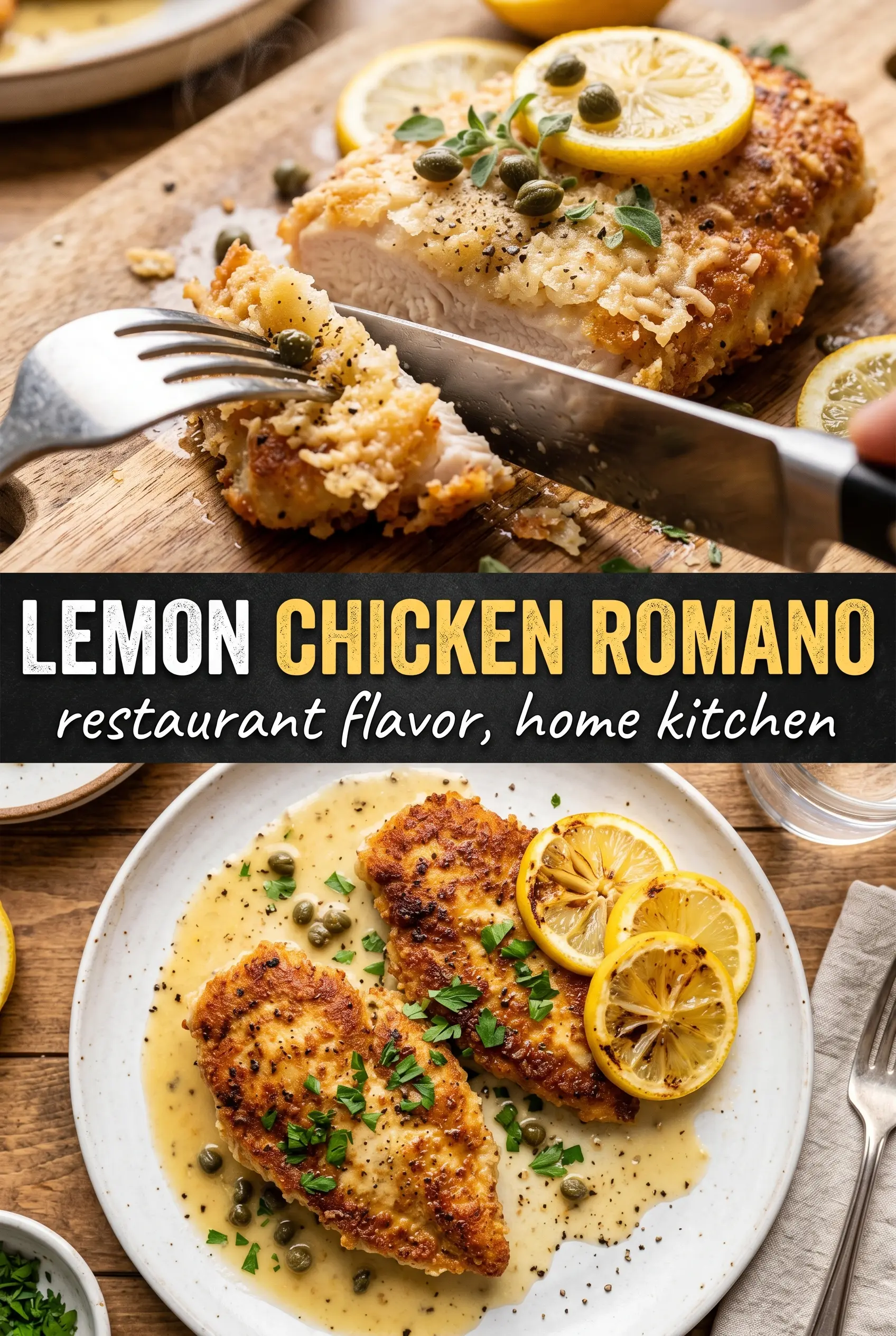
Lemon Chicken Romano
Ingredients
Equipment
Method
- Season the chicken cutlets with salt and pepper and set up your breading stations with flour, beaten eggs, and the Romano cheese mixed with panko.
- Dredge each cutlet in flour, dip into the beaten egg, then press firmly into the Romano coating.
- Heat the olive oil and 2 tablespoons butter in a cast iron skillet over medium-high heat, then pan-fry the cutlets for 3-4 minutes per side until deeply golden and crisp.
- Transfer the cutlets to a plate as soon as they’re deeply golden, keeping them as intact as possible.
- In the same pan, cook the minced garlic for 30 seconds just until fragrant.
- Deglaze with the dry white wine, then add the fresh lemon juice and capers and simmer for 3 minutes.
- Swirl in the remaining 2 tablespoons cold butter until the sauce looks glossy.
- Plate the cutlets and pour the lemon-caper butter sauce over each one, then garnish with fresh parsley.