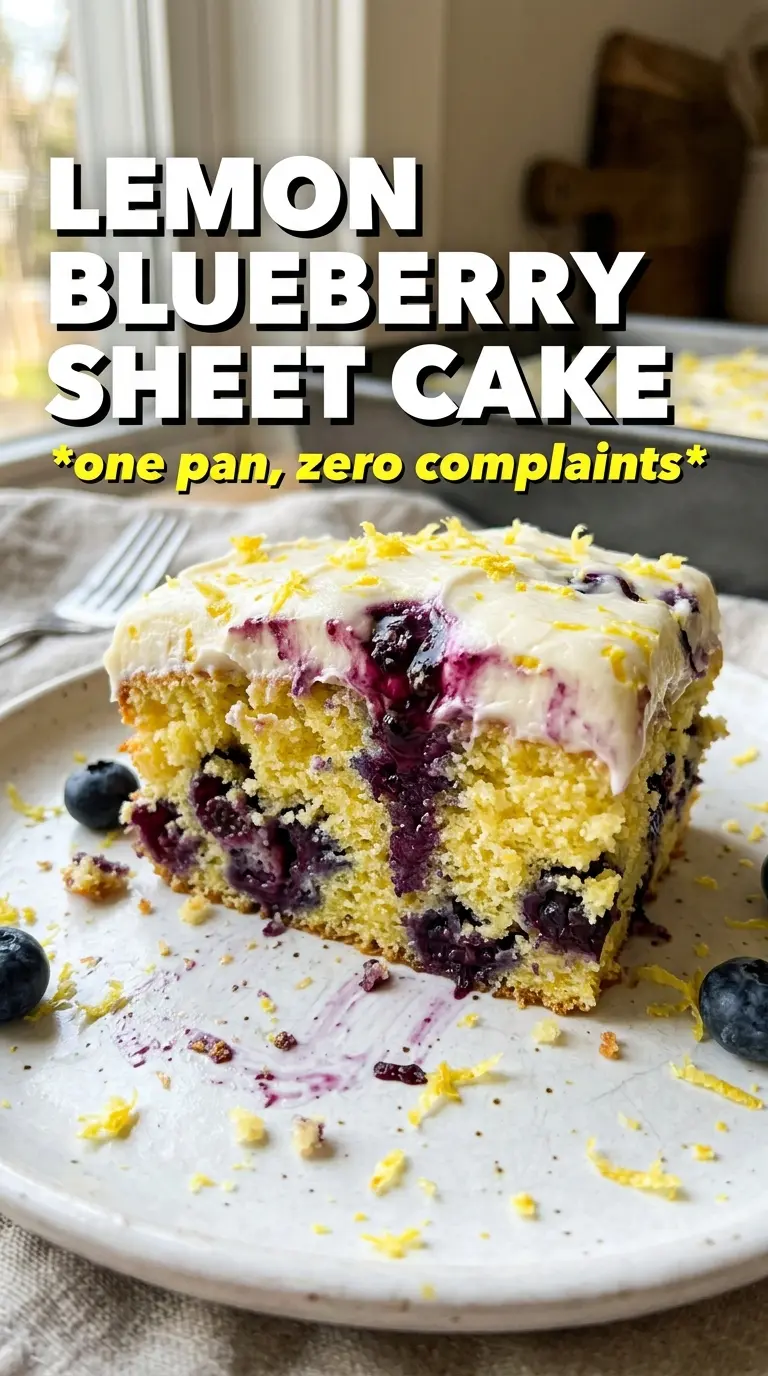
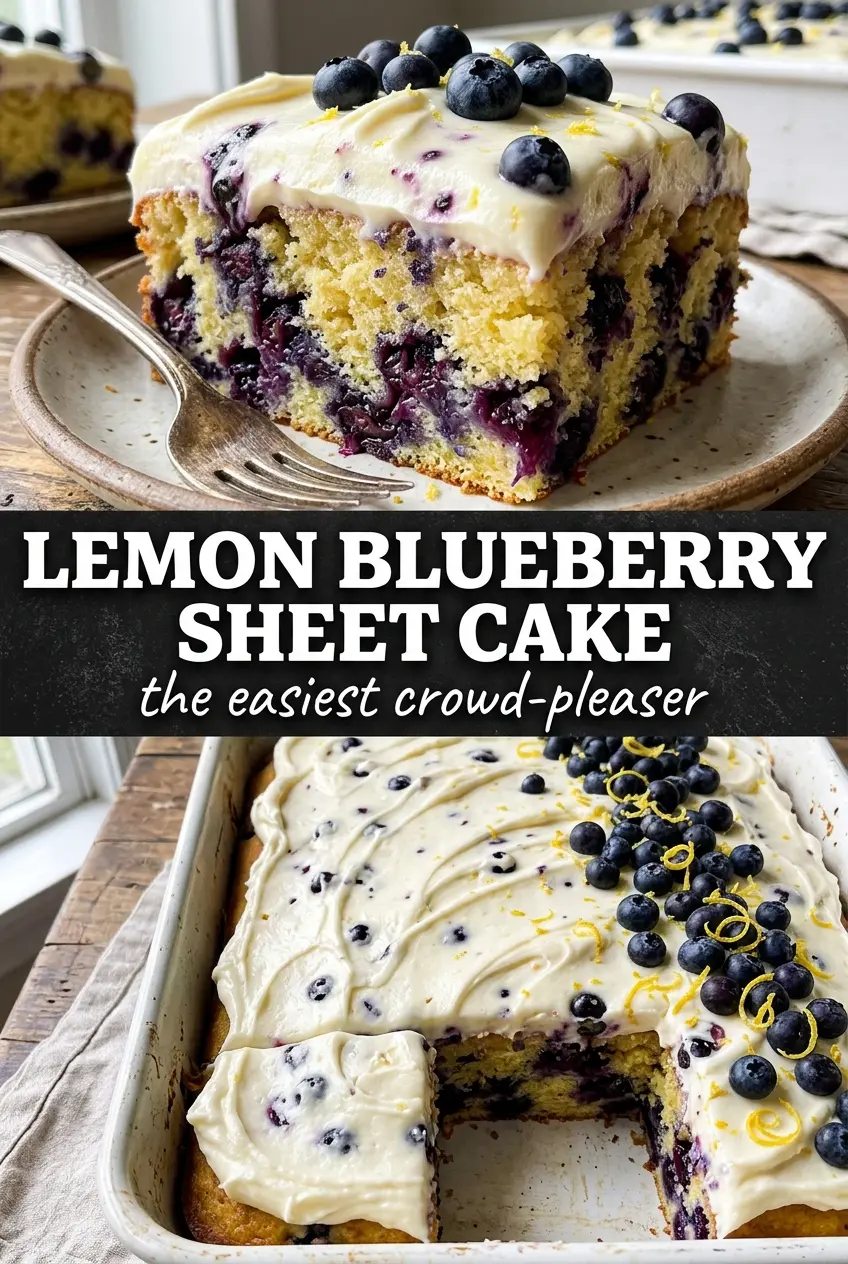
Lemon blueberry sheet cake lands in the sweet spot between bright and comforting. The crumb stays tender, the berries bake into little pockets of jammy sweetness, and the lemon cream cheese frosting gives the whole cake that tangy, plush finish that keeps people coming back for another square.
What makes this version work is balance. The lemon zest goes into the batter, not just the frosting, so the citrus flavor is baked all the way through instead of sitting on top. Tossing the blueberries with flour helps them stay suspended in the cake instead of sinking to the bottom, and buttermilk keeps the crumb soft without making it heavy.
Below, I’ve included the small details that matter most: how to keep the cake from turning dense, why the frosting needs to start with fully softened cream cheese, and what to change if you want to bake it in two pans instead of one sheet pan.
The blueberries stayed evenly scattered instead of sinking, and the frosting set up thick and tangy without being too sweet. I baked it in a 12×18 pan for our church lunch and there wasn’t a crumb left.
Like this lemon blueberry sheet cake? Save it to Pinterest for the days when you need a big, bright dessert with tangy frosting and no fussy layers.
The Mistake That Makes Blueberries Sink to the Bottom
Blueberries sink when the batter is too thin, too warm, or the berries go in naked. This recipe avoids all three problems. The batter is sturdy enough to hold the fruit, the butter-and-sugar base gives it structure, and tossing the berries with a little flour gives them something to grip as the cake bakes.
The other detail that matters is when you fold them in. Add them at the very end and use a light hand. If you stir too long, the berries break and streak the batter, which can make the crumb look muddy instead of clean and even.
- Flour-coated blueberries — That light dusting helps suspend the berries through the batter. Fresh berries work best here because frozen ones can bleed more, though you can use them if you add them straight from the freezer and don’t thaw them first.
- Buttermilk — This keeps the cake tender and gives it a slight tang that plays well with the lemon. Whole milk works in a pinch, but the cake won’t have quite the same plush crumb.
- Butter and sugar — Beating them until fluffy traps air, which gives the sheet cake lift. If you rush this step, the cake bakes up heavier and tighter.
What Each Ingredient Is Actually Doing in the Cake and Frosting
- All-purpose flour — This gives the cake enough structure to hold the berries and frosting without turning bready. Cake flour makes a softer crumb, but it can be a little too delicate for a loaded sheet cake like this.
- Lemon zest and juice — Zest carries the strongest lemon flavor, so don’t skip it. Juice adds tang, but too much liquid can thin the batter and frosting, so the amounts here are deliberate.
- Buttermilk — The acidity tenderizes the crumb and echoes the lemon. If you don’t have it, use milk with a spoonful of lemon juice, but let it sit a few minutes first.
- Cream cheese frosting — This is what makes the cake feel rich without becoming cloying. Full-fat cream cheese gives the best texture; low-fat versions can go loose and grainy when beaten.
- Powdered sugar — It sweetens and thickens the frosting at the same time. Add it gradually so the frosting stays smooth instead of dusty and lumpy.
Building the Batter and Frosting Without Losing the Texture
Start with a properly creamed base
Beat the butter and sugar until the mixture looks pale and fluffy, not just combined. That step sets up the cake’s lift before any flour goes in. Once the eggs are added, scrape the bowl well so the batter stays even; pockets of unmixed butter or sugar can leave greasy streaks in the baked cake.
Alternate the flour and buttermilk
Add the dry ingredients and buttermilk in batches, ending with flour. This keeps the batter smooth and helps prevent overmixing, which is the fastest way to make a sheet cake tough. Stop mixing as soon as the flour disappears, then fold in the blueberries by hand so they stay intact.
Bake just until the center sets
Spread the batter all the way to the corners of the pan and bake until a toothpick comes out clean or with a few moist crumbs. If the top starts to brown deeply before the center is done, the pan may be running hot; tent it loosely with foil for the last few minutes. Let the cake cool completely before frosting or the cream cheese layer will slide right off.
Whip the frosting until it’s spreadable
Start with cream cheese and butter that are soft all the way through. Cold spots leave little lumps that never fully smooth out. Beat until the frosting turns light and fluffy, then add the lemon juice and zest at the end so the frosting stays thick enough to spread in a clean, even layer.
How to Adapt This for Two Pans, More Tang, or a Dairy-Free Table
Bake it in two 9×13 pans
This recipe divides cleanly between two pans if you want a thinner cake or need to feed a crowd with easier serving. The bake time will be shorter, so start checking a few minutes early. You’ll get more frosting coverage per bite, which is no bad thing.
Make it more lemon-forward
If you want a sharper lemon edge, add a little extra zest to the frosting instead of more juice. Zest adds fragrance without thinning the frosting. More juice can loosen the texture and make the topping harder to spread.
Dairy-free version
Use a plant-based butter and a dairy-free cream cheese that’s meant for baking. The cake itself will still bake up nicely with a non-dairy milk plus a teaspoon of lemon juice in place of buttermilk. The frosting may be a touch softer, so chill it briefly before spreading.
Storage and Reheating
- Refrigerator: Store covered for up to 5 days. The frosting stays best chilled, and the crumb stays moist.
- Freezer: Freeze unfrosted cake layers for up to 2 months, wrapped tightly. Frosted cake can be frozen, but the texture of the cream cheese topping is softer after thawing.
- Reheating: There’s no real reheating needed for this cake. Let refrigerated slices sit at room temperature for 20 to 30 minutes so the frosting softens and the lemon flavor comes back through. Don’t microwave it unless you want the frosting to melt.
Answers to the Questions Worth Asking
Lemon Blueberry Sheet Cake
Ingredients
Equipment
Method
- Preheat the oven to 350°F, then grease a 12x18 sheet pan or two 9x13 pans and line with parchment for easy release.
- Beat the softened butter and granulated sugar until fluffy, about 2-3 minutes, so the batter bakes up tender.
- Add the eggs, lemon zest, lemon juice, and vanilla, mixing until smooth and fully combined.
- Whisk together the all-purpose flour, baking powder, and salt, then alternate mixing in the flour mixture and buttermilk just until combined.
- Fold in the fresh blueberries (tossed in 1 tablespoon flour) gently to keep them from bursting and dyeing the batter too much.
- Spread the batter evenly in the prepared pan and bake at 350°F for 25-30 minutes, until a toothpick comes out clean.
- Cool the cake completely, about 30 minutes, so the frosting won’t melt or slide.
- Beat the softened cream cheese and butter until smooth, then mix in the powdered sugar, lemon juice, and lemon zest.
- Continue beating until fluffy, then immediately spread frosting generously over the cooled cake.
- Scatter fresh blueberries and lemon zest curls over the frosted top before serving for a bright, fresh finish.