Pale yellow lemon bars with a lavender shortbread crust hit that sweet spot between bright and elegant. The filling is sharp and silky, the crust is buttery and crumbly, and the floral note stays in the background where it belongs. When these are chilled properly, they cut into clean squares with a sharp knife and hold their shape without leaking lemon curd everywhere.
What makes this version work is balance. The lavender goes into the crust, not the filling, so you get a gentle aroma without turning the lemon layer perfumy. Grinding the dried culinary lavender finely keeps the shortbread from tasting woody or scratchy, and baking the crust before the filling gives you a base that stays crisp instead of soggy under all that citrus.
Below, I’ve added the small details that matter: how to keep the crust tender, how to tell when the lemon layer is just set, and what to do if you want the bars a little more tart or a little more floral.
The crust stayed buttery and crisp even after chilling, and the lemon layer set up cleanly without weeping. I loved that the lavender was subtle instead of tasting like soap.
Save these lavender shortbread lemon bars for when you want a citrus dessert with a crisp crust and a delicate floral finish.
The Crust Is Doing More Than Holding the Filling
The biggest mistake with lemon bars is rushing the base. If the crust goes in underbaked or loosely packed, the filling seeps into it and you end up with a damp bottom layer instead of a clean shortbread bite. Press it firmly and evenly into the pan so it bakes as a real foundation, not a loose crumb layer.
Lavender can go from elegant to overwhelming fast. That’s why it belongs in the crust, where butter softens the floral edge and the lemon filling can stay bright. If your last floral dessert tasted like soap, the problem was usually too much lavender or lavender that wasn’t ground fine enough.
What the Flour, Butter, and Lemon Juice Are Each Doing Here

- Dried culinary lavender — Use culinary lavender only, and grind it finely before mixing it into the crust. Whole buds can leave little bitter specks behind, while ground lavender gives you a smoother, cleaner flavor.
- Powdered sugar in the crust — This keeps the shortbread tender and delicate. Granulated sugar works in a pinch, but the crust will bake up a little more sandy and less melt-in-your-mouth.
- Cold butter — Cold butter is what makes the crust hold its shape and bake up crumbly instead of greasy. If you use softened butter, the mixture turns pasty and the base loses that crisp shortbread texture.
- Fresh lemon juice and zest — Fresh juice gives the filling its sharpness, and the zest adds the part of the lemon flavor you can’t fake with juice alone. Bottled juice tastes flat here, and the filling depends on that fresh lift.
- Flour in the filling — A little flour helps the lemon layer set into neat bars instead of a soft custard. Skip it and you’ll get a filling that’s harder to slice cleanly, especially after chilling.
Building the Layers So the Bars Slice Cleanly
Make the Lavender Shortbread Base
Pulse the flour, powdered sugar, salt, lavender, and cold butter just until the mixture starts to clump. It should look sandy with a few larger pieces, not like a smooth paste. If you overprocess it, the crust gets dense instead of tender. Press it firmly into the lined pan, especially into the corners, because thin spots bake faster and can turn dry before the rest of the crust is ready.
Bake the Crust Until It Barely Turns Gold
The crust only needs to lose its raw look and pick up the faintest golden color at the edges. That short bake gives the lemon filling a stable surface and keeps the bottom from going soft. If it looks deeply browned before the filling goes on, it’s already past where you want it. Work while it’s warm, because the filling settles better over a warm crust than a cold one.
Whisk the Lemon Layer Until It’s Smooth
Whisk the eggs, yolks, sugar, lemon juice, zest, and flour until the mixture looks uniform and glossy, with no streaks of flour hiding at the bottom. Pour it over the warm crust right away. If the filling sits too long before baking, the flour can settle and the bars won’t bake evenly. The warmth from the crust helps the bottom edge of the filling start setting right away.
Watch for the Center to Set Without Overbaking
Bake just until the center no longer jiggles when you move the pan. The edges will look set first, and the top should have a soft matte finish rather than a wet shine. If you bake until the whole pan feels firm in the middle, the filling can turn grainy or rubbery once chilled. Pull it when it still has the tiniest bit of movement, then let the residual heat finish the job.
Chill Before You Cut
Cooling and chilling aren’t optional here. The bars need time for the lemon layer to firm up fully so the knife can glide through clean squares. If you try to cut them warm, the filling smears and the crust cracks. Dust with powdered sugar only after they’re cold, or the sugar will melt into the surface instead of sitting prettily on top.
How to Adjust the Floral Note, Citrus Bite, or Pan Size
Less Floral, More Lemon
Cut the lavender in half if you want the lemon to lead the flavor. The bars will taste brighter and more classic, with just a whisper of floral in the crust instead of a noticeable aroma.
Gluten-Free Version
Use a cup-for-cup gluten-free flour blend in both the crust and filling. The texture will be a little more delicate, but the bars still slice well after a full chill if you press the crust firmly and don’t skip the resting time.
Dairy-Free Shortbread
Swap in a solid plant-based butter that bakes well, not a soft spread from a tub. The crust won’t taste quite as rich, but it will still hold together and give you that crumbly bar texture.
Baking in an 8×8 or 9×9 Pan
For a smaller pan, halve the recipe and watch the bake closely, since the filling will be thicker and may need a few extra minutes. The bars will be taller and more custard-like, which is great if you want a richer dessert instead of thinner squares.
Storage and Reheating
- Refrigerator: Store covered for up to 5 days. The crust stays crispest in the first 2 to 3 days, and the filling firms up even more as it chills.
- Freezer: These freeze well. Wrap the cut bars tightly and freeze for up to 2 months, then thaw in the refrigerator so the filling doesn’t sweat.
- Reheating: Don’t reheat these bars. They’re meant to be served chilled or cool, and warming them softens the filling and melts the powdered sugar topping.
Answers to the Questions Worth Asking
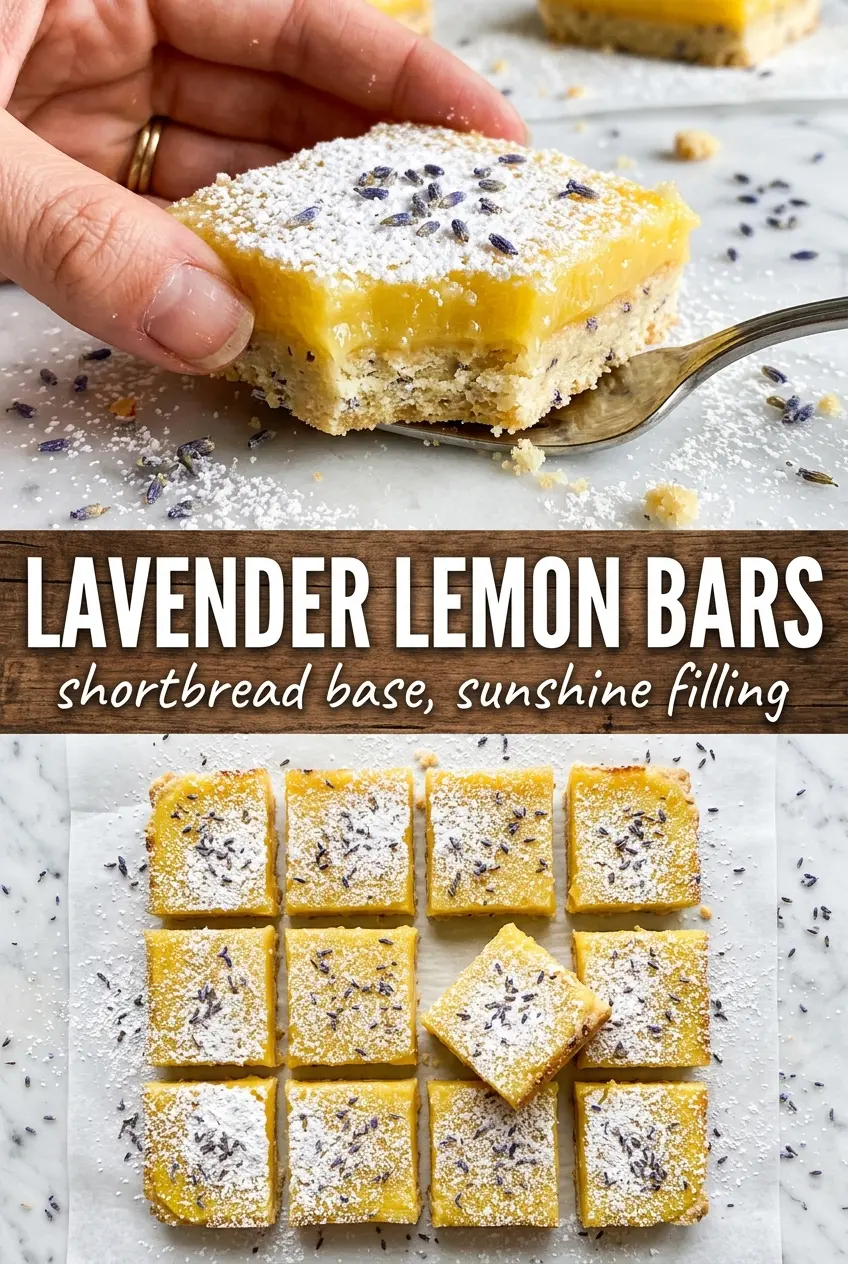
Lavender Shortbread Lemon Bars
Ingredients
Equipment
Method
- Preheat the oven to 350°F and line a 9x13 pan with parchment paper, keeping the edges ready to lift later. Make sure the parchment fully covers the pan so the bars release cleanly.
- Pulse the all-purpose flour, powdered sugar, salt, dried culinary lavender, and cold butter in a food processor just until the mixture comes together. Stop as soon as it holds when pressed (it should look crumbly but cohesive).
- Press the crust mixture firmly and evenly into the prepared pan, packing it into a flat layer. Use steady pressure to prevent gaps.
- Bake for 18-20 minutes at 350°F until lightly golden. You should see light browning at the edges and the top should look set.
- Whisk the large eggs, egg yolks, granulated sugar, fresh lemon juice, lemon zest, and all-purpose flour until smooth. Mix until no streaks remain and the batter looks glossy.
- Pour the lemon curd mixture over the warm crust, spreading it evenly to the corners. Work carefully so you don’t disturb the crust layer.
- Bake for 18-22 minutes at 350°F until the filling is just set with no jiggle in the center. The center should look set and still slightly glossy, not sloshy.
- Cool completely at room temperature until the bars are no longer warm to the touch. This helps the filling firm up evenly before chilling.
- Refrigerate for at least 2 hours until firm. Chill until the bars hold their shape when gently pressed.
- Dust generously with powdered sugar over the top for an even, bright finish. Aim for a light snowfall look without clumping.
- Scatter dried lavender buds and add lemon zest curls across the top. Place the curls so each bar will show an elegant, defined strip when cut.
- Cut into 16 bars, wiping the knife clean between cuts if needed. Use parchment to lift and transfer the bars cleanly to a serving plate.