Lasagna soup gives you everything people love about a bubbling pan of lasagna without the layering, waiting, or cleanup. The broth turns rich and tomato-forward, the noodles soften into spoonable ribbons, and the cheese dollop melts into the center like the best bite from the middle of a baked casserole. It’s the kind of bowl that eats like a full meal and still feels cozy enough to put on repeat.
What makes this version work is the order. The sausage browns first, which gives the soup a savory base before the tomatoes ever hit the pot. Tomato paste cooks for a minute or two until it darkens, and that step adds depth instead of leaving the broth flat and sharp. The lasagna noodles go in near the end so they stay tender instead of turning mushy, and the ricotta-mozzarella topping gets mixed separately so it stays creamy when it lands on the hot soup.
If you’ve ever had lasagna soup that tasted thin or ended up with broken, overcooked noodles, the details below will help. I’m also including the swaps I’d actually use and the reheating note that keeps the texture where it should be.
The noodles stayed tender without getting mushy, and the ricotta topping melted into the broth just enough to make every bowl taste like real lasagna. My husband asked for it again the next night.
Save this lasagna soup for the nights when you want rich tomato broth, tender noodles, and that creamy ricotta topping without assembling a pan of pasta.
The Reason the Broth Tastes Like Lasagna Instead of Tomato Soup
The difference is in the base. If you dump everything into the pot and call it done, you get tomato soup with noodles. Here, the sausage browns first and leaves behind fond, which gives the broth a meaty backbone that stands up to the cheese and pasta.
Tomato paste matters just as much. Cook it until it darkens slightly and smells less raw, and the soup takes on a deeper, rounder flavor. That one minute of patience keeps the broth from tasting sharp or one-note. The other common failure is overcooking the noodles; once they go in, the pot only needs a gentle simmer until they’re tender but still hold their shape.
What Each Ingredient Is Actually Doing in This Bowl

- Italian sausage — This does the heavy lifting for flavor. Mild or hot both work; hot sausage adds more kick, while mild keeps the soup balanced. If you use turkey sausage, add a little extra olive oil because it won’t render as much fat.
- Crushed tomatoes and diced tomatoes — The crushed tomatoes create the body of the broth, while the diced tomatoes leave little bursts of texture. Don’t swap both for tomato sauce, or the soup loses that bright, chunky lasagna feel.
- Tomato paste — This is the depth-builder. Let it cook with the sausage and onion long enough to darken slightly; that step pulls out sweetness and keeps the soup from tasting thin.
- Lasagna noodles — Broken noodles mimic the layered pasta in the casserole version and catch the cheese in every bite. Regular lasagna noodles work best, but you can use gluten-free noodles if you watch the simmer closely, since they soften faster and can break apart.
- Ricotta, mozzarella, parmesan, and basil — This topping is what makes the bowl taste like lasagna instead of red soup. Mixing the cheeses together gives you a creamy dollop that melts into the broth instead of clumping on top.
Building the Soup in the Right Order
Brown the Sausage First
Put the sausage in a large pot over medium-high heat and break it into small crumbles as it cooks. You want browned edges and a little fond on the bottom of the pot, not pale meat steamed in its own juices. If the pot looks crowded and the sausage starts simmering instead of browning, cook it in two batches.
Cook the Onion and Garlic in the Drippings
Once the sausage is drained, use the same pot for the onion. The onion should soften and turn translucent after about four minutes, and the garlic only needs a short minute after that. If the garlic goes in too early, it can turn bitter, and bitter garlic will stick out in a broth like this.
Deepen the Tomato Base
Stir in the tomato paste and cook it for one to two minutes until it darkens a shade and coats the onion. That tiny step changes the whole soup because it takes the edge off canned tomatoes and builds a fuller, more cooked flavor. When the paste starts sticking a little to the bottom of the pot, you’re in the right place.
Simmer the Noodles at the End
Add the broth, tomatoes, seasoning, and red pepper flakes, then bring everything to a boil before lowering it to a steady simmer. Drop in the broken noodles and cook just until they’re tender, usually 10 to 12 minutes. The noodles should bend easily but still have a little bite; if they cook past that point, they’ll keep softening in the hot broth and turn bloated.
Finish with the Cheese Dollop
Mix the ricotta, mozzarella, parmesan, and basil in a bowl, then ladle the soup into bowls and top each serving generously. The heat from the soup softens the cheese mixture without fully melting it into the broth, so you get pockets of creaminess instead of a slick greasy top. Add the cheese at the table if you want the cleanest texture.
How to Adapt This for a Few Different Kitchens
Make It Gluten-Free Without Losing the Comfort
Use a sturdy gluten-free lasagna noodle and pull the pot off the heat as soon as the noodles are tender. Gluten-free pasta can go from firm to crumbly fast, so it’s worth checking a minute early. The flavor stays the same, but the broth may thicken a little more as the noodles sit.
Dairy-Free Topping That Still Feels Creamy
Skip the ricotta mixture and top each bowl with a spoonful of cashew cream or a dairy-free ricotta substitute. You won’t get the same milky tang, but you’ll still get that cooling contrast against the hot tomato broth. Add a little extra basil and parmesan-style dairy-free shreds if you want more of that lasagna feel.
Use Ground Beef or Turkey Instead of Sausage
Ground beef gives a deeper, more classic meat sauce flavor, while turkey makes the soup lighter and a little cleaner tasting. If you swap out the sausage, add an extra pinch of Italian seasoning and a little more red pepper flakes, because sausage brings its own seasoning and fat that plain ground meat doesn’t.
Storage and Reheating
- Refrigerator: Store the soup for up to 4 days. The noodles will continue to absorb broth, so expect it to thicken.
- Freezer: Freeze the broth and meat base without the noodles for best results. Cook fresh noodles when you reheat, because frozen cooked pasta gets soft and grainy.
- Reheating: Warm gently on the stove over medium-low heat with a splash of broth or water. Don’t boil it hard, or the noodles will break down and the cheese topping will lose its creamy texture.
Questions I Get Asked About This Recipe
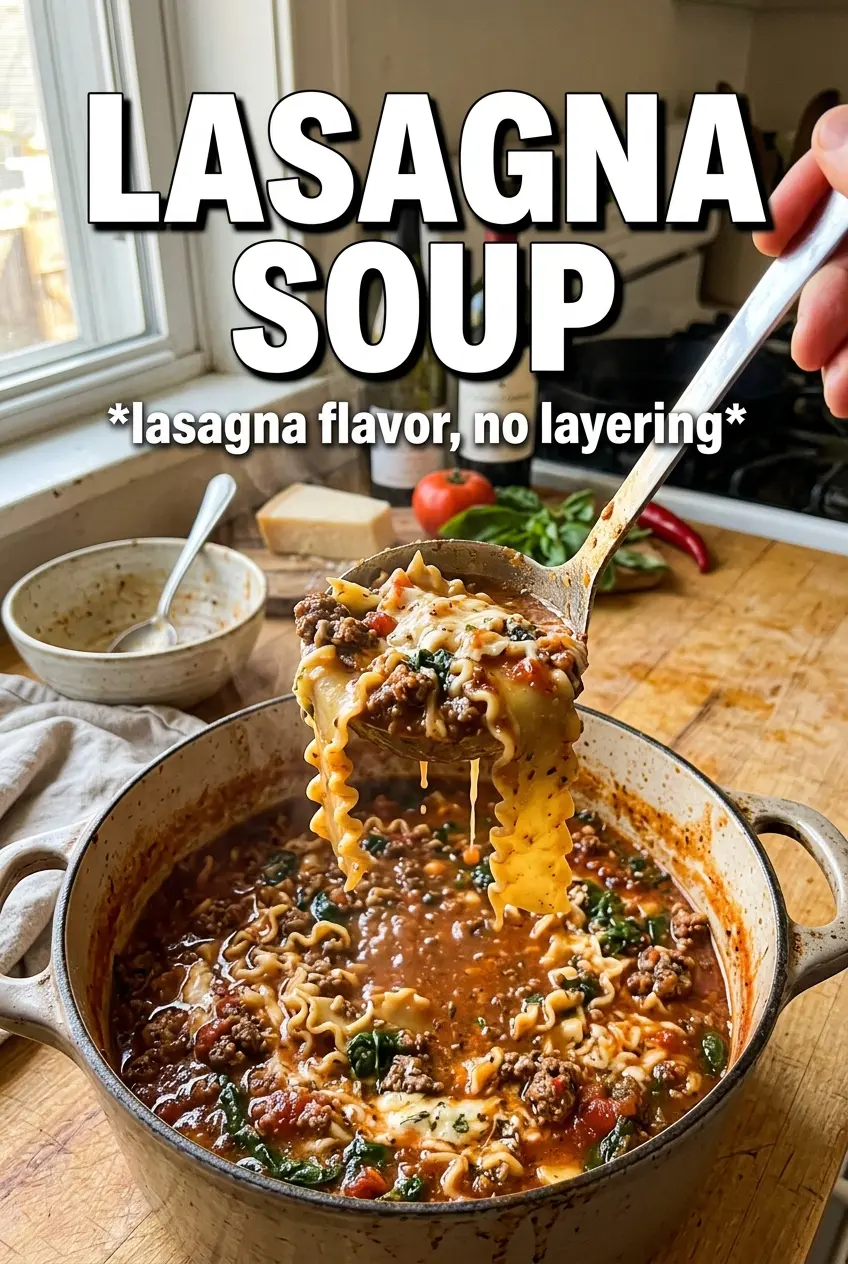
Lasagna Soup
Ingredients
Equipment
Method
- Brown the Italian sausage in a large pot over medium-high heat, breaking it into crumbles until cooked through; drain excess fat.
- Sauté the onion in the same pot for 4 minutes, until softened and glossy; then add the garlic and cook for 1 minute.
- Stir in the tomato paste and cook for 1-2 minutes until it darkens slightly, keeping it moving so it doesn’t burn.
- Add the crushed tomatoes, diced tomatoes, broth, Italian seasoning, dried basil, and red pepper flakes, then bring everything to a boil.
- Add the broken lasagna noodles and reduce to a steady simmer for 10-12 minutes, until the noodles are tender.
- Season with salt and pepper to taste and stir until evenly distributed.
- Mix the ricotta, mozzarella, parmesan, and fresh basil together until smooth and scoopable for a creamy topping.
- Ladle the soup into bowls and top each with a generous dollop of the cheese mixture so it begins to melt in the center.