
Lasagna soup gives you all the things people love about a baked pan of lasagna without waiting around for layers to cool and set. The broth turns deep and savory, the noodles cook right in the tomato base, and that big spoonful of ricotta and mozzarella melts into the bowl in the best possible way. It eats like a proper main dish, but it feels loose enough for a weeknight.
The trick is building the soup in stages so it tastes rounded instead of flat. Browning the sausage first gives you a flavorful base, and cooking the tomato paste for a minute or two takes away that sharp canned edge. I also like using both crushed and fire-roasted tomatoes here: one brings body, the other adds a little extra depth without making the soup taste smoky.
Below you’ll find the exact point where the noodles should go in, how to keep the cheese topping thick instead of watery, and a few swaps that still keep the soup tasting like lasagna in a bowl.
The noodles stayed tender without turning mushy, and the ricotta-mozzarella topping melted into the soup just enough to make every bowl feel like lasagna night.
Save this lasagna soup with ricotta and mozzarella for the night you want bold tomato broth, tender noodles, and that dramatic melty cheese finish.
The Reason the Noodles Go In Last and Not Sooner
The biggest mistake with lasagna soup is letting the noodles sit in the pot too long. They keep drinking broth after the heat is off, which means a nice loose soup turns into a thick, starchy pot of pasta stew. Adding the broken noodles after the broth has fully developed gives you control: they cook through in about 10 to 12 minutes, and they stay tender instead of collapsing.
The second thing that matters is how you handle the tomato base before the liquid goes in. Tomato paste needs a minute in the hot pot with the onion and garlic so it darkens a little and loses that raw, tinny taste. That short step makes the broth taste cooked, not canned.
- Browned sausage — This is the backbone of the soup. If you skip a good sear, the broth tastes flatter because you lose the fond stuck to the pan.
- Tomato paste — Cook it until it turns brick red and smells sweet. That tiny bit of caramelization adds depth you can’t get from simply stirring it into the broth.
- Broken lasagna noodles — Rough pieces are better than neat ones. The jagged edges catch the broth and cheese topping in a way that feels more like lasagna.
What Each Cheese Is Actually Doing in the Bowl
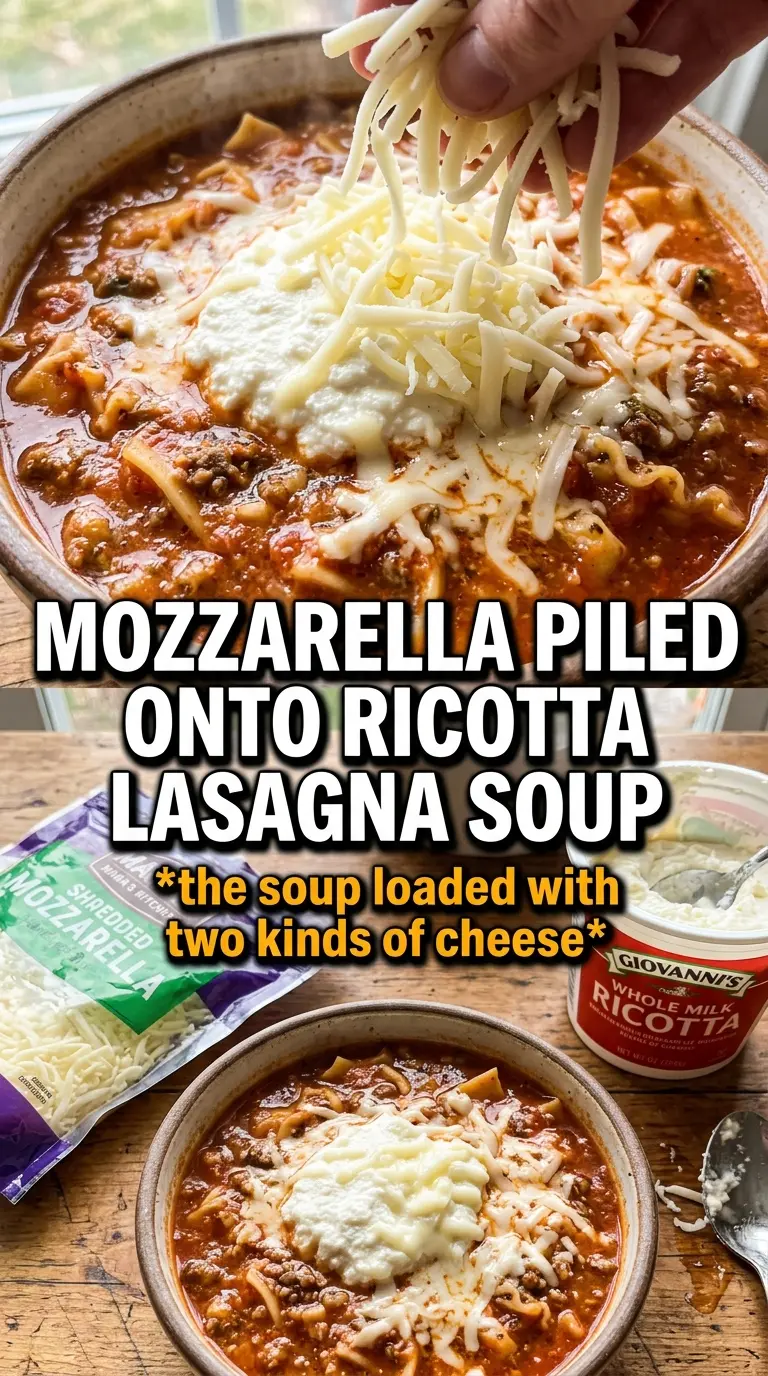
The cheese topping is not garnish here. It’s the whole point of the bowl. Ricotta gives you that soft, milky richness; mozzarella brings the melt; parmesan adds salt and a little sharp edge so the topping doesn’t taste one-note. Mixing them together before they hit the soup keeps the spoonful cohesive instead of leaving you with separate clumps of cheese floating around.
Whole milk ricotta matters more than low-fat ricotta because it stays creamy instead of grainy when it warms. Freshly grated parmesan also matters. The pre-shredded kind is coated and doesn’t melt as smoothly, so it can make the topping feel dusty instead of lush. Basil and a pinch of nutmeg are small additions, but they make the cheese mixture taste like it belongs with lasagna rather than just sitting on top of soup.
- Whole milk ricotta — Use the good stuff here if you can. It stays lush and spoonable when it meets the hot broth.
- Mozzarella — Shred it yourself for the smoothest melt. Bagged shreds work in a pinch, but they don’t get as creamy.
- Fresh basil — Stir it into the cheese mixture right before serving so it stays bright and doesn’t darken.
Building the Broth Without Overcooking the Pasta
Getting the Sausage Right
Cook the sausage over medium-high heat until it’s browned and broken into crumbles, not gray and steamed. If there’s a lot of fat in the pot, drain off the excess before adding the onion so the soup doesn’t end up greasy. Leave the browned bits stuck to the pan; they’re part of the flavor foundation.
Starting the Tomato Base
Cook the diced onion until it softens and starts to turn translucent, then add the garlic and tomato paste. The garlic only needs about a minute, and the tomato paste needs enough time to darken slightly. If it smells harsh or raw at this stage, give it another minute before moving on.
Simmering the Soup
Add both cans of tomatoes, the broth, and the dried herbs, then bring everything to a boil before dropping in the noodles. Once the pasta goes in, keep the heat at a steady simmer so the noodles cook through without breaking apart. Stir often enough to keep them from clumping, especially near the bottom of the pot where they like to stick.
Finishing With the Cheese Spoonful
Mix the ricotta, mozzarella, parmesan, basil, nutmeg, salt, and pepper until the mixture holds together. Ladle the soup into bowls first, then add a generous dollop on top instead of stirring it through the pot. That keeps the broth clear and the cheese dramatic, and it also lets each person decide how creamy they want their bowl to be.
Three Ways to Adjust This Without Losing the Lasagna Feel
Make It Vegetarian
Swap the sausage for chopped mushrooms or a plant-based Italian crumble and use vegetable broth instead of beef broth. You lose some richness from the sausage fat, so add a little extra olive oil when you sauté the onion and don’t skip the tomato paste step.
Make It Gluten-Free
Use your favorite gluten-free lasagna noodles, but keep a close eye on them because they can go soft faster than wheat pasta. If the brand you’re using tends to break up, cook the noodles a minute shy of done and let them finish in the hot broth off the heat.
Dial Up or Down the Heat
The red pepper flakes bring gentle warmth, not real burn. If you want a milder bowl, cut them in half; if you like more kick, add a pinch at the table rather than overloading the whole pot. That keeps the base balanced for everyone.
Storage and Reheating
- Refrigerator: Store the soup and cheese topping separately for up to 4 days. The noodles will keep absorbing broth, so expect a thicker soup the next day.
- Freezer: The soup base freezes well for up to 3 months, but freeze it without the noodles for the best texture. Cook fresh noodles when you’re ready to serve.
- Reheating: Warm the soup gently on the stove over medium-low heat and add a splash of broth if it has thickened too much. Don’t boil it hard or the noodles will turn soft and the sausage can get tough.