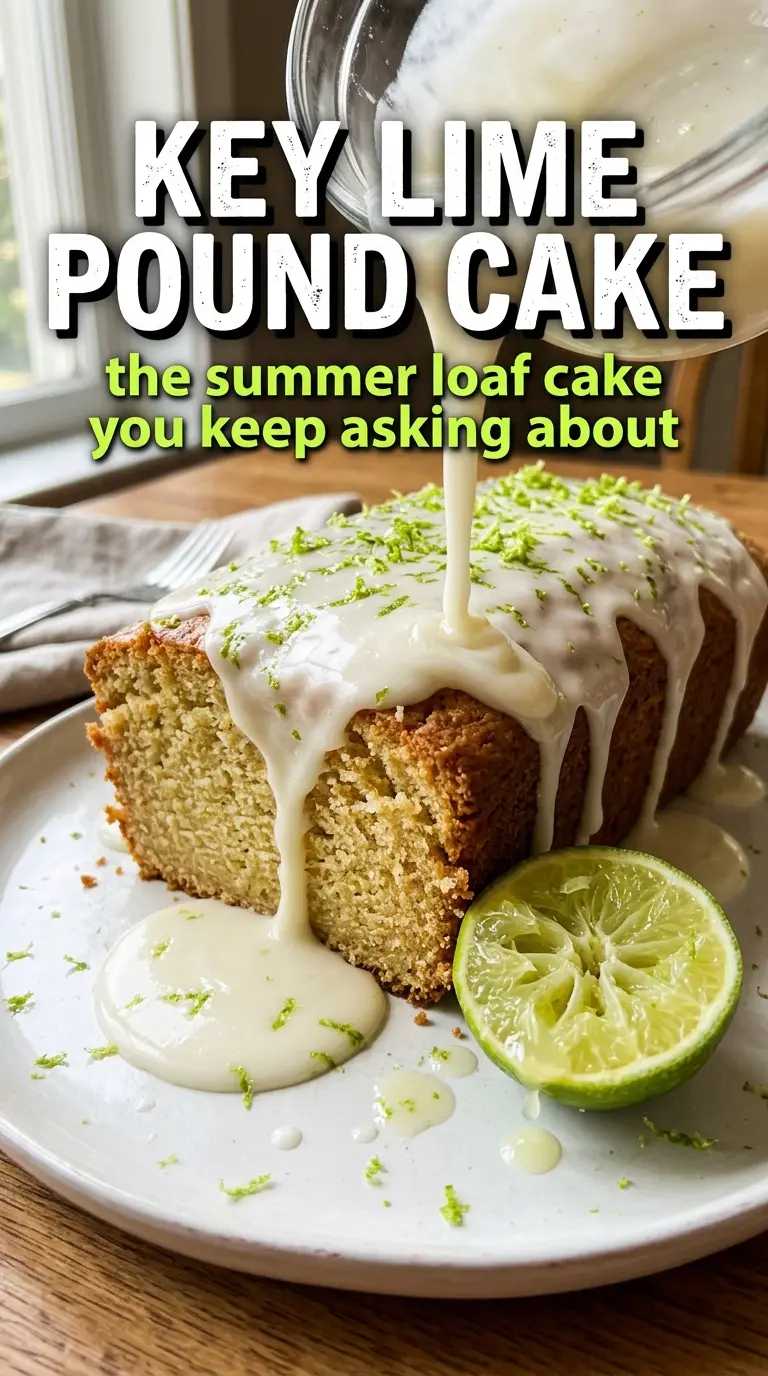
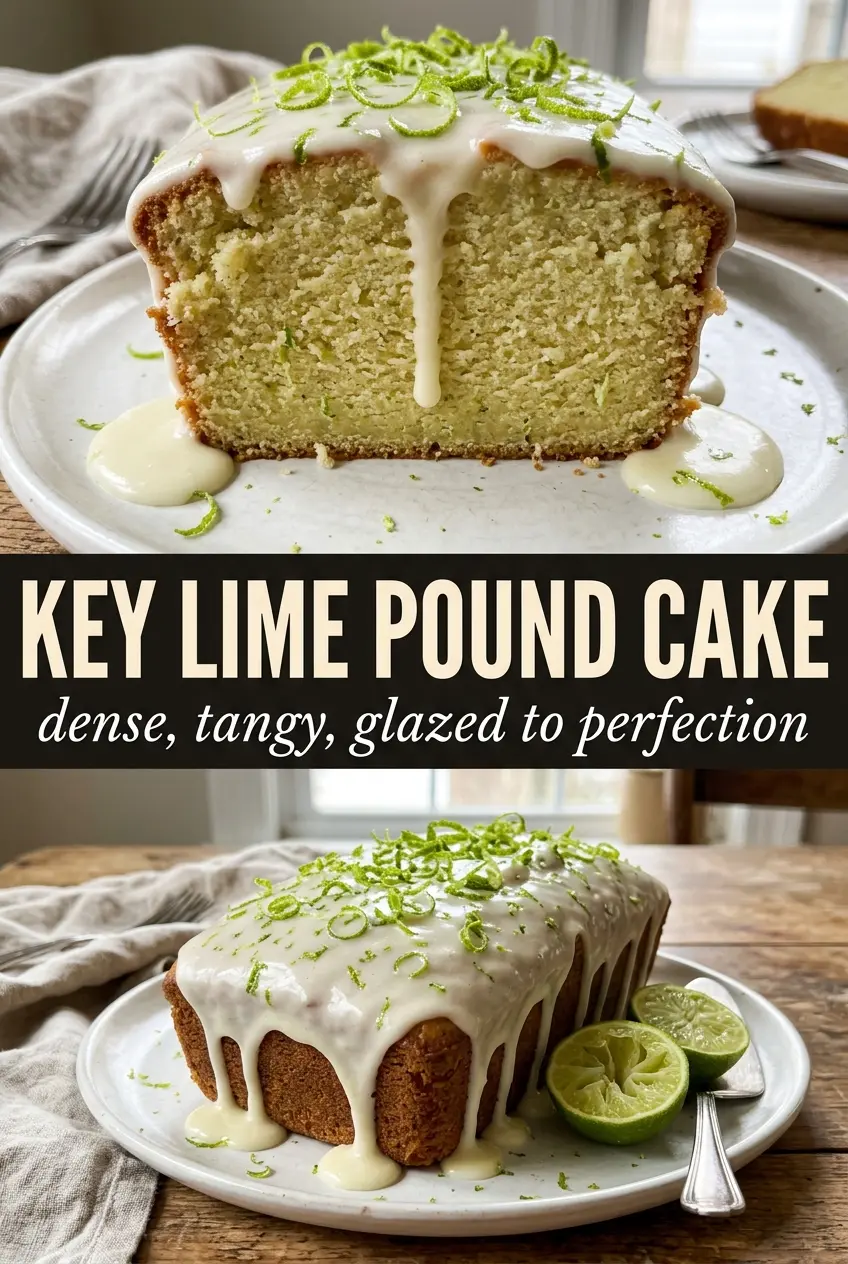
Dense, buttery pound cake meets a bright key lime finish here, and that contrast is what makes each slice worth going back for. The crumb stays tight and tender, not airy or bouncy, so the glaze can sink into the ridges instead of sliding off the top. You get a cake that tastes rich first and citrusy second, which is exactly how a good pound cake should behave.
The sour cream keeps the crumb moist without making it loose, and the key lime juice is added with enough structure around it that the batter still bakes up tall and even. The zest does the heavy lifting for flavor, while the glaze adds the sharper lime pop at the end. That combination gives you a cake that reads as fresh and bright without losing the old-fashioned pound cake texture underneath.
Below, I’ve broken down the part that matters most: how to keep the batter from turning heavy, how to get the lime flavor to come through clearly, and what to do if you want to bake it ahead for a party or Sunday dessert.
The cake rose evenly in my Bundt pan and the glaze soaked into the grooves instead of running off. The sour cream made the crumb stay tender for days, and the key lime flavor came through in every bite.
Save this key lime pound cake for the days when you want a dense, buttery Bundt cake with a sharp citrus glaze that actually clings.
The Mixing Step That Keeps This Cake Dense Instead of Heavy
The biggest mistake with pound cake is treating the batter like a quick cake batter. It needs long enough mixing to whip air into the butter and sugar, but not so much that you start overworking the flour once it goes in. If the cake turns tight or gummy, it usually means the flour was mixed too aggressively after it was added.
The other thing that matters here is temperature. Softened butter, room-temperature eggs, and sour cream all blend into a smooth batter without curdling or separating, which gives you that clean, even crumb pound cake is known for. The lime juice goes in near the end so the batter has structure before the acid shows up.
- Butter — This is the flavor base, so use real butter and let it soften fully. It should press easily but still hold its shape. Melted butter won’t trap air the way you need for a tall Bundt cake.
- Sour cream — This keeps the crumb moist and gives the cake a little tang that works with the lime. Full-fat sour cream gives the best texture. Plain Greek yogurt can work, but the cake will be a little less rich.
- Key lime juice — Fresh juice matters here because the glaze and batter both depend on that sharp citrus edge. Bottled juice works in a pinch, but it tastes flatter. If you can’t find key limes, regular lime juice is the closest swap.
- Key lime zest — This is where most of the lime aroma comes from. Don’t skip it. Zest brings the perfume that juice alone can’t provide, and it keeps the flavor from tasting one-note.
- All-purpose flour — Standard all-purpose flour gives the cake the sturdy, sliceable crumb this style needs. Cake flour makes it softer but less pound-cake-like.
What Each Ingredient Is Actually Doing in This Recipe
- Primary ingredient (the star) — Quality matters most. Choose the best you can find.
- Cooking medium (oil, butter, or broth) — This carries flavors and prevents dryness.
- Seasonings (salt, pepper, spices, herbs) — Layer flavors so nothing overpowers. Build depth gradually.
- Aromatics (garlic, onion, herbs) — Cook with fat to bloom flavors. Become the foundation.
- Supporting ingredients — Complement the main ingredient without overpowering it.
- Sauce or liquid (if applicable) — Brings flavors together. Balance richness with acid.
- Acid (lemon, vinegar, wine, or other) — Brightens and prevents flat-tasting results.
- Final finish (garnish, glaze, or sauce) — Prevents one-dimensional taste and adds visual appeal.
Building the Batter and Baking It Evenly in a Bundt Pan
Creaming the Butter and Sugar
Beat the butter and sugar until the mixture turns pale and fluffy, about five minutes. It should look lighter in color and feel almost spreadable, not grainy. If you stop too soon, the cake bakes up dense in a bad way; if you rush it with cold butter, the sugar never cuts into the fat properly and the texture stays coarse.
Adding the Eggs Without Breaking the Batter
Add the eggs one at a time and let each one disappear before adding the next. The batter may look slightly curdled as the eggs go in, but it should come back together once the flour starts alternating with the sour cream. If it looks soupy, the butter was too warm; if it looks lumpy and stiff, the ingredients were too cold.
Alternating the Dry Ingredients and Sour Cream
Add the flour mixture and sour cream in three additions, starting and ending with the flour. That pattern protects the batter from overmixing and keeps the crumb even. Stir only until the flour streaks disappear. Once the lime juice, zest, and vanilla go in, the batter should smell bright and look thick and glossy.
Baking, Cooling, and Releasing Cleanly
Scrape the batter into a well-greased and floured Bundt pan and smooth the top. Bake at 325°F until a toothpick comes out clean and the top is deep golden, usually 60 to 70 minutes. If the cake is overbaked, the edges dry out before the center sets, so start checking near the 60-minute mark. Let it cool in the pan for 15 minutes before inverting; too soon and it can tear, too long and it can stick.
Use Lemon When Key Limes Aren’t Available
Regular lime juice is the closest substitute, but lemon gives you a different kind of brightness: cleaner and less floral. The cake still works, but it tastes a little more like citrus pound cake than key lime pound cake. Keep the zest matched to whatever juice you use so the flavor doesn’t feel muddled.
Make It a Little Lighter With Greek Yogurt
Plain Greek yogurt can replace the sour cream in equal measure. It adds the same moisture and tang, though the crumb will be slightly less rich and a touch tighter. Full-fat yogurt gives the best result if you want the swap to stay close to the original texture.
Skip the Glaze for a Lower-Sugar Finish
The cake is still good without the glaze, but you lose the sharp lime finish that balances the butter and sugar. If you want something less sweet, dust the cooled cake with powdered sugar and add extra zest on top. That keeps the citrus note visible without adding more sweetness.
Storage and Reheating
- Refrigerator: Store covered for up to 5 days. The crumb stays moist, but the glaze will soften a bit on top.
- Freezer: Freeze the unglazed cake tightly wrapped for up to 2 months. Glaze after thawing for the cleanest texture and appearance.
- Reheating: Bring slices to room temperature or warm them for 10 to 15 seconds in the microwave. Don’t heat too long or the butter in the crumb will turn greasy and the glaze will melt off.
Questions I Get Asked About This Recipe
Key Lime Pound Cake
Ingredients
Equipment
Method
- Preheat the oven to 325°F and grease and flour a Bundt pan so the cake releases cleanly after baking.
- Beat the butter and granulated sugar until very light and fluffy, about 5 minutes, to build a tight, dense pound cake crumb.
- Add the eggs one at a time, mixing after each addition until the batter looks smooth and cohesive.
- Whisk together the all-purpose flour, baking soda, and salt, then alternate adding this flour mixture and the sour cream in 3 additions to keep the batter even.
- Stir in the fresh key lime juice, key lime zest, and vanilla extract until just combined for a bright citrus fragrance throughout the crumb.
- Pour the batter into the prepared Bundt pan and bake for 60–70 minutes, until a toothpick comes out clean.
- Cool the cake in the pan for 15 minutes, then invert onto a rack and cool completely before glazing.
- Whisk the powdered sugar, fresh key lime juice, and key lime zest until smooth, with a pourable glaze consistency.
- Drizzle the glaze over the completely cooled cake so it pools into the cracks and crevices.
- Let the glaze set before slicing so the topping slightly firms and the crumb stays intact.