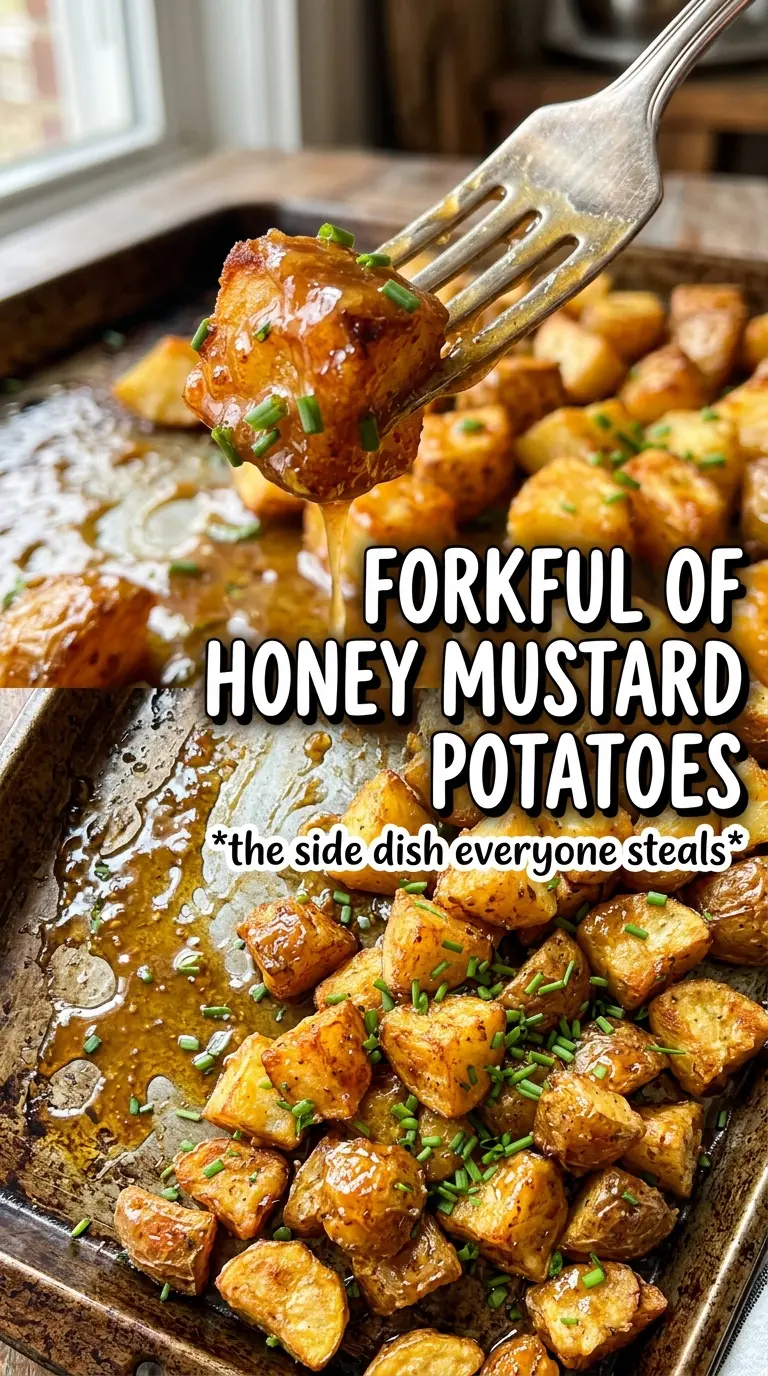
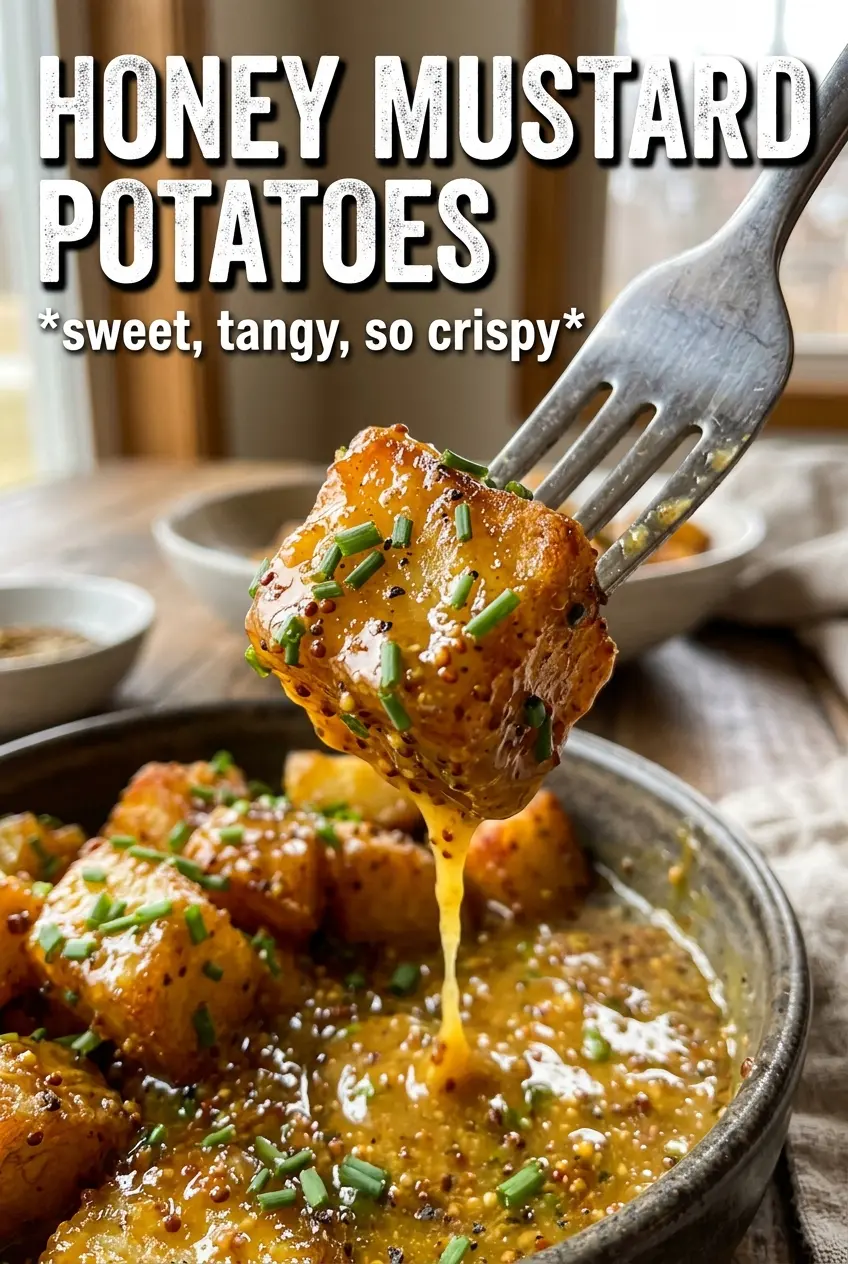
Honey mustard potatoes hit that sweet spot between sharp, savory, and sticky-caramelized, with edges that roast up deep gold while the centers stay creamy. The glaze clings to every cut face of the potatoes, so each bite gets a little punch from Dijon, a little texture from whole grain mustard, and enough honey to brown without turning cloying.
The key here is treating the potatoes like a roasting job first and a sauce job second. The mustard, honey, vinegar, and oil don’t just season the potatoes; they help the cut surfaces blister and caramelize at 425F, especially if you spread everything out in a true single layer. Baby potatoes and Yukon golds both work well because they hold their shape, but you still want the pieces cut evenly so they finish at the same time.
Below you’ll find the small details that keep the glaze from burning, the reason the whole grain mustard matters, and a few ways to adapt these potatoes if you need to swap ingredients or plan ahead.
The potatoes came out crisp on the edges and the glaze thickened into this perfect sticky coating. I tossed them halfway through like you said and they roasted evenly all the way through.
Pin these honey mustard potatoes for a crisp, caramelized side dish with a sticky mustard glaze and rosemary finish.
The Trick to Getting Honey to Caramelize Without Burning the Garlic
Honey brings the browning, but it also burns faster than plain oil, which is why the oven temperature and spacing matter more than people think. At 425F, the potatoes have enough heat to roast through before the glaze dries out, but the garlic and honey still need the potatoes to be spread out so the steam can escape. If the pan is crowded, the potatoes soften and the sugars stay wet instead of turning sticky and browned.
Apple cider vinegar is doing important work here too. It keeps the glaze from tasting flat and helps balance the sweetness, but it also loosens the mixture just enough to coat the potatoes evenly. The whole grain mustard adds texture and little pops of sharpness; Dijon gives the base flavor, but the coarse mustard keeps the glaze interesting after roasting.
What Each Ingredient Is Actually Doing in These Potatoes
- Baby potatoes or Yukon golds — These are the right potatoes because they stay creamy inside while the cut sides roast up crisp. Waxy potatoes hold their shape better than russets here, which would go fluffy and fall apart before the glaze finishes caramelizing.
- Dijon mustard — This gives the glaze its backbone and keeps the honey from tasting one-note. You need that sharp, emulsified base for the coating to cling to the potatoes instead of sliding off the pan.
- Whole grain mustard — This adds texture and a little extra bite. If you only have Dijon, the dish still works, but it loses that rustic, speckled look and the brighter mustard finish.
- Honey — This is what creates the glossy, browned coating. Maple syrup can stand in, but it tastes darker and less sharp; use the same amount if that’s the swap you need.
- Apple cider vinegar — A small amount keeps the glaze from tasting heavy and helps the honey-mustard mixture spread more evenly. Lemon juice works in a pinch, but it tastes cleaner and less rounded.
- Fresh rosemary and smoked paprika — Rosemary brings a piney, savory note that works especially well with roasted potatoes, while smoked paprika adds warmth and color. Dried rosemary can work, but use less because it reads stronger and drier than fresh.
Roasting the Potatoes So the Glaze Sticks Instead of Sliding Off
Mix the glaze first
Whisk the Dijon, whole grain mustard, honey, olive oil, vinegar, garlic, rosemary, smoked paprika, salt, and pepper until smooth and glossy. You want the mixture to look emulsified and loose enough to coat, not separated or grainy. If the honey seems stubborn, warm it for a few seconds before mixing. That makes the coating easier to spread over the potatoes without needing extra oil.
Toss the cut potatoes thoroughly
Add the halved potatoes and work them through the glaze until every cut surface is coated. The cut sides are what brown best, so don’t just slick the outside of the potatoes and call it done. If the bowl looks dry in spots, keep tossing; the glaze should cling in a thin layer rather than pool at the bottom.
Roast until the edges go deep gold
Spread the potatoes in a single layer on a lined baking sheet and roast at 425F for 30 to 35 minutes, tossing halfway through. You’re looking for caramelized edges, tender centers, and a glaze that has thickened into sticky little patches on the pan. If they’re pale and soft, the pan was crowded or the oven ran cool; give them more space and a few extra minutes.
Finish with parsley and flaky salt
Fresh parsley adds a clean, green finish that keeps the potatoes from tasting too rich, and flaky salt sharpens the last bite. Add both right after the potatoes come out of the oven so they stick to the hot glaze. If you wait too long, the salt won’t cling and the parsley will wilt instead of staying bright.
Three Ways to Make These Honey Mustard Potatoes Work for Your Table
Dairy-Free and Naturally Gluten-Free
The recipe already fits both of these without any special swaps, which is part of why it lands so well on a mixed menu. Just check your mustard and vinegar labels if you’re cooking for someone with a sensitivity, then carry on as written.
Make It Brighter with Lemon and Thyme
Swap the apple cider vinegar for fresh lemon juice and use thyme instead of rosemary. The potatoes will taste a little lighter and fresher, with less of the warm, savory edge that rosemary brings.
Turn Them Into a Meal Prep Side
Roast the potatoes until just tender, then hold back the parsley and flaky salt until reheating. That keeps the finish fresh instead of muddy, and the potatoes warm back up with better texture than if you garnish them too early.
Use Maple Syrup Instead of Honey
Maple syrup works in the same amount, but it gives the glaze a deeper, woodier sweetness and a slightly darker finish. The potatoes still caramelize, though the flavor reads more maple-mustard than classic honey mustard.
Storage and Reheating
- Refrigerator: Store leftovers in an airtight container for up to 4 days. The potatoes soften a bit, but the flavor holds well.
- Freezer: These freeze better than you might expect, but the texture won’t be as crisp after thawing. Freeze in a single layer first, then move to a container.
- Reheating: Reheat on a sheet pan in a 400F oven until hot and the edges start to crisp again. The microwave will warm them, but it also turns the glaze sticky in the wrong way and makes the potatoes go soft.
Answers to the Questions Worth Asking
Honey Mustard Potatoes
Ingredients
Equipment
Method
- Preheat the oven to 425°F and line a sheet pan with parchment or foil for easy cleanup.
- Whisk Dijon mustard, whole grain mustard, honey, olive oil, apple cider vinegar, garlic, rosemary, smoked paprika, salt, and pepper until smooth and glossy.
- Toss the halved baby potatoes or Yukon golds in the honey mustard mixture until evenly coated.
- Spread the potatoes in a single layer on the lined sheet pan for maximum browning.
- Roast at 425°F for 30-35 minutes, tossing halfway, until caramelized and golden.
- Finish with fresh parsley and flaky salt, then serve while the glaze is still shiny.