Scoops of homemade strawberry ice cream should taste like real berries first, cream second, and sweetness only after that. This version does exactly that. The strawberries get a little time with sugar and lemon juice before they ever hit the custard, so the fruit stays bright instead of muddy, and the finished ice cream ends up with those pretty pink streaks and soft berry bits that make each spoonful feel alive.
The custard base gives this ice cream its smooth, dense texture without turning heavy. Egg yolks and a gentle stovetop cook bring the mixture to a clean nappe, which means it coats the spoon instead of running off it. That step matters. If you rush the heat, the yolks scramble; if you stop too soon, the base stays thin and freezes icy.
Below, I’ve included the spots that matter most: how to keep the custard silky, why the strawberry puree goes in near the end, and what to change if you want a different texture or need a dairy-free direction.
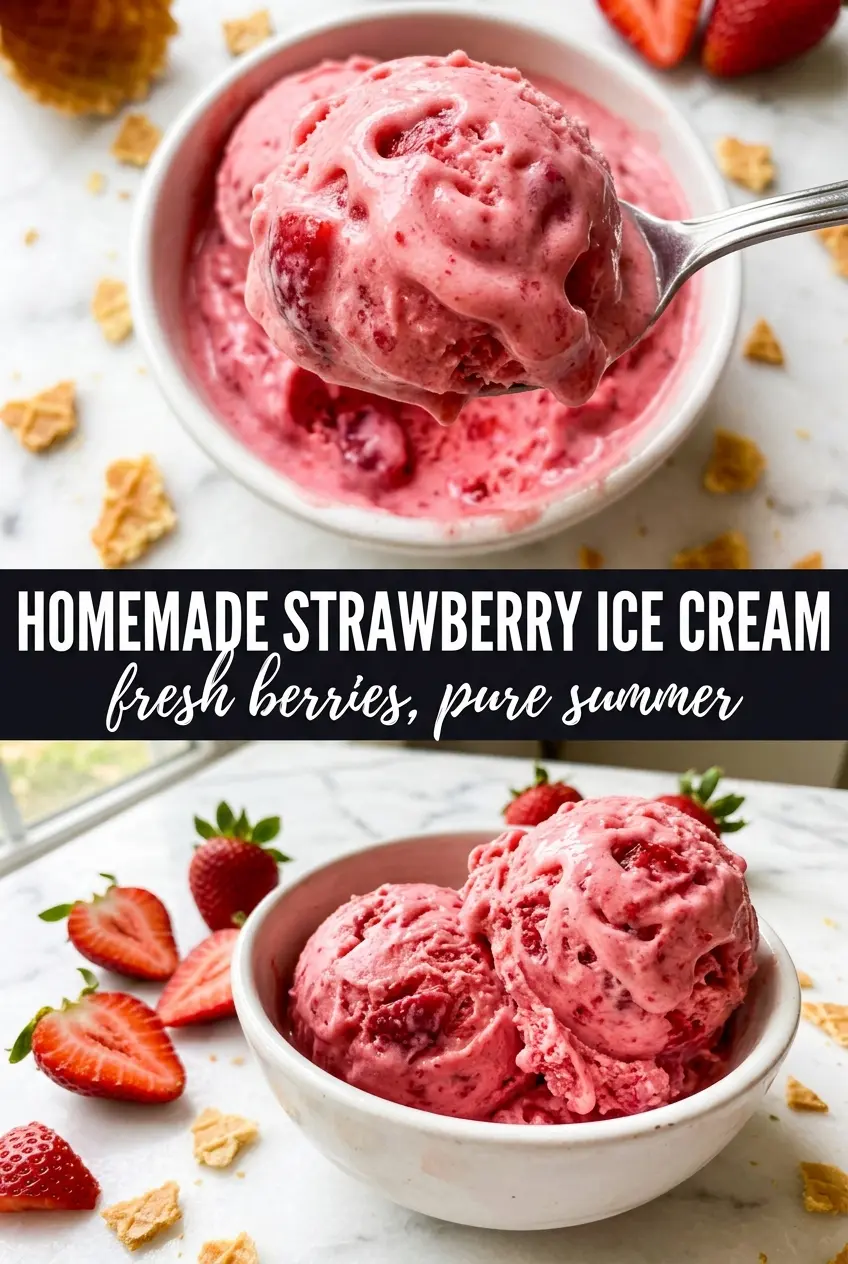
The custard stayed silky and the strawberry pieces stayed bright instead of disappearing into the base. I churned it for the full time and it froze up with that creamy scoop-shop texture we were hoping for.
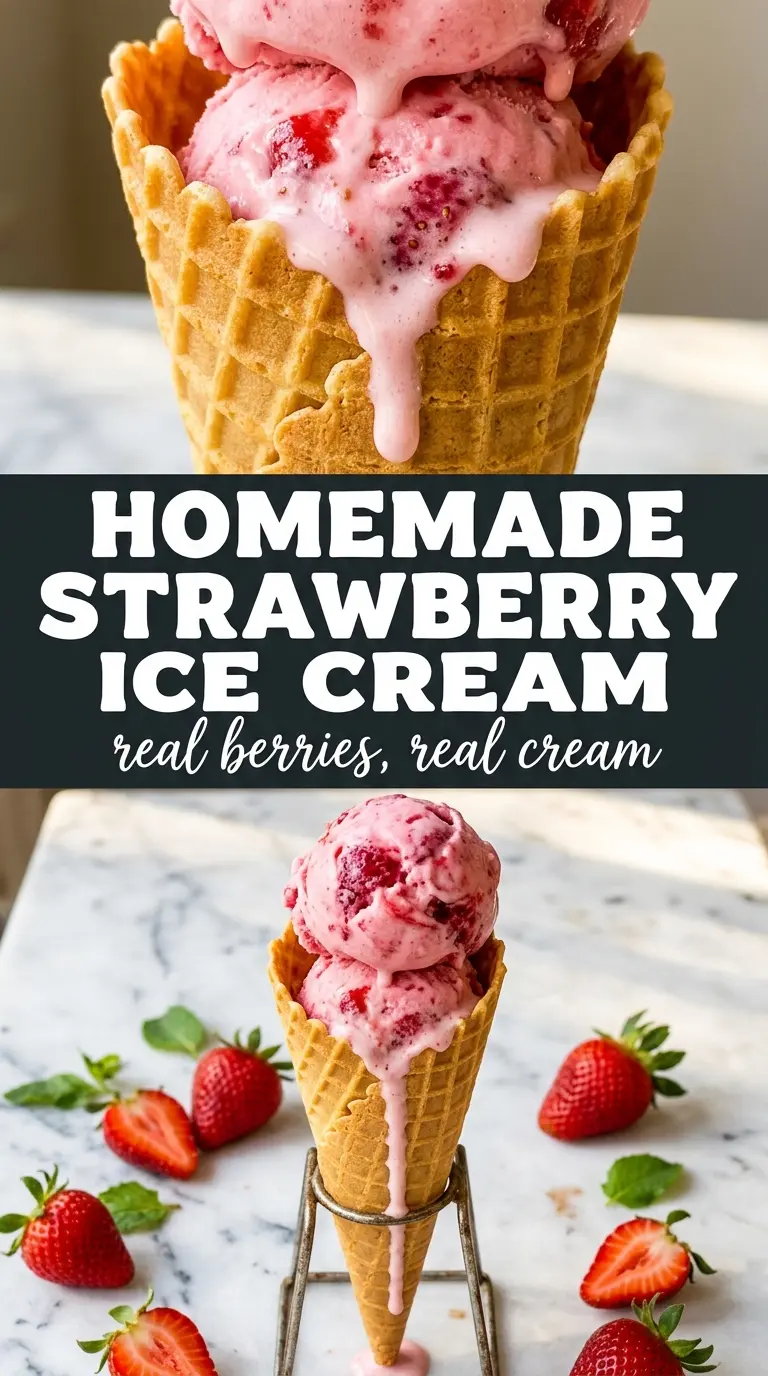
Save this strawberry ice cream for the nights when you want real fruit flavor and a custard-base scoop that freezes up ultra creamy.
The Custard Step That Keeps Strawberry Ice Cream Creamy Instead of Icy
The biggest difference between a smooth homemade strawberry ice cream and one that turns grainy after a day in the freezer is the base. You need enough fat and dissolved sugar to slow down ice crystal growth, and that starts with a properly cooked custard. The eggs don’t make it taste eggy; they give the ice cream body. Without them, the fruit flavor can still be good, but the texture usually feels thin and sharp after freezing.
The other detail that saves this recipe is timing. The strawberry puree goes in during the last few minutes of churning, not before. That keeps the fruit flavor bright and stops the berries from breaking down so much that the base turns dull. If the puree gets mixed in too early, it can loosen the custard and make the finished ice cream freeze harder than it should.
- Fresh strawberries — Fresh fruit gives the cleanest berry flavor and the best color. Frozen strawberries can work in a pinch, but thaw them fully and drain off excess liquid first or the ice cream will taste watered down.
- Heavy cream — This is what gives the finished ice cream its lush texture. Lower-fat cream won’t hold the same body in the churn, and the result will freeze firmer.
- Whole milk — Whole milk keeps the base balanced so it doesn’t become overly rich. Skim or reduced-fat milk makes the custard less stable and gives you more ice crystals.
- Egg yolks — Yolks thicken the custard and help it emulsify. Whisk them with the sugar until pale before heating, which makes them more stable when the hot dairy goes in.
- Lemon juice — The acid wakes up the strawberries and keeps the flavor from tasting flat. Don’t skip it unless your berries are exceptionally sweet and fragrant.
- Vanilla extract — Vanilla rounds out the berry flavor without taking over. Use a real extract here; imitation vanilla can taste harsh against the fruit.
What Each Ingredient Is Actually Doing in This Ice Cream
- Base ingredient (cream, milk, or custard) — This provides the foundation and richness. Quality matters.
- Sweetener (sugar, honey, or condensed milk) — This sweetens and prevents ice crystals. The ratio is critical.
- Flavor element (vanilla, fruit, chocolate, cookie, or other) — This defines the ice cream personality. Use quality ingredients.
- Egg yolks (if making custard base) — These create richness and silky texture. Optional but elevates ice cream.
- Churning (if using ice cream maker) — This incorporates air and prevents ice crystals. Critical for smooth texture.
- Freezing temperature and time — Proper freezing prevents rock-hard texture. Store at 0°F or below.
- Mix-ins (chocolate, cookies, candy, or swirls) — These add texture and prevent one-dimensional flavor. Add near end of churning.
- Serving temperature (slightly soft, not rock hard) — This provides creamy mouthfeel. Remove from freezer 5 minutes before serving.
How to Build the Strawberry Base Without Scrambling the Eggs
Macerating the Strawberries
Toss the sliced strawberries with part of the sugar and the lemon juice, then let them sit until the fruit gets glossy and syrupy. After about 30 minutes, the berries will have released enough juice to blend into a chunky puree without needing extra liquid. If your berries are pale or bland, give them the full time; that short rest is what turns them into the loudest part of the ice cream.
Whisking the Yolks
Beat the yolks with the remaining sugar until the mixture looks thicker and lighter in color. You want the sugar to start dissolving before any heat hits the bowl. If you skip this and dump the yolks into hot milk too quickly, they can seize into little bits instead of staying smooth in the custard.
Tempering and Cooking the Custard
Heat the cream and milk until they steam, not boil, then whisk the hot dairy into the yolks slowly. This gradual tempering is what keeps the eggs from turning into scrambled pieces. Put the mixture back in the pan and stir constantly over medium-low heat until it coats the back of a spoon and reaches 170-175°F. Pull it off the burner the moment it thickens; if you chase a full boil, the custard can break or turn grainy.
Chilling, Churning, and Folding in the Fruit
Strain the custard to catch any cooked egg bits, then stir in the vanilla and salt while it is still warm. Cool it completely before it goes into the ice cream maker, because a warm base churns poorly and takes longer to set. Add the strawberry puree during the last few minutes of churning so it stays distinct in the finished ice cream, then freeze the churned ice cream until firm enough to scoop.
How to Adapt This Strawberry Ice Cream for Different Kitchens and Freezers
Dairy-Free Version With Coconut Cream
Swap the heavy cream and whole milk for full-fat coconut milk and coconut cream, keeping the same total volume. The texture will still be rich, but the ice cream will taste faintly of coconut, which plays nicely with strawberries. Skip the vanilla if your coconut product is strongly flavored and already sweetened.
No-Churn Shortcut for a Firmer, Sweeter Scoop
If you don’t have an ice cream maker, fold the fully cooled strawberry puree into sweetened whipped cream and condensed milk instead of making the custard base. You’ll lose the deep custard flavor, but you gain a faster method that still freezes creamy. Keep the strawberry pieces small so the texture stays scoopable.
More Berry Pieces, Less Smooth Swirl
Instead of blending the strawberries all the way, pulse them into a chunky puree and keep a few small bits intact. This gives you a more rustic finish with visible fruit in every scoop. The tradeoff is a slightly icier bite around the berry pieces, so keep the fruit layer concentrated rather than stirring it in too aggressively.
Storage and Reheating
- Refrigerator: Not applicable for storage once churned; the base can be refrigerated up to 2 days before churning, but the finished ice cream belongs in the freezer.
- Freezer: Store in an airtight container with parchment pressed directly on the surface for up to 2 weeks. After that, the berry flavor is still good, but the texture starts to tighten up.
- Reheating: Let it sit at room temperature for 5 to 10 minutes before scooping. If it’s rock hard, don’t microwave it; that melts the edges before the center softens.
Questions I Get Asked About This Recipe
Homemade Strawberry Ice Cream
Ingredients
Equipment
Method
- Toss the sliced strawberries with 1/4 cup sugar and lemon juice, then let them macerate for 30 minutes in the refrigerator. Mash or blend the berries into a chunky puree, then refrigerate while you make the custard.
- Whisk the egg yolks with the remaining 1/2 cup sugar until pale and thick, about 2 to 3 minutes. Keep whisking until the mixture looks lighter and slightly ribboned.
- Heat the heavy cream and whole milk in a saucepan over medium heat until steaming, then reduce heat to keep it from boiling. Slowly whisk the steaming dairy into the egg yolks to temper without scrambling.
- Return the mixture to the saucepan and cook over medium-low heat, stirring constantly, until it thickens enough to coat the back of a spoon at 170-175°F. Do not boil or the custard can turn grainy.
- Strain the custard, then stir in the vanilla extract and pinch of salt. Cool completely, then refrigerate for at least 2 hours.
- Churn the custard in an ice cream maker according to the manufacturer’s instructions until it reaches a soft-serve consistency. Add the strawberry puree during the last 5 minutes for even fruit distribution.
- Transfer the churned ice cream to a container and freeze for at least 2 hours until firm. Scoop straight from the freezer for the best texture.