
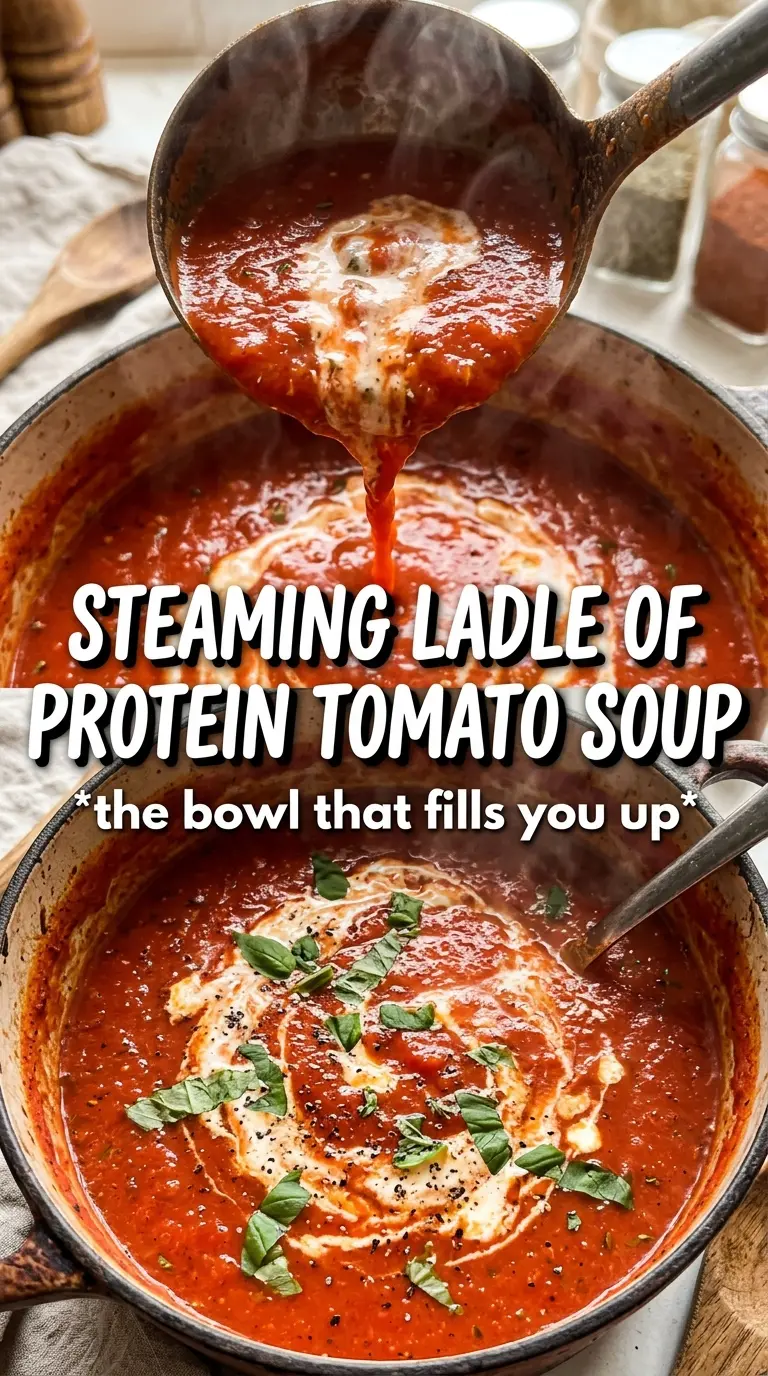
Silky tomato soup gets a lot more satisfying when the body comes from white beans instead of extra cream. The result is still bright, tangy, and spoonable, but it carries enough heft to pass as lunch on its own. A good grilled cheese on the side is a bonus; a grilled cheese crouton on top is even better.
This version leans on canned whole plum tomatoes for clean tomato flavor and uses white beans to thicken the soup from the inside out. That means you get a smoother, more stable finish than you’d get from adding a lot of dairy up front. The yogurt or cream goes in at the very end, off the heat, so it stays silky instead of splitting.
Below, I’m walking through the one step that keeps the soup from tasting flat, the ingredient that gives it its quiet protein boost, and the few small tweaks that make it work whether you want it lighter, richer, or dairy-free.
The white beans made the soup creamy without tasting bean-y, and blending it until totally smooth gave it that restaurant texture. I also loved that the yogurt stirred in at the end stayed velvety and didn’t curdle.
Save this high protein tomato soup for the nights when you want something silky, filling, and easy to finish with a swirl of cream and basil.
The Beans Are Doing More Than Adding Protein
The biggest mistake with tomato soup is treating it like a thin starter and then trying to rescue it with cream alone. Cream adds richness, but it doesn’t give the soup structure. The white beans change that. Once blended, they act like a natural thickener, which is what gives this soup that full, spoon-coating texture without making it heavy.
The other thing that matters is how long the tomatoes simmer before blending. Twenty minutes gives the onion, garlic, and herbs time to mellow the sharp edge of canned tomatoes. If you rush that part, the soup can taste tinny or flat, and no amount of yogurt at the end will fix it.
- Whole plum tomatoes — These break down into a smoother, cleaner soup than diced tomatoes. If you only have crushed tomatoes, use them, but expect a slightly softer, less textured base.
- White beans — Cannellini or great northern beans both work. Rinse them well so the soup stays bright, not cloudy or salty.
- Tomato paste — This adds depth and a little sweetness once it cooks in the oil for a minute or two. Skipping that step leaves the soup tasting one-note.
- Greek yogurt or cream — Greek yogurt gives the soup a gentle tang and more protein; cream makes it richer and rounder. Either one needs to go in off the heat so it stays smooth.
What Each Ingredient Is Actually Doing in This Recipe
- Primary ingredient (the star) — Quality matters most. Choose the best you can find.
- Cooking medium (oil, butter, or broth) — This carries flavors and prevents dryness.
- Seasonings (salt, pepper, spices, herbs) — Layer flavors so nothing overpowers. Build depth gradually.
- Aromatics (garlic, onion, herbs) — Cook with fat to bloom flavors. Become the foundation.
- Supporting ingredients — Complement the main ingredient without overpowering it.
- Sauce or liquid (if applicable) — Brings flavors together. Balance richness with acid.
- Acid (lemon, vinegar, wine, or other) — Brightens and prevents flat-tasting results.
- Final finish (garnish, glaze, or sauce) — Prevents one-dimensional taste and adds visual appeal.
Building Flavor Before the Blender Takes Over
Sautéing the onion until soft and translucent is what keeps the soup from tasting raw after blending. After that, the garlic and tomato paste need a short trip in the hot oil so the paste darkens slightly and loses its harsh edge. That little bit of browning adds more flavor than an extra handful of dried herbs ever will.
Once the tomatoes, beans, broth, and seasonings go in, keep the simmer gentle. A hard boil doesn’t make this soup better; it just splatters and can dull the tomato flavor. Blend until completely smooth, then taste before adding the dairy. Salt wakes up canned tomatoes, and honey or sugar balances the natural acidity if the soup tastes sharp.
Softening the Onion
Start with the olive oil and diced onion and cook until the pieces are soft and glossy, with no raw bite left in the center. You want them to lose their crunch, not color deeply. If the onion starts to brown before it turns soft, the heat is too high and the final soup can taste sweet in the wrong way.
Waking Up the Tomato Paste
Add the garlic and tomato paste and stir them for about 2 minutes. The garlic should smell fragrant, not sharp, and the paste should darken slightly and stick to the bottom of the pot in little caramelized streaks. If you dump the liquid in too quickly, you miss the chance to build that deeper, cooked tomato flavor.
Simmering Until the Flavors Come Together
Add the tomatoes, beans, broth, basil, oregano, and red pepper flakes, then bring everything to a gentle simmer. Let it cook for about 20 minutes so the tomatoes soften fully and the beans absorb the seasoning. If the soup tastes thin at this point, keep simmering uncovered for a few more minutes rather than adding more dairy.
Blending and Finishing Off the Heat
Blend until the soup is completely smooth and no bits of onion or bean remain. Then remove the pot from the burner before stirring in the yogurt or cream. That off-heat finish is what keeps the soup silky; if the dairy goes into a bubbling pot, it can turn grainy or split. Taste again at the end and adjust salt, pepper, and sweetness until the tomato flavor tastes balanced and round.
How to Adjust the Soup Without Losing That Silky Texture
Make it dairy-free
Skip the yogurt or cream and finish with a splash of olive oil instead. The soup will be a little lighter, but the blended beans still give it a creamy body. If you want extra richness, use full-fat coconut milk, though it will nudge the flavor away from classic tomato soup.
Make it vegetarian
Use vegetable broth instead of chicken broth. The beans and tomatoes carry enough weight that you won’t miss the chicken stock, especially once the herbs and yogurt or cream go in. If your vegetable broth tastes flat, add a small pinch more salt at the end.
Make it extra thick
Use a little less broth, or simmer the soup uncovered for 5 to 10 extra minutes before blending. That concentrates the tomato flavor and makes the final texture more like a bisque. Don’t add flour or cornstarch unless you have to; the beans already do the job without turning the soup pasty.
Storage and Reheating
- Refrigerator: Keeps well for up to 4 days. It may thicken as it sits, which is normal.
- Freezer: Freezes well for up to 3 months, but freeze it before adding the yogurt or cream for the best texture.
- Reheating: Warm it gently on the stove over low heat and stir often. If it’s too thick, add a splash of broth or water. Don’t boil it after the dairy has been added or the soup can separate.