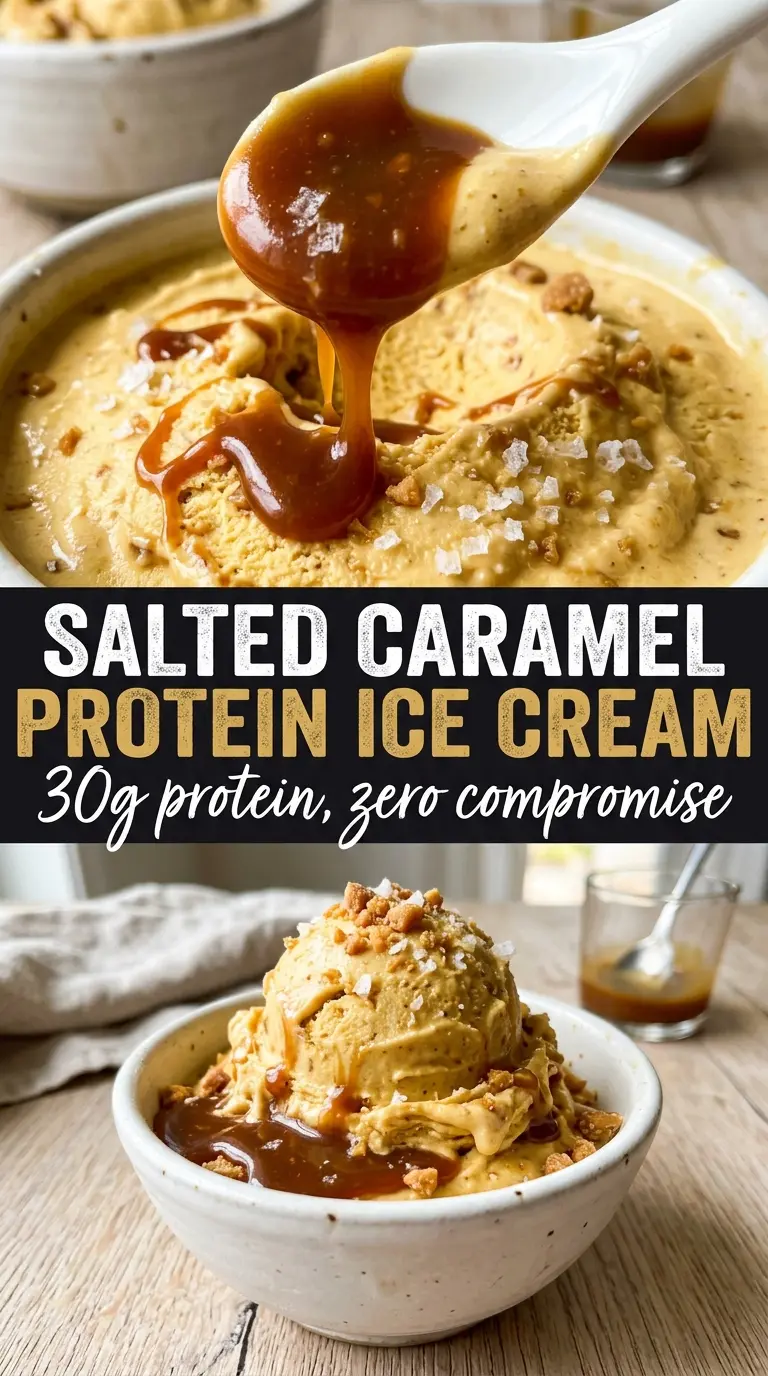
Rich, caramel-forward ice cream with a salty finish is hard to beat, and this version keeps the texture creamy without leaning on a traditional custard base. The cottage cheese blends down into a smooth, velvety freeze that scoops like dessert, not a compromise, with enough caramel and brown sugar to taste indulgent from the first bite.
The key is blending long enough that every bit of curd disappears. If you stop early, the ice cream freezes with a grainy texture, and that’s the one problem this recipe can’t hide later. A little cream cheese adds roundness if you want it, but the real job is making the frozen base taste full and balanced before it ever hits the freezer.
Below, I’ve included the small adjustments that matter most, plus the one freezing trick that keeps this from turning into a brick. If you’ve been wanting a protein dessert that tastes like it belongs in a bowl with caramel sauce and flaky salt, this is the one to keep.
I was shocked at how smooth this turned out after blending for a full two minutes. The caramel flavor came through perfectly, and the little pinch of flaky salt on top made it taste like a real ice cream shop dessert.
Want that creamy salted caramel texture again? Save this high-protein cottage cheese ice cream for the next time you need an easy frozen dessert.
The Blender Time That Keeps This Ice Cream Smooth
The difference between silky and chalky comes down to how completely the cottage cheese gets broken down before freezing. You want the mixture fully emulsified, not just mostly smooth, because any tiny curds will firm up and show themselves after a few hours in the freezer. That’s why this recipe asks for a long blend instead of a quick whirl.
The other thing that matters is balancing sweetness and salt before it chills. Frozen desserts taste less sweet once they’re cold, so the base needs to taste just a touch sweeter than you think when it’s liquid. If it tastes flat now, it’ll taste flatter later.
- Full-fat cottage cheese — This gives the best body and the creamiest freeze. Lower-fat versions work, but they tend to freeze icier and taste a little sharper.
- Caramel sauce — Use one you’d actually want to spoon over ice cream. A thicker sauce adds flavor and a little extra richness, while a thin, watery caramel won’t carry the dessert.
- Brown sugar — This deepens the caramel note and helps the base stay scoopable. Honey or maple syrup can work, but they shift the flavor away from true caramel and can make the texture looser.
- Cream cheese — Optional, but useful if you want a denser, more luxurious finish. Just a tablespoon is enough; too much will push the flavor toward tangy cheesecake instead of caramel ice cream.
- Flaky sea salt — Don’t skip the final pinch. The ice cream already has salt in the base, but the flakes on top give you sharp little bursts that make the caramel taste deeper.
What Each Ingredient Is Actually Doing in This Ice Cream
- Base ingredient (cream, milk, or custard) — This provides the foundation and richness. Quality matters.
- Sweetener (sugar, honey, or condensed milk) — This sweetens and prevents ice crystals. The ratio is critical.
- Flavor element (vanilla, fruit, chocolate, cookie, or other) — This defines the ice cream personality. Use quality ingredients.
- Egg yolks (if making custard base) — These create richness and silky texture. Optional but elevates ice cream.
- Churning (if using ice cream maker) — This incorporates air and prevents ice crystals. Critical for smooth texture.
- Freezing temperature and time — Proper freezing prevents rock-hard texture. Store at 0°F or below.
- Mix-ins (chocolate, cookies, candy, or swirls) — These add texture and prevent one-dimensional flavor. Add near end of churning.
- Serving temperature (slightly soft, not rock hard) — This provides creamy mouthfeel. Remove from freezer 5 minutes before serving.
Freezing the Base Without Turning It Grainy
Blending Until It Disappears
Blend the cottage cheese, caramel sauce, brown sugar, vanilla, sea salt, and cream cheese until the mixture looks glossy and completely uniform. Stop the blender and scrape down the sides once or twice so no hidden curds cling to the jar. If the mixture still looks speckled or textured, keep blending; those tiny bits won’t melt away in the freezer.
Tasting for Sweet-Salty Balance
Taste the base before freezing and adjust from there. It should taste a little more intense than a finished soft dessert because cold dulls sweetness and aroma. If it tastes too salty now, add a spoonful more caramel sauce rather than more sugar, since that keeps the caramel note front and center.
Freezing for the Right Scoop
Pour the mixture into a freezer-safe container and freeze it for about 4 hours. The edges will firm up first, and the center should set to a spoonable, scoopable texture rather than become hard all the way through. If your container is very shallow, check it a little earlier because it can freeze faster than you expect.
Letting It Soften Before Scooping
Pull the container from the freezer and let it sit for about 5 minutes before serving. That short rest matters because this style of ice cream can freeze firm, especially if your freezer runs cold. If you try to scoop it straight away, you’ll end up chipping at the surface instead of getting clean, creamy scoops.
Three Ways to Adjust the Caramel Ice Cream to Fit What You Need
Dairy-Free Version
Use a thick dairy-free yogurt base or coconut-based cottage cheese alternative if you can find one, then keep the caramel and salt the same. The texture will be a little softer and the flavor less tangy, but you’ll still get a creamy frozen dessert with a caramel finish.
Lower-Sugar Option
Cut the brown sugar back a little and rely more on the caramel sauce for sweetness. The final ice cream will taste less candy-like and a bit more dairy-forward, so don’t be surprised if it freezes slightly firmer.
Extra-Rich Restaurant-Style Finish
Add the optional cream cheese and use the full amount of caramel drizzle on top. That combination makes the ice cream taste denser and more luxurious, almost like a frozen cheesecake meeting caramel fudge.
Storage and Reheating
- Refrigerator: This dessert isn’t meant to be stored in the fridge once frozen; it will melt into a soft pudding-like texture within an hour or two.
- Freezer: Freeze in a tightly covered container for up to 2 weeks. After that, the texture can get icy around the edges and lose some of the caramel smoothness.
- Reheating: There’s no reheating here, but the best way to serve it again is to let it sit at room temperature for 5 to 10 minutes before scooping. Don’t microwave it unless you want uneven melted spots and a grainy finish.
Questions I Get Asked About This Recipe
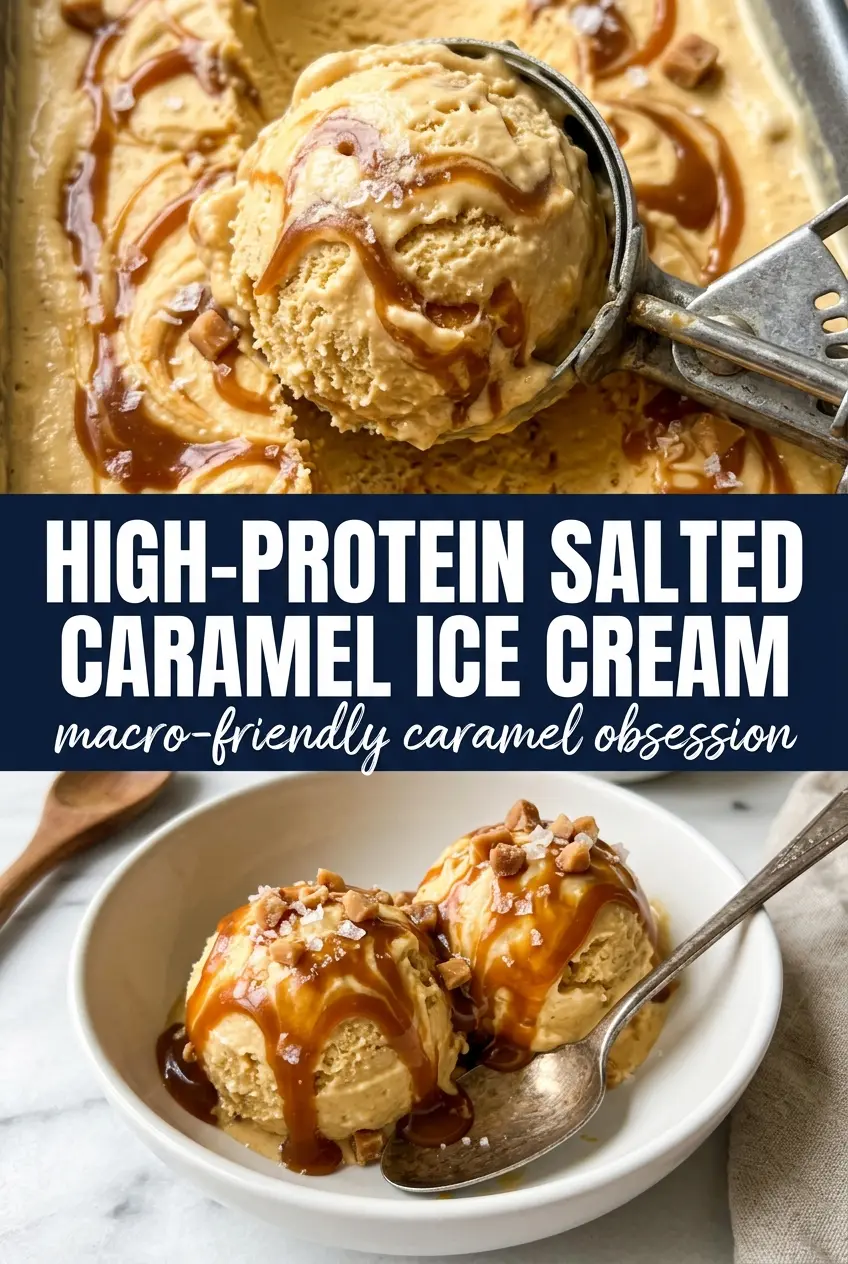
High-Protein Salted Caramel Cottage Cheese Ice Cream
Ingredients
Equipment
Method
- Add full-fat cottage cheese, caramel sauce, brown sugar, vanilla extract, sea salt, and cream cheese (if using) to a blender and blend for 2 minutes until completely smooth with no lumps, scraping down once if needed.
- Taste the mixture and adjust caramel sauce or sea salt until the flavor is balanced sweet and salty.
- Pour the mixture into a freezer-safe container, cover, and freeze for 4 hours until firm.
- Remove from the freezer and let sit for 5 minutes before scooping to soften slightly for easier portioning.
- Spoon into bowls and drizzle with extra caramel sauce, then finish with a pinch of flaky sea salt for contrast and texture.